


Washington Mulling Cutback in Funding for Sudan’s Military

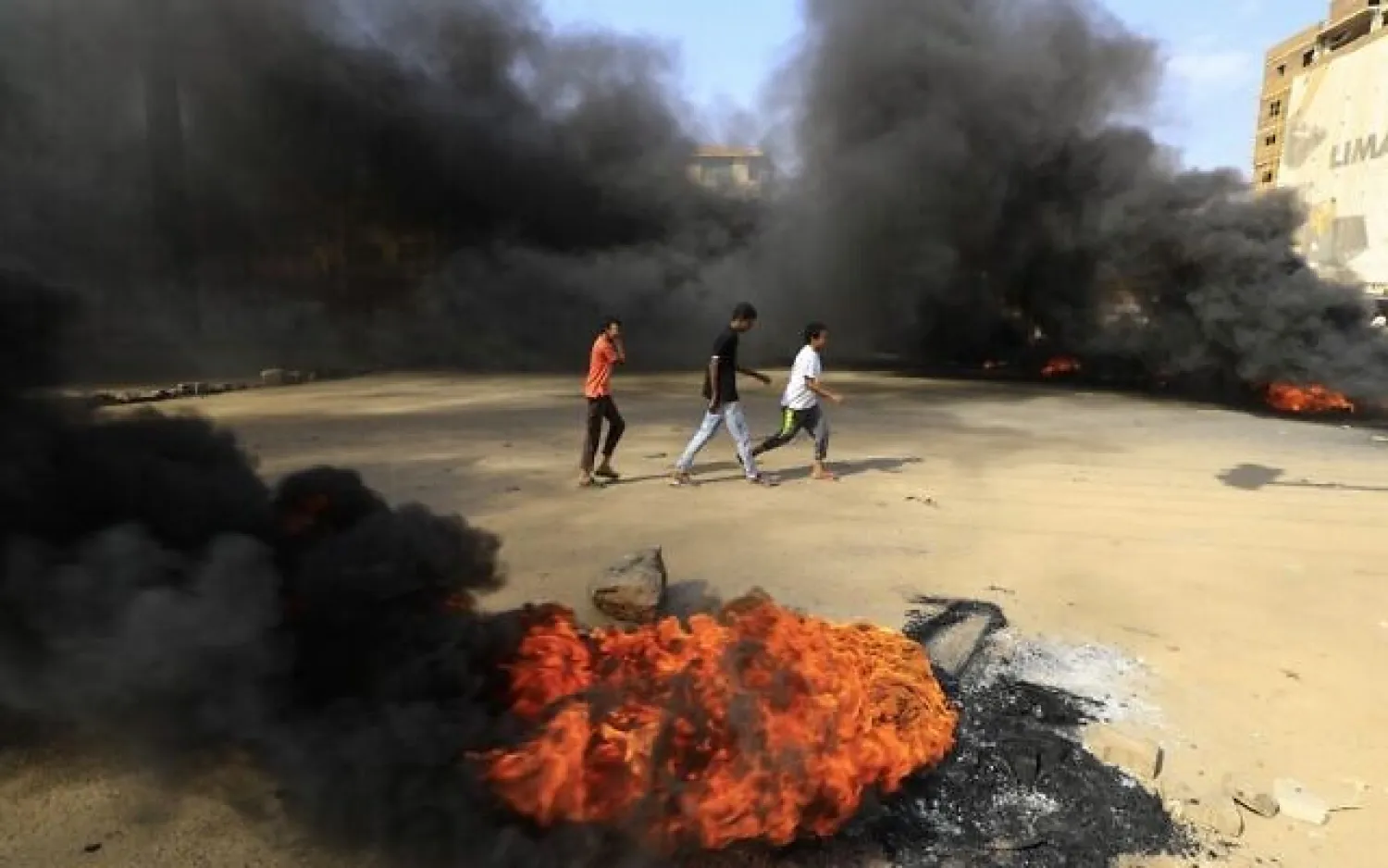
Sudanese protesters burn tires to block a road in Khartoum (File photo: AFP)
TT

Washington Mulling Cutback in Funding for Sudan’s Military

Sudanese protesters burn tires to block a road in Khartoum (File photo: AFP)

The US State Department confirmed to Sudan’s military leaders that Washington is prepared to apply additional costs if violence continues.

Washington has also accused Moscow of “playing a negative role” and backing the “coup” in Sudan.

“We are now reviewing the full range of traditional and non-traditional tools at our disposal to further reduce the funds available to Sudan’s military regime, to isolate its military-controlled companies, and to increase the reputational risk for any who choose to continue to engage in ‘business-as-usual’ with Sudanese security services and their economic enterprises,” US Assistant Secretary of State for African Affairs Molly Phee said in remarks to the Senate Foreign Relations Committee.

Phee added that “we’re looking very hard right now at non-traditional methods of pressure, particularly in terms of, for example, the illicit gold mining that takes place, and we're also looking at the many enterprises that are owned by security forces.”

She also addressed Russia's role in the crisis in Sudan, saying Moscow is interested in exploiting insecurity for tactical and financial gains.

The official warned that Moscow plays a negative role in supporting coups in Africa, including Sudan, which is a source of concern.

Phee cautioned that "Russia is the old Sudan," noting that leaders of Sudan's security forces have a choice "they can be the leaders who help Sudan complete this historic transition or they can be the leaders that fail. We want a Sudan that has a partnership with the US and with our like-minded partners in the world and not with Russia."

Phee repeatedly reiterated that the Sudanese security forces are not monolithic, as "some of them truly would like to affect a transition. They do not know how to do it. They are falling back on their own playbook."

She also reiterated its call on the security forces to cease force and violence against peaceful demonstrators.

"The Sudanese people are amazing. They are committed. They are creative. They have a vision of what they want, and they will not let that vision go. I haven't seen that kind of strength and cohesion in other difficult environments in which I have worked."

Despite these statements, bipartisan committee members strongly criticized the US official. They indicated the US administration failed to use the tools at its disposal to impose sanctions.

They also stressed that Congress would set certain conditions before releasing any aid to Sudan, specifically the $700 million that the administration froze after October 25.

Democratic Committee Chairman Bob Menendez said that despite publicly committing to dialogue to resolve the current crisis, the "Sudanese military continues to kill, torture, abuse and detain protesters and civil society activists."

Menendez warned that the security forces had killed nearly 80 civilians since the coup, including a 27-year-old man, last weekend.

"While a dialogue is necessary, there must also be consequences for those responsible for human rights abuses and for those of the highest levels who have engineered the coup," said Menendez.

He announced his support to the Biden administration to immediately suspend $700 million in aid. However, he noted that these actions are "insufficient to end the violence and force the generals to the negotiating table."

Menendez questioned the UN initiative to resolve the crisis, saying that although the United Nations Mission in Sudan indicated that it would facilitate the Sudanese-led talks, it did not have any means to compel participation or hold the participants accountable for their commitments.

The committee's senior Republican, Senator Jim Risch, sharply criticized Sudan's military leaders, saying: "The well-documented violence against civilians before and following the October 25 coup proves that Sudan's military is brutal, can't be trusted, and incapable of leading Sudan's democratic transition."

"We may need to engage Generals Burhan and Hemedti to find a path toward restoring civilian control. We must put them on notice."

The lawmaker repeated calls for the US administration to describe the events of October 25 as a "military coup" and not a military takeover.



France, Iraq Deepen Energy, Defense Ties During Al-Zaidi Visit

 France's President Emmanuel Macron (R) shakes hand with Iraq's Prime Minister Ali al-Zaidi (L) during an agreement signing ceremony at the Elysee Palace in Paris on September 14, 2026. (AFP)
France's President Emmanuel Macron (R) shakes hand with Iraq's Prime Minister Ali al-Zaidi (L) during an agreement signing ceremony at the Elysee Palace in Paris on September 14, 2026. (AFP)
TT

France, Iraq Deepen Energy, Defense Ties During Al-Zaidi Visit

 France's President Emmanuel Macron (R) shakes hand with Iraq's Prime Minister Ali al-Zaidi (L) during an agreement signing ceremony at the Elysee Palace in Paris on September 14, 2026. (AFP)
France's President Emmanuel Macron (R) shakes hand with Iraq's Prime Minister Ali al-Zaidi (L) during an agreement signing ceremony at the Elysee Palace in Paris on September 14, 2026. (AFP)

France and Iraq on Monday called for a "diversification of export routes" for oil and gas in the Middle East in response to the instability generated by the conflict between the United States and Iran, following talks in Paris.

French President Emmanuel Macron and Iraq's Prime Minister Ali al-Zaidi stressed the importance of "regional interconnections" and export route diversification to "ensure regional energy security", in a joint statement.

Zaidi visited the Elysee Paris on his first trip to Europe since taking office in May and is also expected in Berlin on Tuesday.

The visit comes as the situation in the Middle East continues to deteriorate, with the Iran-backed Houthi militants cementing their hold on the Bab al-Mandeb Strait on Friday, adding to the crisis of Iran's effective closure of the Strait of Hormuz, and driving oil prices up.

On Monday, French energy giant TotalEnergies signed a memorandum of understanding with Iraq on liquefied natural gas supplies and agreed to discuss further energy projects.

TotalEnergies chief Patrick Pouyanne "affirmed the company's readiness to cooperate with Iraq in the oil and energy sectors", noting the company planned to increase its investments in Iraq to $16 billion from $12 billion, during a meeting with Zaidi.

The two countries, which in recent years have been involved in the fight against the ISIS extremist group, also agreed to deepen defense cooperation.

They signed a strategic roadmap on the acquisition of French military equipment as Iraq seeks to modernize its armed forces and strengthen its sovereignty capabilities.

French drone company Harmattan AI separately signed a letter of intent with Iraq's defense ministry concerning autonomous air-defense systems.

Several other agreements were signed in areas including development assistance, education, civil aviation and electricity infrastructure.


Taiz on Alert to Confront the Houthi Threat

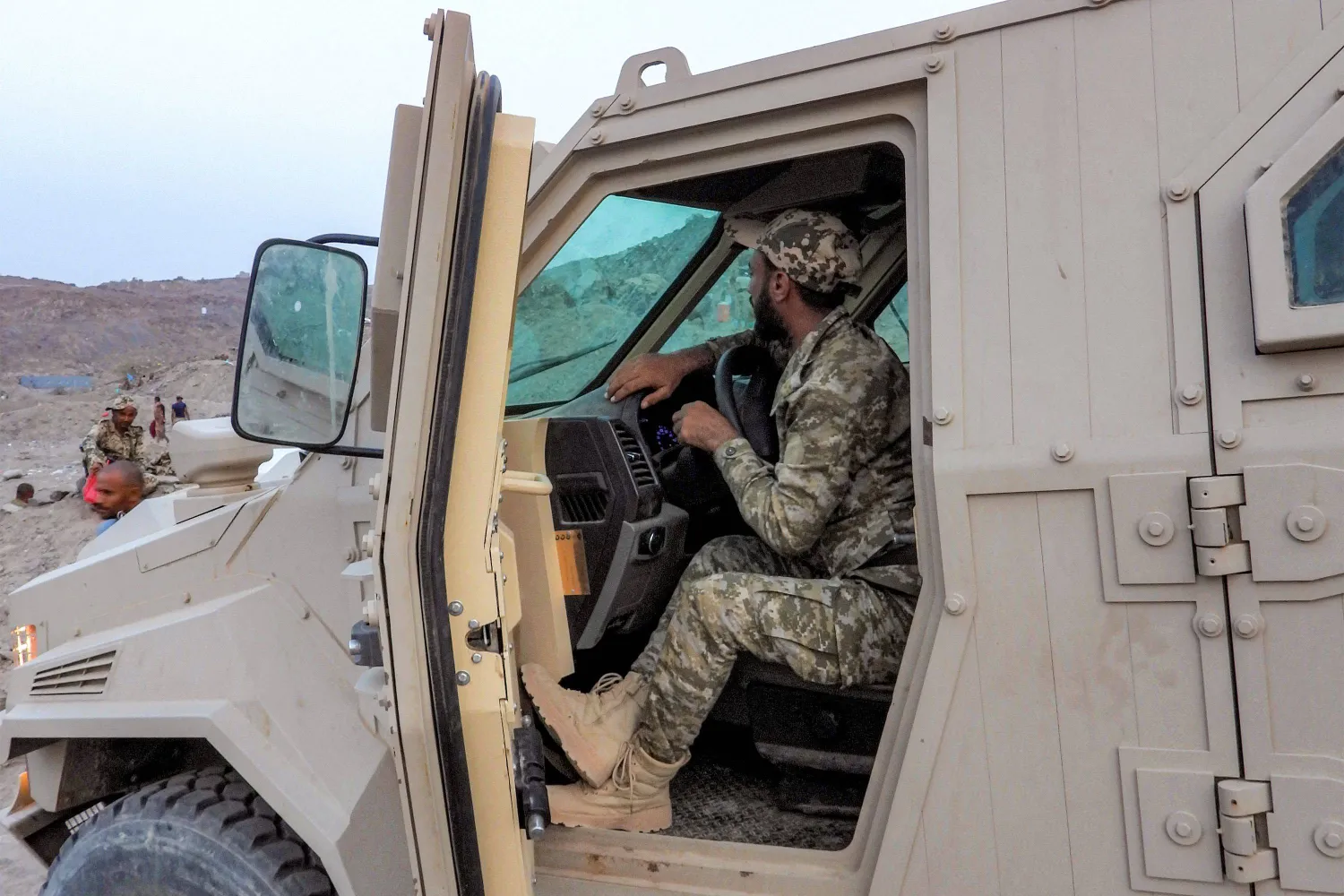
A member of the Yemeni government forces, including National Army and Taiz Axis forces, sits in an armored vehicle at a position along the Kadha frontline west of Taiz in western Yemen on September 13, 2026. (AFP)
TT

Taiz on Alert to Confront the Houthi Threat

A member of the Yemeni government forces, including National Army and Taiz Axis forces, sits in an armored vehicle at a position along the Kadha frontline west of Taiz in western Yemen on September 13, 2026. (AFP)

Yemen’s Taiz governorate has raised its readiness to counter threats from the Houthi militia as the group intensifies its movements across the province's western, northern, and southern fronts in an attempt to achieve field breakthroughs.

These advances aim to tighten the siege on Taiz city and its liberated countryside, while threatening supply lines connecting the city to its western rural areas.

The mobilization coincided with fierce battles fought by government forces across several locations, during which they managed to recapture positions that the Houthis had infiltrated in the western part of the governorate.

Government troops also advanced toward new areas, while airstrikes targeted Houthi positions, reinforcements, and vehicles across multiple fronts.

The group has been attempting, since the start of the escalation in early September, to exploit the widening scope of confrontations along the western coast, southern Hodeidah, and western Taiz. These maneuvers aim to redraw the lines of contact around the governorate, allowing the militia to pressure Taiz city from several directions and sever supply and movement routes leading to the coastal areas.

During the past few hours, government forces announced the recapture of positions overlooking the Jurdad area in al-Shamayatayn district, as well as an advance toward the Ghail Bani Omar region.

These developments followed clashes with Houthi fighters who had infiltrated several locations in the western part of the governorate.

Official military sources said that government forces managed to seize Houthi military equipment during the operations, while inflicting casualties among Houthi ranks.

The government also intensified airstrikes on Houthi positions and movements in various parts of the governorate. According to military sources, the strikes targeted military vehicles and gatherings in the districts of Dhubab, al-Waziyah, and Hayfan, as well as a gathering of militants in the Al-Afeerah area of Jabal Habashi district, killing at least ten militants and destroying several vehicles and a medium-weapons ammunition cache.

Meanwhile, the local authority in Taiz moved to mobilize the internal front to counter the escalation.

Governor of Taiz Nabil Shamsan met with sheikhs, notables, dignitaries, and social figures in the al-Shamayatayn, as part of efforts to strengthen internal cohesion and unify the local stance behind government forces.

Shamsan stressed that Taiz will continue to stand firm against the Houthis, praising the role the governorate has played during the years of war in preserving state institutions, as well as the Saudi support provided to the government and the Yemeni people in confronting the group.

The Human Rights Ministry said 150 civilians have been killed and over 200 wounded between September 3 and 13 since the escalation intensified. Some 85,000 have been displaced.


Portugal Says Israel Undermining Palestinian State Through Settlement Expansion

Palestinian Foreign Affairs and Expatriates Minister Varsin Aghabekian Shahin (L) and Portuguese Foreign Minister Paulo Rangel (R) attend a press conference after a meeting at Necessidades Palace in Lisbon, Portugal, 14 September 2026. (EPA)
TT

Portugal Says Israel Undermining Palestinian State Through Settlement Expansion

Palestinian Foreign Affairs and Expatriates Minister Varsin Aghabekian Shahin (L) and Portuguese Foreign Minister Paulo Rangel (R) attend a press conference after a meeting at Necessidades Palace in Lisbon, Portugal, 14 September 2026. (EPA)

Portugal's ‌foreign minister said on Monday that Israeli settlement expansion and economic pressure in the occupied West Bank and East Jerusalem were undermining prospects for a viable Palestinian state.

Foreign Minister Paulo Rangel said Israel's E1 settlement plan was "extremely pernicious" because ‌it would ‌divide the West Bank, ‌isolate ⁠East Jerusalem and ⁠was incompatible with a two-state solution.

Israel's withholding of Palestinian tax revenues amounted to a "brutal strangulation" of the Palestinian Authority's finances, preventing the economy from ⁠functioning, he said after meeting ‌Palestinian Foreign ‌Minister Varsen Aghabekian Shahin in Lisbon.

‌Rangel also cited the closure ‌of Christian schools in East Jerusalem as evidence of worsening conditions there.

Portugal recognized the State ‌of Palestine a year ago.

Rangel said the two-state ⁠solution ⁠was the only way to guarantee peaceful coexistence between Israelis and Palestinians.

Israel said last week it was closing Britain's consulate in East Jerusalem in response to plans by the UK, France and Canada to block imports from Israeli settlements in the West Bank.