Remotely Heated Seeds to Treat Brain Tumors

A tumor seen on an MRI scan. (Getty/iStock)
TT

Remotely Heated Seeds to Treat Brain Tumors

A tumor seen on an MRI scan. (Getty/iStock)

A tiny magnetic seed could hold the key to treating tumors in some of the most inaccessible parts of the body. According to Sky News, minimally invasive image-guided ablation, or "Minima", is a new therapy which sees the 2mm seed guided through the brain to heat and destroy tumors.

Tested on mice, it involves using an MRI scanner to navigate the seed's path to the tumor, before heating it remotely and using this heat to kill off the cancer cells. The technique could mean more effective treatment, reduced recovery times, and less chance of side effects.

It could be used against hard-to-reach glioblastoma - the most common form of brain cancer - as well as prostate cancer and other tumors that would benefit from less invasive treatment. The findings are detailed in a study published in the journal Advanced Science. Senior author, Professor Mark Lythgoe from the UCL Centre for Advanced Biomedical Imaging, told the PA news agency: "By having precise remote control of the seed using the MRI scanner, we can destroy only the cancer cells. This means that we will be able to preserve the healthy tissue.”

"In terms of neurosurgery this means that we will be able to preserve motor function and cognitive function which not only contribute to the quality of life and recovery time but can contribute to the long-term survival of the patient," he added.

Co-author Dr. Lewis Thorne is a consultant neurosurgeon at the National Hospital for Neurology and Neurosurgery who treats patients with glioblastoma.

"Minima can successfully destroy cancer in a mouse and has the potential to extend survival and limit damage to adjacent brain tissues in patients," Lythgoe added.
Professor Mark Emberton, UCL Division of Surgery and Interventional Science - lead cancer clinician in the study, said: "Improving the precision of our cancer treatments is arguably one of the greatest unmet needs we have today. "

One in eight men will be diagnosed with prostate cancer.

"While treatments such as radiotherapy and surgery can be effective, they often cause unwanted and debilitating side effects such as incontinence and impotence. Minima may allow us to precisely target and destroy prostate tumor tissue, reducing harm to normal cells,” Emberton concluded.

Long-Distance Flights Can Interfere with the Internal Clocks of Seabirds

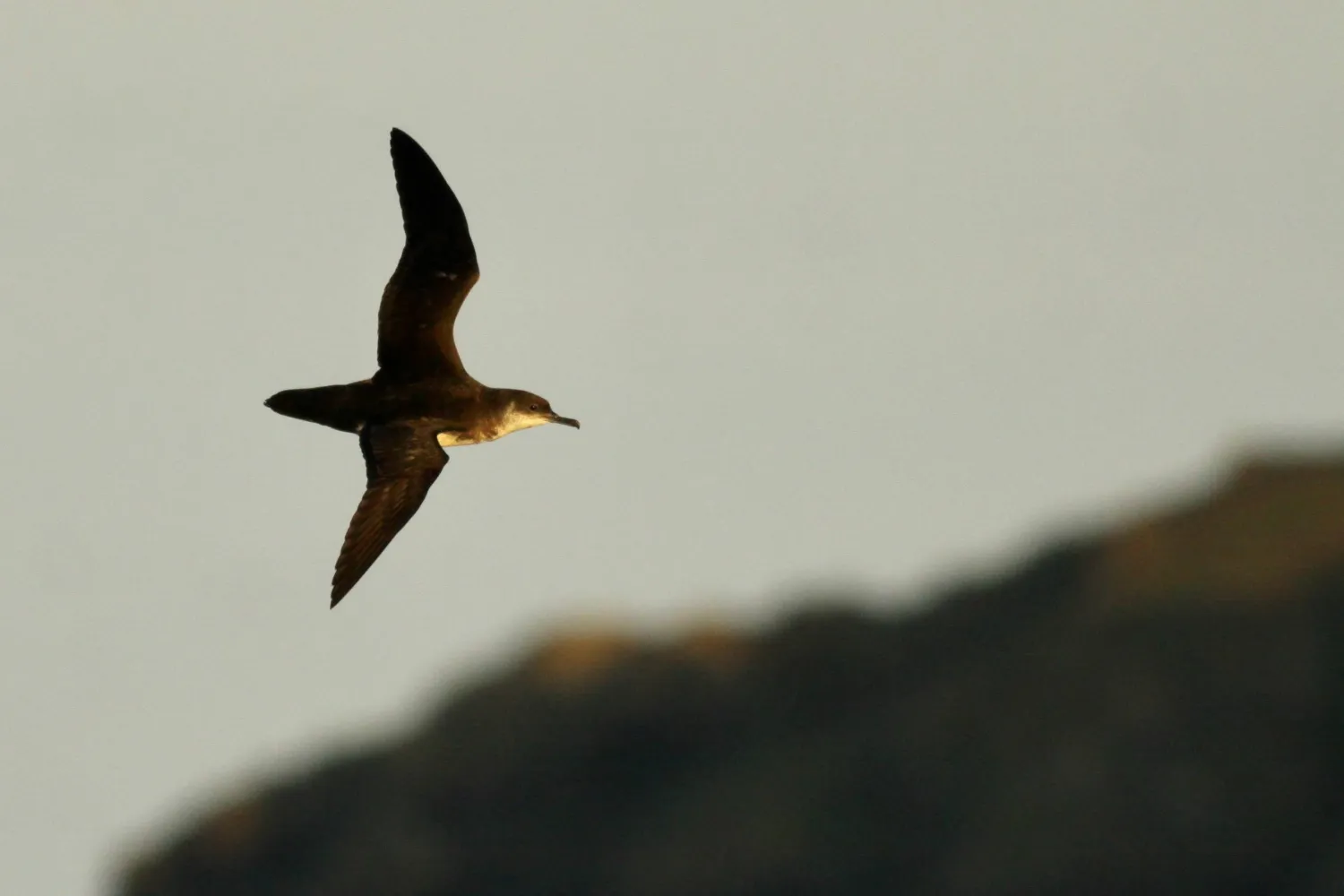
A Manx shearwater flies around Skomer Island, Pembrokeshire, Wales, Britain, in this handout image released on October 29, 2026. (Joe Wynn/Handout via Reuters)
TT

Long-Distance Flights Can Interfere with the Internal Clocks of Seabirds

A Manx shearwater flies around Skomer Island, Pembrokeshire, Wales, Britain, in this handout image released on October 29, 2026. (Joe Wynn/Handout via Reuters)

People who travel across many time zones, like a trip from London to Tokyo, may experience jet lag, with the body's internal 24-hour clock — the circadian rhythm — thrown out of sync with the local time at the arrival location. A new study shows that birds that fly long distances may experience a similar phenomenon that causes them to drift off course.

Research involving seabirds called Manx shearwaters found that crossing the Atlantic at speed can throw their internal clocks out of sync with local time, causing errors in the strategy they use to navigate their way home.

Birds can use several cues to find their way, including having the sun serve as a compass. A bird flying south sees the sun on its left at sunrise and on its right toward sunset, so it must keep adjusting its heading as the sun moves across the sky.

"Animals use an internal clock to do this, the ‌same one that tells ‌our bodies when to sleep, when to be active," said Patrick Lewin, a researcher ‌at ⁠the University of ⁠Oxford's Department of Biology and one of the leaders of the study published in the journal Science.

To investigate how the birds navigate across vast stretches of open ocean, researchers analyzed 20 years of GPS data from 1,045 breeding Manx shearwaters, birds that can travel as far as about 1,000 km (620 miles) west from colonies on islands off Britain on foraging trips.

Using the positions of the birds and the sun's movement across the sky, the researchers calculated the error each bird should make if its internal clock stayed set to the time at dawn. Across 335 homing flights made out of sight of land, the headings of the birds closely matched those ⁠predicted errors.

"The process behind what we're observing here — the mismatch between the internal clock ‌and external time caused by longitudinal movements — is exactly the same as what ‌causes jet lag in humans," Lewin said.

The researchers have not yet investigated whether the clock mismatch affects the birds beyond navigation. But internal clocks ‌influence behaviors including feeding and rest, raising the possibility that those too could be mistimed.

Shearwaters tend to hunt shortly ‌after dawn and before dusk, when fish and other prey are closer to the surface, meaning a mistimed rest period could cost them a feeding opportunity, Lewin said.

The study also showed that birds kept using their solar compass even when another source of information was readily available. Along coastlines, where familiar land could potentially guide them, their distance from shore still shifted in the direction predicted by clock-related sun-compass errors.

A ‌TWO-STEP PROCESS

"For most navigational tasks, it is thought that compass systems are used in conjunction with a map system in a kind of two-step process. In the map step, ⁠the animal determines where it is ⁠in relation to a goal, such as a home colony. Then in the compass step it uses a compass to translate that into movement," said Tim Guilford, a University of Oxford professor of animal behavior who was one of the study leaders.

The birds may continue to combine these systems even in familiar areas, rather than relying entirely on one or the other.

"If this only produces small deviations, there might not be strong selection against it," Lewin said.

Another possibility is that the sun compass helps the birds determine which way to go along the linear feature, Lewin said.

Even clouds may not render the sun compass useless. Evidence suggests that birds can sense polarized light and estimate the sun's position unless conditions are heavily overcast, Lewin said.

In people, jet lag can cause unpleasant short-term effects and has been linked to longer-term health problems in those who experience it frequently, such as airline pilots and flight attendants.

It is not yet known whether birds experience similar effects, but species such as shearwaters that regularly travel rapidly east-west may have evolved ways to cope with repeated disruption to their internal clocks, Lewin said.

"Knowing this phenomenon is occurring is only the first step, but perhaps these birds could teach us something about how to treat or avoid jet lag," Lewin said.


Philippines Raises Volcano Alert Level as Blast Sends Ash Skyward

Smoke billows into the sky as Mayon volcano erupts as seen from Legaspi City, Albay province, south of Manila on October 30, 2026. (AFP)
TT

Philippines Raises Volcano Alert Level as Blast Sends Ash Skyward

Smoke billows into the sky as Mayon volcano erupts as seen from Legaspi City, Albay province, south of Manila on October 30, 2026. (AFP)

One of the Philippines' most active volcanoes fired a dark column of ash thousands of meters into the sky Friday in a "moderately explosive eruption" that lasted nearly six minutes, the state seismology office said.

There were no immediate reports of casualties or damage in towns and cities surrounding Mount Mayon, but the country's volcano institute raised the alert level from 2 to 3 on its 0-5 scale and called for evacuations within six kilometers (3.7 miles) of the crater.

The 3,000-meter (nearly 10,000 feet) ash column gradually drifted southwest onto nearby population centers, the Philippine Institute of Volcanology and Seismology said in a bulletin.

"Mayon is in a new phase of magmatic eruption, with increased chances of lava flows and hazardous PDCs (pyroclastic density currents)... affecting the upper to middle slopes of the volcano in the immediate days to weeks," it said.

It urged local officials to evacuate areas near the crater "due to the danger of PDCs, lava flows, rockfalls and other volcanic hazards", with planes also advised to avoid flying close to the mountain.

The 2,462-meter (8,000-foot) Mayon, rising in a near-perfect cone about 330 kilometers southeast of Manila, is one of three Philippine volcanoes that have shown elevated levels of activity this year, though no major eruptions occurred.

In June 2023, more than 12,000 people living on its lower slopes were moved to evacuation centers to protect them from ash and toxic gases spewing from its crater.

Earthquakes and volcanic activity are common in the Philippines due to its position on the Pacific "Ring of Fire", where tectonic plates collide.

The country's most powerful eruption in recent decades was Mount Pinatubo in 1991, which killed more than 800 people and produced an ash cloud that travelled thousands of kilometers.


People Enter Cages While the Animals Seem Free at a Unique Amsterdam Museum

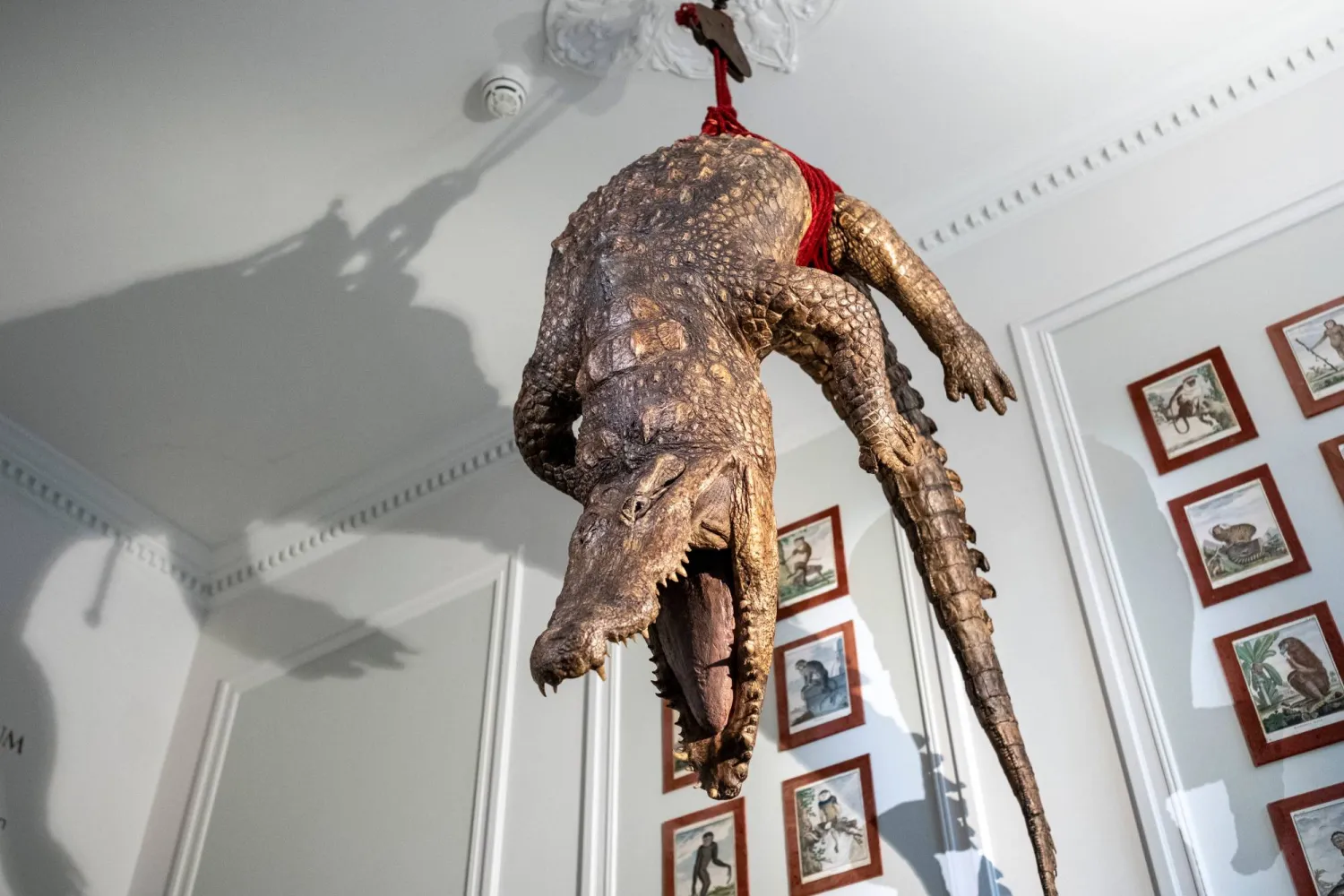
 A crocodile stares down at the entrance of the Art Zoo in Amsterdam, Netherlands, on Oct. 27, 2026. (AP)
A crocodile stares down at the entrance of the Art Zoo in Amsterdam, Netherlands, on Oct. 27, 2026. (AP)
TT

People Enter Cages While the Animals Seem Free at a Unique Amsterdam Museum

 A crocodile stares down at the entrance of the Art Zoo in Amsterdam, Netherlands, on Oct. 27, 2026. (AP)
A crocodile stares down at the entrance of the Art Zoo in Amsterdam, Netherlands, on Oct. 27, 2026. (AP)

Look up as you enter Amsterdam's new Art Zoo museum, and a 12-foot crocodile stares down at you, mouth open, ready to chomp.

The taxidermic reptile is one of hundreds of preserved creatures on display, alongside artfully arranged piles of bones, illuminated tulips encased in apothecary jars and a cabinet of grotesque fish.

While it’s not a Halloween-themed museum, the show should appeal to anybody looking for something a little dark this spooky season.

“It was a little creepy,” admitted Tomáš Vaško, a Slovak living in the Dutch capital, after touring the museum on a dark October day.

Art Zoo is the creation of Dutch artists Jaap Sinke and Ferry van Tongeren, who draw inspiration from “wunderkammers,” or curiosity cabinets collected by wealthy Europeans in the 16th and 17th centuries to showcase objects from the natural world.

“The main thing is that we like storytelling with the animals," van Tongeren told The Associated Press. "We like to add drama. We add an attitude to the animals, where traditional taxidermists just want to mimic nature.”

Behind him, a cheetah slouched in an alcove under the watchful eye of a cassowary.

In natural history museums, animals are posed as they could be seen in the wild. At the Art Zoo, a Japanese giant spider crab stretches its 6-foot legs above a doorway beside the leg bones of a mastodon that nearly reaches the ceiling.

The duo rose to fame in 2015 after shark-pickling artist Damien Hirst purchased their entire exhibition from a London art show.

Unlike at a traditional zoo, the human visitors are confined, not the animals. The display rooms in the 17th-century canal house where the Art Zoo is located are enclosed by brooding, black metal cages.

“We really like the concept of having all the people in a cage and then all the animals free,” van Tongeren says. “In that way, the whole building becomes one artwork.”

None of the animals in the eclectic collection were taken from the wild.

“All our animals come from zoos where they died of natural causes,” said Sinke. Still, he acknowledged that the paperwork can be challenging. The pair primarily obtained specimens from Europe to ensure they know the history of the animals.

Sinke and van Tongeren actually consider themselves an artistic trio, crediting naturalist Charles Darwin as the third contributor to their work. They pitched the concept of the museum as the return of Darwin’s wonder.

Not everything in the collection is a real animal. Underneath the crocodile suspended from the ceiling is a wall of Jenny Hanivers, ray carcasses modified into grotesque creatures by 16th-century sailors who presented the macabre beasts as real sea monsters to gullible collectors.

Their misshapen faces appear to keep a beady eye on museum guests as they walk from caged room to caged room.