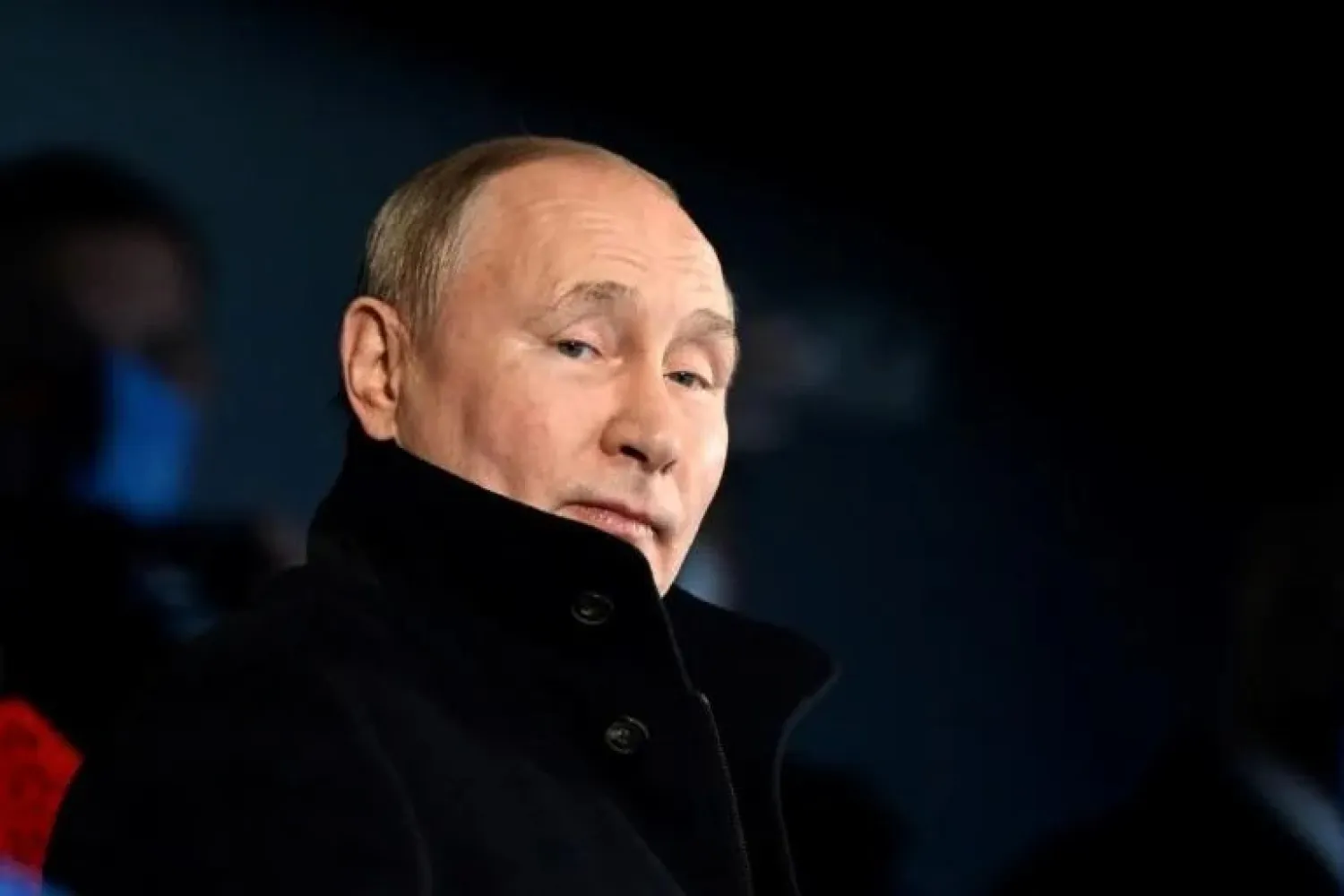
US Officials Say Russia Preparing Full-scale Invasion of Ukraine

US officials say Russian leader Vladimir Putin wants all possible options at his disposal: from a limited invasion of the pro-Russian Donbas region of Ukraine to a full-scale invasion (AFP/WANG Zhao)
TT

US Officials Say Russia Preparing Full-scale Invasion of Ukraine

US officials say Russian leader Vladimir Putin wants all possible options at his disposal: from a limited invasion of the pro-Russian Donbas region of Ukraine to a full-scale invasion (AFP/WANG Zhao)

Russia has stepped up preparations for an all-out invasion of Ukraine but it is not clear if Moscow has decided to take such a step, US officials have said citing intelligence assessments.

Russia has assembled 110,000 troops along the border with its pro-Western neighbor but US intelligence has not determined if President Vladimir Putin has actually decided to invade, according to the officials who in recent days briefed members of Congress and European allies.

The officials warned lawmakers that the assembled Russian force on the frontier is growing at a rate that would give Putin the force he needs for a full-scale invasion -- some 150,000 soldiers -- by mid-February, AFP reported.

They said Putin wants all possible options at his disposal: from a limited campaign in the pro-Russian Donbas region of Ukraine to a full-scale invasion.

Russia denies that it is planning to invade Ukraine.

If Moscow does opt for a full-scale attack, the invading force could take the capital Kyiv and topple President Volodymyr Zelensky in a matter of 48 hours, the officials said.

They estimated such an attack would leave 25,000 to 50,000 civilians dead, along with 5,000 to 25,000 Ukrainian soldiers and 3,000 to 10,000 Russian ones.

It could also trigger a refugee flood of one to five million people, mainly into Poland, the officials added.

- Special forces -
President Joe Biden has decided to send American forces to Poland to protect NATO members, as diplomats work furiously to try to persuade Russia to pull its troops back from the border with Ukraine.

The first contingent of US soldiers arrived Saturday.

Russia has also announced what it calls joint military maneuvers with Belarus, where it has sent several battalions to the north of Kyiv and in the Brest region, not far from the border with Poland.

US intelligence has concluded that Russia is continuing to muster a major military force on its border with Ukraine.

Two weeks ago, a total of 60 Russian army battalions were positioned to the north, east and south of Ukraine, particularly in the Crimean peninsula, which Russia annexed after an invasion in 2014.

But on Friday, there were 80 battalions and 14 more were en route from elsewhere in Russia, US officials said.

They added that some 1,500 Russian special forces soldiers known as Spetsnaz arrived along the Ukraine border a week ago.

- Naval forces assembling -
A major Russian naval force is also positioned in the Black Sea, equipped with five amphibious vessels that could be used to land troops on Ukraine's southern coast, the US officials said.

They added that another six amphibious craft were observed leaving the Barents Sea north of Russia, sailing past Britain and through the Strait of Gibraltar, apparently on their way to the Black Sea.

In other deployments, Russia has positioned fighter planes near Ukraine, as well as bombers, missile batteries and anti-aircraft batteries, US officials said.

On Thursday, the United States said it had evidence that Russia was preparing a video depicting a bogus attack by Ukraine that would serve as a pretext for a real Russian assault on Ukraine.


Somaliland Briefly Detains Americans Accused of Threatening National Security

Traffic flows along a street in Hargeisa, Somaliland, October 16, 2026. REUTERS/Mohamed Ahmed
TT

Somaliland Briefly Detains Americans Accused of Threatening National Security

Traffic flows along a street in Hargeisa, Somaliland, October 16, 2026. REUTERS/Mohamed Ahmed

The national intelligence agency in the self-declared Republic of Somaliland said it had briefly detained five US nationals who were threatening national security.

The National Intelligence Agency of Somaliland (NIA) said in a post on X late on Sunday that it had been monitoring the US nationals since they arrived and ran a "lengthy investigation" into their activities.

It gave no details of their identities or alleged actions in the Horn of Africa territory.

NIA ⁠Director-General Jama Mohamoud ⁠Egal and Somaliland's Ministry of Foreign Affairs did not immediately respond to requests for comment.

The US State Department said it was aware of the reports but could not comment on specifics because of concerns on privacy and other considerations.

Somaliland, ⁠which declared independence from Somalia in 1991, occupies a strategic location at the juncture of the Indian Ocean and Red Sea. Last December, Israel became the first country to recognize it as a sovereign state, and its government has been lobbying for recognition from additional countries, including the United States.

According to a person familiar with the matter, the five Americans work for a company ⁠called ⁠Parallel Black. A November 4 letter seen by Reuters shows they were invited by Somaliland's Foreign Affairs Minister Abdirahman Dahir Adam to conduct feasibility studies for potential investments.

The person said the five Americans left Somaliland on an Ethiopian Airlines flight on Monday afternoon.

Parallel Black, which was registered less than two months ago in the US state of Delaware, did not immediately respond to requests for comment.


Le Pen Says France Will No Longer Aid Ukraine ‘Financially’ if Elected

Marine Le Pen (C), the far-right National Rally (RN) party's candidate for the 2027 French presidential election, visits the "Made in France" fair at the Porte de Versailles exhibition center in Paris, France, 13 November 2026. (EPA)
TT

Le Pen Says France Will No Longer Aid Ukraine ‘Financially’ if Elected

Marine Le Pen (C), the far-right National Rally (RN) party's candidate for the 2027 French presidential election, visits the "Made in France" fair at the Porte de Versailles exhibition center in Paris, France, 13 November 2026. (EPA)

Marine Le Pen on Monday said that France would provide no further financial aid to Ukraine if she is elected president next year, after a meeting with Kyiv's ambassador in Paris.

"The state of France's public finances would no longer allow the country to provide financial assistance to Ukraine in the coming months," Le Pen said in a statement, while insisting France would honor existing commitments, including toward a 90-billion-euro ($100-billion) European Union loan.

Le Pen is currently ahead in polls in the race to succeed President Emmanuel Macron next year, as the war sparked by Russia's 2022 full-scale invasion of Ukraine grinds towards its fifth anniversary.

She has faced criticism over past links to Russia, which included a 2017 meeting in the Kremlin with President Vladimir Putin and her party taking a loan from a Russian bank that it paid off in full in 2023.

But she has opposed the invasion and, at her talks in Paris with Ukrainian ambassador Vadym Omelchenko, Le Pen made clear her "unwavering support for Ukraine since the beginning of the conflict".

The statement said the talks -- the first such between Le Pen and the Ukrainian ambassador -- were "cordial".

While financial aid would be cut, Le Pen told the ambassador that "France would continue to support Ukraine through donations of equipment, humanitarian aid and much more active diplomacy".

The statement said there was a "frank discussion" on the future of the conflict, with Le Pen stressing that "the pursuit of peace -- though a difficult goal to achieve -- must remain a priority for all".

She also asked the ambassador to tell President Volodymyr Zelensky she is ready to meet in "either Paris or Brussels". However, there was no mention of the candidate making the journey to Kyiv after Zelensky invited her to visit the Ukrainian capital.

Le Pen's opponents have expressed alarm that by emphasizing the importance of ending the war swiftly, she could force Ukraine to capitulate on unfavorable terms.

"If Russia imposes its will on a European nation through brutality, all of Europe is weakened," Macron wrote on Facebook at the weekend.

Taking aim at Le Pen, he said: "Let us be clear: those who seek to limit the resources available to Ukraine are, in effect, pushing for an unjust peace -- one that would leave Ukraine permanently vulnerable, and, by extension, leave Europe vulnerable as well."


Trump Says He Might Meet with North Korea’s Kim Jong Un in China

US President Donald Trump and North Korean leader Kim Jong Un shake hands before their one-on-one chat during the second US-North Korea summit at the Metropole Hotel in Hanoi, Vietnam February 27, 2019. (Reuters)
TT

Trump Says He Might Meet with North Korea’s Kim Jong Un in China

US President Donald Trump and North Korean leader Kim Jong Un shake hands before their one-on-one chat during the second US-North Korea summit at the Metropole Hotel in Hanoi, Vietnam February 27, 2019. (Reuters)

US President Donald Trump said on Monday he might meet with North Korean leader Kim Jong Un in China this week, an announcement that could dramatically reshape his upcoming trip through East Asia if it occurs.

The president, who met the North Korean leader several times during his 2017-2021 term, including once in the Korean Demilitarized Zone, has previously expressed ‌interest in ‌another meeting during his current term. Senior ‌US ⁠officials, however, have previously ⁠said he has no immediate plans to do so.

Moreover, Trump has repeatedly previewed meetings with Kim that never took place, including during a trip to Asia last year. North Korea, whose mission to the United Nations did not immediately respond to a ⁠request for comment, has publicly indicated it ‌has no intention of ‌meeting with the US president at this time.

Trump told reporters ‌while departing the White House en route to ‌the Philippines and China that any meeting would occur in China, and that the North Korean leader's presence was ultimately up to Chinese President Xi Jinping.

"(Xi) was here a ‌month ago, and we're also going to meet with (Russian) President Putin, and we ⁠may ⁠meet with Kim Jong Un also," Trump said.

"So that'll be good. We have a chance to accomplish a lot."

Trump has indicated he will meet with Putin and Xi during his trip, but US officials and analysts have played down the possibility of a meaningful agreement emerging from any trilateral sit-down.

Among the possible topics of conversation, Trump and others have said, are Russia's invasion of Ukraine, counterproliferation and the war in Iran.