


Israel PM Vows Action as Police Pegasus Spying Scandal Widens

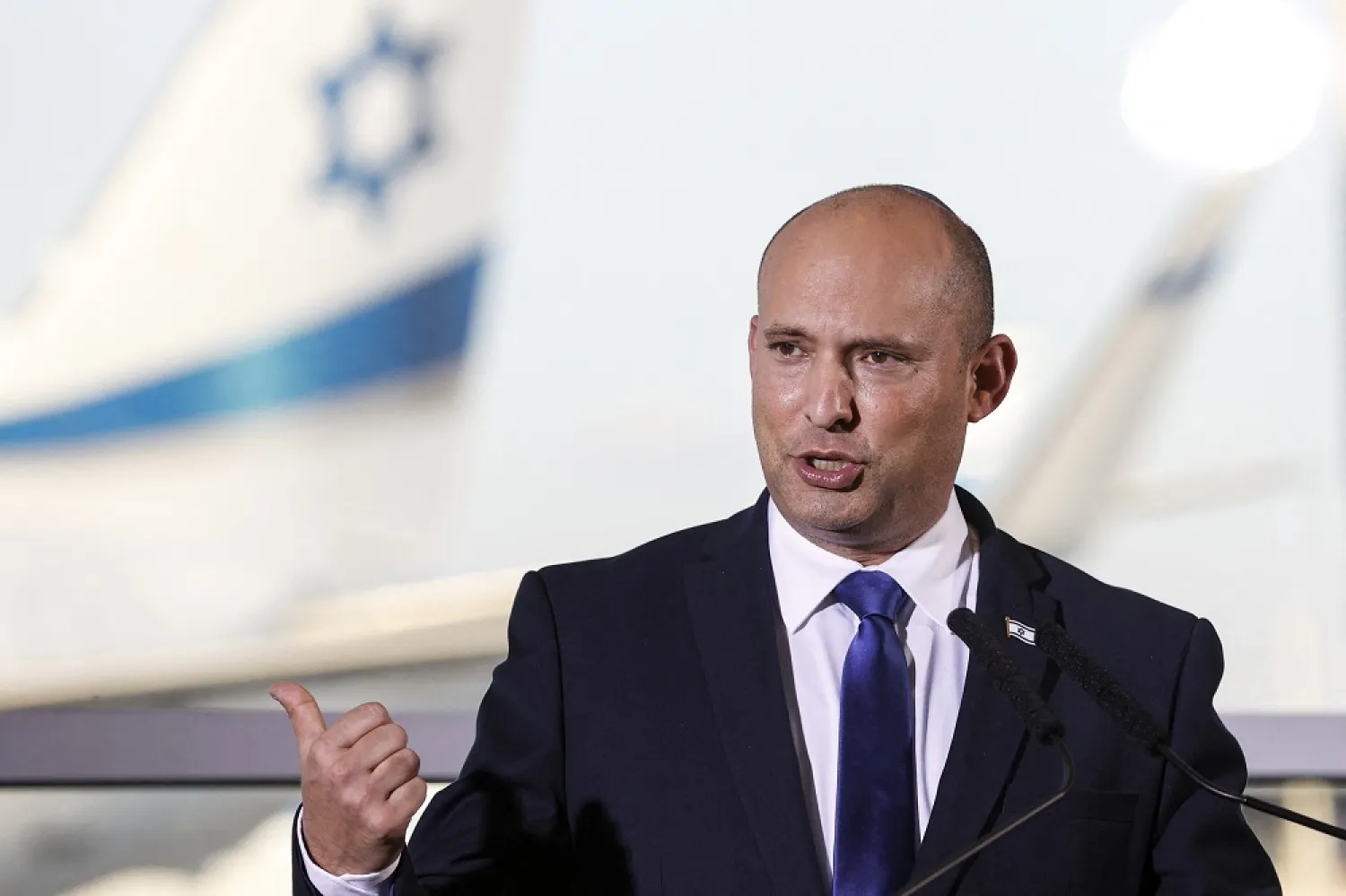
Prime Minister Naftali Bennett. (Getty Images)
TT

Israel PM Vows Action as Police Pegasus Spying Scandal Widens

Prime Minister Naftali Bennett. (Getty Images)

Israel's domestic spying scandal widened Monday, with Prime Minister Naftali Bennett vowing government action following new reports that police illegally used the Pegasus malware to hack phones of dozens of prominent figures.

The latest bombshell from business daily Calcalist alleged that Pegasus was used against a son of former premier Benjamin Netanyahu and his advisors, as well as activists, senior government officials, businessmen and others.

Calcalist had previously reported that the controversial malware, which can turn a phone into a pocket spying device, was used by police against leaders of an anti-Netanyahu protest movement.

After Monday's report emerged, Bennett vowed that his government "won't leave this without a response".

"The reports apparently describe a very grave situation that is unacceptable in a democracy," Bennett said.

"These cyber tools were designed to fight terrorism and serious crime, not be used against citizens. We will see to a transparent, in-depth and quick inquiry because all of us -- citizens of the State of Israel, government ministers and all establishments -- deserve answers."

As Bennett pledged action, Minister for Public Security Omer Barlev, who oversees the police, said he would seek authorization for a government commission of inquiry.

Barlev said that, if approved, the probe would be led by a retired judge to uncover "violations of civil rights and privacy".

'Shocked'

Pegasus, a malware product made by the Israeli firm NSO, is at the center of a months-long international scandal following revelations that it was used by governments worldwide to spy on activists, politicians, journalists and even heads of state.

Israel had come under fire for allowing the export of the invasive technology to states with poor human rights records, but the Calcalist reports have unleashed domestic outrage.

President Isaac Herzog suggested the credibility of key Israeli institutions was at stake.

"We must not lose our democracy. We must not lose our police. And we must certainly not lose public trust in them. This requires an in-depth and thorough investigation," Herzog said.

Calcalist said dozens of people were targeted who were not suspected of criminal conduct, and without police receiving the necessary court approval.

They include senior leaders of the finance, justice and communication ministries, supermarket magnate Rami Levy, mayors, Ethiopian-Israelis who led protests against alleged police misconduct, and former Netanyahu advisors Topaz Luk and Jonatan Urich.

Avner Netanyahu, one of the premier's sons, was also on the list. "I truly am shocked," he wrote on Facebook.

In another revelation set to rock Netanyahu's ongoing corruption trial, Calcalist reported that key witness Ilan Yeshua, former chief executive of the Walla news site, was a target.

Netanyahu is accused of seeking to trade regulatory favors with media moguls in exchange for favorable coverage, including on Walla. He denies the charges.

The Justice Ministry confirmed to AFP that the Jerusalem District Court cancelled a hearing in Netanyahu's trial scheduled for Tuesday, and instructed prosecutors to answer questions from the former premier's lawyers about the extent of the espionage.

The trial also suffered a blow last week when multiple Israeli broadcasters reported that police may have used spyware on Shlomo Filber, a former Netanyahu ally turned state witness.

Those reports, which Netanyahu described as an "earthquake", did not mention Pegasus.

NSO has consistently denied wrongdoing throughout the multi-stranded Pegasus scandal, stressing that it does not operate the system once sold to clients, and has no access to any of the data collected.



Flash Flooding Eases in Australia's Largest City Sydney

Some of the more than ten cars washed into the surf by the flood at the Cumberland River Caravan park after flash flooding near the Wye River, Australia, 16 January 2026. EPA/MICHAEL CURRIE AUSTRALIA AND NEW ZEALAND OUT
TT

Flash Flooding Eases in Australia's Largest City Sydney

Some of the more than ten cars washed into the surf by the flood at the Cumberland River Caravan park after flash flooding near the Wye River, Australia, 16 January 2026. EPA/MICHAEL CURRIE AUSTRALIA AND NEW ZEALAND OUT

'Bring it On': UK's Labor Readies for EU Reset Fight

British PM Keir Starmer (L) and European Commission President Ursula von der Leyen held a UK-EU summit in London in 2025. Carl Court / POOL/AFP
TT

'Bring it On': UK's Labor Readies for EU Reset Fight

British PM Keir Starmer (L) and European Commission President Ursula von der Leyen held a UK-EU summit in London in 2025. Carl Court / POOL/AFP

Britain's so-called Brexit wars dominated parliament for years. Now the Labor government is bracing for new battles as it eyes legislation to move closer to the European Union.

Prime Minister Keir Starmer immediately set about repairing and rebuilding relations with the 27-member bloc after winning the July 2024 election that ousted the Conservatives after 14 years in power.

He hopes a deeper relationship with European neighbors can help fire up Britain's insipid economy and inject life into a premiership that has so far been deeply unpopular with the public.

His Labor government is preparing to introduce a bill that would provide a legal framework for his much-touted "reset" of relations with the EU.

Despite Labor's crushing majority in parliament, the move is expected to be fiercely opposed by the right-wing opposition parties -- the Conservatives, who took Britain out of the EU, and hard-right Reform UK, which leads opinion polls.

"Bring it on," a UK government official told AFP, referring to likely "Brexit betrayal" claims from the Tories and Reform's leader, arch-Eurosceptic Nigel Farage.

The move also risks splitting open divisions within Labor, including over whether the party should breach a manifesto promise not to rejoin the EU customs union.

Last year, Starmer struck an economic agreement with EU leaders that aims to boost trade by easing red tape on food and plant exports.

They also agreed to work on a new electricity deal that would integrate the UK into the EU's internal electricity market, with the intention of lowering energy costs.

- 'Brexit damage' -

The agreements form part of Britain aligning itself with EU rules in certain areas.

The bill has not been published yet but the government official, who asked not to be named, said it would provide a "mechanism" for an alignment.

"The bill will provide the powers to adopt the rules and set out the role parliament will play in that," the official said.

The government hopes to introduce the legislation in the spring or summer, meaning it could coincide with the 10th anniversary of the Brexit referendum, which was held in June 2016.

Three years of bitter parliamentary wrangling about what Britain's relationship with the EU should look like post-departure followed the vote, ultimately leading to the resignation of Theresa May as prime minister.

The deadlock was broken when her successor, Boris Johnson, won a landslide general election victory in December 2019 to force through the exit.

Opinion polls regularly now show that most Britons regret the razor-thin vote to leave the EU and view the Brexit project as a failure, something Starmer hopes can work in his favor.

"Labor members are almost wholly united in wanting to see some of the damage done by the Tory-Farage Brexit exposed and fixed," said one supportive Labor MP.

"Closer alignment helps our economic message, has the backing of members and most MPs, and will provide a boost to British business," the lawmaker, who asked not to be named, told AFP.

But not all Labor MPs are in agreement.

Thirteen of them recently voted in favor of a bill by the pro-EU centrist Liberal Democrat party that called for the UK to begin negotiations to rejoin a customs union with the EU.

- 'Do more' -

Health Secretary Wes Streeting, widely seen as the favorite to succeed Starmer as Labor's next leader, has indicated his support for such an agreement.

Starmer has come out against a customs union, however, insisting that he favors closer realignment with the EU's single market.

"I want us to do more," one Labor MP who feels Starmer is not being bold enough told AFP on condition of anonymity.

Other Labor lawmakers would rather he left the issue alone.

"We said we wouldn't re-open the Brexit debate and now we are doing exactly that," MP Jonathan Hinder told AFP.

"We can create a fairer, socialist Britain while outside the EU and that is what we should be focused on doing."

A UK government spokesperson said in a statement that the reset was "improving our diplomatic, economic and security cooperation and will be worth £9.0 billion ($12 billion) to the UK economy by 2040".

"We will legislate to deliver on this and further details of the bill will be announced in due course."

The deputy director for the Center for European Reform think tank, Ian Bond, said that whether the bill is "a game changer will depend on exactly how much latitude the British government gives itself".

"If it holds its nerve, it really doesn't need to pay any attention to these noises," he said.

But he added he felt ministers were "all terrified that if they do anything too bold, Reform will criticize them for it".


Protester Arrested after Climbing Roof of Iran's Embassy in London

Iranians who live in Greece gather to rally outside the Iranian embassy in Athens, Friday, Jan. 16, 2026, in support of Iran's anti-government protests. (AP Photo/Petros Giannakouris)
TT

Protester Arrested after Climbing Roof of Iran's Embassy in London

Iranians who live in Greece gather to rally outside the Iranian embassy in Athens, Friday, Jan. 16, 2026, in support of Iran's anti-government protests. (AP Photo/Petros Giannakouris)

A protester who climbed onto the roof of Iran's embassy in London and removed a flag was arrested with several others, police said late on Friday, adding multiple officers were injured in the demonstrations, said AFP.

"During the ongoing protest at the Iranian Embassy this evening, a protester illegally accessed private property and climbed across multiple balconies onto the roof of the Embassy and removed a flag," the Metropolitan Police said in a post on X.

"Several officers have suffered injuries," the UK capital's police added, saying in the "ongoing disorder" objects had been thrown at officers and "a number of people have been arrested on suspicion of violent disorder".

London police said last week they were deploying additional officers to "prevent any disorder" and protect the Iranian embassy.

On Saturday last week, a protester briefly replaced the embassy's flag with a former flag flown before Iran's revolution in 1979.

Iran has seen its largest demonstrations in years in the past few weeks, challenging the country's theocratic system in protests that have killed thousands but subsided in recent days, according to monitors.

Demonstrations sparked by economic grievances began with a shutdown in the Tehran bazaar on December 28 but turned into a mass movement demanding the removal of the clerical system that has ruled Iran since the 1979 revolution.