


Model Legends Walk Sergio Hudson’s NY Fashion Week Runway

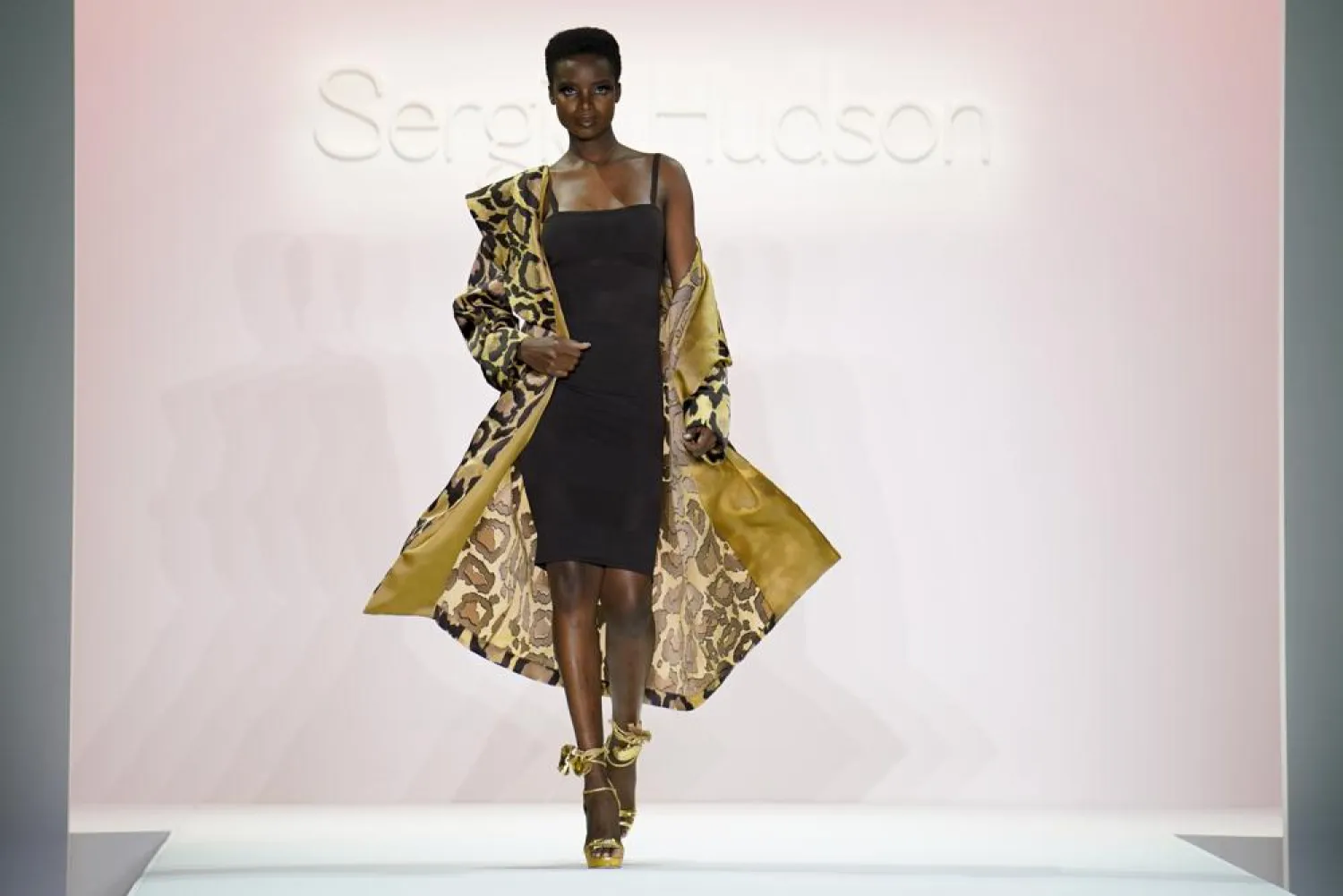
Fashion from Sergio Hudson's fall/winter 2022 collection is modeled during Fashion Week, Sunday, Feb. 13, 2022, in New York. (AP)
TT

Model Legends Walk Sergio Hudson’s NY Fashion Week Runway

Fashion from Sergio Hudson's fall/winter 2022 collection is modeled during Fashion Week, Sunday, Feb. 13, 2022, in New York. (AP)

With model legends Beverly Johnson, Veronica Webb and Gisele Zelauy on his runway, Sergio Hudson took New York Fashion Week on a vibrant, outlandish safari Sunday inspired in part by the blues, yellows and oranges favored by the Ndebele of southern Africa.

But attitude was just as important as color to Hudson's latest collection, some of which went on sale immediately.

“If Whitley Gilbert from 'Different World' or Cher Horowitz and Dionne from 'Clueless' were to go on safari, what would they wear? It's just really fun, really cheeky, and clothes that girls can really, really wear and women can really, really wear,” he told The Associated Press.

There were mini dresses with bouncy ruffle hems, tiny shorts sets and delicious trouser suits in bright greens, purples, sunset orange and sunny yellow. He played with a brown animal print fit for safari, using it for a range of looks, from a lighter-than-air coat worn with a simple brown dress to a sleeveless evening sparkler.

And when Hudson spoke of girls and women, he meant it.

Webb, the first Black model to land a long-term contract with a major cosmetics company (Revlon in 1992), walked in a jewel-tone purple mini skirt and zip jacket with large, safari-worthy front pockets. Zelauy, the ‘80s and '90s icon from Brazil known for her emotive modeling style, showed off one of Hudson's slinky slip gowns in bright green. Johnson, the first African American model to appear on the cover of American Vogue in 1974, donned a sexy, soft pink tea length dress with a wide ruffle hem.

“I just believe in inclusivity," Hudson said. "Like, it’s not all about 25-year-old or 22-year-old or some of these girls. These girls don’t buy my clothes. Women over 30 buy my clothes. So why not look at the runway and see, OK, this woman is wearing what you could be wearing? It just makes sense to me. Women don’t stop being beautiful, sexy, smart. They’re even smarter at that age, so why not?"

And some of Hudson's women care about sun protection. He gave a few huge, wide-brim hats to top off mini sets in sunset colors.

Hudson has been an outspoken critic of the lack of racial diversity in the industry he loves.

“I think it's changing. I'm very proud of the fashion industry because doors have been opening and people are becoming more open to the conversation,” he said. “There wasn't a place for us and I feel like they opened the door. We are designers just like everybody else.”

Hudson's career was launched in 2013, when Rihanna chose his black ball gown on Bravo's “Styled to Rock” fashion competition show. He launched his namesake ready-to-wear brand the following year. Since then, he's dressed everyone from former first lady Michelle Obama (those tailored burgundy pants and belt at the 2021 inauguration) to Beyonce and Jennifer Lopez.

“There are a few people I’m dying to dress but there's one event I really want and that’s the Academy Awards,” the 36-year-old South Carolina native said with the gentle drawl. “I’m not shy about wanting to be that designer that everybody wants to wear. I’m trying to create a legacy for people to be able to look to and say, ‘OK, this Black man did this. Now I can do it.’ I didn't have anyone that looked like me who I could look to.”

Western Brands Under Pressure as 'Pre-owned' Luxury Booms in China

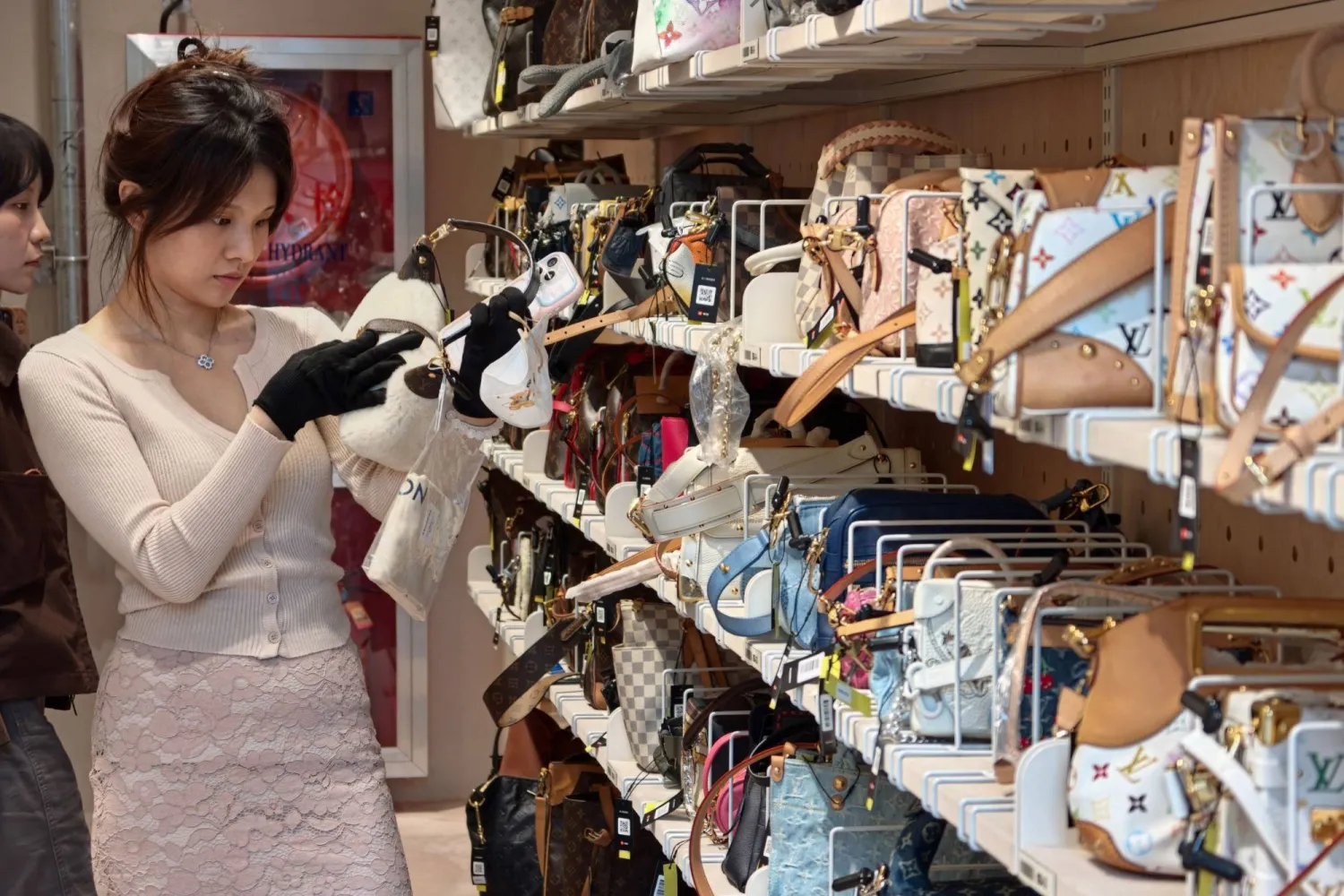
This picture taken on October 14, 2026 shows a customer browsing purses among secondhand luxury goods at the Zhuanzhuan superstore in the Jing'an District in Shanghai. (Photo by Pedro PARDO / AFP)
TT

Western Brands Under Pressure as 'Pre-owned' Luxury Booms in China

This picture taken on October 14, 2026 shows a customer browsing purses among secondhand luxury goods at the Zhuanzhuan superstore in the Jing'an District in Shanghai. (Photo by Pedro PARDO / AFP)

With China's economy still struggling to recover from the pandemic, even global fashion icons are beginning to feel the pinch as consumers turn instead to the second-hand market or buy upstart new homegrown brands.

Chinese were once massive buyers of luxury Western brands, accounting for around a third of worldwide spending and earning firms such as LVMH and Hermes billions of dollars.

But consumers' belt-tightening has forced them to rethink their strategies, with Louis Vuitton closing five stores in mainland China in the past two years -- including a chocolate boutique in Shanghai -- while Galeries Lafayette shut its Beijing flagship in May.

"People used to compare who had spent more," dance teacher Yuan told AFP at a new retail space in central Shanghai filled with luxury handbags, belts and jewelry items -- all second hand.

"But now everyone compares who got a better deal and spent less," the 24-year-old said at the two-story warehouse-style store in the center of the Chinese financial hub.

After plunging as much as 19 percent in 2024, mainland China's personal luxury market contracted another three to five percent in 2025, according to consultancy Bain & Company.

LVMH recently blamed a "slowdown in demand in China" for a drop in organic sales in the third quarter in its fashion and leather goods unit, a slump expected to be mirrored in its peers' results.

China's second-hand luxury market meanwhile exploded 15-20 percent in 2025, according to Bain & Company.

And domestic industry consultancy Insight & Info Consulting estimates total sales reached 38.4 billion yuan ($5.7 billion) in 2025, while forecasting it could top 100 billion yuan by 2030.

At the new Shanghai store Super Zhuanzhuan, shoppers have to wear black gloves to avoid their greasy fingers touching the products.

Customer Phoebe Ma, 24, said that when her mother's generation was young, China "wasn't so developed" and people were initially familiar with only a handful of luxury brands.

"Consequently, they formed a deep-seated impression that, OK, Louis Vuitton was the absolute best and most prestigious," the freelancer told AFP.

"I just feel that the [LV] monogram is dated. It suits my mother's generation, but Gen Z would rather buy trendy Korean brands," she said.

Chen Luo, head of China consumer research at Bank of America, said shoppers were moving away from associating luxury solely with social status and towards "self-identity, distinction, experience, quality, emotional value (and) cultural relevance".

"Apart from that, China's retail landscape is very digital/social media driven, and China's digital ecosystem is also very unique," Luo told AFP. "Foreign brands should work very hard to stay relevant in this context."

Adding to the headwinds for Western brands is growing cultural and legal friction.

LVMH recently successfully sued Chinese beverage chain Molly Tea for trademark infringement over a four-petal floral pattern resembling the French firm's monogram.

But the lawsuit sparked an online backlash after Chinese internet users and state media pointed out that the motif shares roots with ancient Chinese traditional patterns.

"It feels a bit absurd," said shopper Echo Wang, 31, who works in marketing.

"Molly Tea may be doing well in China, but it's nowhere near Louis Vuitton's global profile... I think some people feel the lawsuit was inappropriate," she told AFP.

LVMH management called its intellectual property "an absolute key asset", but admitted the furor had "had a negative impact".

Analysts emphasize that China remains vital for the global luxury industry.

"In our view, China will still be an important market, although it may not be a growth engine in two to three years," said Luo.

"Luxury spending is normally rebounding in sync with the economy, as usually the wealthy class will be among the first to benefit from economic recovery."


Ralph Lauren Ties Executive Payouts to AI in Sign of Retail's Shifting Priorities

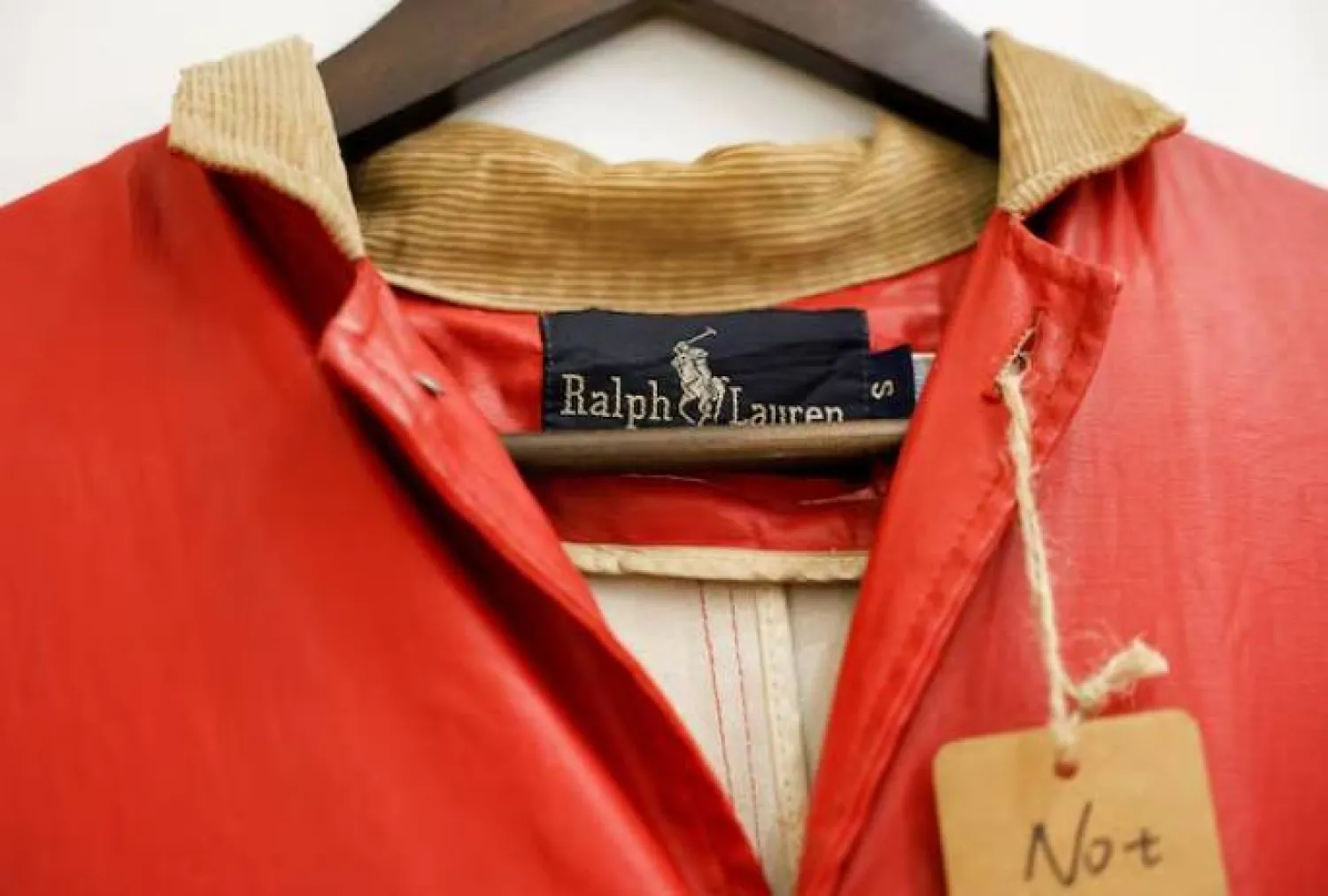
A Polo Ralph Lauren vintage logo on a jacket tag at Neng Vintage, a store specializing in Polo Ralph Lauren vintage clothing in Shanghai, China, June 23, 2026. REUTERS/Go Nakamura
TT

Ralph Lauren Ties Executive Payouts to AI in Sign of Retail's Shifting Priorities

A Polo Ralph Lauren vintage logo on a jacket tag at Neng Vintage, a store specializing in Polo Ralph Lauren vintage clothing in Shanghai, China, June 23, 2026. REUTERS/Go Nakamura

Ralph Lauren, like many companies in the retail space, had until last year tied part of its executives’ compensation to a warm-and-cuddly metric known as “citizenship and sustainability.” 

But in a sign of the times, the fashion label has replaced the sustainability measure with one linking a portion of its top leaders’ annual payout to “AI metrics.” 

The company's previously unreported move eliminates sustainability targets — a hallmark of the so-called ESG movement, which urged companies to find performance measures tied to environmental and social well-being — from its short-term incentive plan. Those targets had been in place for four years. 

Instead, AI goals were added to a series of other factors, such as sales growth and operational costs, as a basis to adjust annual incentive payouts for executives. Buried in a 131-page disclosure, the shift signals an emerging push in the retail sector to hold corporate leaders accountable for AI adoption. 

A Ralph Lauren spokesperson said the AI ‌target reinforced "opportunities for ‌leveraging AI to enhance our work." 

The company's prior sustainability metrics, she added, contributed to meaningful ‌progress ⁠on its goals. "Our ⁠work in this area has matured and is now operationalized throughout our business," she said. 

Ralph Lauren is among the few publicly listed retailers that have explicitly incorporated AI into incentive plans, joining companies beyond the retail sector including Salesforce and Textron, which also replaced its ESG metric. A handful of consumer companies, including PepsiCo, have cited advancing an "AI agenda" this year as a factor in setting annual payouts for specific executives. 

Compensation advisors say more of Ralph Lauren's peers might eventually follow suit as investors seek returns on AI spending and as consumer companies turn to the technology to boost margins. 

"I'd call it an emerging practice," said Cory Morrow, a partner at Korn Ferry who leads the firm's consumer ⁠and retail practice for executive pay. 

"The hard part, when you're putting something like AI in ‌a bonus plan, is quantifying what are you really measuring," he said. "It's still relatively ‌new at this point, so companies are just getting a baseline on anything that's measurable." 

A retailer's annual incentive plan is a "messaging device" to signal ‌what's important to the company, Morrow said, adding that financial metrics like sales growth and profitability will continue to form the ‌bulk of most bonus plans. 

RISE IN AI-RELATED GOALS 

About 12% of companies in the S&P 500 index disclosed AI-related goals in their executive incentive plans this year, up from 5% of companies in 2024, according to data from the Conference Board and ESGUAGE shared with Reuters. 

In its fiscal year 2026, which ran through this March, Ralph Lauren's short-term incentive plan was for the first time "tied to critical business priorities that focus our ‌executives on AI literacy and enablement," the company said in a proxy statement filed with the US Securities and Exchange Commission in June. 

The premium apparel company has reported strong growth in recent ⁠quarters as young shoppers in ⁠Asia and North America flock to its high-end collections. It said in the June filing that it saw "strong performance of our AI metrics" in fiscal 2026, which contributed to maximum payouts for top executives. 

Retailers from apparel brands to grocery chains are increasingly using AI tools for inventory and pricing decisions, while also creating consumer-facing AI shopping assistants. The focus on AI is changing C-suite charts: Ralph Lauren added AI to its chief digital officer's title last year, and big-box chain Target appointed its first-ever chief AI officer in August. 

EARLY STAGES 

Firms in the consumer sector — which have reported sharp declines in diversity and emission-reduction metrics over the past two years — still lag in incorporating AI metrics into bonus plans, compared to sectors such as communications and finance, the Conference Board data shows. 

That makes Ralph Lauren's decision "notable" among its peers in the retail and consumer goods industry, said Matteo Tonello, the head of data benchmarking and analytics at the Conference Board. He cautioned, however, that it does not appear to indicate a sector-wide shift at this stage. 

Only 2% of public companies across sectors have incorporated AI into executive incentive structures, according to a review by compensation advisory firm Pearl Meyer of 2,500 proxy statements filed this year. 

Ralph Lauren is "probably ahead of the curve in terms of what they are doing," said Patrick Haggerty, a managing director at Pearl Meyer. 


Boisterous Fashion Week Barnstorms 'Sleepy' Nigerian Capital

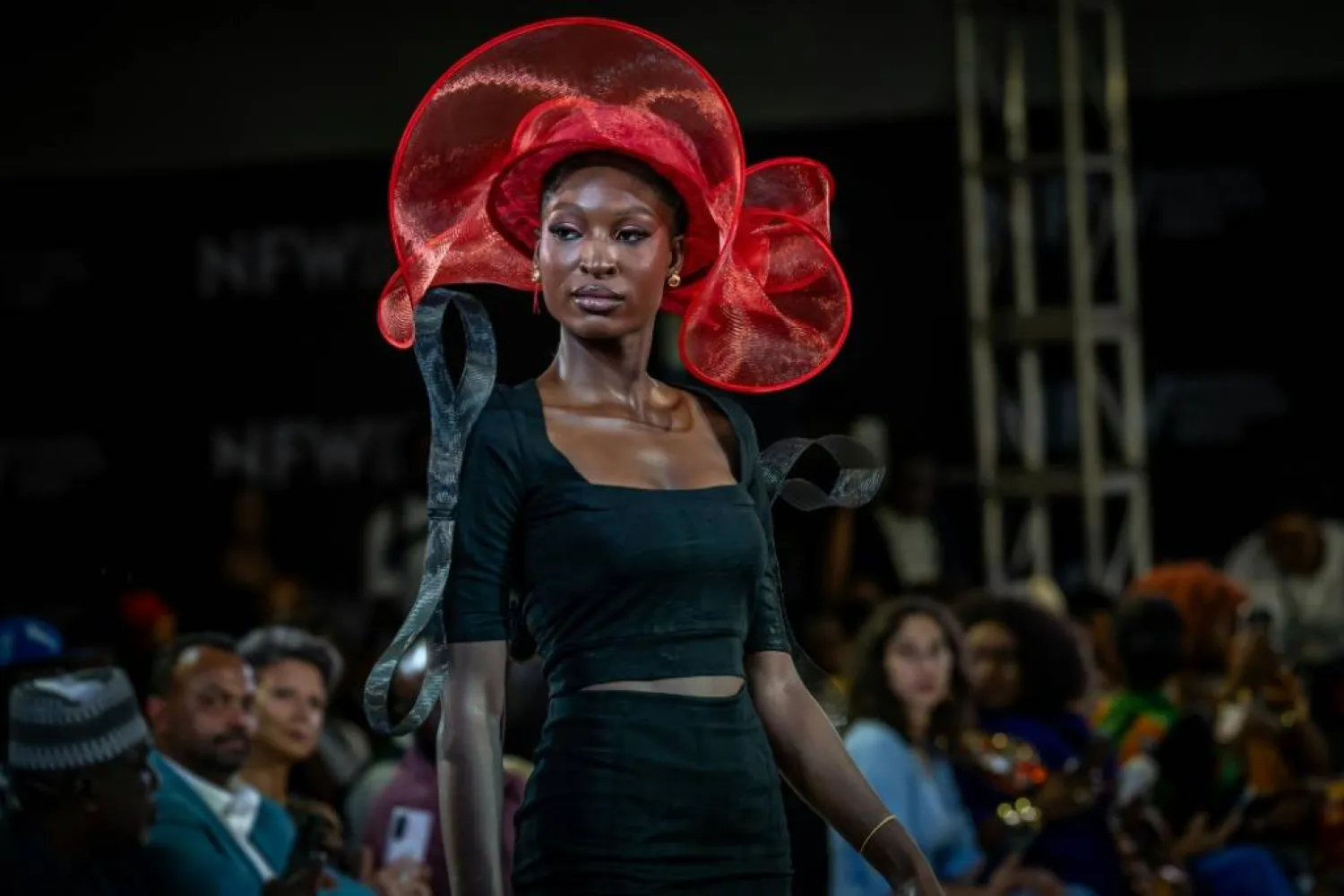
The Nigerian capital Abuja, which hosted Nigeria Fashion Week for the first time in 2026, has a small but developing arts scene — Light Oriye Tamunotonye / AFP
TT

Boisterous Fashion Week Barnstorms 'Sleepy' Nigerian Capital

The Nigerian capital Abuja, which hosted Nigeria Fashion Week for the first time in 2026, has a small but developing arts scene — Light Oriye Tamunotonye / AFP

Nigerian models donned outfits of seemingly impossible amounts of fabric folded and molded into massive silhouettes, or overlapping in shingled, feather-like patterns.

The colorful, detailed textiles evoked Carnival -- both Nigeria's own, in the southeastern city of Calabar, or that of Rio de Janeiro fame -- but were in fact splashing down a runway in Abuja, better known for being the sleepy seat of government than for avant-garde couture.

Nigeria Fashion Week, which wrapped up last Sunday, decamped from Lagos this year, trading the mega-city of more than 20 million for the centrally planned administrative center, which nonetheless has developed its own, smaller creative scene.

"Abuja is slow, slow in every way. People are very laid back," Lexy Mojo-Eyes, the dapper organizer of the fashion week, who cut his teeth in Lagos, told AFP.

"We want to change the dynamics, we want to build Abuja as a fashion city."

- A slowly changing city -

Nigeria officially moved its capital from thronging, crowded Lagos in 1991. But even in 2026, Abuja can still look half-built, its pockmarked downtown home to modern office buildings alongside empty lots and even farms that pre-date its founding.

It doesn't have Lagos's famous, and infamous, raucousness -- but neither does it have a riposte to the Lagos film industry, known as Nollywood, or its major corporate headquarters and roster of Afrobeats stars.

As Abuja has slowly filled in over the years, it has shed some of its sterile feel, hosting a photography festival, an international film festival and a burgeoning literary scene.

Part of the reason the show moved to Abuja was to increase dialogue between industry and government, organisers said.

"Government has to be that enabling environment," including by reforming tourism and intellectual property law, culture minister Hannatu Musa Musawa told AFP, wearing a metallic silver, pink and blue dress as she sat in the front row at a Friday runway show.

Libyan designer Rabia Ben Barka, whose models showed off similarly shimmering dresses, told AFP she found Abuja -- on her first trip to Nigeria -- "so clean" and organised.

"Anyone who comes by, they greet you with 'Good morning,'" said Ben Barka, considered the doyen of Libyan fashion and who once counted Muammar Gaddafi's wife among her clients.

Some of her boxy silhouettes evoked retro women's shoulder pads -- and then, down the runway, strutted a man in a metallic silver-and-black pinstripe suit, complete with heeled leather shoes: souped-up businesswear for a capital city shedding its stuffy image.

- Cost of living -

Abuja is also drawing longtime Lagos players, including Chinwe Ezenwa, a handbag designer who opened a second factory in the capital in 2021.

"It's a bit of a sleepy town," Ezenwa, the CEO of Le Look, told AFP. "But it's picking up."

Lagos, for its part, still retains its own, separate fashion week.

And whether Abuja can support the workers needed to run a creative sector -- designers, fashion students and entrepreneurs -- remains to be seen.

Many residents are already forced beyond the suburbs by brutal housing costs, and the government has come under fire for razing green areas, farms and "gardens" -- cheap, open-air restaurants situated in parks -- in favour of luxury development.

Despite the change in venue, some things are universal in Nigeria, whose creaking grid is as infamous as Lagos traffic: as the models prepared backstage Friday, the power briefly cut out.

As the lights flickered back on, baptism in blackout over, one attendee quipped that the show was now, officially, "very authentic".