3 Syrian Soldiers Killed in Israeli Strike Near Damascus

A view shows the damage in a container storage area, after Syrian state media reported an Israeli airstrike on the Syrian port of Latakia, Syria, in this handout picture released by SANA on December 7 , 2021. SANA/Handout via REUTERS
TT

3 Syrian Soldiers Killed in Israeli Strike Near Damascus

A view shows the damage in a container storage area, after Syrian state media reported an Israeli airstrike on the Syrian port of Latakia, Syria, in this handout picture released by SANA on December 7 , 2021. SANA/Handout via REUTERS

Three Syrian soldiers were killed Thursday in an Israeli airstrike near the capital Damascus, according to Syria's state media.

It was the fourth reported time this month Israel has launched strikes inside Syria, keeping up a campaign against pro-Iranian forces supporting the Damascus government in the more than decade-old civil war.

"The Israeli enemy carried out an air assault with several missiles," state news agency SANA reported, adding three soldiers were killed.

According to AFP, it said Syrian air defenses intercepted most of the missiles in the attack, which occurred at around 1:10 am (2310 GMT Wednesday).

The Syrian Observatory for Human Rights (SOHR), which has an extensive network of sources across the country, reported that explosions were heard in Damascus and its suburbs "after the interception of Israeli missiles by the Syrian regime's anti-aircraft defense".

It follows strikes in recent days on a town near the Golan Heights, a Syrian military post on February 17, and an assault against anti-aircraft batteries at the start of the month.


Israel Demolishes Gunmen’s Homes in West Bank Operation That Has Displaced Thousands

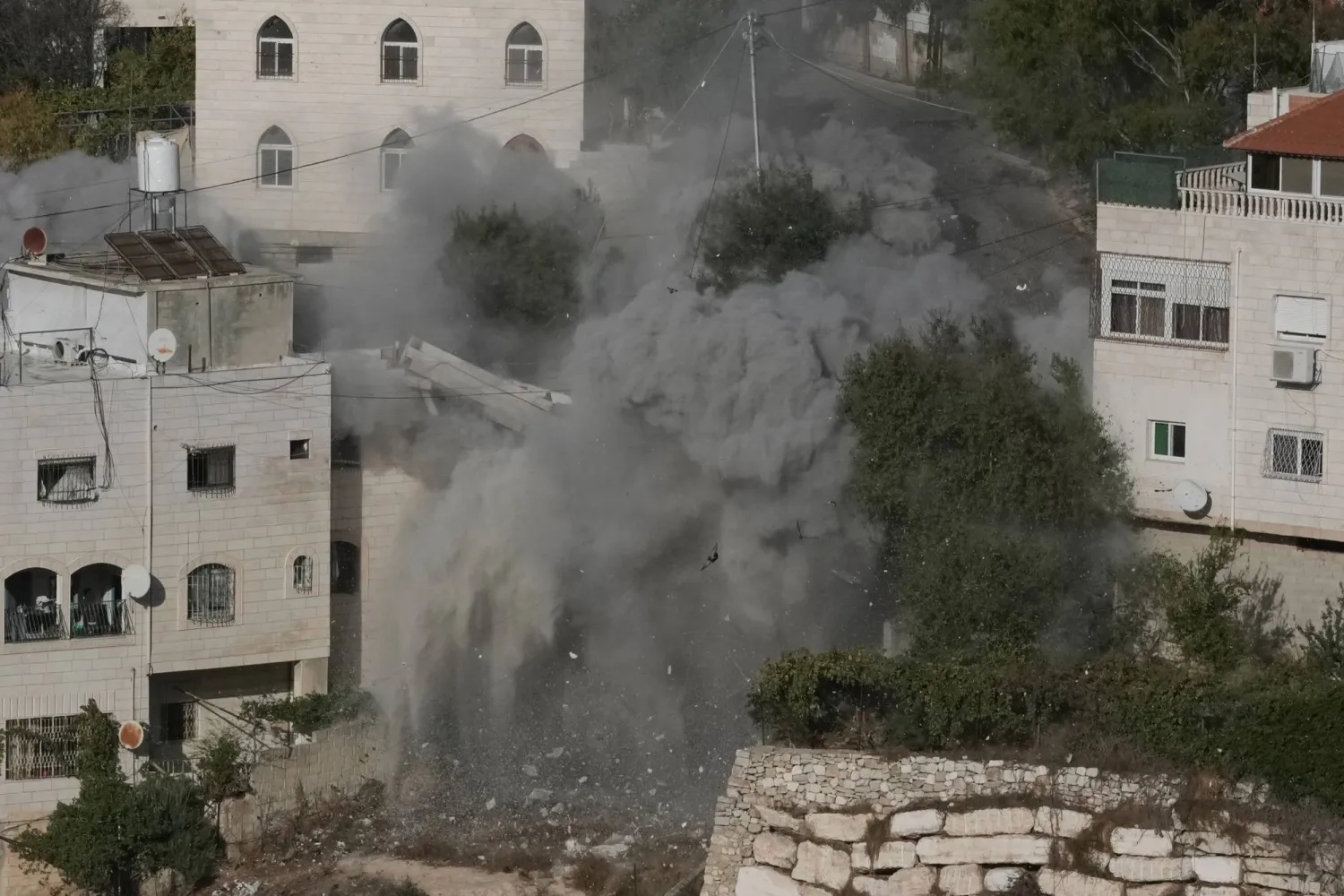
 Smoke, dust and debris rise as the Israeli army demolishes two houses with explosives in connection with an Oct. 23 shooting attack that killed two Israeli soldiers, in the occupied West Bank city of Hebron, Friday, Oct. 30, 2026. (AP)
Smoke, dust and debris rise as the Israeli army demolishes two houses with explosives in connection with an Oct. 23 shooting attack that killed two Israeli soldiers, in the occupied West Bank city of Hebron, Friday, Oct. 30, 2026. (AP)
TT

Israel Demolishes Gunmen’s Homes in West Bank Operation That Has Displaced Thousands

 Smoke, dust and debris rise as the Israeli army demolishes two houses with explosives in connection with an Oct. 23 shooting attack that killed two Israeli soldiers, in the occupied West Bank city of Hebron, Friday, Oct. 30, 2026. (AP)
Smoke, dust and debris rise as the Israeli army demolishes two houses with explosives in connection with an Oct. 23 shooting attack that killed two Israeli soldiers, in the occupied West Bank city of Hebron, Friday, Oct. 30, 2026. (AP)

Israel demolished on Friday the homes ‌of the assailants who killed two Israeli soldiers at a checkpoint in the occupied West Bank city of Hebron last week, part of an ongoing operation that has forcibly displaced over 3,000 Palestinians.

After the October 23 attack, in which both gunmen were killed, Israeli Prime Minister Benjamin Netanyahu ordered the Israeli military to launch a large-scale operation in areas near the checkpoint, triggering protests by Palestinian residents.

Palestinian officials have accused Netanyahu of using the operation to drum up support ahead of a general election in Israel on Tuesday. Israel's government says its operation is a response to the attack ‌on its soldiers.

In ‌a statement announcing the demolitions, Israel's military said it ‌would "continue ⁠to operate proactively ⁠and offensively" to thwart attacks in the West Bank and "protect residents in the area".

The homes demolished on Friday had been occupied by the wives and children of the gunmen before the military forced Palestinians to leave the area over the past week, according to local residents.

The military has also demolished other homes as well as shops, roads, and factories in Hebron since ⁠the attack, according to local officials, though the exact ‌scale of the demolitions is unclear.

It has ‌closed most entrances to the city, severely curtailing freedom of movement for Palestinians, including people ‌in need of medical attention.

UN human rights chief Volker Türk ‌said this week that the displacement of residents raised "grave concerns of unnecessary and disproportionate use of force" and that "threats to empty and erase entire neighborhoods also raise serious concerns of ethnic cleansing."

Netanyahu's government has presided over a rapid expansion of settlements, deemed ‌illegal by UN bodies and most countries, though Israel disputes this.

Under Netanyahu's right-wing coalition there has also ⁠been a surge of ⁠militant settler violence against Palestinians.

In Kafr Malik near Ramallah on Friday, Reuters witnesses documented militant Israeli settlers shoving Palestinians and preventing farmers from harvesting their olives, while the Israeli military was present.

The Israeli military said it had responded to reports from Israeli settlers that Palestinians were throwing stones at them, and had arrested two Palestinians.

It did not address the reports of Israeli settlers attacking Palestinians. A Reuters witness present during the incident did not observe the Palestinians throwing stones.

Attacks have surged during the Palestinian olive harvest, which starts at the end of September and ends in November. The Israeli rights group Yesh Din reported at least 135 physical attacks on the olive harvest as of October 23.


First Algerian Troops Arrive in Niger Where Extremists Threaten Stability

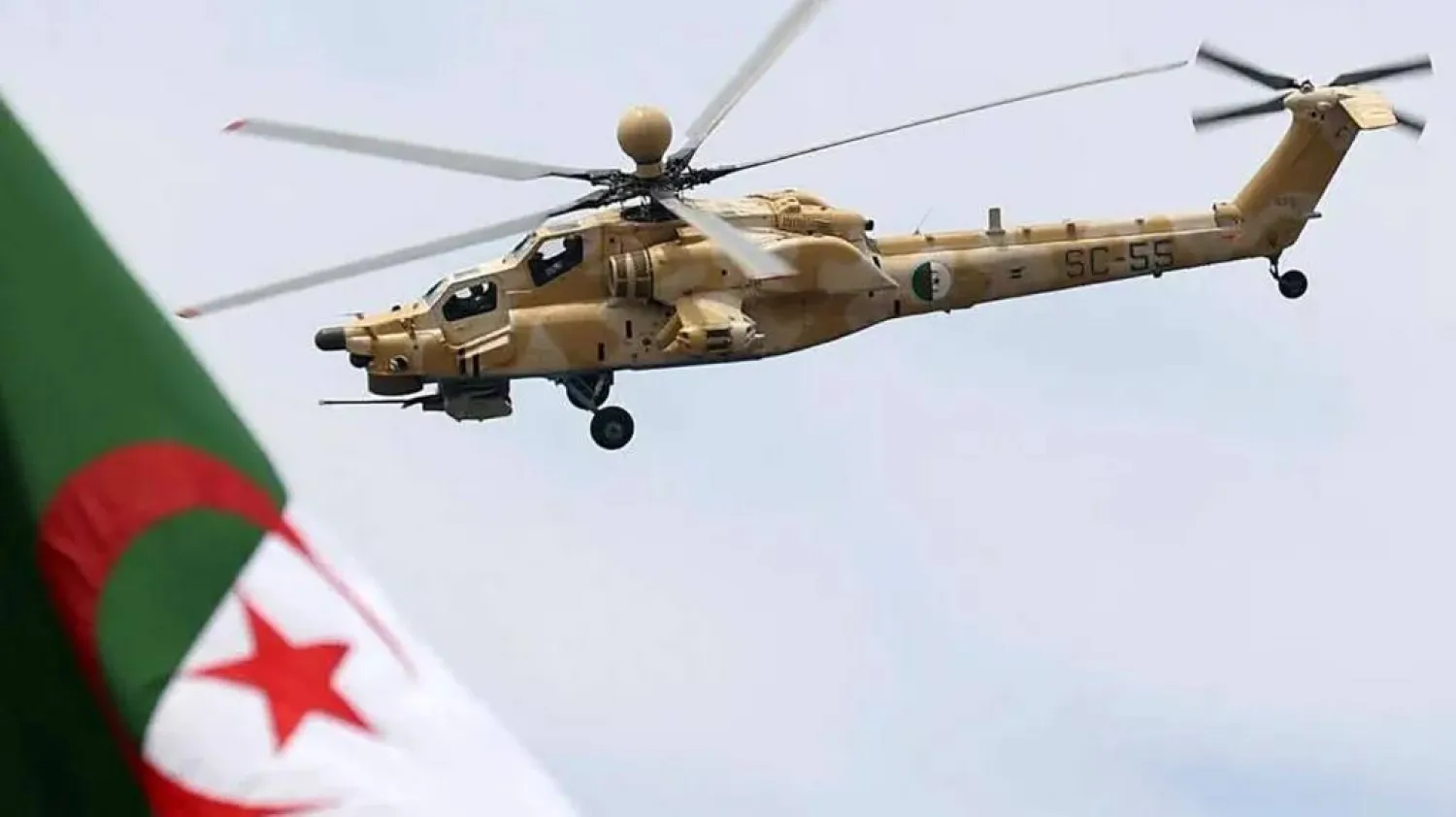
Algeria, which shares a border with Niger, has traditionally regarded stability in ‌the Sahel-Sahara ‌as an important regional security ‌priority. (Getty Images)
TT

First Algerian Troops Arrive in Niger Where Extremists Threaten Stability

Algeria, which shares a border with Niger, has traditionally regarded stability in ‌the Sahel-Sahara ‌as an important regional security ‌priority. (Getty Images)

An Algerian army ‌convoy has arrived in Niger in Algeria's first foreign troop deployment since it sent forces to support Egypt during the 1973 Arab-Israeli war.

Niger, like other countries in West Africa's Sahel region, is battling insurgents linked to al-Qaeda and ISIS.

Algeria, which shares a border with Niger, has traditionally regarded stability in ‌the Sahel-Sahara ‌as an important regional security ‌priority.

⁠Energy is an ⁠important focus for Algeria in Niger, where Algerian state-run oil and gas firm Sonatrach has investments.

One major project, the Trans-Saharan Gas Pipeline with Niger and Nigeria, aims to deliver African gas to Europe ⁠and other international markets.

Reuters spoke ‌to 10 people ‌who said the first Algerian military convoy had ‌reached Arlit, a uranium mining town ‌in the country's northwest.

Algeria has said the decision to deploy troops was taken to protect the country's energy and economic interests, without disclosing ‌the size of the force or the timetable for their arrival.

Military ⁠officers ⁠have ruled Niger, which has uranium, oil and gold resources, since the July 2023 coup that ousted President Mohamed Bazoum, which Algeria initially opposed.


Houthis Suspected of Recruiting Children, Young Men Amid Surge in Disappearances in Sanaa

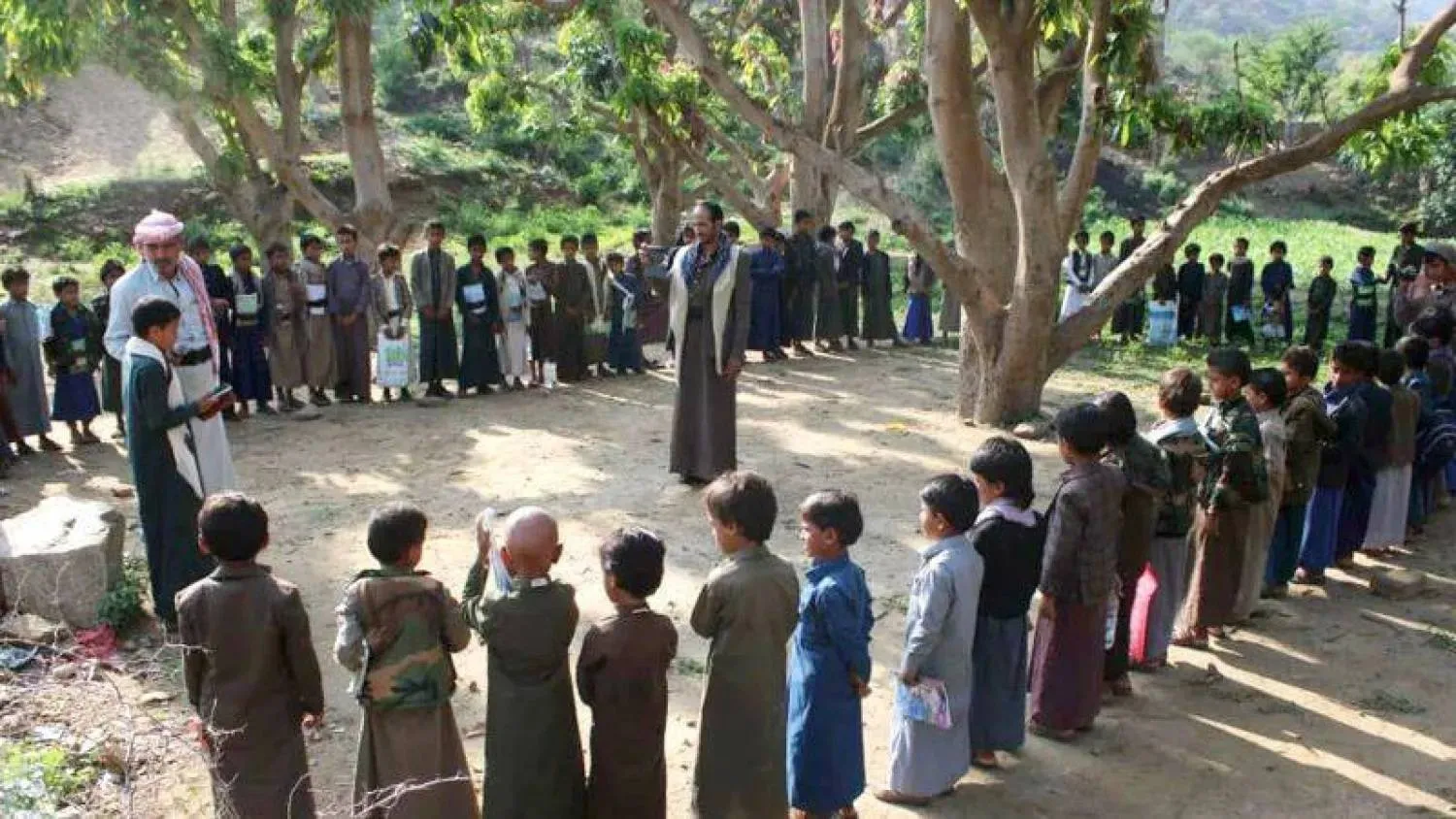
Human rights reports accuse the Houthis of recruiting more children. (Local media)
TT

Houthis Suspected of Recruiting Children, Young Men Amid Surge in Disappearances in Sanaa

Human rights reports accuse the Houthis of recruiting more children. (Local media)

Disappearances of children and young men have surged in Yemen's Houthi-held capital Sanaa and its outskirts in recent weeks, fueling accusations that the Houthis are luring them into military camps, training them for combat and sending them to battlefronts without their families' knowledge or consent.

The cases have also raised fears among families of possible extortion, as authorities face accusations of failing to investigate the disappearances or disclose the fate of those missing.

Local human rights sources told Asharq Al-Awsat that the unexplained disappearances have left residents increasingly alarmed, with children and young men vanishing from schools, streets and residential neighborhoods, sometimes without a trace.

Families have been left to search for their missing relatives on their own, turning to social media to appeal for information as Houthi-controlled security authorities ignore their reports, the sources said.

About 13 children and young men have disappeared from different parts of Sanaa since the start of October, the sources said. Most were aged between 15 and 23, and some were later found at Houthi military camps or on battlefronts after being lured into combat training without their families' knowledge or approval.

Hundreds of disappearances involving children and young men have been reported in Sanaa and other Houthi-controlled cities since the beginning of the year, the sources said. Some families remain in the dark about their missing relatives' whereabouts.

The sources accused Houthi security authorities of ignoring families' reports and appeals, compounding their distress and leaving those missing vulnerable to exploitation and recruitment.

The latest cases, reported over the past two days, involve Amjad Noman al-Sarouhi, 16, who vanished from the al-Ansi neighborhood in central Sanaa's Maeen district, and Mukhtar Abdullah Hassan al-Rifai, 22, who went missing near the Haziz market on the capital's outskirts.

Lured into military camps

Families' accounts have deepened fears that disappearances are being used to funnel children and young men into Houthi military camps, amid accusations that Houthi supervisors and recruitment brokers are exploiting their social and economic hardships to draw them into combat.

In one case, a family spent five days searching neighborhoods and hospitals for a minor who disappeared from Sanaa two months ago, only to learn from a Houthi supervisor that he was at a military camp north of the city.

A relative told Asharq Al-Awsat that the supervisor confirmed Houthi members had lured the boy into the camp and put him through combat training without his family's knowledge.

The relative described five days of fear and anguish as the family searched for the boy, worried he might have been harmed, before discovering he had been taken to a Houthi camp and subjected to military training without their consent.

For Mujeeb, a Sanaa resident and father of four, the disappearances have turned even routine outings into a source of fear.

"We live in constant fear for our children. We no longer feel at ease even when one of them steps out to run a simple errand," he said.

"We fear a Houthi member or supervisor could lure them away or exploit their needs and difficult living conditions, leaving us facing a situation we are powerless to change."

Mujeeb said families wanted their children kept safe and allowed to pursue their education and lead normal lives, free from recruitment and being sent to battlefronts.