


Ukraine Official Twitter-shaming Firms to Action over Invasion

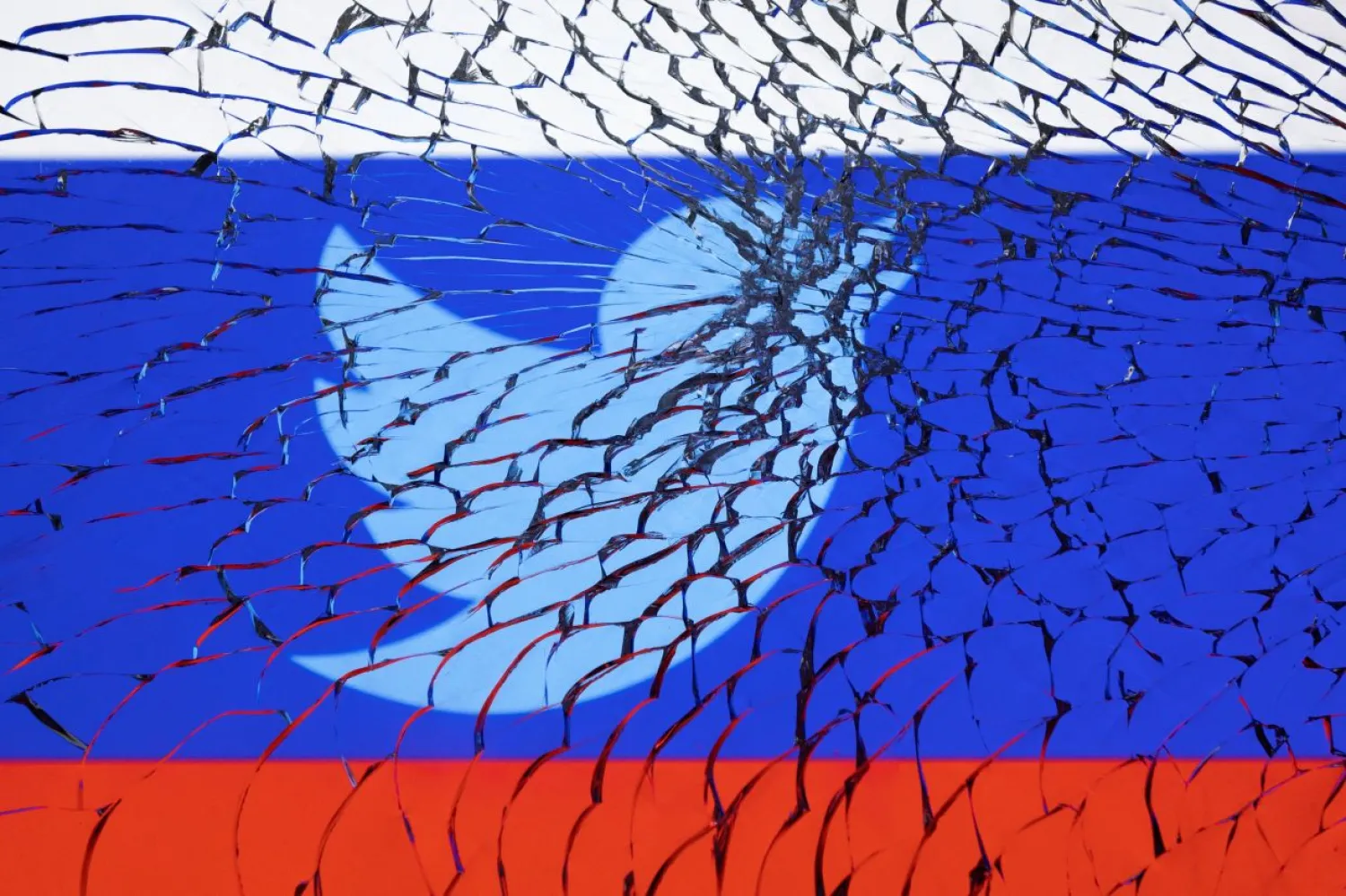
Ukraine's vice prime minister is pressuring big tech, by calling them out on Twitter, pushing them to penalize Russia over its invasion. — REUTERS/Illustration
TT

Ukraine Official Twitter-shaming Firms to Action over Invasion

Ukraine's vice prime minister is pressuring big tech, by calling them out on Twitter, pushing them to penalize Russia over its invasion. — REUTERS/Illustration

Ukraine's vice prime minister has been calling out big tech companies by name on Twitter to push them to penalize Russia over its invasion -- and it's having an impact.

Marshalling his government's social media savvy and a deep international well of sympathy, Mykhailo Fedorov's feed has become a list of firms willing to oppose Moscow or come to Ukraine's aid, AFP said.

"We need your support -- in 2022 modern technology is perhaps the best answer to tanks, multiple rocket launchers and missiles," he wrote in a letter he tweeted out Friday to Apple chief Tim Cook.

By Tuesday the iPhone maker had announced sales were halted in Russia, and Apple Pay services were limited.

The 31-year-old minister had also paid Cook a visit in the United States last year with the two discussing topics from training opportunities to Apple stores in Ukraine.

Fedorov's callouts only gathered pace after his tweet seeking Cook's support, with subsequent ones noting Ukraine's government had asked Google, Netflix, YouTube and Facebook to cut off Russia.

While those companies have not severed ties completely, all have announced actions ranging from restrictions on the spread of Russian state-owned media to resisting Kremlin requirements.

"You hold them accountable this way," Larissa Doroshenko, a postdoctoral researcher at Boston's Northeastern University said of the impact of calling out companies on Twitter.

"It's a very savvy, very strategic way of social media because you can do it behind closed doors or... you can make it public," she added.

Fedorov, who is responsible for Ukraine's digital matters, is part of a government that has built social media into its communication strategy from the start.

Doroshenko said Ukrainian President Volodymyr Zelensky's campaign engaged with people on social media during the 2019 election, and his government has kept doing so once in power.

- 'Gratitude from people of Ukraine ' -
Since Russia's invasion last week, the 44-year-old president has used his eye for modern image management and the skills honed as an actor to deliver stirring messages on social media.

"It has been adapted to these war times," Doroshenko added.

Moscow's invasion of Ukraine is one of the most dangerous global moments in decades, with spiking tensions as the West imposes unprecedented economic sanctions on Russia.

At the same time, support has poured in for embattled Ukraine and has ranged from kind words to flows of money, supplies and weapons.

"There are literally millions of people on the internet wanting to try and do something," said Omar Wasow, an assistant professor of politics at Pomona College in California.

"So if he (Fedorov) does this callout of a particular company, and then thousands of people like and retweet what he's doing that's going to get the attention of those companies' social media managers and ultimately CEOs," he added.

Fedorov's tweet with the appeal letter to Cook has gotten over 10,600 likes and retweets combined to date.

The tweet to Tesla boss Elon Musk asking for Starlink satellite internet service got over 200,000 likes and retweets.

"While you try to colonize Mars — Russia try to occupy Ukraine!" the message began, with another more than 588,000 likes and retweets on Fedorov's tweet showing the Starlink terminals had arrived.

"In Ukraine, being the image of a younger democracy, we see social media used very similarly by regular people and by people in power," Doroshenko added.

Fedorov has kept up his stream of callouts, urging video game developers like Riot Games to close any Russia operations. The company did not immediately reply to a request for comment.

He also tweeted letters sent to German software firm SAP and US tech giant Oracle urging them to cut any ties with Russia, noting "more sanctions imposed -- faster peace restored in Ukraine!"

"Oracle Corporation has already suspended all operations in the Russian Federation", the company replied, drawing this message from Fedorov: "With gratitude from all the free people of Ukraine!"

Siemens Energy Trebles Profit as AI Boosts Power Demand

FILED - 05 August 2025, Berlin: The "Siemens Energy" logo can be seen in the entrance area of the company. Photo: Britta Pedersen/dpa
TT

Siemens Energy Trebles Profit as AI Boosts Power Demand

FILED - 05 August 2025, Berlin: The "Siemens Energy" logo can be seen in the entrance area of the company. Photo: Britta Pedersen/dpa

German turbine maker Siemens Energy said Wednesday that its quarterly profits had almost tripled as the firm gains from surging demand for electricity driven by the artificial intelligence boom.

The company's gas turbines are used to generate electricity for data centers that provide computing power for AI, and have been in hot demand as US tech giants like OpenAI and Meta rapidly build more of the sites.

Net profit in the group's fiscal first quarter, to end-December, climbed to 746 million euros ($889 million) from 252 million euros a year earlier.

Orders -- an indicator of future sales -- increased by a third to 17.6 billion euros.

The company's shares rose over five percent in Frankfurt trading, putting the stock up about a quarter since the start of the year and making it the best performer to date in Germany's blue-chip DAX index.

"Siemens Energy ticked all of the major boxes that investors were looking for with these results," Morgan Stanley analysts wrote in a note, adding that the company's gas turbine orders were "exceptionally strong".

US data center electricity consumption is projected to more than triple by 2035, according to the International Energy Agency, and already accounts for six to eight percent of US electricity use.

Asked about rising orders on an earnings call, Siemens Energy CEO Christian Bruch said he thought the first-quarter figures were not "particularly strong" and that further growth could be expected.

"Demand for gas turbines is extremely high," he said. "We're talking about 2029 and 2030 for delivery dates."

Siemens Energy, spun out of the broader Siemens group in 2020, said last week that it would spend $1 billion expanding its US operations, including a new equipment plant in Mississippi as part of wider plans that would create 1,500 jobs.

Its shares have increased over tenfold since 2023, when the German government had to provide the firm with credit guarantees after quality problems at its wind-turbine unit.


Instagram Boss to Testify at Social Media Addiction Trial 

The Instagram app icon is seen on a smartphone in this illustration taken October 27, 2025. (Reuters)
TT

Instagram Boss to Testify at Social Media Addiction Trial 

The Instagram app icon is seen on a smartphone in this illustration taken October 27, 2025. (Reuters)

Instagram chief Adam Mosseri is to be called to testify Wednesday in a Los Angeles courtroom by lawyers out to prove social media is dangerously addictive by design to young, vulnerable minds.

YouTube and Meta -- the parent company of Instagram and Facebook -- are defendants in a blockbuster trial that could set a legal precedent regarding whether social media giants deliberately designed their platforms to be addictive to children.

Rival lawyers made opening remarks to jurors this week, with an attorney for YouTube insisting that the Google-owned video platform was neither intentionally addictive nor technically social media.

"It's not social media addiction when it's not social media and it's not addiction," YouTube lawyer Luis Li told the 12 jurors during his opening remarks.

The civil trial in California state court centers on allegations that a 20-year-old woman, identified as Kaley G.M., suffered severe mental harm after becoming addicted to social media as a child.

She started using YouTube at six and joined Instagram at 11, before moving on to Snapchat and TikTok two or three years later.

The plaintiff "is not addicted to YouTube. You can listen to her own words -- she said so, her doctor said so, her father said so," Li said, citing evidence he said would be detailed at trial.

Li's opening arguments followed remarks on Monday from lawyers for the plaintiffs and co-defendant Meta.

On Monday, the plaintiffs' attorney Mark Lanier told the jury YouTube and Meta both engineer addiction in young people's brains to gain users and profits.

"This case is about two of the richest corporations in history who have engineered addiction in children's brains," Lanier said.

"They don't only build apps; they build traps."

But Li told the six men and six women on the jury that he did not recognize the description of YouTube put forth by the other side and tried to draw a clear line between YouTube's widely popular video app and social media platforms like Instagram or TikTok.

YouTube is selling "the ability to watch something essentially for free on your computer, on your phone, on your iPad," Li insisted, comparing the service to Netflix or traditional TV.

Li said it was the quality of content that kept users coming back, citing internal company emails that he said showed executives rejecting a pursuit of internet virality in favor of educational and more socially useful content.

- 'Gateway drug' -

Stanford University School of Medicine professor Anna Lembke, the first witness called by the plaintiffs, testified that she views social media, broadly speaking, as a drug.

The part of the brain that acts as a brake when it comes to having another hit is not typically developed before a person is 25 years old, Lembke, the author of the book "Dopamine Nation," told jurors.

"Which is why teenagers will often take risks that they shouldn't and not appreciate future consequences," Lembke testified.

"And typically, the gateway drug is the most easily accessible drug," she said, describing Kaley's first use of YouTube at the age of six.

The case is being treated as a bellwether proceeding whose outcome could set the tone for a wave of similar litigation across the United States.

Social media firms face hundreds of lawsuits accusing them of leading young users to become addicted to content and suffer from depression, eating disorders, psychiatric hospitalization, and even suicide.

Lawyers for the plaintiffs are borrowing strategies used in the 1990s and 2000s against the tobacco industry, which faced a similar onslaught of lawsuits arguing that companies knowingly sold a harmful product.


OpenAI Starts Testing Ads in ChatGPT

The OpenAI logo is seen in this illustration taken May 20, 2024. (Reuters)
TT

OpenAI Starts Testing Ads in ChatGPT

The OpenAI logo is seen in this illustration taken May 20, 2024. (Reuters)

OpenAI has begun placing ads in the basic versions of its ChatGPT chatbot, a bet that users will not mind the interruptions as the company seeks revenue as its costs soar.

"The test will be for logged-in adult users on the Free and Go subscription tiers" in the United States, OpenAI said Monday. The Go subscription costs $8 in the United States.

Only a small percentage of its nearly one billion users pay for its premium subscription services, which will remain ad-free.

"Ads do not influence the answers ChatGPT gives you, and we keep your conversations with ChatGPT private from advertisers," the company said.

Since ChatGPT's launch in 2022, OpenAI's valuation has soared to $500 billion in funding rounds -- higher than any other private company. Some analysts expect it could go public with a trillion-dollar valuation.

But the ChatGPT maker burns through cash at a furious rate, mostly on the powerful computing required to deliver its services.

Its chief executive Sam Altman had long expressed his dislike for advertising, citing concerns that it could create distrust about ChatGPT's content.

His about-face garnered a jab from its rival Anthropic over the weekend, which made its advertising debut at the Super Bowl championship with commercials saying its Claude chatbot would stay ad-free.