Stocks Plunge, Oil Rockets, Gold Tops $2,000 on Ukraine Fears

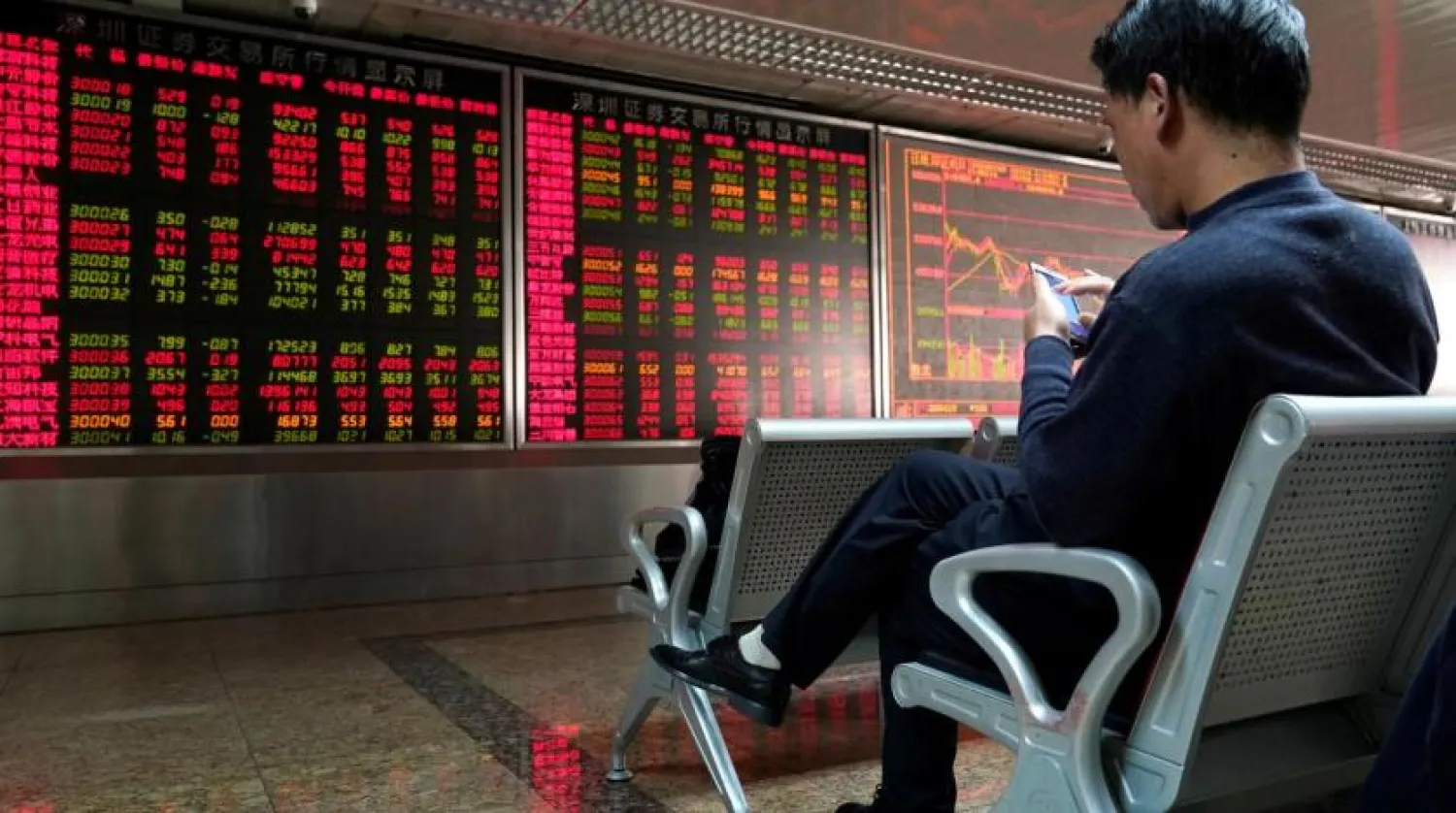
FILE PHOTO: An investor uses his mobile phone in front of a stock quotation board at a brokerage office in Beijing, China January 3, 2020. REUTERS/Jason Lee
TT

Stocks Plunge, Oil Rockets, Gold Tops $2,000 on Ukraine Fears

FILE PHOTO: An investor uses his mobile phone in front of a stock quotation board at a brokerage office in Beijing, China January 3, 2020. REUTERS/Jason Lee

Equity markets plunged Monday, while oil prices soared to a near 14-year high and safe-haven gold broke $2,000 as investors grew increasingly fearful about the impact of the Ukraine war on the global economy.

Trading floors were a sea of red in early exchanges with experts warning of a period of stagflation with the spike in crude likely to light a fire under already high inflation.

The commodity at one point rocketed almost 18 percent to $139.13 -- a level not seen since mid-2008 -- after US Secretary of State Antony Blinken said the White House and allies were in talks about banning imports from Russia.

With the country the third-biggest producer of oil, such a move would compound a supply crisis just as demand takes off. Other commodities sourced from the region such as wheat and metals were also sharply higher.

And Mike Muller of Vitol warned of further pain.

"We have plenty of twists and turns to come," he told a podcast produced by Dubai-based consultant and publisher Gulf Intelligence.

"While I think the world is already pricing in the fact there'll be an inability to take in a serious amount of Russian oil in the western hemisphere, I don’t think we've priced in everything yet."

World governments had until now not included Russian oil in their wide-ranging sanctions on Moscow owing to concerns about the impact on prices and consumers, though trade has become increasingly tough as banks pull financing and shipping costs rise.

The surge in crude is giving central banks a headache as they start to tighten pandemic-era monetary policy to fight inflation, which is already at a 40-year high in the United States.

The International Monetary Fund warned at the weekend that the war and sanctions on Russia will have a "severe impact" on the global economy.

National Australia Bank's Tapas Strickland said: "Global growth fears abound given the surge in commodity prices, with 'stagflation' again rearing its head in what must be akin to a horror movie for a central bank.

"A key question for markets is how do central banks respond to higher inflation and the possibility of slower growth ahead."

Concerns about the impact on the global economy have rattled through markets, with European equities particularly badly hit owing to the continent's reliance on Russian energy. The euro remained wedged below $1.10 for the first time since mid-2020.

On Monday, Asian bourses were deep in the red, with Hong Kong at one point losing more than four percent, while Tokyo and Taipei were off more than three percent.

Seoul and Manila were both down more than two percent, with Shanghai, Sydney and Wellington off more than one percent. There were also steep losses in Singapore and Jakarta. US futures were sharply lower.

The panic on trading floors sent safe havens sharply higher, with gold -- a key go-to in times of crisis and turmoil -- hitting as much as $2,000.86, its highest since mid-2020.

The dollar was also well up against most other currencies, while Treasuries continued to rally.

- Key figures around 0230 GMT -
Brent North Sea crude: UP 8.4 percent at $128.02 per barrel

West Texas Intermediate: UP 7.4 percent at $124.24 per barrel

Tokyo - Nikkei 225: DOWN 3.2 percent at 25,166.23 (break)

Hong Kong - Hang Seng Index: DOWN 3.5 percent at 21,137.01

Shanghai - Composite: DOWN 1.1 percent at 3,409.48

Dollar/yen: UP at 114.90 yen from 114.78 yen late Friday

Euro/dollar: DOWN at $1.0850 from $1.0916

Pound/dollar: DOWN at $1.3200 from $1.3248

Euro/pound: DOWN 82.18 pence from 82.60 pence

New York - Dow: DOWN 0.5 percent at 33,614.80 (close)

London - FTSE 100: DOWN 3.5 percent at 6,987.14 (close)


Iraq Oil Output Exceeds 5 million bpd

Majnoon oil field near the Iraqi city of Basra (Reuters)
TT

Iraq Oil Output Exceeds 5 million bpd

Majnoon oil field near the Iraqi city of Basra (Reuters)

Iraq produces more than 5 million barrels of oil per day (bpd), Oil Minister Basim Mohammed told state news agency INA on Saturday.

According to Reuters, Iraq is pushing for a higher OPEC production quota as the economic fallout from the Iran war and new investment by oil majors increase pressure on Baghdad to boost output, potentially putting it at odds with the producer group.

The conflict has hit Iraq particularly hard, forcing major export cuts and depriving the state of oil revenue, which accounted for 88% of government income last year.


IMF: Any Slowdown in AI-driven Growth Would be Factor for Central Banks

IMF Managing Director Kristalina Georgieva speaks during the Annual Meetings Plenary at the Annual Meetings of the International Monetary Fund (IMF) and the World Bank Group (WBG) at the Queen Sirikit National Convention Center (QSNCC) in Bangkok on October 16, 2026. (Photo by Lillian SUWANRUMPHA / AFP)
TT

IMF: Any Slowdown in AI-driven Growth Would be Factor for Central Banks

IMF Managing Director Kristalina Georgieva speaks during the Annual Meetings Plenary at the Annual Meetings of the International Monetary Fund (IMF) and the World Bank Group (WBG) at the Queen Sirikit National Convention Center (QSNCC) in Bangkok on October 16, 2026. (Photo by Lillian SUWANRUMPHA / AFP)

Central bankers around the world would need to consider any slowdown in AI-driven growth as they assess steps in their fight against inflation, International Monetary Fund Managing Director Kristalina Georgieva said on Friday.

Georgieva said concerns about dependence on the AI investment boom and high valuations were impacting markets around the world.

"Things are going up and down, and this is likely to continue," she told an audience at IMF headquarters in Washington, adding that the volatility would complicate the job of central banks at a time when risks to price stability had been growing.

A steep rout in technology stocks on Thursday rippled through markets on fears that ⁠the Democrats' victory ⁠in the US midterm elections would increase regulatory scrutiny of AI and slow the data center build-out, sending investors to the safety of bonds.

The political jitters are hitting an AI trade already on shaky footing due to worry about return on massive spending on AI-related infrastructure, with the meltdown spurring margin calls and spooking retail investors and hedge ⁠funds alike.

Georgieva said the AI investment boom was lifting growth in some countries, helping to offset a negative oil-supply shock triggered by the war in the Middle East, but it was also adding to inflationary pressures and financial stability concerns.

The IMF last month flagged significant growth and financial stability risks from a potential ending of the AI investment boom, among other factors, including a prolonged Middle East war. At the time, it warned that a steep drop in AI investment could lead to a sharp fall in asset prices, ultimately cutting global GDP ⁠by 1.1% ⁠by 2028, including a 1.8% drop in US output.

Georgieva did not repeat the downside forecast on Friday, but acknowledged the recent market volatility.

"Should there be a slowdown in the AI-driven growth impulse, it would need to be factored in as central banks assess the necessary steps in the fight against stubborn inflation," she said.

Democrats are planning to unleash a flood of new legislation targeting artificial intelligence systems and data-center development when they take control of the US Congress in January, Reuters reported on Friday, citing congressional aides and advocates.

That would mark a sharp shift from the Republican-led Congress, where lawmakers largely focused on promoting AI development and declined to pass legislation restricting the technology.


World Food Prices Dip in October, but Remain Higher Than a Year Ago

A worker carries loaves of bread for sale at a bakery in the capital city of Cairo, Egypt November 4, 2026. (Reuters)
TT

World Food Prices Dip in October, but Remain Higher Than a Year Ago

A worker carries loaves of bread for sale at a bakery in the capital city of Cairo, Egypt November 4, 2026. (Reuters)

World food prices edged lower in October as weaker import demand contributed to monthly declines in cereal, dairy and meat prices, but were still nearly 6% higher than a year earlier, the United Nations' Food and Agriculture Organization said on Friday.

The FAO Food Price Index, which tracks monthly changes in international prices for a basket of food commodities, ‌averaged 133.9 points ‌in October, down from a revised ‌135.6 ⁠in September.

The index ⁠was 5.9% higher than a year earlier, but remained 16.4% below its March 2022 peak.

FAO's cereal price index fell 4.5% from September and was 12.6% lower than a year ago, as wheat and maize quotations declined. Wheat prices eased on weak import demand ⁠and improved production prospects, especially in Argentina.

"Expectations of ‌easing constraints on Black ‌Sea export flows added to the downward pressure on prices, ‌although continued disruptions to Black Sea logistics limited the decline," ‌FAO said in a statement.

Maize prices also eased after reaching a three-year high in September, pressured by the US harvest, expectations of ample supplies in South America and renewed ‌prospects of easing tensions in the Black Sea region.

Vegetable oil prices edged up 0.3%, ⁠as ⁠higher soybean and sunflower oil prices more than offset a fall in rapeseed oil prices.

Sugar prices rose 6.6%, their fourth straight monthly increase, to the highest level since December 2024, after rainfall disrupted harvesting in Brazil. They were now 28.8% above a year ago.

The dairy index fell 1.1%, as lower butter and cheese prices linked to ample supplies and subdued demand outweighed gains in milk powder.

The meat index declined 1.2%, while still slightly above its year-earlier level, as ovine and bovine meat prices fell.