


Saudi Crown Prince Launches New Strategy for National Development Fund

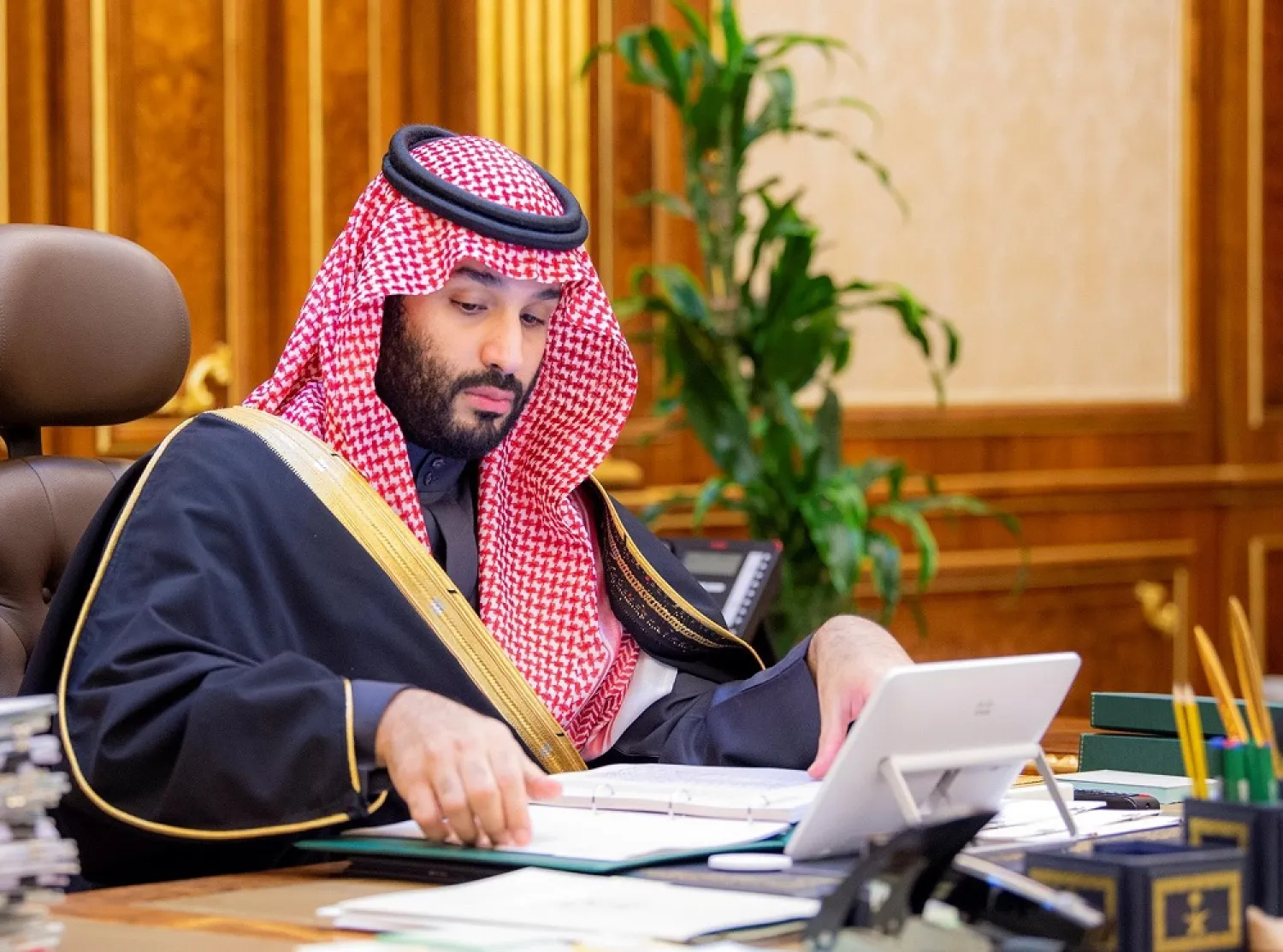
Saudi Crown Prince Mohammed bin Salman. (SPA)
TT

Saudi Crown Prince Launches New Strategy for National Development Fund

Saudi Crown Prince Mohammed bin Salman. (SPA)

Saudi Crown Prince Mohammed bin Salman, Deputy Prime Minister, and Chairman of the National Development Fund (NDF), launched on Monday the Fund’s strategy.

The strategy was announced during a meeting of the NDF’s Board of Directors.

The strategy aims to make the fund a pivotal enabler for the economic and social objectives of the Saudi Vision 2030 and overcome existing development challenges, in line with global best practices, reported the Saudi Press Agency.

"NDF’s strategy aspires to create a long-term and sustainable economy through transforming the Fund into a Development Finance Institution (DFI) that will contribute to achieving the objectives of Vision 2030," said Crown Prince Mohammed.

It seeks through its development funds and banks to stimulate a threefold increase in the private sector's development impact on the Kingdom's economy by 2030.

Moreover, NDF will contribute to Saudi Arabia's real GDP growth by injecting more than SAR 570 billion by 2030, added Crown Prince Mohammed.

Additionally, NDF targets to achieve more than a threefold increase of non-oil GDP to reach SAR 605 billion, in addition to generating many job opportunities in the Kingdom by 2030.

The NDF’s strategy activates the Kingdom’s development objectives by securing liquidity for the development funds and banks, in addition to enabling it to achieve a sustainable business model portfolio, and mobilizing the private sector to boost its role in development finance and take advantage of the harmonization, commercial and operational integration to serve the beneficiaries of the affiliated entities in securing long-term sustainable economic growth.

Furthermore, the NDF’s strategy aims to inaugurate initiatives concerned with improving performance and transparency, increasing efficiency and effectiveness, along developing the internal capabilities required to meet the aspirations and objectives of NDF for long-term development finance.

Muhammad bin Mazyad Al-Tuwaijri, NDF Vice Chairman of the Board, said the launch of the strategy "is a step that reflects our firm commitment to transform into an integrated development financing institution, which contributes to the development and diversification of the Saudi economy and boosts its prosperity; to consolidate the Kingdom's position at the global level."

"We intend to achieve these goals by transforming the Kingdom’s economy from an economy dependent on government spending to an economy led and integrated by the private sector," he stressed.

"We are confident that the National Development Fund will be one of the main pillars to turn these plans into a tangible reality," he added.

Stephen Groff, Governor of the NDF, said: "At NDF, we have a huge opportunity to enhance the efficiency of government development funds and banks in terms of identifying and investing in financing opportunities across the Kingdom."

"Our goal is to become a global brand of excellence in development finance through integration, alignment, and facilitation of synergies between partners. These plans are centered around cementing robust and sustainable financial institutions that function according to global best practices," he continued.

"As the NDF's strategy gains momentum, we will bear fruit in ensuring high levels of prosperity, improving the quality of life, generating new and sustainable jobs, and positioning the Kingdom as a new hub of foreign investments. Today, we are at the crossroads of big things to come, venturing forward in our quest to make the Crown Prince's Vision a reality and lead the world in different areas," he stressed.

The NDF was established by the Crown Prince's recommendation to set affiliated development funds and banks with robust and sustainable development that functions according to global best practices. The NDF is mandated to blaze a path for Vision 2030 goals and development agendas to be transformed into reality. The Fund oversees the financing activities carried out by its development funds and banks and aligns its various policies.

The NDF has injected more than SAR 690 billion through its affiliates since its inception, becoming one of the largest development finance funds in terms of the ratio of assets to GDP in G20 economies, with assets amounting to SAR 496 billion.



Mawani Signs 3 MoUs with Global Shipping Lines to Support Saudi Exports

Mawani Signs 3 MoUs with Global Shipping Lines to Support Saudi Exports
TT

Mawani Signs 3 MoUs with Global Shipping Lines to Support Saudi Exports

Mawani Signs 3 MoUs with Global Shipping Lines to Support Saudi Exports

The Saudi Ports Authority (Mawani) signed on Tuesday three memoranda of understanding (MoUs) with major international shipping lines: MSC, Maersk, and CMA CGM.

The agreements were signed on the sidelines of the Made in Saudi Expo 2025 and in partnership with the Saudi Export Development Authority (Saudi Exports).

The memoranda aim to support national exports and Saudi exporters by boosting access to global markets through an integrated logistics services ecosystem that connects the Kingdom’s ports with international destinations via leading global shipping lines.

The initiative provides exporters with broader opportunities for expansion and growth, while reinforcing international confidence in the quality of Saudi products by ensuring fast, efficient, and reliable delivery.

The MoUs establish a strategic framework for cooperation among the signatories to deliver innovative and integrated logistics solutions, facilitate the export of Saudi products, and boost the availability of empty containers at the Kingdom’s ports to ensure sufficient inventory levels that meet exporters’ needs.

They aim to expand joint initiatives that contribute to increasing Saudi exports in line with the goals of Saudi Vision 2030. This includes organizing workshops, conferences, and exhibitions to raise awareness, bolster exporters’ capabilities, measure satisfaction with logistics services, and promote national exports globally.

The MoUs seek to improve Saudi exporters’ access to new markets by providing advanced and efficient logistics solutions through Jeddah Islamic Port, King Abdulaziz Port in Dammam, and Jubail Commercial Port, alongside efforts to further automate port operations.


Saudi Arabia, Syria Discuss Industrial Investment Partnerships

Saudi Minister of Industry and Mineral Resources Bandar Alkhorayef during Tuesday's meeting. (SPA)
TT

Saudi Arabia, Syria Discuss Industrial Investment Partnerships

Saudi Minister of Industry and Mineral Resources Bandar Alkhorayef during Tuesday's meeting. (SPA)

Saudi Minister of Industry and Mineral Resources Bandar Alkhorayef held talks in Riyadh on Tuesday with Syrian Minister of Economy and Industry Nedal Al-Shaar on ways to strengthen economic relations and develop industrial investment partnerships between their countries.

Alkhorayef praised Syria’s participation as Guest of Honor in the third edition of the Made in Saudi Expo, noting that this reflects the depth of fraternal relations and the shared economic ties between the two countries.

The officials discussed aspects of industrial cooperation and the opportunities for Syria to benefit from the Kingdom’s expertise and successful experience in developing its industrial sector.

They addressed prominent export opportunities that can support trade growth, strengthen industrial and economic integration between Saudi Arabia and Syria, and advance their developmental goals and shared interests.

Separately, Alkhorayef revealed that the Kingdom’s non-oil exports reached SAR307 billion in the first half of this year, marking the highest semiannual growth on record. 

He made the announcement during his participation in a dialogue session with Al-Shaar on the sidelines of the Made in Saudi Expo 2025. 

Alkhorayef explained that Saudi Vision 2030, through its initiatives, has driven record performance and sustained growth in non-oil exports over the past few years by unlocking national industrial capabilities, boosting the quality of Saudi products, and expanding their access to global markets. 

He highlighted opportunities for cooperation between Saudi Arabia and Syria in developing industrial cities, enabling Damascus to benefit from the Kingdom’s successful experience in export development and local content support, thereby contributing to its economic growth. 

Alkhorayef underlined the level of efficiency, skill, and craftsmanship demonstrated by Syrian investors in the Kingdom’s industrial sector, hoping that the industrial sector would become a key pillar of Syria’s economic advancement. 

He also addressed trade development between the two countries, noting that Saudi non-oil exports to Syria totaled SAR1.2 billion in the first nine months of 2025. 


Saudi Inflation Slows to Nine-Month Low in November

 People enjoy sitting outdoors as the summer heat eases in Riyadh (AFP). 
 People enjoy sitting outdoors as the summer heat eases in Riyadh (AFP). 
TT

Saudi Inflation Slows to Nine-Month Low in November

 People enjoy sitting outdoors as the summer heat eases in Riyadh (AFP). 
 People enjoy sitting outdoors as the summer heat eases in Riyadh (AFP). 

Saudi Arabia’s annual inflation rate slowed to 1.9 percent in November 2025, its lowest level in nine months, down from 2.2 percent in October, driven by easing housing costs and lower prices for food and beverages.

On a monthly basis, inflation remained broadly stable, edging up 0.1 percent compared with October.

According to data released on Monday by the Saudi General Authority for Statistics (GASTAT), the housing, water, electricity, gas and other fuels category rose 4.3 percent year on year in November, down from 4.5 percent in October. Within that category, actual housing rents increased 5.4 percent, slowing from 5.7 percent a month earlier.

Prices in the food and beverages category rose 1.3 percent, reflecting a 1.6 percent increase in the prices of fresh, chilled and frozen meat. The transport category climbed 1.5 percent, driven by a 6.4 percent rise in passenger transport services.

The personal care, social protection and miscellaneous goods and services category recorded the largest annual increase, up 6.6 percent, supported by a 19.9 percent surge in prices of other personal products, influenced by a 21.6 percent rise in jewelry and watch prices.

Prices for insurance and financial services increased 5.1 percent, led by an 8.4 percent rise in insurance costs. The recreation, sports and culture category rose 1.3 percent, reflecting a 2.1 percent increase in holiday package prices.

In contrast, prices for furniture, household equipment and routine household maintenance declined 0.3 percent. The restaurants and accommodation services category also fell 0.5 percent, as accommodation service prices decreased 2.3 percent.

GASTAT noted that the Consumer Price Index (CPI) measures changes in prices paid by consumers for a fixed basket of 582 items, while the Wholesale Price Index (WPI) tracks price movements of goods at the pre-retail stage for a fixed basket of 343 items.