

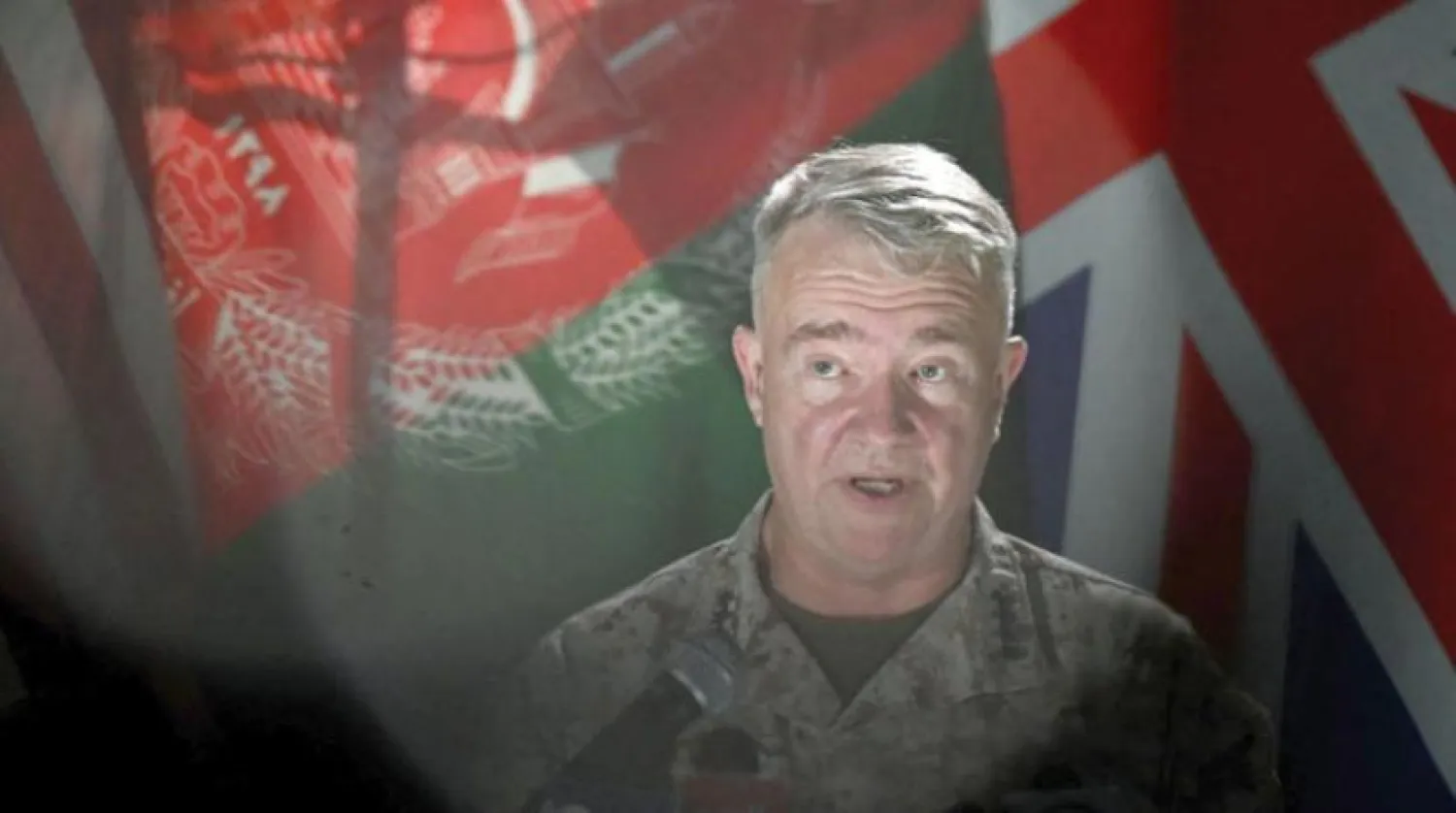

McKenzie: Iran Remains the Greatest Threat to Region's Security

CENTCOM Commander General Kenneth F. McKenzie (File photo: AFP)
TT

McKenzie: Iran Remains the Greatest Threat to Region's Security

CENTCOM Commander General Kenneth F. McKenzie (File photo: AFP)

The commander of the US Central Command, General Kenneth McKenzie, has said that Iran remains the greatest threat to the security of the Central Region.

Speaking at a hearing held by the Senate Armed Services Committee, McKenzie explained that the greatest single day-to-day threat to regional security and stability remains Iran, which
challenges the United States and its allies by pursuing regional hegemony and breaching its Joint Comprehensive Plan of Action (JCPOA) commitments.

McKenzie accused Iran of posing a conventional threat to partner nations while facilitating and conducting coercive and malign activities.

"Over the past year, Iran used these weapons to attack and seize merchant vessels in the Strait of Hormuz, Gulf of Oman, and northern Arabian Sea," said McKenzie.

"Iran continues to violate sanctions and embargos, proliferate weapons to its network of proxies and affiliates, terrorize mariners, and seize shipping in international waters," he added.

Regarding Iran's activities in Yemen, the commander said Houthis are the least restrained and most destabilizing Iranian affiliates in the region.

He said Houthis have raised the stakes further by using the same high-end Iranian weapons to target US partners.

"Over the past year, Iran has continued to provide Houthi forces with advanced conventional weapons (UASs, theater ballistic missiles, cruise missiles, and unmanned surface vehicles) and related technology. The proliferation of small and medium-sized UASs and sophisticated ballistic and cruise missiles to the Houthis presents the most complex and consequential threat to US, partner, and allied forces."

Speaking at the same hearing, Deputy Under Secretary of Defense for Policy Sasha Baker also affirmed that Iran continues to play a destabilizing role in the region through its development and proliferation of short and medium range ballistic missiles and unmanned aerial systems.

She stressed that the Department of Defense fully supports both the UAE and the Kingdom of Saudi Arabia in the defense of their territory and people.

Baker said Saudi Arabia remains a central pillar of our regional counterterrorism efforts.

"The Saudis are an important partner for cooperation in promoting regional stability, security, and countering Iranian influence," she noted.



Chief of Staff: Israel Ready ‘to Return Immediately and Forcefully’ to Fighting on All Fronts

Israel's military chief Lieutenant General Eyal Zamir speaks during the funeral of Lieutenant Hadar Goldin who was killed during the six-week 2014 war in Gaza, in a military cemetery in Kfar Saba on November 11, 2025. (Photo by Abir SULTAN / POOL / AFP)
TT

Chief of Staff: Israel Ready ‘to Return Immediately and Forcefully’ to Fighting on All Fronts

Israel's military chief Lieutenant General Eyal Zamir speaks during the funeral of Lieutenant Hadar Goldin who was killed during the six-week 2014 war in Gaza, in a military cemetery in Kfar Saba on November 11, 2025. (Photo by Abir SULTAN / POOL / AFP)

Israeli Chief of Staff Lt. Gen. Eyal Zamir said Wednesday that the military remained on high alert and was ready to return to fighting on all fronts, amid the fragile truces in Iran and Lebanon.

“Since the inferno of October 7, we have been working to reestablish our military strength through continuous fighting,” Zamir said while addressing soldiers honored at an Independence Day ceremony at the President’s Residence.

The Times of Israel quoted Zamir as saying that in Gaza, the Israeli military “prevailed in the fight against Hamas.”

“At this very moment, we are conducting intense fighting in Lebanon to strengthen the defense of the northern communities,” he stated.

“So too in the fighting against Iran in Rising Lion and Roaring Lion,” he said, referring to the June 2025 war with Iran and the latest 40-day conflict with Iran.

The Israeli military is on high alert and “prepared to return immediately and forcefully to combat in all sectors,” Zamir added.

Israeli Foreign Minister Gideon Saar called on Lebanon to work with Israel to disarm the Iranian-backed militant group Hezbollah ahead of negotiations in Washington on Thursday.

The meeting follows a similar gathering last week in Washington, and is the first time in decades the two countries are speaking directly.


NATO ‘Will Always Defend’ Türkiye, Says Rutte

A handout photo made available by the Turkish Defense Ministry Press Office shows Turkish Defense Minister Yasar Guler (R) and North Atlantic Treaty Organization (NATO) Secretary General Mark Rutte (L) shaking hands during a meeting in Ankara, Türkiye, 21 April 2026. (EPA/Turkish Defense Ministry/Handout)
TT

NATO ‘Will Always Defend’ Türkiye, Says Rutte

A handout photo made available by the Turkish Defense Ministry Press Office shows Turkish Defense Minister Yasar Guler (R) and North Atlantic Treaty Organization (NATO) Secretary General Mark Rutte (L) shaking hands during a meeting in Ankara, Türkiye, 21 April 2026. (EPA/Turkish Defense Ministry/Handout)

NATO chief Mark Rutte said on Wednesday the alliance would do "what's necessary to defend" its members including Türkiye after intercepting four missiles fired from Iran and head into Turkish air space over the past weeks.

A member of the US-led defense alliance, Türkiye, which borders Iran, has been largely spared the sort of retaliation from Tehran suffered by countries in the Middle East before the ceasefire.

NATO forces had shot down ballistic missiles fired from Iran for four times, prompting the alliance to deploy a new Patriot missile battery at Incirlik air base in southern Türkiye.

"Iran is spreading terror and chaos, and you feel this prominently here in Türkiye," Rutte told journalists on a visit to Türkiye’s largest defense electronics company Aselsan.

"In recent weeks, NATO has successfully intercepted ballistic missiles heading to Türkiye from Iran on four separate occasions," he said.

"NATO is prepared for such threats and will always do what is necessary to defend Türkiye and all others. And we cannot do it alone," he added.

Rutte's visit comes ahead of a July summit by NATO leaders to be held in Ankara.

Praising the progress made by Türkiye in the defense field, Rutte said: "We can learn a lot from what Türkiye is doing here".

"This is needed because we live in a more dangerous world... and that means we need strong defenses to protect our security".

Rutte said: "Türkiye has gone through a defense industrial revolution. I could really say it's a revolution in recent years."

The NATO chief is due to meet with President Recep Tayyip Erdogan.


China Warns Middle East at ‘Critical Juncture’ After Trump Extends Ceasefire

 13 April 2026, China, Beijing: Guo Jiakun, spokesman for the Chinese Foreign Ministry, speaks to journalists. (dpa)
13 April 2026, China, Beijing: Guo Jiakun, spokesman for the Chinese Foreign Ministry, speaks to journalists. (dpa)
TT

China Warns Middle East at ‘Critical Juncture’ After Trump Extends Ceasefire

 13 April 2026, China, Beijing: Guo Jiakun, spokesman for the Chinese Foreign Ministry, speaks to journalists. (dpa)
13 April 2026, China, Beijing: Guo Jiakun, spokesman for the Chinese Foreign Ministry, speaks to journalists. (dpa)

China warned on Wednesday that the situation in the Middle East was at a "critical juncture" after US President Donald Trump extended a ceasefire to allow Iran more time to negotiate.

Trump indefinitely pushed back the end of the two-week truce on Tuesday with Tehran yet to respond but he said a US blockade of Iran's ports would continue.

"The current regional situation stands at a critical juncture transitioning between war and peace; the paramount priority remains to make every effort to prevent a resumption of hostilities," Chinese foreign ministry spokesman Guo Jiakun told a news briefing.

Guo did not comment directly on the ceasefire when asked about it, adding only that Beijing would continue to play a "constructive" role.