


US Imposes Sanctions on Key Actors in Iran’s Ballistic Missile Program

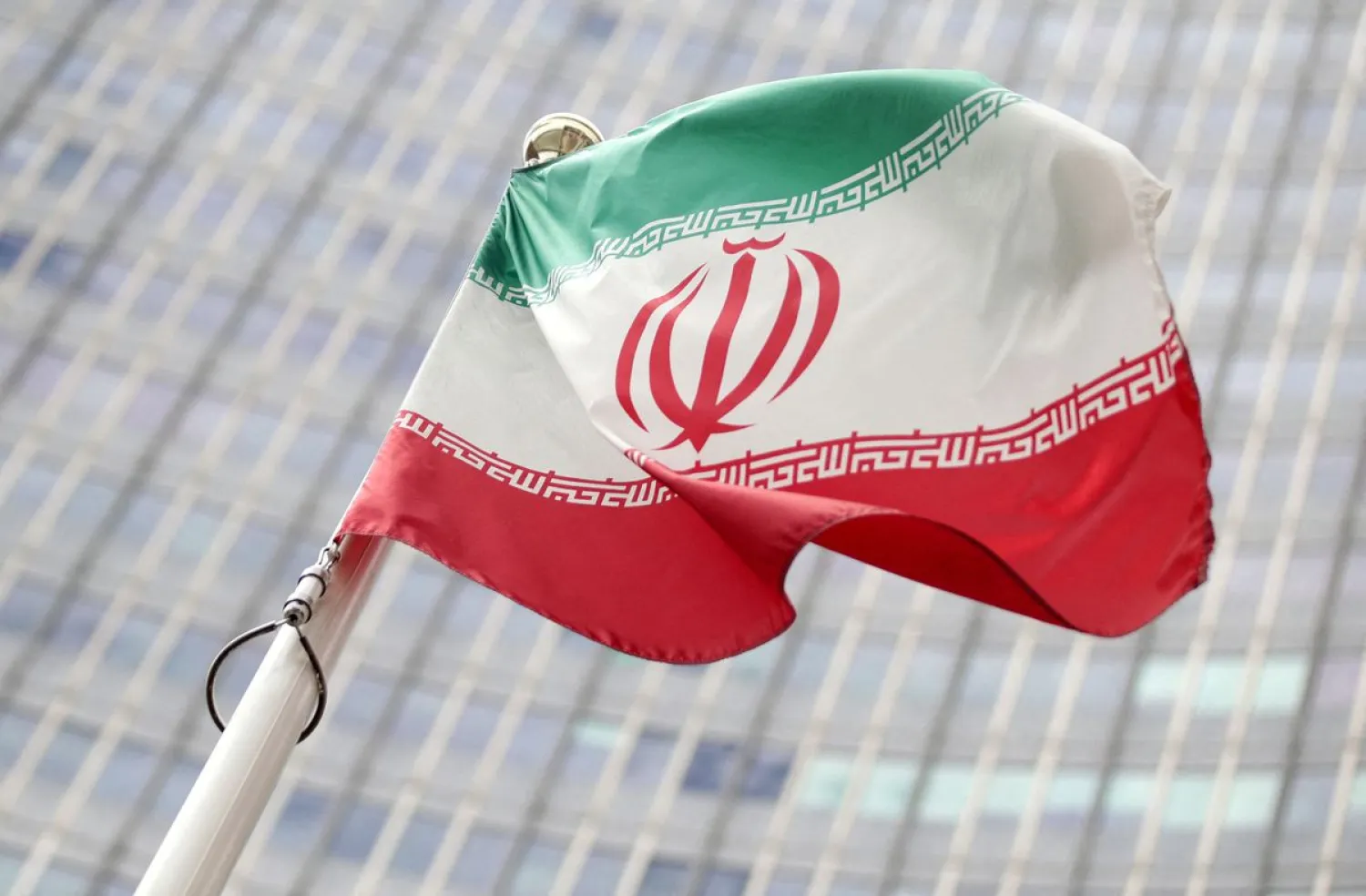
The Iranian flag flutters in front the International Atomic Energy Agency (IAEA) headquarters in Vienna, Austria July 10, 2019. (Reuters)
TT

US Imposes Sanctions on Key Actors in Iran’s Ballistic Missile Program

The Iranian flag flutters in front the International Atomic Energy Agency (IAEA) headquarters in Vienna, Austria July 10, 2019. (Reuters)

The United States on Wednesday imposed sanctions on an Iran-based man and his network of companies it accused of helping Tehran obtain materials for its ballistic missile program, acting after missile attacks by suspected Iranian-backed proxies on countries in the region.

In a statement issued as talks on reviving the 2015 Iran nuclear deal have stalled, the US Treasury Department said it acted after Iran's missile attack on Erbil in Iraq and an "Iranian enabled" Houthi missile attack against a Saudi Aramco facility this month, as well as other missile attacks by Iranian proxies against Saudi Arabia and the United Arab Emirates.

The Treasury said it slapped sanctions on Iranian procurement agent Mohammad Ali Hosseini and a network of companies it accused him of using to procure ballistic missile propellant and related materials in support of Iran's missile program.

The Treasury accused him of procuring materials for the Iranian Revolutionary Guard Corps (IRGC) unit responsible for research and development of ballistic missiles. Iran's IRGC is subject to US sanctions.

A US official, who spoke on condition of anonymity, said the sanctions were not related to efforts to revive the nuclear deal under which Iran had limited its nuclear program to make it harder to develop a nuclear bomb -- an ambition it denies -- in return for relief from global economic sanctions.

"While the United States continues to seek Iran´s return to full compliance with the Joint Comprehensive Plan of Action, we will not hesitate to target those who support Iran's ballistic missile program," the Treasury's Under Secretary for Terrorism and Financial Intelligence Brian Nelson said in the statement.

Wednesday's move freezes any US assets of those hit with sanctions and generally bars Americans from dealing with them. Those that engage in certain transactions with them also risk being hit with sanctions, the Treasury said.

The companies hit with sanctions in Wednesday's action include Iran-based Jestar Sanat Delijan and Sina Composite Delijan Co. Also sanctioned was P.B. Sadr Co, which the Treasury accused of acting on behalf of Parchin Chemical Industries, an element of Iran's Defense Industries Organization also under US sanctions.

Iran conducted a March 13 attack on Erbil, the capital of Iraq's northern Kurdish region, a rare publicly declared assault by the IRGC, and a missile attack by Yemen's Iran-backed Houthi militias hit a Saudi Aramco facility on March 25.

A nascent plan for Iraq's Kurdistan region to supply gas to Turkey and Europe -- with Israeli help -- is part of what angered Iran into striking Erbil with ballistic missiles this month, Iraqi and Turkish officials say.

Last week, the Saudi-led Arab coalition said oil giant Aramco's petroleum products distribution station in Jeddah was hit, causing a fire in two storage tanks but no casualties.

The indirect US-Iran nuclear talks were close to an agreement in early March before last-minute Russian demands for sweeping guarantees that would have hollowed out sanctions imposed following its invasion of Ukraine derailed the talks.

Russia has since appeared to have narrowed its demands to cover only work linked to the nuclear deal, leaving a small number of issues to be resolved between Washington and Tehran, diplomats say.



Top Trump Iran Negotiator Says Visits US Aircraft Carrier in Middle East

US Special Envoy Steve Witkoff delivers a press conference upon the signing of the declaration on deploying post-ceasefire force in Ukraine, during the so-called "Coalition of the Willing" summit, at the Elysee Palace in Paris, France, January 6, 2026. (Reuters)
TT

Top Trump Iran Negotiator Says Visits US Aircraft Carrier in Middle East

US Special Envoy Steve Witkoff delivers a press conference upon the signing of the declaration on deploying post-ceasefire force in Ukraine, during the so-called "Coalition of the Willing" summit, at the Elysee Palace in Paris, France, January 6, 2026. (Reuters)

US President Donald Trump's lead Iran negotiator Steve Witkoff on Saturday said he visited the USS Abraham Lincoln aircraft carrier currently in the Arabian Sea, with Washington and Tehran due to hold further talks soon.

"Today, Adm. Brad Cooper, Commander of US Naval Forces Central Command, Jared Kushner, and I met with the brave sailors and Marines aboard the USS Abraham Lincoln, her strike group, and Carrier Air Wing 9 who are keeping us safe and upholding President Trump's message of peace through strength," said Witkoff in a social media post.

Iranian Foreign Minister Abbas Araghchi said on Saturday he hoped talks with the United States would resume soon, while reiterating Tehran's red lines and warning against any American attack.


Israel’s Netanyahu Expected to Meet Trump in US on Wednesday and Discuss Iran

Israeli Prime Minister Benjamin Netanyahu delivers a speech during a special session to mark the 77th anniversary of the Knesset's establishment and the 60th anniversary of the dedication of the current building at the Knesset, the Israeli parliament, in Jerusalem, 02 February 2026. (EPA)
TT

Israel’s Netanyahu Expected to Meet Trump in US on Wednesday and Discuss Iran

Israeli Prime Minister Benjamin Netanyahu delivers a speech during a special session to mark the 77th anniversary of the Knesset's establishment and the 60th anniversary of the dedication of the current building at the Knesset, the Israeli parliament, in Jerusalem, 02 February 2026. (EPA)

Israeli Prime Minister Benjamin Netanyahu is expected to meet US President Donald Trump on Wednesday in Washington, where they will discuss negotiations with Iran, Netanyahu's office said on Saturday.

Iranian and US officials held indirect nuclear ‌talks in the ‌Omani capital ‌Muscat ⁠on Friday. ‌Both sides said more talks were expected to be held again soon.

A regional diplomat briefed by Tehran on the talks told Reuters Iran insisted ⁠on its "right to enrich uranium" ‌during the negotiations with ‍the US, ‍and that Tehran's missile capabilities ‍were not raised in the discussions.

Iranian officials have ruled out putting Iran's missiles - one of the largest such arsenals in the region - up ⁠for discussion, and have said Tehran wants recognition of its right to enrich uranium.

"The Prime Minister believes that any negotiations must include limiting ballistic missiles and halting support for the Iranian axis," Netanyahu's office said in a ‌statement.


Italy FM Rules Out Joining Trump’s ‘Board of Peace’

Italy's Minister for Foreign Affairs Antonio Tajani speaks to the press during the EPP Leaders’ meeting, in Zagreb, Croatia, 30 January 2026. (EPA)
TT

Italy FM Rules Out Joining Trump’s ‘Board of Peace’

Italy's Minister for Foreign Affairs Antonio Tajani speaks to the press during the EPP Leaders’ meeting, in Zagreb, Croatia, 30 January 2026. (EPA)

Italy will not take part in US President Donald Trump's "Board of Peace", Italian Foreign Minister Antonio Tajani said Saturday, citing "insurmountable" constitutional issues.

Trump launched his "Board of Peace" at the World Economic Forum in Davos in January and some 19 countries have signed its founding charter.

But Italy's constitution bars the country from joining an organization led by a single foreign leader.

Prime Minister Giorgia Meloni, a Trump ally, last month noted "constitutional problems" with joining, but suggested Trump could perhaps reopen the framework "to meet the needs not only of Italy, but also of other European countries".

Tajani appeared Saturday to rule that out.

"We cannot participate in the Board of Peace because there is a constitutional limit," he told the ANSA news agency.

"This is insurmountable from a legal standpoint," he said, the day after meeting US Secretary of State Marco Rubio and US Vice President JD Vance at the Olympics in Milan.

Although originally meant to oversee Gaza's rebuilding, the board's charter does not limit its role to the Palestinian territory and appears to want to rival the United Nations.