EU Election Mission to Begin Deploying Observers in Lebanon

Two European Union election observers watch as an election worker casts her ballot in early voting in Beirut, Lebanon, June 4, 2009. (AP)
TT

EU Election Mission to Begin Deploying Observers in Lebanon

Two European Union election observers watch as an election worker casts her ballot in early voting in Beirut, Lebanon, June 4, 2009. (AP)

A delegation from the European Union election observers on Monday wrapped up a six-day visit to Lebanon during which they discussed the deployment of observers ahead of the upcoming May 15 parliamentary elections in the crisis-hit country.

The observer mission said it will start deploying 30 observers throughout Lebanon later this week, with their numbers reaching more than 150 from 27 EU member states, Switzerland and Norway on the day of the vote.

During the visit, Gyorgy Holvenyi, head of the mission, discussed its work with top Lebanese officials, politicians and religious leaders.

The May 15 elections will be the first in Lebanon since the country's economic meltdown began in October 2019. A massive Aug. 4, 2020 explosion in Beirut's port that killed more than 200 people, injured over 6,000 and caused wide damage in the Lebanese capital, precipitated the country's crisis.

A total of 103 lists with 1,044 candidates are vying for the 128-seat legislature. Parliamentary elections are held once every four years in Lebanon.

Holvenyi, a Hungarian politician currently serving as a member of the European Parliament, highlighted that the EU Election Observation Mission is impartial and independent, adding that it does not judge the electoral outcome or validate the results.

He said it will evaluate the electoral process and its compliance with regional and international commitments on political participation and democratic elections.

"We are not here to interfere in the process. We are not investigators,” Holvenyi said.


EU Condemns Israel's West Bank Control Measures

The Israeli settlement of Har Homa, seen from the West Bank city of Bethlehem, Tuesday, Dec. 17, 2024. (AP)
TT

EU Condemns Israel's West Bank Control Measures

The Israeli settlement of Har Homa, seen from the West Bank city of Bethlehem, Tuesday, Dec. 17, 2024. (AP)

The European Union on Monday condemned new Israeli measures to tighten control of the West Bank and pave the way for more settlements in the occupied Palestinian territory, AFP reported.

"The European Union condemns recent decisions by Israel's security cabinet to expand Israeli control in the West Bank. This move is another step in the wrong direction," EU spokesman Anouar El Anouni told journalists.


Atrocities in Sudan's El-Fasher Were 'Preventable Human Rights Catastrophe'

Sudanese displaced people who left El Fasher after its fall, sit in the shade in Tawila at the Rwanda camp reception point on December 17, 2025. (Photo by AFP)
TT

Atrocities in Sudan's El-Fasher Were 'Preventable Human Rights Catastrophe'

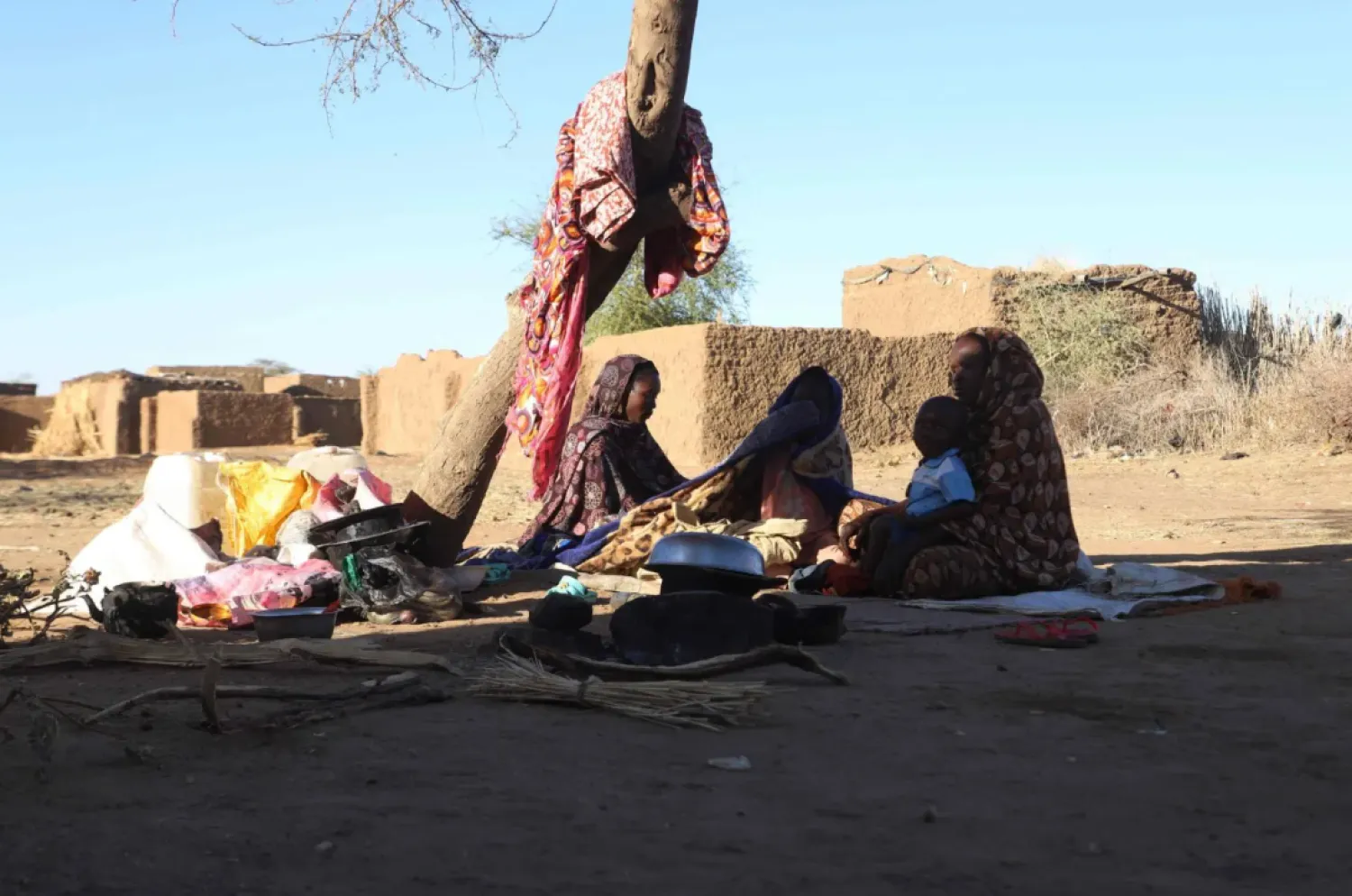
Sudanese displaced people who left El Fasher after its fall, sit in the shade in Tawila at the Rwanda camp reception point on December 17, 2025. (Photo by AFP)

The atrocities unleashed on El-Fasher in Sudan's Darfur region last October were a "preventable human rights catastrophe", the United Nations said Monday, warning they now risked being repeated in the neighbouring Kordofan region.


"My office sounded the alarm about the risk of mass atrocities in the besieged city of El-Fasher for more than a year ... but our warnings were ignored," UN rights chief Volker Turk told the Human Rights Council in Geneva.


He added that he was now "extremely concerned that these violations and abuses may be repeated in the Kordofan region".


Arab League Condemns Israel's Decisions to Alter Legal, Administrative Status of West Bank

A general view shows the opening session of the meeting of Arab foreign ministers at the Arab League Headquarters (Reuters)
TT

Arab League Condemns Israel's Decisions to Alter Legal, Administrative Status of West Bank

A general view shows the opening session of the meeting of Arab foreign ministers at the Arab League Headquarters (Reuters)

The General Secretariat of the Arab League strongly condemned decisions by Israeli occupation authorities to impose fundamental changes on the legal and administrative status of the occupied Palestinian territories, particularly in the West Bank, describing them as a dangerous escalation and a flagrant violation of international law, international legitimacy resolutions, and signed agreements, SPA reported.

In a statement, the Arab League said the measures include facilitating the confiscation of private Palestinian property and transferring planning and licensing authorities in the city of Hebron and the area surrounding the Ibrahimi Mosque to occupation authorities.

It warned of the serious repercussions of these actions on the rights of the Palestinian people and on Islamic and Christian holy sites.

The statement reaffirmed the Arab League’s firm support for the legitimate rights of the Palestinian people, foremost among them the establishment of their independent state on the June 4, 1967 borders, with East Jerusalem as its capital.