UAE Approves Strategy to Double Contribution of Digital Economy to GDP Within 10 Years https://english.aawsat.com/home/article/3587436/uae-approves-strategy-double-contribution-digital-economy-gdp-within-10-years
UAE Approves Strategy to Double Contribution of Digital Economy to GDP Within 10 Years
Sheikh Mohammed bin Rashid chairing a cabinet session on Monday, April 11, 2022. (WAM)
The UAE cabinet on Monday approved a digital economy strategy to double the contribution of the digital economy to the GDP from 9.7% to 19.4% within the next 10 years. It also aims to transfer the UAE into a hub for digital economy regionally and globally.
The strategy includes more than 30 initiatives and programs targeting six sectors and five new areas of growth.
It will define the digital economy in the country, with a unified mechanism for measuring its growth while measuring its indicators periodically.
The strategy will define the priorities of digital economy in the country, ensuring the contribution of all other economic sectors to promote and support the digital economy.
Sheikh Mohammed bin Rashid Al Maktoum, Vice President, Prime Minister and Ruler of Dubai, said: “Our goal is to increase the contribution of the digital economy sector to the non-oil GDP by 20 percent over the next 10 years.”
“We formed a Council for Digital Economy chaired by Omar bin Sultan al-Olama, the UAE Minister of State for Artificial Intelligence, Digital Economy, and Teleworking Applications,” he added.
The cabinet also approved a federal law about the public finance. It compels federal authorities to coordinate with the Ministry of Finance to achieve the financial strategy’s objectives.
It approved executive regulation of the federal decree-law on private education aimed at regulating the work of private schools in the country, in accordance with the objectives of the private education law, the provisions of which apply to all private schools in the UAE.
The executive regulation aims to enhance a high-level educational system that regulates the licensing mechanism for private schools, to ensure the quality of education and to place students among the best in the world in knowledge assessment tests.
The cabinet further adopted a unified framework to coordinate and organize the humanitarian and development work of the charitable institutions.
It includes a guide that organizes the seasonal work of all UAE donors concerned with foreign aids, in accordance with international standards, and in line with the UAE foreign aid policy and strategy.
This framework includes the establishment of coordinating offices in the country's missions abroad for foreign aid.
It will contribute to regulating financial transfers to donors, and the UAE charitable institutions in the beneficiary countries.
In addition to reviewing and discussing several reports, the cabinet approved an agreement to linking payment systems among GCC countries, an agreement with Brazil, two agreements with Denmark and an agreement with the United States.
A trader works on the trading floor at the New York Stock Exchange (NYSE) in Manhattan, New York City, US, November 11, 2022. REUTERS/Andrew Kelly/File Photo
A trader works on the trading floor at the New York Stock Exchange (NYSE) in Manhattan, New York City, US, November 11, 2022. REUTERS/Andrew Kelly/File Photo
Wall Street stocks slipped early Thursday, after oil prices soared on reports that the United States could launch fresh attacks on Iran before key midterm elections.
The Dow Jones Industrial Average dipped 0.2 percent to 51,074.31, while the broad-based S&P 500 Index lost 0.3 percent to 7,776.28.
The tech-focused Nasdaq Composite Index retreated 0.5 percent to 27,405.11, AFP reported.
The gloomier start was "based on two factors that have been haunting the market: both oil prices rising sharply and also (bond) yields that are returning to yesterday's peak levels," said Peter Cardillo of Spartan Capital Securities.
He told AFP that these will be an "ongoing problem for the market in the near term."
Cardillo said that oil prices have jumped as US President Donald Trump said he did not want to deal with Iran.
"And now it looks as though there's been a shift in strategy from an economic squeeze on the Iranian economy to a new round of massive bombing," he warned.
After reports that Washington could open new attacks against Iran, international benchmark Brent North Sea crude rallied to $105.46 per barrel.
The main US contract, West Texas Intermediate rose to $92.82 per barrel before cooling slightly.
Meanwhile, the yield on the 10-year Treasury note advanced to 5.3 percent and that on the 30-year note was at 5.7 percent.
A Year After Riyadh Halted Rent Hikes, the Market Tests a New Balancehttps://english.aawsat.com/business/5327399-year-after-riyadh-halted-rent-hikes-market-tests-new-balance
A Year After Riyadh Halted Rent Hikes, the Market Tests a New Balance
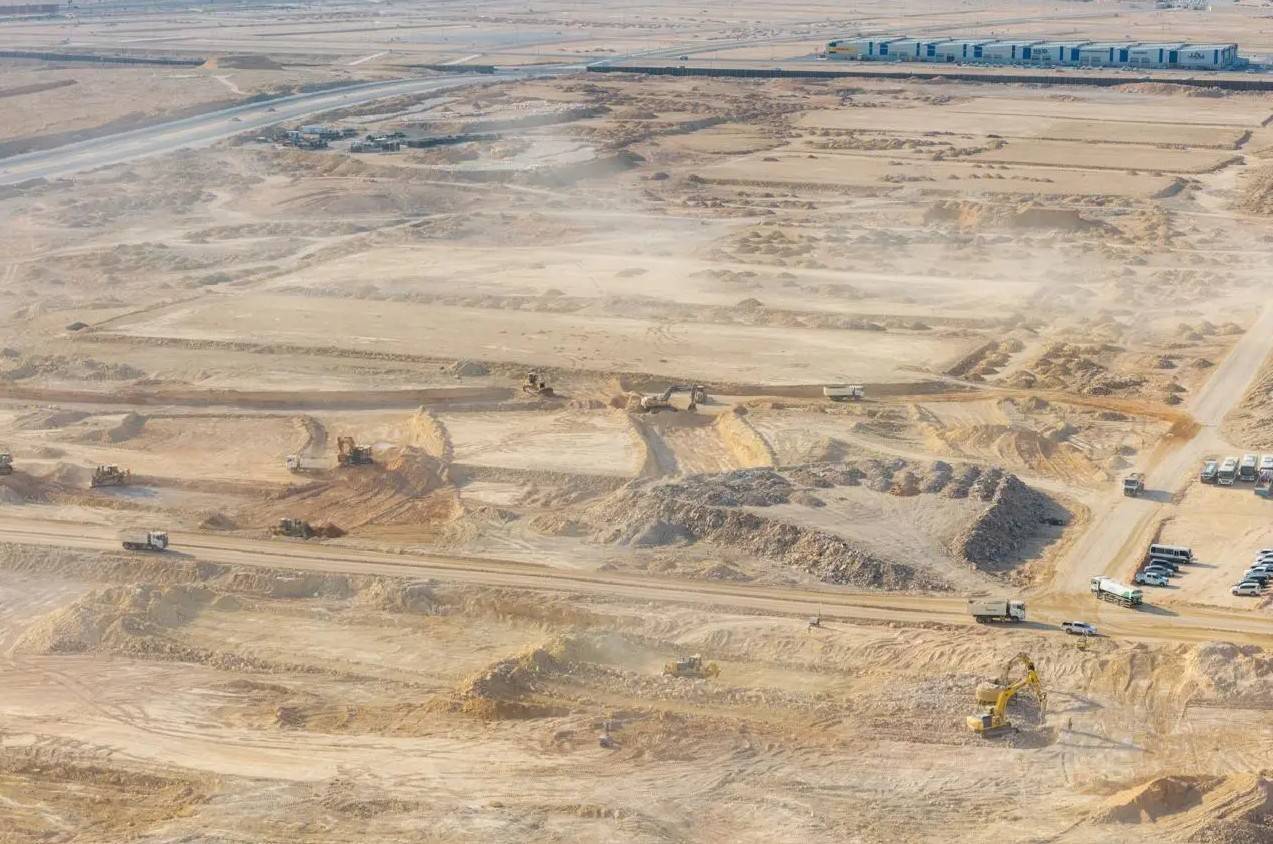
Development work on plots during the first year of the Real Estate Balance Program in Riyadh (SPA)
A year after regulations freezing rent increases began to take effect, the rental market in Riyadh has begun to show a clear shift in the trajectory of prices. Residential rents grew by 4.5 percent in August 2026, the slowest pace of increase in more than three years, while the share of household income absorbed by rent declined to about 15 percent, from more than 17.5 percent a year earlier.
These developments point to a gradual easing of the price pressures that drove rents to high levels in recent years, but they are not enough on their own to conclude that the market has entered a sustainable equilibrium. Rental activity continues to grow, while the market still needs to absorb new supply and determine the impact of the regulations on the decisions of investors, developers and tenants.
The regulatory provisions governing the relationship between landlords and tenants in Riyadh were issued on September 25, 2025, pursuant to the directive of Crown Prince and Prime Minister Mohammed bin Salman to take measures to achieve balance in the capital’s real estate sector, with the approval of the Council of Ministers and by royal decree. The provisions were later published in the official gazette, Umm Al-Qura, and took effect on November 7 of the same year. They remain in effect for five years and provide for a freeze on annual rent increases for residential and commercial properties within Riyadh’s urban boundaries, in addition to regulating rents for vacant properties that had previously been leased and setting rules governing contract renewals and evictions.
These provisions formed part of a broader package of measures aimed at restoring balance to the capital’s real estate market. The package included increasing the supply of residential land, developing the system of white land and vacant property fees, strengthening the regulation of rental relationships, and raising levels of documentation and transparency.
Development works on plots during the first year of the Real Estate Balance Program in Riyadh (SPA)
About a year after the provisions took effect, the capital’s rental market has begun to show signs of gradual repricing, with slower rent growth and a decline in the burden of rent on household income. However, the extent to which the market moves toward a more sustainable equilibrium will remain linked to the trajectory of new supply, development and financing costs, and households’ ability to afford housing.
The latest available data indicate that residential rents in Riyadh rose by 4.5 percent year-on-year in August 2026, marking the 12th consecutive month of slower growth and the lowest pace of increase in more than three years, according to an analysis based on data from the General Authority for Statistics.
Although rents continued to rise year-on-year, the slower pace reflects a gradual easing of the price pressures that the capital experienced in recent years, alongside a package of government measures aimed at restoring balance to the real estate market.
The regulation of the rental market was part of this package, which included increasing the supply of residential land, developing the system of white land and vacant property fees, as well as strengthening the regulation of rental relationships and raising levels of documentation and transparency in the market.
In an indicator directly linked to households’ ability to afford housing costs, the share of rent in household income in Riyadh declined to about 15 percent, compared with more than 17.5 percent in September 2025.
Abdullah Al-Hammad, CEO of the General Real Estate Authority, said last September that this decline was one of the initial effects measured from the real estate balance decisions in the capital.
This indicator is particularly significant because it measures the share of rent in household income, providing a clearer reading of changes in housing affordability and the impact of market movements on tenants.
This coincided with a continued slowdown in housing-related inflation across the Kingdom. The growth rate of prices in the housing, water, electricity, gas and other fuels category declined to 3.9 percent year-on-year in August, from 4.2 percent in July.
By contrast, the slowdown in price growth was not accompanied by a similar contraction in rental activity across the Kingdom. The number of rental transactions rose to about 446,300 in August, compared with 325,200 in the same month of 2025, an annual increase of 37 percent.
The value of rental transactions also increased by 32 percent to 10.62 billion riyals ($2.83 billion), compared with about 8.03 billion riyals a year earlier. The residential sector accounted for about 343,700 transactions, an increase of 36 percent, while the value of its transactions rose 28 percent to 5.59 billion riyals.
Although these figures reflect the performance of Saudi Arabia’s rental market as a whole and do not separately measure the impact of the measures implemented in Riyadh, they indicate that slower rent growth has not, so far, been accompanied by a broad contraction in rental activity.
Balance or a Transitional Phase?
A year after the regulations were implemented, the picture raises the question of whether the current indicators represent the beginning of a sustainable equilibrium in Riyadh’s rental market, or whether they reflect a transitional phase during which the market is reshaping price levels, returns, and the behavior of tenants and investors. According to real estate specialists, determining the direction of this trend will depend on developments in new supply, development and financing costs, and households’ ability to afford housing in the coming period.
Real estate expert and commentator Abdullah Al-Mousa told Asharq Al-Awsat that the current indicators reflect a tangible impact from the latest regulatory measures on Riyadh’s rental market, particularly the freeze on annual increases. He noted that slower rent growth and the decline in the burden of rent on household income reflect an easing of some of the price pressures that the capital has experienced in recent years.
He explained that this improvement cannot be attributed solely to the freeze on increases, but comes within a comprehensive package of measures that included regulating the relationship between landlords and tenants, fixing rents under specific regulations, increasing the supply of land, developing the white land fee system, and strengthening documentation and transparency in the market.
Al-Mousa said it was too early to consider the rental market to have reached “full equilibrium,” saying that what is currently taking place is closer to a transition from a period of rapidly rising prices toward stability, repricing and testing new levels of equilibrium.
He added that sustainable equilibrium is not measured by slower prices alone, but by the market’s ability to provide sufficient supply, maintain affordable housing costs relative to household income, and keep occupancy rates stable while ensuring that investment in the rental sector remains attractive.
Regarding the impact of the regulations on the behavior of landlords and tenants, Al-Mousa noted that their effect may be behavioral and contractual as much as it is related to prices. They give tenants greater ability to anticipate their future obligations and limit sudden increases, which could encourage them to remain in a unit for longer periods.
At the same time, the regulations may encourage landlords to place greater priority on tenant stability and regular payment rather than relying on raising rents at every renewal.
He noted that the regulations have also reshaped the way units are priced and negotiated, particularly for properties entering the market for the first time, where the initial rent becomes more important in determining the subsequent course of the contract. This is prompting owners and developers to study pricing more carefully and link it to the unit’s location, quality, level of services and the value it provides to the tenant.
Al-Mousa considered that this shift could, over the long term, move competition in the rental market away from focusing on raising prices and toward improving the quality of real estate products and retaining tenants for longer periods. This would reflect a market moving toward greater competition over value and stability, rather than price alone.
Reshaping Investment Economics
Real estate expert and marketer Saqr Al-Zahrani told Asharq Al-Awsat that rental regulations are likely to reshape the economics of investment in the residential sector, rather than simply limiting investment activity. He explained that limited growth in rental revenues, alongside rising land, financing and construction costs, will push investors to scrutinize target returns more closely and focus on assets capable of generating stable cash flows and achieving greater operational efficiency.
He added that the next phase could see a greater shift by institutional investors toward towers and integrated, professionally managed residential complexes, benefiting from economies of scale in reducing operating costs, improving occupancy efficiency, and diversifying products and services. At the same time, standalone residential units may become less attractive as rental assets, as a larger share of them shifts toward ownership by end users.
According to Al-Zahrani, demand for housing in Riyadh will not necessarily decline, but it may become more selective, with tenants paying greater attention to balancing price, location, space, product quality and services. Landlords, meanwhile, will rely more heavily on asset quality and sustainable occupancy rather than relying solely on rent growth.
He noted that among the key indicators that should be monitored over the next two years are rent growth rates, the volume of new supply, occupancy and vacancy rates, net investment returns, the movement of households from renting to homeownership, the length of time units remain on the market, and the ratio of housing costs to household income.
Al-Zahrani said one of the most significant potential shifts is the movement of some investment away from individual residential units toward integrated residential assets, particularly as projects capable of relying on actual local demand and generating stable cash flows become increasingly important.
At the same time, he warned that continued increases in development costs, combined with limited rent growth, could prompt some investors to reduce the supply allocated for rental or redirect capital toward homeownership projects.
Conversely, improved homeownership affordability could gradually encourage some tenants to shift from bearing rental costs toward building homeownership, potentially reshaping the pattern of demand in the capital’s housing market.
Maersk Raises Emergency Fuel Surcharge Due to Middle East Conflicthttps://english.aawsat.com/business/5327326-maersk-raises-emergency-fuel-surcharge-due-middle-east-conflict
FILE PHOTO: A truck transports a Maersk container at APM Terminals at the Port of Los Angeles, California, US, March 4, 2026. REUTERS/Mike Blake/File Photo
Maersk Raises Emergency Fuel Surcharge Due to Middle East Conflict
FILE PHOTO: A truck transports a Maersk container at APM Terminals at the Port of Los Angeles, California, US, March 4, 2026. REUTERS/Mike Blake/File Photo
Danish shipping group Maersk said on Thursday it was increasing its emergency fuel surcharge (EFS) on all export collections and import deliveries due to the ongoing conflict in the Middle East.
Oil prices rose on Thursday on worries about supply from the Middle East region amid an increase in attacks on shipping in the Gulf and the Strait of Hormuz, while the US cut output as a hurricane menaced offshore production.
Maersk said in a statement it was increasing its EFS to 20% as of October 12, and that it would continue to review the surcharge regularly.
لم تشترك بعد
انشئ حساباً خاصاً بك لتحصل على أخبار مخصصة لك ولتتمتع بخاصية حفظ المقالات وتتلقى نشراتنا البريدية المتنوعة