


EU Plans Phased Oil Ban on Russia, Also Targeting More Banks

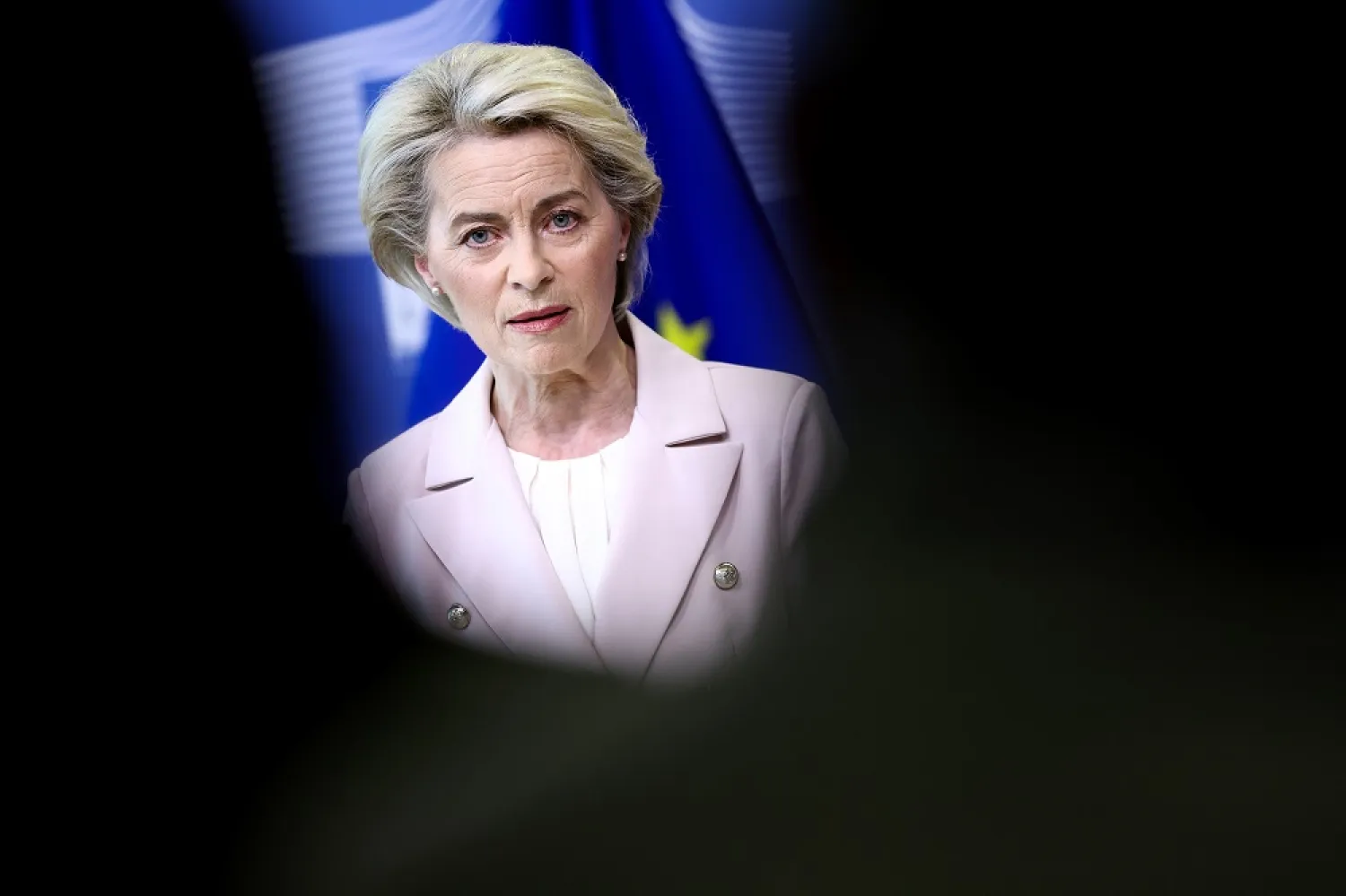
European Commission President Ursula von der Leyen delivers a statement at EU headquarters in Brussels, Wednesday, April 27, 2022. (AP)
TT

EU Plans Phased Oil Ban on Russia, Also Targeting More Banks

European Commission President Ursula von der Leyen delivers a statement at EU headquarters in Brussels, Wednesday, April 27, 2022. (AP)

The European Union's chief executive on Wednesday proposed a phased oil embargo on Russia over its war in Ukraine, as well as sanctioning Russia's top bank and banning Russian broadcasters from European airwaves, in a bid to deepen Moscow's isolation.

The plan, if agreed by EU governments, would mark a watershed for the world's largest trading bloc, which is dependent on Russian energy and must find alternative supplies.

But Russia's invasion of Ukraine by land, sea and air on Feb. 24, the renewed Russian offensive in eastern Ukraine and the horrific images of slaughter in Ukrainian towns have overcome reluctance to deliver the toughest sanctions so far.

"Today, we will propose to ban all Russian oil from Europe,"

European Commission President Ursula von der Leyen told the European Parliament in Strasbourg.

"This will be a complete import ban on all Russia," she said to applause in the chamber.

The Commission's measures include phasing out supplies of Russian crude oil within six months and refined products by the end of 2022, von der Leyen said. She pledged to minimize the impact on European economies.

The price of Brent crude rose 2% to $107,11 at around 0900 CET, up 37.5% since the start of year.

"We are addressing our dependency on Russian oil. And let's be clear, it will not be easy because some member states are strongly dependent on Russian oil, but we simply have to do it," she said.

"(Russian President Vladimir)Putin must pay a price, a high price, for his brutal aggression," she said.

As well as oil, the latest round of sanctions will hit Sberbank, Russia's top lender, as well as three other banks, adding it to several banks that have already been excluded from the SWIFT messaging system.

"We de-SWIFT Sberbank - by far Russia's largest bank, and two other major banks. By that, we hit banks that are systemically critical to the Russian financial system and Putin's ability to wage destruction," von der Leyen said.

"This will solidify the complete isolation of the Russian financial sector from the global system," she said.

Von der Leyen said more high-ranking Russian military officials would face EU asset freezes and travel bans, without giving names. "You are not getting away with this," she said, referring to the Kremlin.

The proposals by the Commission now need to go to the 27 member states for approval. Diplomats said there was likely to be a longer period granted to Hungary and Slovakia to stop oil imports as they are so heavily dependent on Russian energy.

Simone Tagliapietra of the Bruegel think tank said the EU's gradual embargo on Russian oil was "a risky bet"

"In the short term it might leave Russian revenues high while implying negative consequences for the EU and global economy in terms of higher prices," he said. "Not to talk about retaliation risks on natural gas supplies."



Trump Hints at Land Strike as Venezuela Pressure Mounts

A US Air Force C-130J Super Hercules aircraft approaches for landing at Rafael Hernandez Airport, amid tensions between US President Donald Trump's administration and the government of Venezuelan President Nicolas Maduro, in Aguadilla, Puerto Rico, December 28, 2025. (Reuters)
TT

Trump Hints at Land Strike as Venezuela Pressure Mounts

A US Air Force C-130J Super Hercules aircraft approaches for landing at Rafael Hernandez Airport, amid tensions between US President Donald Trump's administration and the government of Venezuelan President Nicolas Maduro, in Aguadilla, Puerto Rico, December 28, 2025. (Reuters)

A throwaway remark last week by President Donald Trump has raised questions about whether US forces may have carried their first land strike against drug cartels in Venezuela.

Trump said the US knocked out a "big facility" for producing trafficking boats, as he was discussing his pressure campaign against Venezuelan President Nicolas Maduro in an interview broadcast Friday.

"They have a big plant or a big facility where they send, you know, where the ships come from," Trump said in an interview with billionaire supporter John Catsimatidis on the WABC radio station in New York.

"Two nights ago we knocked that out. So we hit them very hard."

Trump did not say where the facility was located or give any other details. US forces have carried out numerous strikes in both the Caribbean Sea and eastern Pacific Ocean since September, killing more than 100 people.

The Pentagon referred questions about Trump's remarks to the White House. The White House did not respond to requests for comment from AFP.

There has been no official comment from the Venezuelan government.

Trump has been saying for weeks that the United States will "soon" start carrying out land strikes targeting drug cartels in Latin America, but there have been no confirmed attacks to date.

The Trump administration has been ramping up pressure on Maduro, accusing the Venezuelan leader of running a drug cartel himself and imposing an oil tanker blockade.

Maduro has accused Washington of attempting regime change.


UN Chief Says ‘Get Serious’ in Grim New Year Message

 UN Secretary-General Antonio Guterres. (AFP)
UN Secretary-General Antonio Guterres. (AFP)
TT

UN Chief Says ‘Get Serious’ in Grim New Year Message

 UN Secretary-General Antonio Guterres. (AFP)
UN Secretary-General Antonio Guterres. (AFP)

The United Nations urged global leaders Monday to focus on people and the planet in a New Year's message depicting the world in chaos.

"As we enter the new year, the world stands at a crossroads. Chaos and uncertainty surround us. Division. Violence. Climate breakdown. And systemic violations of international law," UN Secretary-General Antonio Guterres said in a video message.

In 2026, as war rages in Ukraine and elsewhere, world leaders must work to ease human suffering and fight climate change, he added.

"I call on leaders everywhere: Get serious. Choose people and planet over pain," said Guterres, criticizing the global imbalance between military spending and financing for the poorest countries.

Military spending is up nearly 10 percent this year to $2.7 trillion, which is 13 times total world spending on development aid and equivalent to the entire gross domestic product of Africa, he said.

Wars are raging at levels unseen since World War II, he added.

"In this New Year, let's resolve to get our priorities straight. A safer world begins by investing more in fighting poverty and less in fighting wars. Peace must prevail," said Guterres, who will be serving his last year as secretary general.


Türkiye and Armenia Agree to Simplify Visa Procedures to Normalize Ties

Türkiye’s President Recep Tayyip Erdogan, right, and Armenia's Prime Minister Nikol Pashinyan shake hands before a meeting at Prague Castle in Prague, Czech Republic, Thursday, Oct. 6, 2022. (Turkish Presidency via AP, File)
TT

Türkiye and Armenia Agree to Simplify Visa Procedures to Normalize Ties

Türkiye’s President Recep Tayyip Erdogan, right, and Armenia's Prime Minister Nikol Pashinyan shake hands before a meeting at Prague Castle in Prague, Czech Republic, Thursday, Oct. 6, 2022. (Turkish Presidency via AP, File)

Türkiye and Armenia have agreed to simplify visa procedures as part of efforts to normalize ties, Türkiye’s Foreign Ministry announced Monday, making it easier for their citizens to travel between the two countries.

Relations between Türkiye and Armenia have long been strained by historic grievances and Türkiye’s alliance with Azerbaijan. The two neighboring countries have no formal diplomatic ties and their joint border has remained closed since the 1990s.

The two countries, however, agreed to work toward normalization in 2021, appointing special envoys to explore steps toward reconciliation and reopening the frontier. Those talks have progressed in parallel with efforts to ease tensions between Armenia and Azerbaijan.

Türkiye supported Azerbaijan during its 2020 conflict with Armenia for control of the Karabakh region, known internationally as Nagorno-Karabakh, a territorial dispute that had lasted nearly four decades.

The Turkish Foreign Ministry said in a statement posted on social platform X that Ankara and Yerevan agreed that holders of diplomatic, special and service passports from both countries would be able to obtain electronic visas free of charge as of Jan. 1.

“On this occasion, Türkiye and Armenia reaffirm once again their commitment to continue the normalization process between the two countries with the goal of achieving full normalization without any preconditions,” the ministry said.

Türkiye and Armenia also have a more than century-old dispute over the deaths of an estimated 1.5 million Armenians in massacres, deportations and forced marches that began in 1915 in Ottoman Türkiye. Historians widely view the event as genocide.

Türkiye denies the deaths constituted genocide, saying the toll has been inflated and those killed were victims of civil war and unrest. It has lobbied to prevent countries from officially recognizing the massacres as genocide.