
Protest by Other Means: Lebanon Activists Run in Election

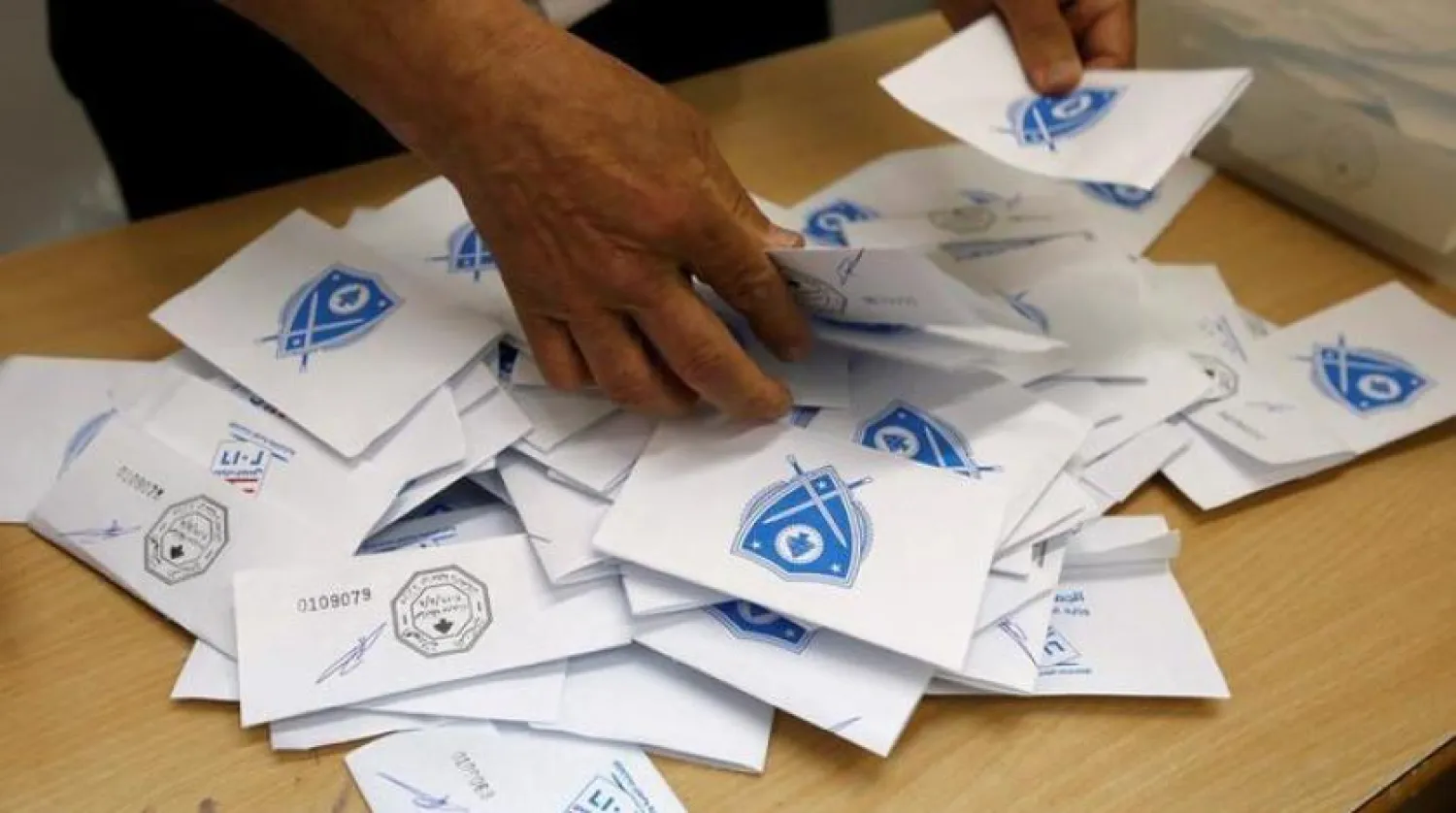
A Lebanese election official counts ballots after the polling station closed during Beirut’s municipal elections in Lebanon, May 8, 2016. REUTERS/Mohamed Azakir
TT

Protest by Other Means: Lebanon Activists Run in Election

A Lebanese election official counts ballots after the polling station closed during Beirut’s municipal elections in Lebanon, May 8, 2016. REUTERS/Mohamed Azakir

As a law student in late 2019, Verena El Amil joined mass street protests against Lebanon's political elite. Now she wants to fight them at the ballot box.

At age 25, she is one of a growing number of independent candidates running in a May 15 parliamentary vote in the crisis-torn country, AFP reported.

"We are going to fight," the young lawyer, dressed in a black leather jacket and combat boots, said at a coffee shop outside Beirut.

"The slogans we screamed during the protests are the ones we want to carry into campaigns and into parliament."

The vote will be the first major electoral test since a youth-led protest movement from October 2019 vented its rage at Lebanon's graft-tainted political class.

The revolutionary fervor has been sapped since by cascading crises, from a financial collapse and the pandemic to the 2020 Beirut port blast that killed more than 200 people.

While most of her fellow graduates have fled abroad, Amil honed her political skills in student activism and spent all her savings on the campaign.

"Running for parliamentary elections for me is a continuation," said Amil, one of the youngest candidates to stand.

"After the 2019 protests, we all grappled with defeat and the reality of a massive emigration wave.

"But in spite of this, we still need to try, and I am running for the elections to show that we are still trying."

- 'Election as protest' -
The number of independent candidates running against established parties has more than doubled since the last vote in 2018.

Beirut-based think tank the Policy Initiative said opposition and independent candidates make up 284 of the 718 hopefuls -- up from 124 four years ago.

They are running in 48 different electoral lists across Lebanon, including in peripheral regions where traditional leaders have seldom faced a challenge.

Also in the race this time is Lucien Bourjeily, an activist, writer and director who emerged as one of the key figures of the 2019 protest movement.

Running for a seat for the second time, Bourjeily said he sensed more engagement from the public this time around.

But the opposition is mainly gunning for accountability, not a major win, he said, urging voters to document any signs of electoral fraud.

"The way we documented people getting beaten and losing their eyes and getting killed on the street, we should document how votes will be stolen," he said.

"People should treat election day as a protest."

- 'Haphazard, disorganized' -
Even in a clean election, opposition candidates would face an uphill challenge, lacking the funds and campaign machines of the traditional parties.

Lebanon's electoral law is designed to benefit established players, and the opposition is far from united.

"You have competing opposition lists in most districts, and this is unacceptable," said Carmen Geha, a professor of public administration at the American University of Beirut.

"We needed hope, and hope would have come from a national campaign."

Voter turnout may be low, in part because high fuel prices deter travel to ancestral towns and villages where constituents are required to cast their vote.

An Oxfam report last month said only 54 percent of over 4,600 people surveyed said they intended to vote, a trend it blamed largely on widespread "disappointment and hopelessness".

Most of those planning to abstain cited a lack of promising candidates, while nearly half of those who plan to vote said they would choose an independent candidate, the British-based charity said.

Veteran activist Maher Abou Chakra, who ran briefly for the election before pulling out, criticized the opposition for lacking a coherent strategy to rock the establishment.

"Lebanon's political regime is hundreds of years old... and it is deeply entrenched," he said.

"You can't challenge it in a haphazard and disorganized way."


Will STC Keep its Gains in Yemen or Prepare for a Major Confrontation?

A supporter of the Southern Transitional Council (STC) stands in the back of a pickup truck in the Khor Maksar district of the second city of Aden on August 29, 2019. (AFP file)
TT

Will STC Keep its Gains in Yemen or Prepare for a Major Confrontation?

A supporter of the Southern Transitional Council (STC) stands in the back of a pickup truck in the Khor Maksar district of the second city of Aden on August 29, 2019. (AFP file)

Yemen's eastern provinces of Hadhramaut and Al-Mahra are passing through a critical phase amid the unprecedented unilateral military escalation carried out by the Southern Transitional Council (STC) that has been met with widespread regional and international condemnation.

Observers have said the STC cannot be allowed to impose a new status quo through the use of force no matter its justifications or claims.

They said the situation is not a passing development that can be ignored by the Saudi-led Arab coalition to restore legitimacy in Yemen and its supporters. Rather, this is a multifaceted political and security test where southern interests, the war against the Houthis and regional peace collide.

At the moment, the STC is opting to maneuver under pressure instead of leading the challenge head-on. In its recent statements, the council has resorted to political claims to justify its actions on the ground, speaking of "coordination" and "understanding concerns", reflecting a growing realization that its room to maneuver is shrinking and that it must take the right decision.

Saudi Arabia has made clear warnings over the situation, starting with a political warning, followed by an airstrike on Hadhramaut. The stern response means that a firm decision has been taken to prevent Hadhramaut and Al-Mahra from being dragged into an internal conflict or becoming an arena where agendas are imposed by force.

The STC is aware that ignoring the warnings puts it in a direct confrontation with a regional heavyweight - Saudi Arabia. The council does not have the political or military means to come out on top, so it has been advised to seriously deal with the warnings and avoid resorting to stalling tactics if it is considering taking the option of minimal losses to the gains it has amassed over the years.

Failing to heed the warning will mean it will have to come to heel through force, which will end in its major defeat.

The observers said the STC has landed itself in an unprecedented crisis. The council has justified its unilateral military actions as aimed at "protecting the southern cause" and that it was meeting the demands of the people. It also claimed that it sought to block Houthi smuggling routes and fight terrorist groups.

Despite everything, it is not too late for the STC to salvage the situation, as stated by Saudi Defense Minister Prince Khalid bin Salman on Saturday. The STC can still end the crisis while taking minimal losses by immediately withdrawing its forces from Hadhramaut and Al-Mahra.

Should it stand its ground, the STC does not have the means to consolidate its presence in the two provinces, especially amid wide popular opposition, notably in Hadhramaut. Moreover, the STC lacks regional cover and international support that is a main condition for creating any security changes in critical areas.

So, it would seem that the best and easiest scenario would be for the STC to withdraw its forces, under such pretexts of "redeployment" or "security arrangements", to minimize its political losses, said the observers.

Should it ignore the warnings and choose to continue to escalate the situation, then the STC will lose its partnership with the legitimate Yemeni authorities, transforming into an obstacle in efforts to restore stability in the country. International sanctions may even be imposed on its leaders.

On the military level, the Arab coalition was clear in stating that it will not allow a new status quo to be imposed by force in eastern Yemen. Any escalation may be met with direct deterrence, meaning casualties on the ground that the STC cannot justify.

On the ground, the STC does not enjoy the support of the people in Hadhramaut and Al-Mahra and the continued escalation will deepen opposition to it in the south. The southern cause will transform from an issue that enjoys consensus to one that causes division.


Syrian Army Enters Latakia, Tartus after Attacks by Regime Remnants

Syrian Security forces stand atop a military vehicle in the city of Latakia, Syria, 28 December 2025. (EPA)
TT

Syrian Army Enters Latakia, Tartus after Attacks by Regime Remnants

Syrian Security forces stand atop a military vehicle in the city of Latakia, Syria, 28 December 2025. (EPA)

The Syrian Defense Ministry announced on Sunday the deployment of military forces in the coastal cities of Latakia and Tartus in wake of an armed attack against security forces and civilians during recent protests.

Syrian television said the deployment was happening after "outlawed groups" carried out attacks against security forces and the people.

The military will work on preserving security and restoring calm in cooperation with the internal security forces, it added.

Earlier, local media reported that three people were killed and 48 wounded when gunmen affiliated with the ousted regime opened fire at civilians and security forces during protests in Latakia and Tartus.

State television said a member of the security forces was killed and others were injured while they were protecting protests in Latakia.

Head of the security forces in the Latakia province Abdulaziz al-Ahmed said the attack was carried out by terrorist members of the former regime.

The protests in Latakia were called for by Ghazal Ghazal.

Al-Ahmed added that masked gunmen were spotted at the protests and they were identified as members of Coastal Shield Brigade and Al-Jawad Brigade terrorist groups, reported the official SANA news agency.

The groups were responsible for bombings on the M1 highway and extrajudicial killings, it added.

A member of the groups was arrested in the Jableh countryside during a security operation, announced the Interior Ministry. Three other members were killed, while explosives and various weapons and ammunition were seized during the operation.

The Al-Jawad Brigade is affiliated with Suheil al-Hassan, a notorious former Syrian military officer.

In a statement, the Interior Ministry said the group was involved in assassinations, bombings and attacks against the Interior Ministry forces and the army.

It was planning attacks on New Year celebrations, it revealed. The detainee also revealed the locations of weapons caches used by the group.


Hezbollah Chief Accuses Lebanese Authorities of Working ‘in the Interest of What Israel Wants’

Hezbollah leader Naim Qassem
TT

Hezbollah Chief Accuses Lebanese Authorities of Working ‘in the Interest of What Israel Wants’

Hezbollah leader Naim Qassem

Hezbollah leader Naim Qassem on Sunday said moves to disarm the group in Lebanon are an "Israeli-American plan,” accusing Israel of failing to abide by a ceasefire agreement sealed last year.

Under heavy US pressure and fears of expanded Israeli strikes, the Lebanese military is expected to complete Hezbollah's disarmament south of the Litani River -- located about 30 kilometers from the border with Israel -- by the end of the year.

It will then tackle disarming the Iran-backed movement in the rest of the country.

"Disarmament is an Israeli-American plan," Qassem said.

"To demand exclusive arms control while Israel is committing aggression and America is imposing its will on Lebanon, stripping it of its power, means that you are not working in Lebanon's interest, but rather in the interest of what Israel wants."

Despite a November 2024 ceasefire that was supposed to end more than a year of hostilities between Israel and Hezbollah, Israel has kept up strikes on Lebanon and has maintained troops in five areas it deems strategic.

According to the agreement, Hezbollah was required to pull its forces north of the Litani River and have its military infrastructure in the vacated area dismantled.

Israel has questioned the Lebanese military's effectiveness and has accused Hezbollah of rearming, while the group itself has rejected calls to surrender its weapons.

"The deployment of the Lebanese army south of the Litani River was required only if Israel had adhered to its commitments... to halting the aggression, withdrawing, releasing prisoners, and having reconstruction commence," Qassem said in a televised address.

"With the Israeli enemy not implementing any of the steps of the agreement... Lebanon is no longer required to take any action on any level before the Israelis commit to what they are obligated to do."

Lebanese army chief Rodolphe Haykal told a military meeting on Tuesday "the army is in the process of finishing the first phase of its plan.”

He said the army is carefully planning "for the subsequent phases" of disarmament.