


Zoom Urged by Rights Groups to Rule Out ‘Creepy’ AI Emotion Tech

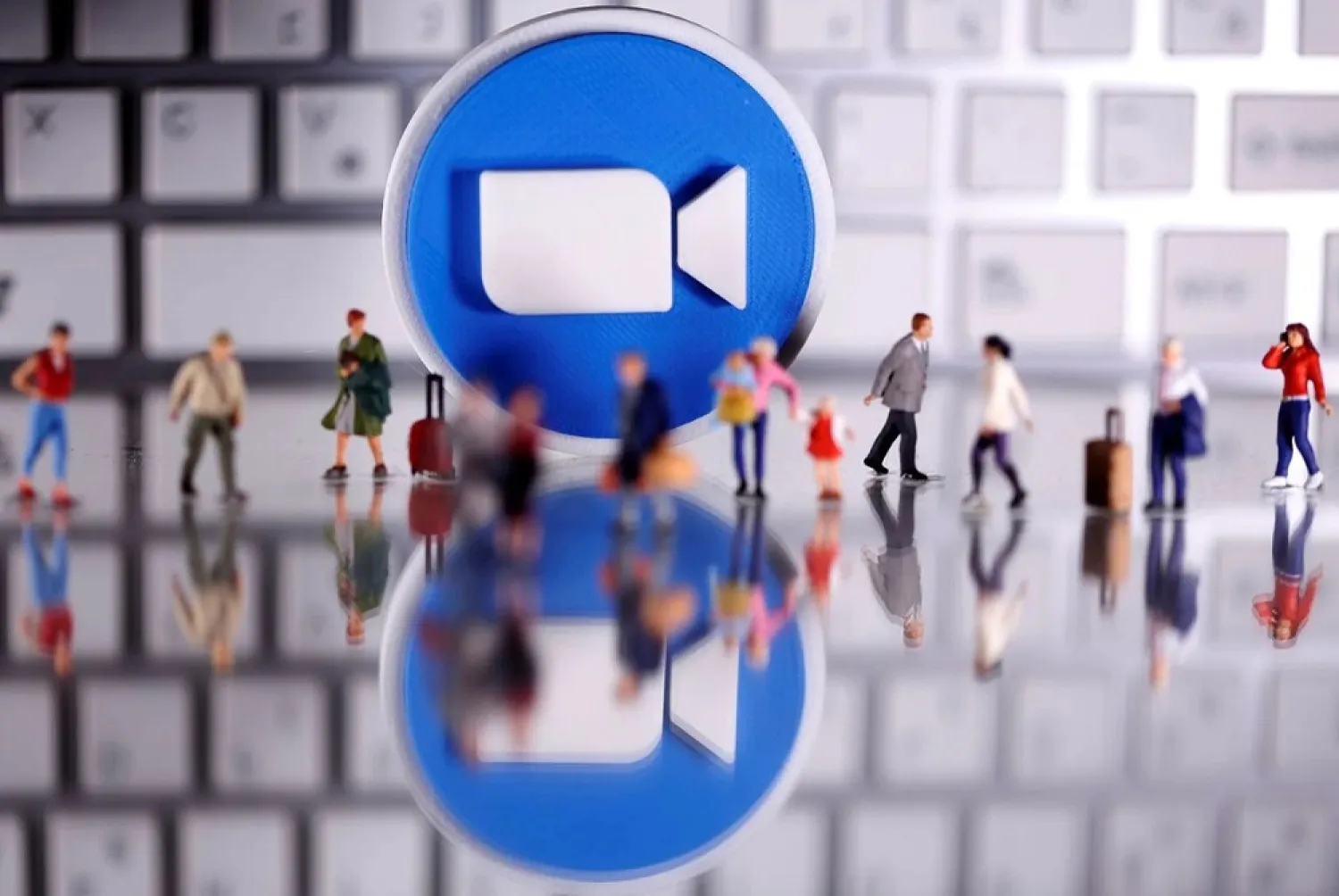
A 3D printed Zoom logo is placed between small toy people figures and a keyboard in this illustration taken April 12, 2020. (Reuters)
TT

Zoom Urged by Rights Groups to Rule Out ‘Creepy’ AI Emotion Tech

A 3D printed Zoom logo is placed between small toy people figures and a keyboard in this illustration taken April 12, 2020. (Reuters)

Human rights groups have urged video-conferencing company Zoom to scrap research on integrating emotion recognition tools into its products, saying the technology can infringe users' privacy and perpetuate discrimination.

Technology publication Protocol reported last month that California-based Zoom was looking into building such tools, which could use artificial intelligence (AI) to scan facial movements and speech to draw conclusions about people's mood.

In a joint letter sent to Zoom Chief Executive Eric Yuan on Wednesday, more than 25 rights groups including Access Now, the American Civil Liberties Union (ACLU) and the Muslim Justice League said the technology was inaccurate and could threaten basic rights.

"If Zoom advances with these plans, this feature will discriminate against people of certain ethnicities and people with disabilities, hardcoding stereotypes into millions of devices," said Caitlin Seeley George, director of campaign and operations at Fight for the Future, a digital rights group.

"Beyond mining users for profit and allowing businesses to capitalize on them, this technology could take on far more sinister and punitive uses," George said.

Zoom did not immediately respond to a request for comment.

Zoom Video Communications Inc emerged as a major video conferencing platform around the world during COVID-19 lockdowns as education and work shifted online, reporting more than 200 million daily users at the height of the pandemic in 2020.

The company has already built tools that purport to analyze the sentiment of meetings based on text transcripts of video calls, and according to Protocol it also plans to explore more advanced emotion reading tools across its products.

In a blog post describing the sentiment analysis technology, Zoom said its tools can measure the "emotional tone of the conversations" in order to help sales people improve their pitches.

But the rights groups' letter said rolling out emotional recognition analysis for video calls would trample users' rights.

"This move to mine users for emotional data points based on the false idea that AI can track and analyze human emotions is a violation of privacy and human rights," said the letter, a copy of which was sent to the Thomson Reuters Foundation.

"Zoom needs to halt plans to advance this feature," it added.

From classrooms to job interviews and in public places, emotional recognition tools are increasingly common, despite questions about their accuracy and human rights implications.

Critics of the technology often draw parallels to facial recognition technologies, which have been shown to have high error rates on non-white faces, and have led to wrongful arrests.

Esha Bhandari, deputy director of the ACLU Speech, Privacy, and Technology Project, called emotion AI "a junk science."

"There is no good reason for Zoom to mine its users' facial expressions, vocal tones, and eye movements to develop this creepy technology," she said in emailed comments.



Why AI Makes Computer Worms Harder to Stop

Letters spelling "AI," a keyboard and a robotic hand in this illustration created on September 23, 2026. (Reuters)
TT

Why AI Makes Computer Worms Harder to Stop

Letters spelling "AI," a keyboard and a robotic hand in this illustration created on September 23, 2026. (Reuters)

Anthropic's warning that AI-powered "worms" could soon spread across smart gadgets is the latest in a series of studies showing how artificial intelligence could supercharge self-spreading malware.

A computer worm is malicious software that spreads between devices on its own.

In June, Nicolas Papernot, an associate professor of electrical and computer engineering at the University of Toronto, led a team that built a prototype AI worm using freely available AI models.

Papernot, who has signed an open letter with recommendations for policymakers, spoke to AFP about why AI makes these attacks harder to stop.

The interview has been edited for length and clarity.

Q: How is AI changing these types of attacks?

A: The reality is that a lot of these "IoT" (Internet of Things or connected home) devices have very poor cybersecurity hygiene, and so they are very easy targets for bad actors to compromise.

Historically, a worm would exploit a fixed set of vulnerabilities, and that meant you could fix these vulnerabilities and prevent the worm from propagating any further to devices that had been updated.

Now, with AI, an attacker can design a worm that tailors the attack strategy to that device's specifics and these vulnerabilities can be different.

This makes it significantly harder to interrupt the propagation of an AI-driven computer worm, because you have to anticipate all the possible vulnerabilities the devices might present.

Some of these vulnerabilities are not software bugs.

They can also be misconfigurations -- for instance, if someone has used the same password for multiple services, or hasn't configured a database properly.

What AI-driven malware does is accelerate the pace at which these vulnerabilities are exploited and the scale.

In the past, your corner coffee shop, or the laptop in your basement that you use very rarely, might not be up to date, but it wouldn't be targeted by a human attacker, because they don't have the resources and the time to do that.

Now, the autonomy gained by using AI means that all these devices that are less immediate targets become interesting targets as a launchpad to attack more interesting targets.

But we have to keep in mind that a human is launching an agent.

Once launched, the agent can replicate, as we showed in our work, but it is launched by a human.

Q: What can we do to mitigate the risks?

A: We won't bring the risk to zero and we have to realize that, despite the fact that some of these vulnerability fixes are available, people don't update their devices or don't apply the fixes in a timely manner.

Despite cybersecurity experts calling for increased cybersecurity for decades, we still live in a world where a lot more can be invested in improving the security of our computer systems.

There are really three things we recommend in the very short term.

The first is to change development and testing practices to ensure that AI models are initially disconnected from the internet, as a precaution, to understand their behavior better before we expose critical infrastructure on the internet [to them].

The second recommendation is to create an international body to standardize both how we train and how we contain AI models. Both are important. We want to train models that are safer.

The last part is about making reporting of security incidents mandatory. Right now, we are only getting information as a function of what AI developers are willing to release, and that's a big problem.

In particular, the academic community needs a lot more information about incidents to be able to develop countermeasures much more quickly.

Otherwise, we have to do a lot of research on understanding the threat first, before we can develop the countermeasures. Otherwise, we won't see what bad actors are doing until an attack is launched.


Microsoft’s Brad Smith Calls for ‘Real and Effective’ AI Safety Standards

Microsoft Vice Chair and President Brad Smith addresses a keynote in Brussels, Belgium April 30, 2025. (Reuters)
TT

Microsoft’s Brad Smith Calls for ‘Real and Effective’ AI Safety Standards

Microsoft Vice Chair and President Brad Smith addresses a keynote in Brussels, Belgium April 30, 2025. (Reuters)

Microsoft president Brad Smith warned Tuesday that industry and governments must "act with urgency" to create "real and effective safety standards" to contain the risks linked to artificial intelligence.

"We're going to need for AI what we have for everything else in life... we need real and effective safety standards, and we need the public to have confidence in them," Smith told a group of reporters on the eve of an international AI summit in Dublin.

Concerns about AI safety have soared in recent months after models developed by OpenAI and Anthropic were involved in security incidents during testing, piling on pressure to regulate the technology.

"We've reached a point where we obviously need companies in the industry to step up and do more to address AI safety issues," Smith said. "I think we reached a time when we're going to need governments to do more as well."

The Microsoft boss outlined the company's proposals to strengthen safety across the sector, starting with a requirement that AI agents be equipped with "safety brakes" that users could activate in the event of an incident.

"The notion, especially for any AI that's running on critical infrastructure or some other kind of automated system, they have the ability to turn off or slow down," he explained.

Smith also called for AI providers to face mandatory incident-reporting obligations.

"If you are a business and you suffer a security breach that leads to the loss of consumer data, you have to let consumers know," he said. "The same logic should apply to people harmed by an AI agent," with a legal obligation to inform those affected.

The Microsoft president further advocated stronger testing and evaluation of AI models before they are released, to ensure they are safe.

"We need to act with urgency," he warned.

Smith is the latest in a series of leading industry figures to highlight the need for increased vigilance around AI technology. Among them, Dario Amodei, chief executive of Anthropic, has pledged to slow development unilaterally if necessary.

Nvidia CEO Jensen Huang on Tuesday said AI company leaders must take responsibility for ensuring the technology is developed safely.

Speaking in Paris, Huang said: "The full potential of AI can only be realized if we advance the capabilities of AI and the safety and security of AI at the same time."

"These are not conflicting goals. These are, in fact, the same goal."


Apple's HomeView Brings Personalized Siri to Smart Home, Takes on Amazon and Google

 People take pictures of the Apple HomeView, an iPad-like device meant to hang on walls or perch on tabletops that will showcase its AI-upgraded Siri virtual assistant, during a launch of smart home products in New York City, US, October 13, 2026. (Reuters)
People take pictures of the Apple HomeView, an iPad-like device meant to hang on walls or perch on tabletops that will showcase its AI-upgraded Siri virtual assistant, during a launch of smart home products in New York City, US, October 13, 2026. (Reuters)
TT

Apple's HomeView Brings Personalized Siri to Smart Home, Takes on Amazon and Google

 People take pictures of the Apple HomeView, an iPad-like device meant to hang on walls or perch on tabletops that will showcase its AI-upgraded Siri virtual assistant, during a launch of smart home products in New York City, US, October 13, 2026. (Reuters)
People take pictures of the Apple HomeView, an iPad-like device meant to hang on walls or perch on tabletops that will showcase its AI-upgraded Siri virtual assistant, during a launch of smart home products in New York City, US, October 13, 2026. (Reuters)

Apple on Tuesday unveiled a smart-home hub that taps iPhone user data to make Siri more personal, but promised privacy safeguards designed to keep that information out of the company's hands.

The HomeView smart-home hub, which took center stage at an event in New York, is an important test of Apple's AI strategy as it tries to close the gap with rivals Amazon and Alphabet's Google, while reinforcing its reputation for user privacy.

In a series of demonstrations, Apple showed Siri AI recognizing a user's face and performing personalized tasks such as fetching recipes from text messages, finding a nearby farmer's market for missing ingredients and then updating shopping lists.

When a different member of the household steps in, the HomeView recognizes that user's face ‌and switches to ‌their personal data, for example fetching information from text messages about when a ‌friend's ⁠early morning flight ⁠lands and how long it will take them to arrive, then teeing up a coffee maker a few minutes ahead of time.

The new device and Siri AI lean on the iPhone to make those personalized features happen, reflecting new CEO John Ternus' vision of Apple's best-selling product as an "intelligent personal hub" laid out at Apple's iPhone launch event last month.

Siri AI's usefulness hinges on how much it knows about a user. HomeView draws on a personal search index stored on the user's iPhone to personalize responses.

"That will give you what's more relevant, what's more timely, what's ⁠important to you, because it's coming from your iPhone," Kaiann Drance, Apple's vice ‌president of product marketing for home products, said in an interview.

PRIVACY ‌SAFEGUARDS AND ENCRYPTION

HomeView has its own operating system and runs on Apple's A18 chip, designed to process encrypted user data ‌in a walled-off part of the chip. To access private data, a user's iPhone has to be ‌connected to the same home network as HomeView, and no private data is stored on the HomeView device itself. Apple said none of the data is used for marketing, including first-party advertising efforts.

"One of the things we talked about is not building a marketing profile," Drance said. "Our intent is to provide users a helpful experience that adheres to simplicity, being personal, being ‌intelligent, and continuing our commitment to privacy."

A key difference between Siri AI and rival systems is that it does not end each interaction with ⁠a follow-up question designed to ⁠elicit more information from the user, a practice that Lilian Rincon, vice president of product marketing for AI, said was a deliberate choice on Apple's part.

"For us, it's really about creating these really great products for consumers, which is why we're not in this game of getting you to engage and continue the conversation in many, many, many turns," Rincon said.

HomeView also required Apple to figure out how to make Siri personal on a device shared by multiple people in communal spaces such as a kitchen. Apple demonstrated HomeView juggling requests from family members during the morning rush to school and work.

While the device can recognize up to six voices and faces to show private data, Apple said it will make decisions on which user to prioritize based on who last touched the device and other factors, and that some features such as weather and thermostat controls will be available to any user.

"There is a logic built in to kind of manage that experience," Drance said. "There was thought put into the nature of that communal computer sharing of the voice and the face recognition."