


Riyadh Interfaith Forum Emphasizes on Tolerance

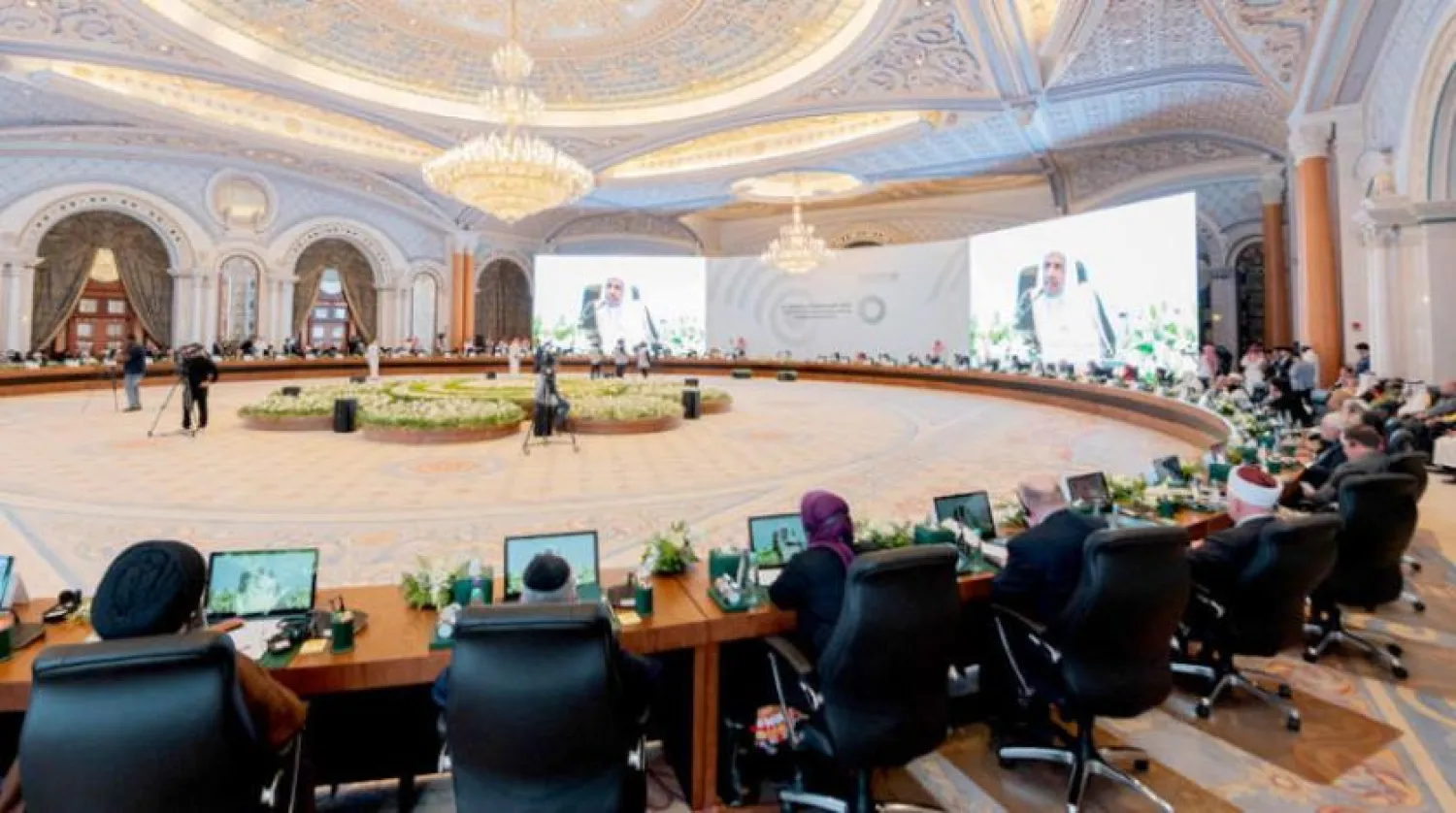
Muslim World League Chief Muhammad bin Abdul Karim Al-Issa gives his speech at the “Common Values among Religious Followers” forum in Riyadh, (Asharq Al-Awsat)
TT

Riyadh Interfaith Forum Emphasizes on Tolerance

Muslim World League Chief Muhammad bin Abdul Karim Al-Issa gives his speech at the “Common Values among Religious Followers” forum in Riyadh, (Asharq Al-Awsat)

The Muslim World League (MWL) launched on Wednesday the forum of "Common Values among Religious Followers", in the presence of around 100 religious leaders and scholars in Riyadh.

Attendees are participating in the forum to draw emphasis on human dignity, just equality between human beings, and the necessity of tolerance and understanding when it comes to religious and cultural differences.

Participants in the interfaith forum also called for the need to promote peace and solidarity around the world.

In his speech at the conference, Muhammad bin Abdul Karim Al-Issa, Secretary-General of the Muslim World League, said that all followers of religions have the right to exist with dignity and respect.

“We reject any wrong or deliberate interpretation that undermines coexistence between followers of religions,” said Al-Issa.

“This forum aims to enhance understanding and harmony among followers of religions… Our spiritual moderation brings together and does not differentiate,” calling for the need to avoid volatility in positions for the sake of interim goals.

Meanwhile, Patriarch Bartholomew I, the Ecumenical Patriarch of Constantinople and New Rome, said: “Religion is not only related to human fears, but to the identity of peoples and civilizations.”

He added that religion preserves human values and we must cooperate and apply what we know about peace.

The forum has an opening session and three discussion panels, the first of which is under the topic “Human Dignity: equality between human beings and the depth of human commonalities.”

It focuses on the necessity of understanding religious and cultural specificities and not offending their followers, but rather dialogue shall take place to clarify what needs to be clarified as it is among the morals of Islam.

The second is entitled “Bridging Humanity for the Good of Humanity: Dismantling the concept of the inevitable conflict, clash of civilizations, as well as promoting the values of friendship and cooperation among nations and people for the benefit of all,” under the slogan: “One human family gets to know each other, understands and cooperates while clarifying the truth for all.”

The third session deals with the topic: Moderation and understanding others ... the innate human values and their role in forming moderate personality, understanding diversity among humans, and not turning it into fear, hatred or conflict, but rather into dialogue, understanding and cooperation for the benefit of all.

Sessions will be followed by an open dialogue about the presented initiatives. A final statement will be read out during the final session, including a declaration of common human values in light of the outcomes of the forum's conclusions.



Saudi Foreign Minister, Egyptian Counterpart Discuss Regional Developments

Saudi Minister of Foreign Affairs Prince Faisal bin Farhan bin Abdullah
TT

Saudi Foreign Minister, Egyptian Counterpart Discuss Regional Developments

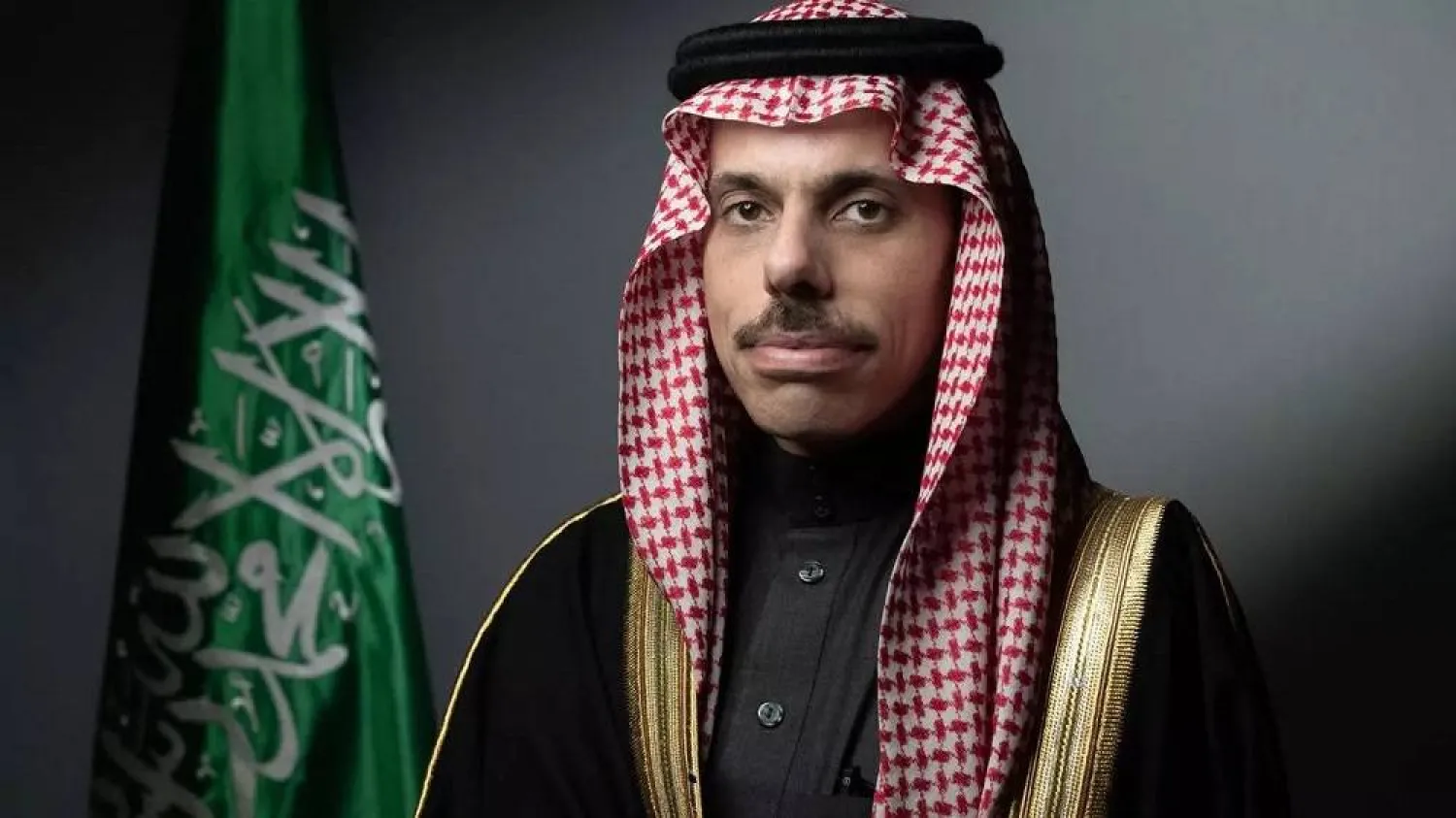
Saudi Minister of Foreign Affairs Prince Faisal bin Farhan bin Abdullah

Saudi Minister of Foreign Affairs Prince Faisal bin Farhan bin Abdullah received a phone call on Saturday from Egypt's Minister of Foreign Affairs, Emigration and Egyptian Expatriates Dr. Badr Abdelatty.

They discussed the latest regional developments and agreed to maintain bilateral coordination and consultation on these issues.


Albudaiwi: GCC States Consistently Seek to Enhance Global Security and Stability

Secretary-General of the Gulf Cooperation Council (GCC) Jasem Albudaiwi. SPA
TT

Albudaiwi: GCC States Consistently Seek to Enhance Global Security and Stability

Secretary-General of the Gulf Cooperation Council (GCC) Jasem Albudaiwi. SPA

Secretary-General of the Gulf Cooperation Council (GCC) Jasem Albudaiwi said that the GCC member states consistently seek to enhance security, stability, development, and prosperity to serve the mutual interests of the region's peoples and the entire world.

This comes in light of the rapid geopolitical shifts as well as growing security and economic challenges facing the globe, according to SPA.

During his participation in a panel session on GCC-European strategic links, held today in the Czech capital, Prague, on the sidelines of the GLOBSEC Global Security Forum 2026, the GCC secretary-general said: "The GCC General Secretariat’s participation in the GLOBSEC Global Security Forum 2026 embodies its keenness to maintain an active presence in regional and international forums. This engagement aims to bolster communication and exchange perspectives with international partners, decision-makers, and experts, thereby supporting efforts to maintain regional and international security while keeping pace with rapid global changes."

He also pointed out that the region has recently witnessed several events that have heavily impacted security and stability, adding that the GCC states have sustained their continuous diplomatic efforts to de-escalate and defuse tensions in the region, promoting paths of dialogue and diplomacy to protect regional security, stability, and the safety of its peoples.

The GCC secretary-general underscored the paramount importance of protecting the security of air and maritime corridors, ensuring freedom of navigation, the safety of supply chains, and the stability of global energy market.

"The stability of the Gulf region remains a fundamental pillar for the stability of the global economy and international maritime security," he reiterated.

Albudaiwi explained that recent developments have proven that the security of Europe and the Middle East has become unprecedentedly interconnected, asserting that any disruption in the Gulf region and its surrounding maritime passages directly affects the European economy, global energy security, supply chains, and international stability as a whole. He stressed that Gulf stability is no longer merely a regional matter, but has become a shared international interest.

Discussing the future of Gulf-European relations, Albudaiwi mentioned that both sides aspire to elevate their ties to broader horizons.

He added that the upcoming GCC-EU Summit will contribute to cementing cooperation across numerous fields and achieving the mutual interests of both parties, emphasizing the significance of reaching tangible results that serve both sides and elevate their ongoing cooperation.


Saudi Arabia Says Will Not Allow Practices That Deviate Hajj from its Objectives

Security commanders are seen at the press conference in Makkah on Friday (Bashir Saleh)
TT

Saudi Arabia Says Will Not Allow Practices That Deviate Hajj from its Objectives

Security commanders are seen at the press conference in Makkah on Friday (Bashir Saleh)

Saudi Arabia said it would not allow the Hajj to be used for any activity that strays from its religious purpose, as more than 1.5 million pilgrims arrived from abroad by Friday afternoon.

He made his statement during a press conference by Hajj security commanders at the Unified Security Operations Center (911) in the Makkah region.

Officials outlined security, traffic, and organizational plans for this year’s holy pilgrimage, along with related instructions and guidelines.

Lt. Gen. Mohammed Al-Bassami, director of Public Security, said the Hajj security system was fully ready to carry out its duties.

“Our goal is for pilgrims to reach their destination, perform their rituals, and return home safely,” he stressed.

Al-Bassami said crowd management plans focused on regulating pilgrim flows and minimizing overlap between routes. Technology, he said, was playing a key role alongside security personnel on the ground.

He said authorities were prepared for various scenarios based on risk assessments, following extensive drills and field exercises to test the readiness of all security agencies.

Lt. Gen. Mohammed Al-Omari, commander of the Special Emergency Forces at the Presidency of State Security, described the security plans as “integrated, proactive and flexible.” He said security forces were deployed in the central area and the holy sites to protect pilgrims.

Maj. Gen. Dr. Hammoud Al-Faraj, director general of Civil Defense, said preparations for the Hajj season were complete.

“We trained all bodies involved in serving pilgrims on self-protection,” he said, adding that male and female volunteers were working alongside Civil Defense personnel across all tasks and operations.

Maj. Gen. Dr. Saleh Al-Murabba, commander of the Passports Forces for Hajj, said the “Makkah Route” initiative accounted for 30% of arriving pilgrims. He said 1,518,153 pilgrims had arrived from outside Saudi Arabia by Friday afternoon.