


Rare Monkeypox Outbreaks Detected in N.America, Europe

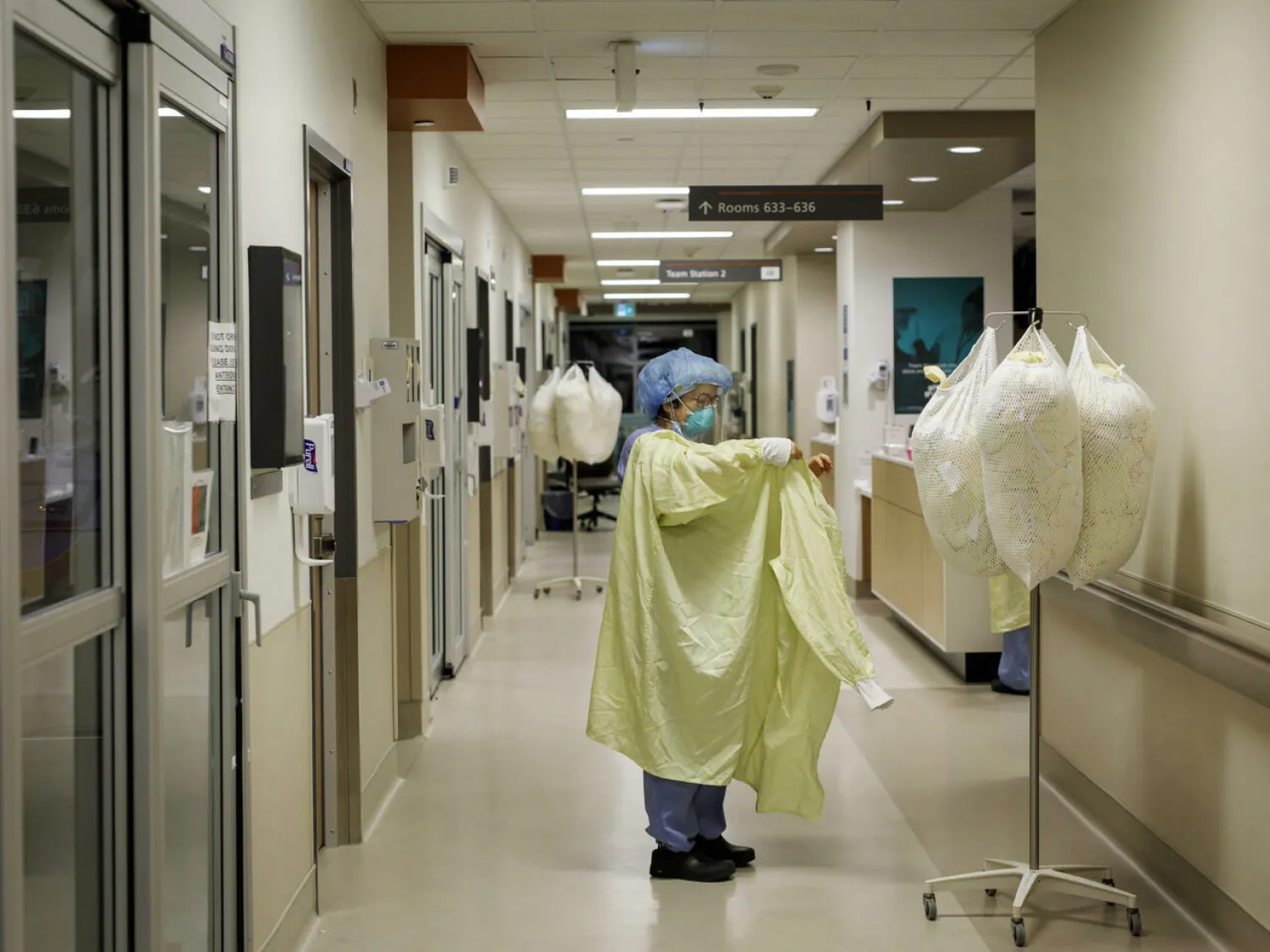
Multiple cases of monkeypox in Europe, the UK, Canada and the United States have health authorities worried that the dangerous, though usually not life-threatening, disease could be spreading Cole Burston AFP/File
TT

Rare Monkeypox Outbreaks Detected in N.America, Europe

Multiple cases of monkeypox in Europe, the UK, Canada and the United States have health authorities worried that the dangerous, though usually not life-threatening, disease could be spreading Cole Burston AFP/File

Health authorities in North America and Europe have detected dozens of suspected or confirmed cases of monkeypox since early May, sparking concern the disease endemic in parts of Africa is spreading.

Canada was the latest country to report it was investigating more than a dozen suspected cases of monkeypox, after Spain and Portugal detected more than 40 possible and verified cases, AFP said.

Britain has confirmed nine cases since May 6, and the United States verified its first on Wednesday, saying a man in the eastern state of Massachusetts had tested positive for the virus after visiting Canada.

The illness, from which most people recover within several weeks and has only been fatal in rare cases, has infected thousands of people in parts of Central and Western Africa in recent years but is rare in Europe and North Africa.

The World Health Organization (WHO) said on Tuesday it was coordinating with UK and European health officials over the new outbreaks.

"We really need to better understand the extent of monkeypox in endemic countries... to really understand how much is circulating and the risk that it poses for people who are living there, as well as the risk of exportation," infectious disease epidemiologist Dr. Maria Van Kerkhove said at a WHO press conference on Tuesday on global health issues.

The first case in Britain was someone who had traveled from Nigeria, though later cases were possibly through community transmission, the UK Health Security Agency (UKHSA) said in a statement.

"These latest cases, together with reports of cases in countries across Europe, confirms our initial concerns that there could be spread of monkeypox within our communities," said UKHSA Chief Medical Adviser Dr. Susan Hopkins.

The WHO said it was also investigating that many cases reported were people identifying as gay, bisexual or men who have sex with men.

"We are seeing transmission among men having sex with men," said WHO Assistant Director-General Dr. Soce Fall at the press conference.

"This is new information we need to investigate properly to understand better the dynamic of local transmission in the UK and some other countries."

- 'No risk to the public' -
The UKHSA noted that monkeypox has not previously been characterized as a sexually transmitted disease, underscoring that "it can be passed on by direct contact during sex."

"Anyone, regardless of sexual orientation, can spread monkeypox through contact with body fluids, monkeypox sores, or shared items (such as clothing and bedding) that have been contaminated with fluids or sores of a person with monkeypox," a US Centers for Disease Control and Prevention (CDC) statement said Wednesday, adding that household disinfectants can kill the virus on surfaces.

The illness often starts with flu-like symptoms such as fever, muscle ache and swollen lymph nodes before causing a chickenpox-like rash on the face and body, the US agency explained.

The Massachusetts Department of Health, said that the case there -- the first confirmed this year in the United States -- occurred in a patient who had recently traveled to Canada and "poses no risk to the public, and the individual is hospitalized and in good condition."

Health authorities in Canada's Quebec province announced they were investigating at least 13 suspected cases of monkeypox, the public broadcaster CBC reported Wednesday.

The cases were flagged to Montreal authorities after diagnoses were made in several clinics specializing in sexually transmitted and blood-borne infections.

The Public Health Agency of Canada (PHAC) told CBC it had called on "public health authorities and laboratory partners across Canada to be alert for and investigate any potential cases."

According to the CDC, there were no reported cases of monkeypox for 40 years before it re-emerged in Nigeria in 2017.



In First, French Presidential Candidate Gives Birth During Campaign

Marine Tondelier, National Secretary of Les Ecologistes (the Ecologists - EELV - French Green Party) party arrives for a meeting with French President Emmanuel Macron about the situation in the Middle East and Ukraine and their consequences for France's security and energy supplies, at the Elysee Palace in Paris, France, September 18, 2026. REUTERS/Sarah Meyssonnier
TT

In First, French Presidential Candidate Gives Birth During Campaign

Marine Tondelier, National Secretary of Les Ecologistes (the Ecologists - EELV - French Green Party) party arrives for a meeting with French President Emmanuel Macron about the situation in the Middle East and Ukraine and their consequences for France's security and energy supplies, at the Elysee Palace in Paris, France, September 18, 2026. REUTERS/Sarah Meyssonnier

French Greens leader and candidate in the 2027 presidential election Marine Tondelier said Wednesday she had given birth to a son, emphasizing that she would press on campaigning while prioritizing the health of her child.

Tondelier, 40, was the first candidate in French politics to campaign while pregnant and, while acknowledging the challenges, she had expressed hope it would push issues including infertility and motherhood up the agenda.

Her boy Leon was born in Lens in northern France on September 18, Tondelier told AFP, saying the family had kept the news private for a few days.

He was born hours after Tondelier as Greens chief had attended a rare meeting at the Elysee Palace where President Emmanuel Macron had warned France's political leaders over the risk of Russian hybrid attacks.

She told AFP that the birth had gone "very well," adding that she would be "working differently" for a while and "trying to figure out how to balance a presidential campaign with a newborn, whose health and well-being come first."

Already the mother of a 7-year-old boy, Tondelier was confirmed as the candidate for the Greens on Monday. In December, the party will decide whether to maintain her candidacy or withdraw and throw the party's weight behind another left-wing figure.

Polls currently show Tondelier, who has the slogan "another Marine is possible!" in reference to far-right frontrunner Marine Le Pen, lagging well under five percent in the first round of voting.


Voting Opens in Alaska's Annual Fat Bear Week

A brown bear eats his catch while fishing for salmon in Brooks Falls, Alaska on August 12, 2023. (Photo by JOHN MOORE / GETTY IMAGES NORTH AMERICA / AFP)
TT

Voting Opens in Alaska's Annual Fat Bear Week

A brown bear eats his catch while fishing for salmon in Brooks Falls, Alaska on August 12, 2023. (Photo by JOHN MOORE / GETTY IMAGES NORTH AMERICA / AFP)

Polls opened Tuesday in the only American election that really matters: Fat Bear Week.

While the United States might be gearing up for midterm ballots that will decide who runs Washington, hundreds of thousands of people were readying to vote on animals gorging themselves in rural Alaska.

In a contest that has rapidly become one of the internet's favorite moments, the brown bears of Katmai National Park unwittingly compete in a series of head-to-head contests to see which one of them has most impressively piled on the pounds ahead of hibernation.

Viewers can watch a livestream of the enormous animals as they scoop salmon from the Brooks River, or browse biographies of some of the top contenders, including before-and-after pictures showing how much weight the bears have gained over a summer of feasting.

"For each match-up, vote for the bear you believe best exemplifies fatness and success in brown bears," said organizers, according to AFP.

"The bear with the most votes advances to the next round. Only one will be crowned Fat Bear Week champion."

Last year's winner, Chunk, beat out a stiff challenge from two-time winner Grazer.

Summer and early autumn are key fueling periods for the brown bears, which will not eat for five months of hibernation, relying on their store of fat to survive the punishing Alaskan winter.

The online contest began in 2014 with just a few thousand people voting, but has now turned into an eagerly awaited exercise in tongue-in-cheek democracy with more than a million people voting every year.

The aim is to raise awareness of brown bears and their habitat in Alaska, and the risks they face from human activity.


Another Beluga Whale Dies at Chicago Aquarium after Rescue Mission from Canada Park

This photo provided by Shedd Aquarium shows a beluga whale named Osiris at Shedd Aquarium in Chicago, Aug. 20, 2026. (Rachel Mittelstaedt/Shedd Aquarium via AP)
TT

Another Beluga Whale Dies at Chicago Aquarium after Rescue Mission from Canada Park

This photo provided by Shedd Aquarium shows a beluga whale named Osiris at Shedd Aquarium in Chicago, Aug. 20, 2026. (Rachel Mittelstaedt/Shedd Aquarium via AP)

A third beluga has died at a Chicago aquarium after being rescued this summer from a shuttered Canadian marine park in a complex international operation that moved 30 whales to aquariums in the US and Spain.

Osiris, a 26-year-old female whale, died on Monday, Chicago's Shedd Aquarium said in a statement. The death comes less than a week after a fourth beluga, named Jelly Bean, died since it was rehomed at Oceanogràfic de València in Spain.

The deaths were sudden and unexpected as their health wavered amid the challenges of adjusting to a new home, according to statements from the aquariums.

Beluga whales are particularly vulnerable to changes in their environment, like climate change, pollution and other sources of stress, according to the National Oceanic and Atmospheric Association. Beluga whales native to the Cook Inlet on Alaska's coast are classified as an endangered species, and their population rapidly declined by nearly 80% from 1979 to 2018.

“When Shedd was asked to help with this rescue, we understood that these animals arrived with significant vulnerabilities and that the outcome for every individual could not be guaranteed,” The Associated Press quoted the Shedd Aquarium as saying in a statement.

The Shedd Aquarium took in 10 of the 30 belugas and four dolphins stranded at Marineland, an Ontario park that closed years ago and could no longer care for them. The Canadian government signed off on a last-minute agreement to move its last captive whales out of the country earlier this year, saving them from euthanasia.

The belugas came from the Marineland park and zoo in Niagara Falls, Ontario, which announced in early 2023 that it was for sale and closed to the public in late summer 2024.

Twenty whales — 19 belugas and one killer whale — had died at Marineland since 2019, according to provincial government data obtained through freedom of information laws and official statements.

The rescued belugas were moved in custom-made slings and temperature-controlled containers, Shedd staff told The Associated Press. Aquarium personnel traveled to Marineland to examine their health records in preparation for the move. They have monitored their health minute-by-minute since they arrived, the aquarium staff said.

Peekachu and Rain died at the Shedd in late August and early September after arriving from Canada. Another beluga that had lived at the aquarium for decades died around the same time.

Osiris was a “whale of clinical concern” since she arrived, according to the aquarium. The whale did not eat as consistently as her fellow animals, which complicated the efforts to keep her well-fed and hydrated, according to the statement.

“Osiris experienced periods of meaningful progress, both nutritionally and socially, but her overall condition remained closely monitored,” the aquarium stated.

Osiris' caretakers noticed sudden changes in her behavior and breathing patterns the morning of her death, according to the aquarium. She was moved to the medical habitat, but “her condition declined rapidly,” and she “passed away despite lifesaving efforts.”

A beluga sent to Spain died suddenly Jelly Bean, the whale that died at Oceanogràfic de València, also died “suddenly and unexpectedly,” according to José Rafael Serra, a spokesperson for the facility. The whale “experienced feeding difficulties, prompting the veterinary team to intensify her monitoring,” despite periods of improvement, Serra said in an email.

The Spanish aquarium took in two of Marineland's beluga whales, including Jelly Bean. The Georgia Aquarium and SeaWorld locations in San Diego and San Antonio have also accepted whales from the Canadian park.

The two rescued whales at the Georgia Aquarium showed decreased appetites and were examined, but no issues were found, the aquarium said in a social media post Friday. The whales at SeaWorld are in “stable health,” according to AnneMarie Iturrizaga, a spokesperson for the company that owns the parks.

The Shedd Aquarium notified the NOAA of Osiris’ death Monday, according to John Chu, a spokesperson for NOAA Fisheries. Within 30 days of the whales’ deaths, the aquarium must formally submit their names and causes of death, and on request, provide copies of necropsy reports, Chu said in an email earlier this month.

The Shedd Aquarium said it will conduct necropsies into the whales and will share the results when they are confirmed.

Andrew Trites, the director of the University of British Columbia’s Marine Mammal Research Unit, said it was concerning that the four belugas had died “so shortly after arriving in their new homes."

The belugas were in small, confined spaces on the flights out of Marineland, but that's not out of the ordinary for them, Trites said. The whales often swim in narrow spaces between sheets of ice, and “should be reasonably well adapted to that sort of condition,” he said.

“Four animals have died so shortly after arriving in the new homes, and that’s what stands out to me as being surprising," Trites said.