


Saudi Arabia Heads to Cannes to Promote Flourishing Film Industry, Support Emerging Talent

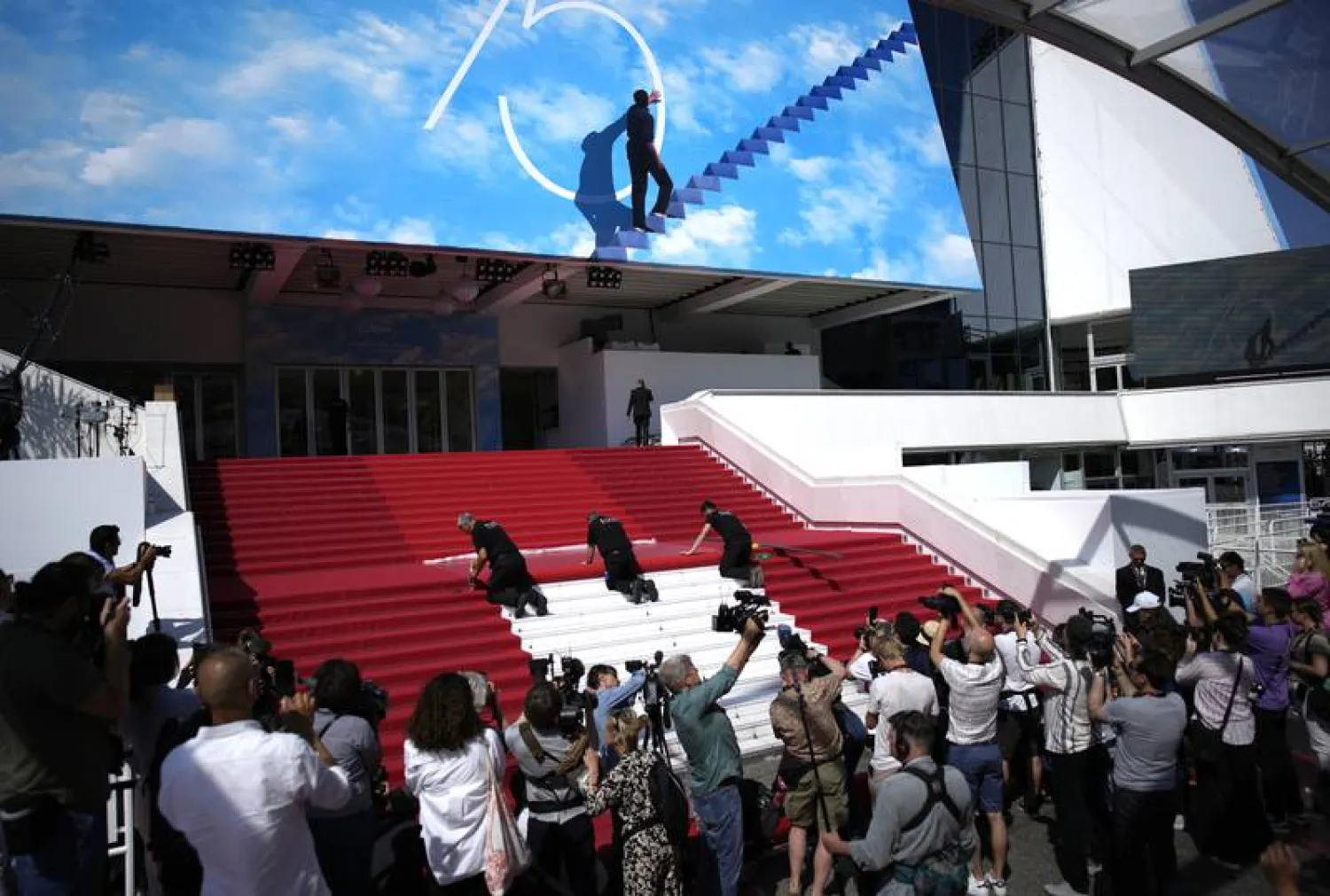
Crew members install the red carpet at the Palais des Festivals, ahead of the opening day of the 75th Cannes Film Festival. (AP)
TT

Saudi Arabia Heads to Cannes to Promote Flourishing Film Industry, Support Emerging Talent

Crew members install the red carpet at the Palais des Festivals, ahead of the opening day of the 75th Cannes Film Festival. (AP)

The Saudi Film Commission (SFC), is participating in the 75th edition of the Cannes International Film Festival which runs from 17-28 May, to build awareness of the country's rapidly developing film industry, showcase its unique cinematic and pristine locations, and champion new and exciting talent in a drive to become a world-class hub for film and TV production.

Located in the International Village, the Saudi Pavilion will be the epicenter of information, events, panel discussions, and networking, bringing together country partners who are making great strides in building the industry and enhancing the ecosystem in the Kingdom, reported the Saudi Press Agency on Thursday.

The Saudi Film Commission will be joined by partners from across the Saudi film sector including the Red Sea International Film Festival (RSIFF), Film AlUla (the Royal Commission for AlUla’s film agency), the Ministry of Investment of Saudi Arabia (MISA), the media hub of NEOM, and Ithra (King Abdulaziz Center for World Culture). MBC GROUP, the largest media company in the Middle East and North Africa region will be also present at the pavilion this year.

They are joined by other entities covering several sectors of the media and entertainment industry including production, distribution, content creation and talent development.

A delegation of promising Saudi film talent shaping the filmmaking culture of Saudi Arabia will also head to Cannes showcasing the best of the rapidly flourishing filmmaking scene. They will present their work at the Short Film Corner, a successful sidebar to the Festival organized by the Marché du Film and designed to give a new generation of filmmakers a platform on the global stage.

Abdullah Al Eyaf, CEO of the Saudi Film Commission, said: “We are thrilled to return to the Cannes Film Festival to connect with the international film industry to build awareness around what is happening in our flourishing creative sector and to showcase the country as a truly unique and exciting film destination.”

“The Festival is the perfect platform to champion emerging talent who will showcase their work on the big screen to the global film industry. This is an exciting time for Saudi Arabia, and Cannes provides a crucial opportunity for us to maximize opportunities as we drive the rapid growth of the industry.”

The Saudi Film Commission will also present the State of Arabia Conference at the Marché du Film featuring Saudi producer and director Aymen Khoja, Egyptian producer Mohammed Hefzy, and Tunisian director Lotfy Nathan.

Nathan is making his feature debut with “Harka” a recipient of the RSIFF’s Red Sea Souk Award and screening as part of the Festivals Certain Regard section.

The panel will explore the future of Arab cinema and discuss the opportunities and challenges that need to be addressed in order to build a robust industry that will elevate Arab cinema and command the attention it deserves.

Film AlUla will take the stage to introduce the country as a global film hub at the American Pavilion joined by Stephen Strachan, Film AlUla, Abduljalil Alnasser, General Manager of Sector Development and Investment Attraction at the Saudi Film Commission, Wayne Borg, Managing Director Media Industries, Entertainment and Culture at NEOM, Zeinab Abu Alsamh, General Manager of MBC Studios, Matt Rhodes, Producer and President at The Hideaway Entertainment and Christian Mercuri, CEO of Capstone.

The group will discuss the international and regional ambitions to become a production powerhouse, huge internal investment combined with a strong financial incentive offering, and a film-friendly ecosystem to support productions in an exciting new destination for filmmakers.

Over the last 18 months Saudi Arabia has provided the backdrop for three major Hollywood films, Ric Roman Waugh’s action thriller “Kandahar” filmed in the extraordinary landscape of AlUla, home to the UNESCO World Heritage Site, Hegra, and Jeddah, Rupert Wyatt’s historical epic “Desert Warrior” shot in the incredible new city state of NEOM and the region of Tabuk, and the Russo Brothers’ crime drama “Cherry” shot in AlUla and the capital Riyadh.

In addition, eight local feature films have reached completion in the last 12 months and ready to hit the festival circuit along with a slate of documentaries, commercials and local productions including “Norah”, written and directed by Tawfik Alzaidi and “Within Sand”, directed by Moe Alatawi.

Both films were recipients of a fund award at the Saudi Film Commission’s Daw’ Film Competition, an initiative launched by Saudi Arabia's Ministry of Culture in September 2019 to support Saudi film production and champion the next generation of filmmakers by establishing a sustainable funding program to bring Saudi content to the screen and wider global audiences.

Saudi Arabia hosts two film festivals annually, the Saudi Film Festival, now in its 8th edition, has grown to become a crucial springboard for exciting new voices, and the Red Sea International Film Festival which enjoyed a successful first edition in 2021, showcasing 136 films, representing 68 countries in 35 languages, including 28 world premieres with 38% of the program made up of female filmmakers and 27 homegrown features and shorts from exciting new Saudi voices.



SDRPY, Roads Maintenance Fund Sign Agreement to Support Transport Sector in Yemen 

The agreement aims to boost infrastructure efficiency, facilitate mobility and access, and stimulate economic and commercial activity. (SPA)
TT

SDRPY, Roads Maintenance Fund Sign Agreement to Support Transport Sector in Yemen 

The agreement aims to boost infrastructure efficiency, facilitate mobility and access, and stimulate economic and commercial activity. (SPA)

The Saudi Development and Reconstruction Program for Yemen (SDRPY) signed a memorandum of cooperation with the Roads Maintenance Fund in Yemen, as part of the program’s continued support for the transport sector in Yemen, reported the Saudi Press Agency on Thursday.

The agreement aims to boost infrastructure efficiency, facilitate mobility and access, and stimulate economic and commercial activity.

It seeks to ensure the sustainability of road maintenance and operations by improving efficiency through several initiatives. These include providing vehicle weighing stations to ensure compliance with legal load limits, offering technical and advisory support in the rehabilitation and operation of roads, and strengthening the fund’s capacities in cooperation with relevant Saudi entities.

The SDRPY has implemented projects and initiatives to rehabilitate, develop, and expand main and internal roads, including the expansion and rehabilitation of Al-Abr Road and Hijat Al-Abd Road, as well as projects for vital roads in several Yemeni governorates, totaling more than 200 kilometers.

The program’s transport-sector projects and initiatives have also spanned ports, border crossings, airports, and roads. These efforts have helped improve mobility, infrastructure, and logistics; providing safe transportation for individuals and goods; boosting access to services and markets; and supporting social connectivity and commercial and economic activity.

The SDRPY has delivered 268 development projects and initiatives in core and vital sectors, including education, health, water, energy, transport, agriculture and fisheries, development and support of the Yemeni government, across the country.


Saudi Arabia, Pakistan Underscore Their Strategic Defense Partnership 

Saudi Defense Minister Prince Khalid bin Salman and Pakistan's Chief of Army Staff and Chief of Defense Forces Field Marshal Asim Munir meet in Riyadh on Thursday. (Saudi Ministry of Defense)
TT

Saudi Arabia, Pakistan Underscore Their Strategic Defense Partnership 

Saudi Defense Minister Prince Khalid bin Salman and Pakistan's Chief of Army Staff and Chief of Defense Forces Field Marshal Asim Munir meet in Riyadh on Thursday. (Saudi Ministry of Defense)

Saudi Arabia and Pakistan underscored on Thursday the strength of their relations, strategic defense partnership and pioneering and pivotal role in preserving international security and peace.

Saudi Defense Minister Prince Khalid bin Salman received in Riyadh Pakistan's Chief of Army Staff and Chief of Defense Forces Field Marshal Asim Munir to discuss several issues of common interest.

The meeting was attended by Saudi Vice Minister of Defense Prince Abdulrahman bin Mohammed bin Ayyaf, Chief of General Staff Fayyad bin Hamed Al-Ruwaili and other officials.


World Defense Show Ends in Riyadh with 220 Deals, 60 Arms Contracts

Governor of the General Authority for Military Industries says show drew 137,000 visitors (World Defense Show)
TT

World Defense Show Ends in Riyadh with 220 Deals, 60 Arms Contracts

Governor of the General Authority for Military Industries says show drew 137,000 visitors (World Defense Show)

Engineer Ahmad Al-Ohali, Governor of the General Authority for Military Industries, said the third edition of the World Defense Show was the product of two years of coordinated work by government entities and private sector partners to deliver what he described as a landmark event.

Speaking at a press briefing on Thursday in Malham, north of Riyadh, Al-Ohali said the exhibition was held under the patronage of the Custodian of the Two Holy Mosques, King Salman bin Abdulaziz, with the follow-up and supervision of Crown Prince and Prime Minister Prince Mohammed bin Salman, and inaugurated under the patronage of Minister of Defense Prince Khalid bin Salman.

The authority organizes the show every two years as part of its mandate to build and support the military industries sector, he said, in a drive to boost military readiness, advance self-sufficiency, and meet Saudi Vision 2030’s target of localizing more than 50 percent of military spending by 2030.

Held under the theme “Future of Defense Integration,” the exhibition showcased what Al-Ohali described as a shift toward a fully integrated defense ecosystem rooted in partnerships, innovation, technology transfer, stronger supply chains, and the development of national talent.

This year’s edition, he said, stood out for its local innovations, the Defense Industry Lab, Saudi capabilities and homegrown talent, alongside closer alignment between education, training and sector needs.

Saudi Arabia has made what Al-Ohali called a historic leap in localizing military spending, rising from 4 percent in 2018 to 25 percent by the end of 2024, a fourfold increase in eight years.

The national workforce in the sector grew from 25,000 in 2020 to 34,000, an increase of about 40 percent, with Saudis now accounting for 63 percent of total employees.

He said the gains reflect a structural transformation since the authority’s establishment in 2018, with the sector moving from full dependence on imports to building an integrated and sustainable national industrial base.

“This is still the beginning,” he said, reaffirming the goal of surpassing 50 percent localization and achieving high local content by 2030.

Al-Ohali said 26 government entities backed the preparation and execution of the show. Over five days, the third edition set records, attracting 1,486 local and international exhibitors from 89 countries, including the world’s top 10 defense companies.

The event hosted 513 official delegations representing 121 governments and attracted 137,000 visitors. Exhibition space expanded to more than 272,000 square meters, up 58 percent from the previous edition, with four halls compared with three in earlier editions.

One of the region’s largest specialized aerial and static displays featured 63 static aircraft and 25 aircraft in live air shows, including F-16, F-15, F-35, and Typhoon jets, with participation from the Saudi Falcons and South Korea’s Black Eagles.

The static display area included around 700 military assets. A dedicated naval platform featured participation from 10 countries, alongside an outdoor platform for unmanned systems and a zone for live land demonstrations.

Al-Ohali said the exhibition generated 73 memorandums of understanding and 220 agreements in total, including 93 intergovernmental deals and 127 agreements between companies. Sixty arms procurement contracts were signed, totaling 33 billion riyals, exceeding the totals recorded in the two previous editions.

He said the agreements, memorandums, meetings, and contracts were central to the exhibition’s objectives. The strong turnout, he added, signaled international confidence in Saudi Arabia as a strategic partner and an attractive destination for defense investment, reflecting growing trust in the Kingdom’s investment environment, particularly in military industries.

Planning has already begun for the next edition in 2028, Al-Ohali said, adding that the third edition demonstrated the sector’s ability to deliver results.

The exhibition is no longer just a display space, he said. It has become an active platform to shape the future of defense integration, reinforcing Saudi Arabia’s position as an international hub for integrated defense industries.

He said the Kingdom will continue strengthening its standing among nations that manufacture and develop military technologies, aiming to become a regional and global center in this strategic field.