Egyptian Businessman Sentenced to 3 Years in Prison for Human Trafficking

Egyptian businessman, Mohamed Al-Amin. (Facebook)
TT

Egyptian Businessman Sentenced to 3 Years in Prison for Human Trafficking

Egyptian businessman, Mohamed Al-Amin. (Facebook)

The Cairo Criminal Court sentenced on Monday renowned Egyptian businessman Mohamed Al-Amin to three years in prison and fined him 200,000 Egyptian pounds after finding him guilty of human trafficking.

His case was exposed in January while his first trial was in March.

Al-Amin is a media and real estate tycoon who owned and managed several television channels and newspapers in Egypt.

The prosecution had referred Al-Amin’s case to the criminal court last February. It found him guilty of human trafficking when he exploited seven girls at an orphanage he founded in the southern Beni Suef province and of sexually assaulting the victims and threatening them with violence.

The referral came after hearing the testimonies of 13 eyewitnesses, the confessions of the victims, the examination of the defendant’s mobile phone, the Forensic Authority’s reports, the National Council of Childhood and Motherhood and the physiological and social research department at the Ministry of Social Solidarity.

The prosecutor-general’s office said in a statement that Al-Amin housed the victims in the orphanage for the purpose of sexually abusing them.

During the investigations, the exploited girls testified against Al-Amin.

Evidence collected from the his mobile phone contained a number of photos of the victims that revealed he was with them and proved he frequently visited the orphanage.

The owner of the Facebook page Atfal Mafqooda (Lost Children) had presented evidence, releasing a recording of one of the girls describing the abuse she endured.

The Ministry of Social Solidarity intervened in the case, pledging to respond with full force to any violations at social welfare institutions.

The Ministry said it will not hesitate in referring such cases immediately to the Public Prosecution for necessary action against the perpetrators, regardless of their positions.


Houthi Siege Puts Vaccination of Over 350,000 Children at Risk in Yemen’s Taiz

Children displaced by the Houthis at a school for displaced people near Aden (AP)
TT

Houthi Siege Puts Vaccination of Over 350,000 Children at Risk in Yemen’s Taiz

Children displaced by the Houthis at a school for displaced people near Aden (AP)

More than 350,000 children in Yemen’s Taiz governorate risk missing out on lifesaving vaccines as security restrictions and the ongoing Houthi siege of the city prevent immunization teams from reaching their communities, fueling fears of measles and rubella outbreaks.

The threat comes amid a deepening humanitarian crisis triggered by the military escalation that began in August, forcing more than 364,000 people from their homes, including over 145,000 in Taiz alone, according to UN figures.

The UN and its partners have managed to deliver food and relief supplies to around 300,000 displaced people, accounting for 70% of those displaced since the escalation began. Some 30% remain beyond the reach of humanitarian aid.

UN health partners said around 350,000 children in Taiz had missed out on a national measles and rubella vaccination campaign as insecurity and access restrictions prevented vaccines from reaching them.

The threat extends beyond those targeted by the campaign. More than 30,000 children under the age of one risk missing routine vaccinations as disruptions prevent health services and medical supplies from reaching affected areas.

The World Health Organization (WHO) and the United Nations Children’s Fund (UNICEF) have the resources and vaccines needed to carry out immunization campaigns. Yet neither can currently reach the children in Taiz.

A vaccination campaign launched in early November in other government-controlled areas immunized more than 600,000 children, underscoring the widening gap in healthcare access as security restrictions hamper vaccine deliveries.

Mass Displacement, Limited Aid

More than 364,000 people have fled their homes since the latest military escalation began in August, as hostilities and insecurity persist across several governorates, according to the UN Office for the Coordination of Humanitarian Affairs (OCHA).

Taiz governorate hosts the largest displaced population, with more than 145,000 people, piling pressure on health services, shelters and food supplies in host communities.

Despite access constraints, more than 25 humanitarian partners have provided healthcare to over 100,000 displaced people since the escalation began through mobile medical teams, ambulances and support for health facilities.

Emergency food aid, hygiene supplies and essential relief items have reached around 300,000 displaced people. Yet the response continues to fall short of mounting needs as displacement persists and more areas are affected.

Road Closures, Civilian Casualties

The UN Human Rights Office has verified 323 civilian casualties since the beginning of August, including 76 deaths and 247 injuries. Children account for more than a third of all casualties and half of those killed.

Road restrictions continue to hamper civilian movement and the flow of commercial goods into Taiz city. Most roads leading to the governorate were open for only a few hours during the day last week and were subject to sudden closures, the UN report said.

The restrictions are delaying deliveries of food and essential goods, leaving families stranded for prolonged periods, often without adequate sanitation facilities.

In Marib governorate, health facilities received 19 trucks carrying emergency medical supplies from a humanitarian partner, bringing the total to 33 since the first shipment arrived on November 4.

The UN renewed its calls for the protection of civilians and safe, unhindered humanitarian access, urging the lifting of restrictions preventing Taiz residents from receiving basic healthcare and relief aid as hundreds of thousands of children risk going without essential vaccinations.


Rural Taiz Defies Houthi Mobilization and Militarization

Children in a rural village in Taiz improvise a classroom game after being cut off from schooling. (X)
TT

Rural Taiz Defies Houthi Mobilization and Militarization

Children in a rural village in Taiz improvise a classroom game after being cut off from schooling. (X)

Rural communities in southern Taiz province, southwestern Yemen, have emerged as a flashpoint near the front lines, where the conflict has spilled into classrooms and the wider community. Houthi efforts to turn schools into platforms for ideological indoctrination and student recruitment have met with widespread resistance and boycotts.

Government authorities have suspended classes across Taiz since the Houthis escalated their offensive and seized control of most districts.

Despite the group's efforts to reopen schools, most teachers have opted to stay home or flee to government-controlled areas, leaving tens of thousands of children at risk of losing an academic year.

Several mothers in Al-Shamayatayn district told Asharq Al-Awsat their children were distraught at being unable to attend school.

The Houthis have turned many schools into military barracks, deepening parents' fears about sending their children back amid continued fighting and mounting resistance to the group's control and interference in daily life.

One mother recalled trying to persuade her child to stay home by showing him photographs of his school converted into a Houthi military barracks and military vehicles stationed nearby.

But when he asked to transfer to another school, she struggled to explain her fears that he could be subjected to indoctrination and recruitment.

The Houthis have pressed ahead with efforts to persuade parents to send their children back to school while repeatedly threatening education officials, staff and teachers with punitive measures.

A report by the American Center for Justice (ACJ) and the Yemeni Teachers Syndicate in Taiz documented Houthi abuses in October, including killings, abductions, enforced disappearances and the destruction and looting of schools.

It recorded the deaths of 13 teachers and education workers across several districts from shelling and direct gunfire, reflecting a systematic effort to subjugate educational institutions and communities in war-affected areas.

Houthi pressure and infighting

Local sources said a campaign was gaining traction on social media, with residents of rural southern Taiz circulating messages under slogans such as "Our schools are for education, not recruitment."

Women have also burned ideological pamphlets distributed by the Houthis in schools, government offices and markets.

A teacher working in Al-Shamayatayn recounted to Asharq Al-Awsat an unusual encounter with rival Houthi officials.

The teacher had fled to his native Al-Maqatirah district in neighboring Lahj province before the Houthis seized control of the area. He was surprised when a Houthi supervisor approached him, asking him to cooperate with the group and help resume classes at a local school.

He declined, saying that if he returned to teaching, it would be at the school where he was employed.

The supervisor tried to win him over, promising to facilitate his transfer and grant him privileges in return for his cooperation.

But another Houthi official, who oversaw his school in Al-Shamayatayn, called to warn him against accepting the offer and demanded that he return to his original workplace.

The teacher seized on the warning to fend off the first supervisor's demands. The incident, however, sparked a dispute between the two officials, who accused each other of overstepping their authority and obstructing their work, threatening to take the matter to the group's senior leadership.

Another education worker told Asharq Al-Awsat that the Houthis were pressuring education personnel through phone calls, social media messages and home visits by field commanders.

Their tactics ranged from veiled threats to promises of promotions and greater influence for those who complied.

Grassroots resistance

Field sources in Al-Mawasit, Al-Shamayatayn and Al-Ma'afer districts said markets and roads remained unusually quiet, with commercial activity sharply reduced nearly six weeks after the Houthi takeover. The group's supporters have also found Houthi slogans on walls erased overnight.

Traders and shop owners have refused to donate to the group or disclose details of their business activities and sales to its supervisors. Many have kept their shops closed or opened for limited hours.

Vendors and restaurant owners have refused to provide Houthi members with free goods or meals, insisting on payment upfront. Houthi members, meanwhile, have sought to win over residents by sharing food or handing out bread and canned goods, particularly to children.

Earlier this month, Asharq Al-Awsat reported that the Houthis were seeking to reactivate networks that had operated covertly before their recent expansion into rural villages to offset manpower losses, using schools and educational activities as a gateway into local communities.

The group has sought to step up its mobilization campaigns and lectures targeting young people and children, but few residents have attended.

Observers fear the Houthis could exploit the crippling economic crisis and deteriorating living conditions to lure young people and children.

Taiz's local authorities have intervened, formally warning education personnel and parents against participating in mobilization programs targeting students, following strict directives suspending classes over the Houthi escalation.

The authorities stressed that anyone facilitating or assisting recruitment efforts would face legal action.

Since taking control of southern Taiz, the Houthis have used the districts, particularly Al-Shamayatayn, as bases for military attacks in Al-Mudaribah and Al-Arah, Al-Maqatirah and Tur Al-Baha in Lahj province.



Lebanese Army Breaks Up Armed Clash in Hezbollah Stronghold

Lebanese army vehicles deployed at the scene of the clashes in Beirut’s southern suburbs. (Army Orientation Directorate)
TT

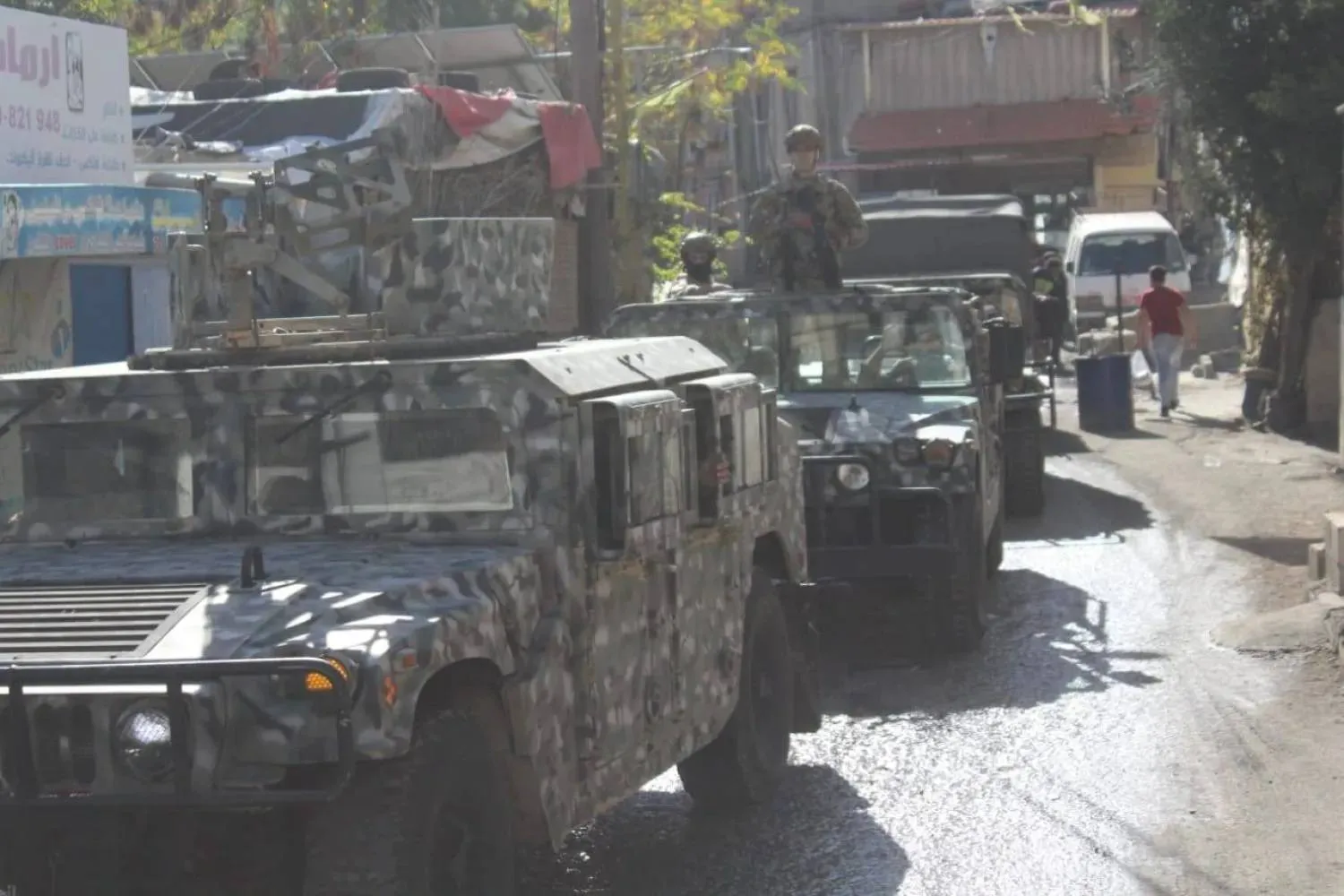
Lebanese Army Breaks Up Armed Clash in Hezbollah Stronghold

Lebanese army vehicles deployed at the scene of the clashes in Beirut’s southern suburbs. (Army Orientation Directorate)

The Lebanese army broke up an armed clash in the Kafaat area of Beirut's southern suburbs, a Hezbollah stronghold, that left several people wounded and sparked public anger over the gunfire, with residents calling on authorities to arrest those responsible.

The confrontation erupted between minibus drivers at the No. 4 bus stop in the Hay al-Jamaa neighborhood. Shots were fired, leaving several people wounded who were taken to the Lebanon Medical Center for treatment. The dispute later spread to the nearby Laylaki area, prompting residents to call on the army to intervene and put an end to the violence.

Videos circulating on social media showed individuals exchanging gunfire in Hay al-Jamaa, with one of the gunmen seen being struck by a bullet.

The area frequently sees armed clashes involving members of clans from eastern Lebanon’s Bekaa Valley who reside in the southern suburbs.

Army patrols swiftly deployed in force, driving the gunmen into hiding, field sources told Asharq Al-Awsat. The army sent reinforcements and began pursuing those involved in the shooting, the sources added.

Lebanon’s National News Agency (NNA) reported Thursday afternoon that a tense calm had returned to Hay al-Jamaa following the clashes between the minibus drivers.

Troops deployed across Kafaat, around Lebanon Medical Center and in Laylaki and Hay al-Jamaa to contain the violence and restore calm, the agency said.

The Lebanese Army Command later said an army unit had intervened to contain a personal dispute that escalated into an armed clash in Laylaki, carrying out raids that led to the arrest of four Lebanese nationals.

Security operations were ongoing to apprehend the remaining suspects, it added.

Armed clashes are a recurring problem in Beirut’s southern suburbs, where the widespread possession of firearms and machine guns among numerous groups has fueled confrontations that often leave people wounded and terrorize residents.

The violence has repeatedly drawn condemnation from residents frustrated by the persistent clashes and gunfire.

Kafaat residents said the problem was compounded by the presence of individuals who enjoy preferential treatment and protection.

“People here are demanding that the state put an end to uncontrolled weapons as a priority to protect residents. ... We can no longer endure the risks and intimidation,” one resident told Asharq Al-Awsat, pointing to disruptions to daily life and mounting risks to schoolchildren as clashes recur.

The Lebanese army pursues suspects wanted for gunfire offenses in the southern suburbs, as it does elsewhere in the country.

Last week, an army unit raided several homes of wanted suspects in the southern suburbs in pursuit of two individuals accused of opening fire on previous occasions, seizing weapons and military ammunition.

On Nov. 13, the Lebanese Army Command announced that its Intelligence Directorate had carried out a targeted security operation following close monitoring of weapons transportation and trafficking activities.

The operation involved a raid on a warehouse in Musharrafieh, in Beirut’s southern suburbs, where the army seized a large cache of weapons and military ammunition and arrested one person.