


Saudi FM Says 'Not Enough Progress' Made at Talks with Iran

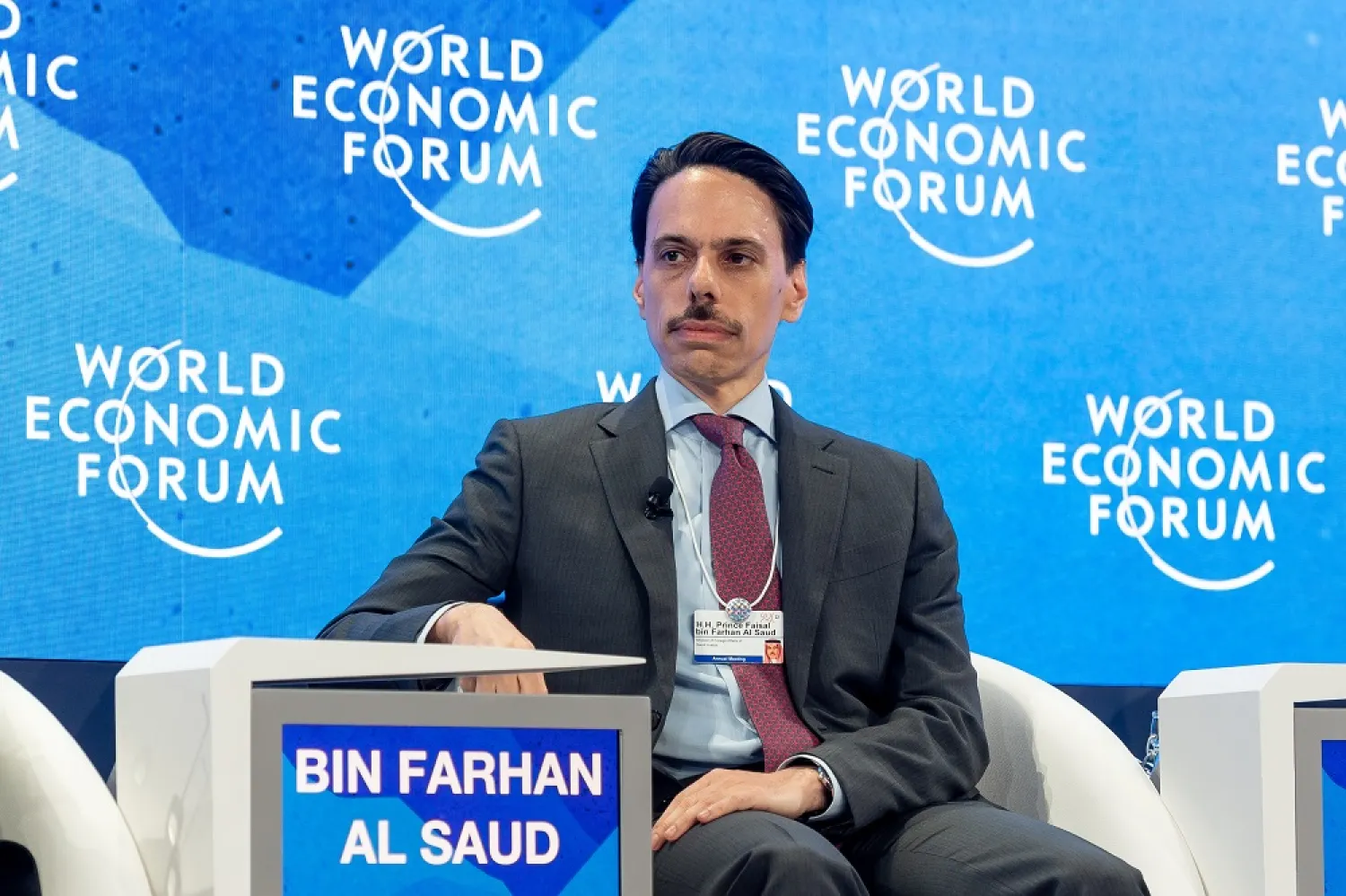
24 May 2022, Switzerland, Davos: Prince Faisal bin Farhan bin Adbullah, Minister of Foreign Affairs of Saudi Arabia, attends the "Geopolitical Outlook" session at the World Economic Forum Annual Meeting in Davos-Klosters. (World Economic Forum/dpa)
TT

Saudi FM Says 'Not Enough Progress' Made at Talks with Iran

24 May 2022, Switzerland, Davos: Prince Faisal bin Farhan bin Adbullah, Minister of Foreign Affairs of Saudi Arabia, attends the "Geopolitical Outlook" session at the World Economic Forum Annual Meeting in Davos-Klosters. (World Economic Forum/dpa)

Saudi Foreign Minister Prince Faisal bin Farhan bin Abdullah revealed on Tuesday that "some" progress has been made in talks with Iran, but it was "not enough."

"Our hands are stretched out," he told a World Economic Forum panel on security in the Middle East.

Joining Prince Faisal on the panel were his counterparts from Kuwait, Ahmed Nasser Al Sabah, and Jordan, Ayman al-Safadi, and Prime Minister of the Iraqi Kurdistan Region Masrour Barzani.

Prince Faisal said Saudi Arabia, like its fellow members in the Gulf Cooperation Council, was seeking a future that is based on hope, development and cooperation in line with the Kingdom's Vision 2030. This hope extends beyond its borders.

"Our hands are extended to Iran and we are trying to send a message that moving towards a new phase of cooperation in the region carries benefits for everyone," he stressed.

He added that this hinges on Tehran making up its mind about joining this path towards a prosperous future.

He revealed that all GCC countries hold talks with Iran and are coordinating closely.

On a nuclear deal with Tehran, the FM said it would "be potentially a good thing if it's a good deal" and reiterated Riyadh's stance that Tehran's regional activities should be addressed.

Lebanon
Turning to the recent parliamentary elections in Lebanon, Prince Faisal said: "They were the voice of the Lebanese people. We have previously stated that Lebanon needed change."

"How this change is brought about is up to them," he added.

He noted that the elections were a "strong" sign, but that it was too soon to jump to conclusions.

The elections saw Iran-backed Hezbollah and its allies lose their majority at parliament.

Change depends on the decisions the Lebanese politicians take. "Will they embark on real economic reform?" Prince Faisal asked. "Will political reform restore the authority of the state and the legitimacy of its institutions and fight corruption?"

"We hop so. We will support it if it happens," he pledged.

Jordan's FM Safadi added: "We will not allow the collapse of Lebanon. Everyone [in the region] will pay the price of that."

Syria
On Syria, he said the greatest danger his kingdom confronted in recent years was terrorism. Now, that threat is drug smuggling to Jordan and through it, to Iraq, Kuwait and Saudi Arabia.

The continuation of the current situation will deepen the crisis and with it, the suffering of the Syrian people and refugees, he warned.

Everyone agrees that the only solution in Syria is political, he added.

Safadi reiterated Amman's call to draft a mechanism that allows Arabs to play a collective role to resolve the crisis, by redefining it as a Syrian cause, not an open arena were international powers vie for interests.

Two-state solution
Asked if Saudi Arabia would consider normalizing relations with Israel, Prince Faisal replied that normalizing ties between the region and Israel carries many benefits for everyone, but "we will not be able to reap them without resolving the Palestinian cause."

He said the crisis is still at the root of instability in the region. Leaving it unresolved will embolden extremists and hardliners, he warned.

"Our priority today lies in pushing forward the peace process, which will help the Israelis, Palestinians and entire region."

Safadi, for his part, criticized the lack of political prospects to resolve the Palestinian-Israeli conflict.

"This kills hope and empowers extremists everywhere," he warned, while stressing that the two-state solution was the only solution, which would see the formation of a sovereign Palestinian state based on 1967 borders with East Jerusalem as its capital.



Saudi, Swedish FMs Stress Importance of Intensifying Int’l Efforts to End Regional Escalation

Saudi Minister of Foreign Affairs Prince Faisal bin Farhan bin Abdullah and his Swedish counterpart Maria Malmer Stenergard meet in Riyadh on Tuesday. (SPA)
TT

Saudi, Swedish FMs Stress Importance of Intensifying Int’l Efforts to End Regional Escalation

Saudi Minister of Foreign Affairs Prince Faisal bin Farhan bin Abdullah and his Swedish counterpart Maria Malmer Stenergard meet in Riyadh on Tuesday. (SPA)

Saudi Minister of Foreign Affairs Prince Faisal bin Farhan bin Abdullah received in Riyadh on Tuesday his Swedish counterpart Maria Malmer Stenergard for talks on regional developments.

They underlined the importance of intensifying international efforts to de-escalate tensions to preserve regional peace and stability.

They FMs also tackled the bilateral relations between their countries and ways to bolster them in various fields.

Stenergard stressed Sweden’s condemnation of the Iranian attacks in the region, expressing its solidarity with the affected countries and the need for navigation to return to normal in the Strait of Hormuz.

The ministers also reviewed the humanitarian situation in Gaza and the Israeli attacks on Lebanon.

Also on Tuesday, Prince Faisal received a telephone call from his Egyptian counterpart Badr Abdelatty to discuss regional developments.

They underscored the importance of intensifying efforts to de-escalate tensions in a manner that preserves regional peace and security.


Swedish FM to Asharq Al-Awsat: We Stand in Full Solidarity with Saudi amid these Difficult Times

Swedish Foreign Minister Maria Malmer Stenergard. (Turky Al-Agili)
TT

Swedish FM to Asharq Al-Awsat: We Stand in Full Solidarity with Saudi amid these Difficult Times

Swedish Foreign Minister Maria Malmer Stenergard. (Turky Al-Agili)

Swedish Foreign Minister Maria Malmer Stenergard stressed her country’s full solidarity with Saudi Arabia amid the difficult conditions in the region, adding that the Kingdom was a “highly valued partner and interlocutor on regional and global issues”.

In an interview to Asharq Al-Awsat, she said: “I have long planned to visit Saudi Arabia and I am very pleased to finally be here. It is important for me to be able to personally convey my government’s sincere support and solidarity with Saudi Arabia in current difficult times.”

“We commend the Kingdom’s resilience and commitment to support dialogue and peaceful solutions. Sweden and Saudi Arabia share a joint interest in global peace and stability within a rules-based international order. During my discussion with Foreign Minister Prince Faisal bin Farhan bin Abdullah, I have also been able to outline Sweden’s approach to major international conflicts, including our strong support to Ukraine,” she added.

“I also wanted to meet with additional representatives in the very diverse group of Swedish or ‘Swede-tech’ companies present in Saudi Arabia, such as Envac, Getinge, TetraPak and Hitachi Energy. I wanted to express my sincere gratitude for their contribution to the impressive development of Saudi Arabia and for being excellent ambassadors of Sweden’s spirit of innovation and building a better future,” she continued.

On Saudi-Swedish relations and aspects of cooperation, Stenergard said: “Swedish- Saudi relations are excellent and ever-expanding. Saudi Arabia has for a long time been one of Sweden’s largest trading partners in the MENA region. Swedish companies, like Ericsson and ABB, have been present in the Saudi market since the 1950’s and 60’s and continue to bring jobs to Saudis across the Kingdom.”

US-Israel war on Iran

On the US-Israel war on Iran, she said: “Sweden views the situation with great concern. Sweden’s position is clear: we urge all parties to continue talks and pursue a diplomatic solution.”

“There is a strong global urge and interest that these efforts, as soon as possible, lead to sustainable peace. Any final arrangement must address key concerns, such free navigation in the Strait of Hormuz, ensuring that Iran does not acquire nuclear weapons and that Iran does not pose a threat to regional and international security,” she stated.

On whether Sweden would be involved in ensuring freedom of navigation in the Strait of Hormuz, the Red Sea and the Bab el-Mandeb strait, she replied: “Sweden is engaged in efforts to uphold freedom of navigation in the region, such as the French British initiative, together with Saudi Arabia.”

“We continue to assess how Sweden can best contribute. As a member of the European Union, Sweden contributes to the EU led Operation Aspides in the Red Sea, which aims to safeguard maritime security and ensure continued freedom of navigation through key waterways such as the Red Sea and the Bab el-Mandeb strait,” Stenergard went on to say.

NATO summit

Asked about the outcomes of the recent NATO summit in Sweden, she told Asharq Al-Awsat: “Sweden is happy to have hosted a productive meeting of the NATO Ministers of Foreign Affairs in Helsingborg. The meeting was an important milestone on the road to the NATO Summit in Ankara.”

“We are pleased that Sweden could facilitate a meeting that allowed for open and constructive discussions. Hosting our first NATO meeting at ministerial level is an expression of Sweden’s ambition to be an active and constructive NATO ally,” she added.

Lebanon-Israel negotiations

Turning to the future of the Israeli and Lebanese negotiations, she stressed that she was “deeply concerned about the situation on the ground, including the large-scale demolition of villages in southern Lebanon, and the very large number of internally displaced people.”

“The Swedish position is clear: the ceasefire must be respected and talks on a long-term solution need to continue. Israel must withdraw from Lebanese territory and respect Lebanon’s sovereignty and territorial integrity,” she demanded.

“At the same time, a sustainable peace requires the disarmament of Hezbollah, in line with UN Security Council resolutions and decisions by the Lebanese government. There can only be a diplomatic solution to this conflict,” she said.


Oman, Kuwait Support Stability, Dialogue to Tackle Regional Challenges

Omani Foreign Minister Badr bin Hamad Al Busaidi and his Kuwaiti counterpart Sheikh Jarrah Jaber Al Ahmad Al Sabah sign the MoU during their meeting on Monday. (ONA)
TT

Oman, Kuwait Support Stability, Dialogue to Tackle Regional Challenges

Omani Foreign Minister Badr bin Hamad Al Busaidi and his Kuwaiti counterpart Sheikh Jarrah Jaber Al Ahmad Al Sabah sign the MoU during their meeting on Monday. (ONA)

Oman and Kuwait stressed on Monday the importance of maintaining coordination and consultations, bolstering security and stability, and supporting dialogue and diplomacy to tackle challenges in the region.

The countries held the 11th session of the Oman-Kuwait Joint Committee in Al Jabal Al Akhdar in Oman. It was chaired by Omani Foreign Minister Badr bin Hamad Al Busaidi and his Kuwaiti counterpart Sheikh Jarrah Jaber Al Ahmad Al Sabah.

The meeting addressed the deep-rooted fraternal relations between their countries. The officials discussed ways to boost bilateral cooperation in a number of fields to serve common interests, in translation of the aspirations of the wise leaderships of Oman’s Sultan Haitham bin Tarik and Kuwait’s Emir Sheikh Mishal Al Ahmad Al Jaber Al Sabah, reported Oman’s state news agency ONA.

Al Busaidi said that the meeting was held in implementation of the supreme directives of the leaderships of the two countries, calling for deepening bilateral cooperation, particularly in the economic, commercial, cultural, and scientific fields, and exchanging expertise to achieve greater integration and partnership between Oman and Kuwait.

He pointed out that the regular convening of the joint committee reflects the attention and care it receives from the leaderships of both countries, and embodies the joint commitment to strengthening its role as an effective institutional framework to propel cooperative relations toward more advanced and comprehensive levels.

For his part, Sheikh Jarrah stressed that the two countries' celebration this year of the 55th anniversary of their diplomatic relations reflects the development and growth of their ties.

The FMs said that Omani-Kuwaiti relations are a model of sincere fraternal bonds among the countries of the Gulf Cooperation Council.

They signed a memorandum of understanding in the field of cybersecurity, and an executive program in the field of standardization.