

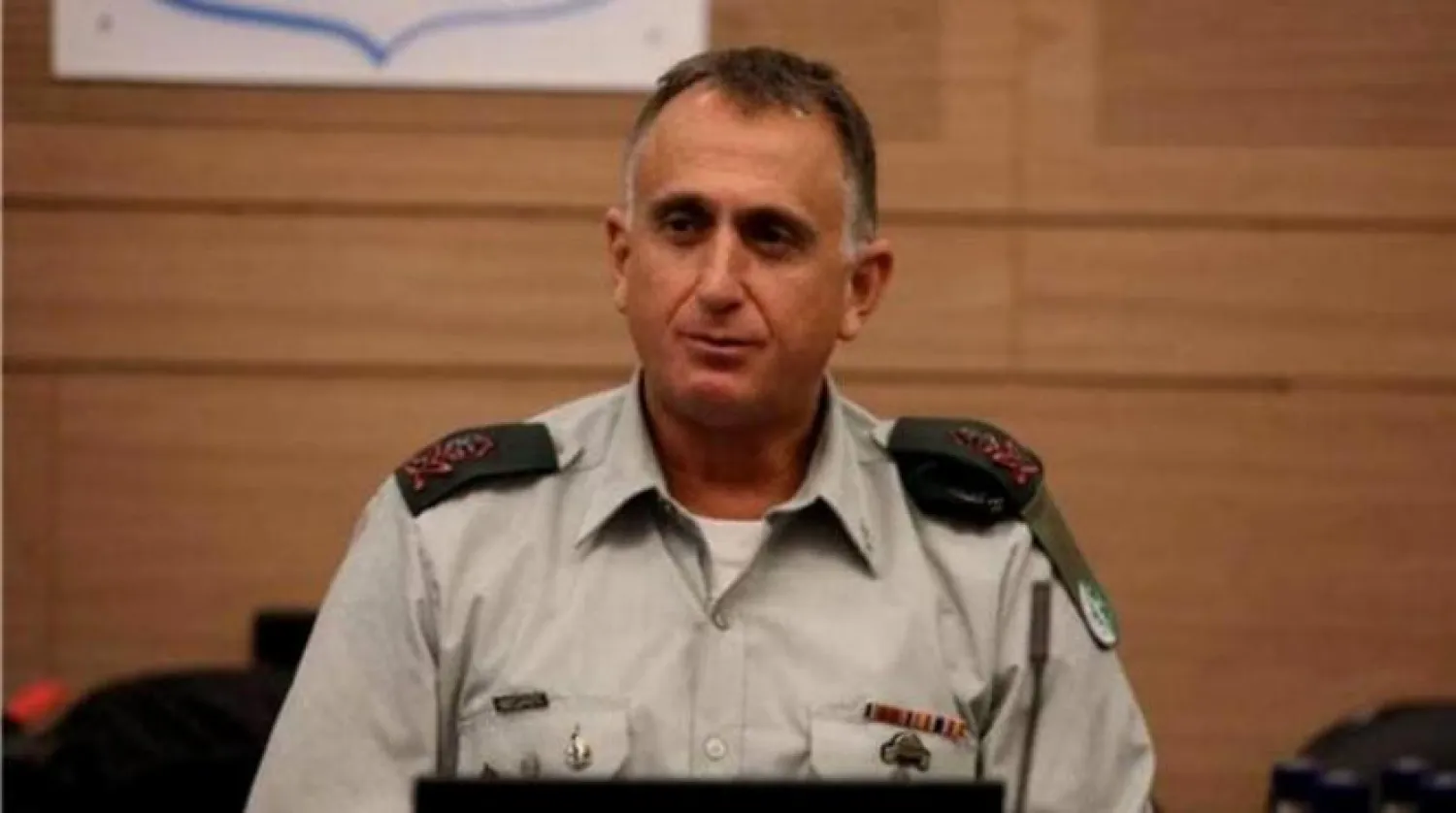

Israel’s Military Figures Endorse US Stance to Reach Nuclear Deal with Iran

Israel’s former Military Intelligence Chief Tamir Hayman
TT

Israel’s Military Figures Endorse US Stance to Reach Nuclear Deal with Iran

Israel’s former Military Intelligence Chief Tamir Hayman

Leaders of the military and security institutions in Israel disagree with Prime Minister Naftali Bennet government’s hardline opposition to the Iranian nuclear deal, political sources in Tel Aviv revealed on Wednesday.

They support the US policy towards Iran, led by President Joe Biden, generals in the Pentagon, the army and intelligence services, and prefer reaching an agreement with Tehran instead of the failure of the ongoing negotiations in Vienna.

The sources said these Israeli figures cannot engage in public discussions with the government, so they don’t express their stances and continue to prepare for direct military confrontations with Tehran and conduct drills to launch raids on Iranian nuclear facilities.

But in order to influence the government’s stance, they push veteran retired generals to speak on their behalf to the media as experts.

In this context, Israel’s former military intelligence chief endorsed a return to the Iran nuclear deal this week, asserting that such a move would be in Israel’s interests at the current time.

“At any point in time, things should be examined according to the data available. Therefore, the reality of here and now, reaching a deal is the right thing,” Maj. Gen. Tamir Hayman said in an interview with Israel Hayom, published on Wednesday.

Hayman affirmed that Tehran has exceeded the amount of fissile material sufficient to produce the first bomb.

“This means that the situation that would have happened once the nuclear deal elapsed (in 2030) wouldn't have been as bad as the current situation, as Iran has stockpiled so much enriched material and its abilities have advanced beyond what the deal had allowed it to pursue,” he warned.

He affirmed that an agreement between Western powers and Iran will buy Israel time.

“It would diminish and reset the amount of enriched material that Iran has, set it back and it would buy us (Israel) a very long time because enrichment takes a long time.”

Israel could put this time to good use, he stressed, noting that it can issue threats, improve military capabilities, form international coalitions, or put in place infrastructure for the post-deal period.

Hayman, who headed the Israeli military's Intelligence Directorate until late last year, is now the director of the Institute for National Security Studies (INSS).

Ofer Shelah, the former senior member of the Knesset Foreign Affairs and Defense Committee, also published a similar position on Ynet news website on Wednesday.

He stressed that the government is making a grave mistake in opposing the nuclear deal, since it would affect its ties with the US administration and harm its own interests.

He said Israel’s arrogance, narrow-mindedness, and addiction to using force will not cripple Iran’s nuclear plans, but rather convince Tehran that nuclear arms are something they must attain for protection.

History has taught us that those who set their minds to attaining a nuclear weapon, do so, Shelah wrote.

He pointed out that Iran is giving the impression that it has yet to make a final decision on whether it actually wants that.

“Instead of concentrating all resources on trying to prevent it from reaching such a decision we're merely applying more and more force,” he lamented.



Iran, US Trade Blows as Middle East Peace Deal Draws No Nearer

A man walks near an anti-US mural on a building in Tehran, Iran, June 9, 2026. Majid Asgaripour/WANA (West Asia News Agency) via Reuters
TT

Iran, US Trade Blows as Middle East Peace Deal Draws No Nearer

A man walks near an anti-US mural on a building in Tehran, Iran, June 9, 2026. Majid Asgaripour/WANA (West Asia News Agency) via Reuters

Iran attacked US bases in Jordan and Bahrain on Wednesday, the latest salvo in tit-for-tat strikes with the United States after the downing of a US helicopter over the Strait of Hormuz.

The worst bout of fighting between Washington and Tehran since their April 8 ceasefire has cast further doubt on US President Donald Trump's earlier claim that negotiations were in their "final throes" before reaching an enduring settlement to end the Middle East war.

The fresh Iranian strikes came after the United States carried out its own attacks on Iran in response to Tehran shooting down an American helicopter.

Jordan's military said it shot down five missiles from Iran, with no casualties or material damage.

The hostilities extended to other countries in the Middle East, with air raid sirens sounding in Bahrain after the Iranian Revolutionary Guards said they had struck a US base there.

The Kuwaiti military said its air defenses were engaging "hostile aerial targets".

The incidents came after the US military said it had "completed" what Trump portrayed as a retaliatory assault on Iran over the downing of an Apache attack helicopter.

US Central Command (CENTCOM), which oversees American forces in the Middle East, said on X that it had "struck Iranian air defense, ground control stations, and surveillance radar sites near the Strait of Hormuz with precision munitions from US Air Force and Navy fighter jets".

Iranian Foreign Minister Abbas Araghchi had earlier threatened payback, saying on X: "The US (has) opted to test our determination. Our Powerful Armed Forces will leave no attack or threat unanswered."

- Deal or no deal? -

During the US strikes, Iranian media reported at least two series of explosions along Iran's southern coast near the Strait of Hormuz.

Digital news outlet Axios reported that US forces had attacked several Iranian air defense systems and radar systems around the strait.

Hours earlier, Trump had said talks to end the three-month-long war were in their final stages -- a claim he has made repeatedly in the past few weeks.

Asked whether it would be matter of days or weeks, the US leader said it would take "two or three days".

But after the downing of the helicopter on Monday, Trump said in a telephone interview with ABC News that the United States was responding "in a strong manner".

"And I believe the response should be very strong, very powerful, and that's what this one is," he said.

The shaky ceasefire between Washington and Tehran already faced a serious test over the weekend when Iran and Israel briefly resumed their attacks, before later announcing a halt.

Iran has insisted any deal to end the war must include a truce in Lebanon, which was drawn into the conflict when Iran-backed Hezbollah fighters within its borders fired rockets at Israel on March 2.

Israel responded with an extensive campaign of airstrikes and a ground invasion that has killed more than 3,600 people. Exchanges of fire with Hezbollah have not stopped despite a nominal truce.

Lebanese officials said 11 people were killed in airstrikes on the southern city of Tyre on Tuesday.

The Israeli military also warned the entire city to evacuate.

An AFP correspondent saw residents of Tyre fleeing and heavy traffic heading north after the Israeli warning.

Another correspondent in the coastal city of Sidon, further north, saw displaced people arriving from Tyre, some with belongings strapped to the roofs of their cars.

- Strait on the edge -

The renewed fighting has also overshadowed efforts to reopen the Strait of Hormuz, the critical waterway for global fuel supplies that Iran has virtually blockaded since the start of the war.

Crude prices jumped one percent on Wednesday amid dimming prospects of a deal to reopen the strait, having fallen as much as five percent at one point the previous day on optimism an agreement would be reached.

On Tuesday, Araghchi urged foreign forces to leave the strait and surrounding areas, warning that they faced a risk of being caught in the crossfire if they remained.

"The Strait of Hormuz is NOT international waters but shared between Iran and Oman," Araghchi said.

"Foreign forces in proximity to our territory are at constant risk... (the) best solution is for them to leave," he said.

The Apache helicopter is the second crewed aircraft that Washington has confirmed was shot down by Iran during the war, following the loss of an F-15 fighter plane in April.

CENTCOM said the two crew members were rescued after the helicopter went down near the coast of Oman.


UK Says New Law Will Crack Down on Hostile States’ Proxies from Next Month

 Britain's Prime Minister Keir Starmer hosts a roundtable meeting for leaders of NHS Trusts, at 10 Downing Street in central London on June 9, 2026. (AFP)
Britain's Prime Minister Keir Starmer hosts a roundtable meeting for leaders of NHS Trusts, at 10 Downing Street in central London on June 9, 2026. (AFP)
TT

UK Says New Law Will Crack Down on Hostile States’ Proxies from Next Month

 Britain's Prime Minister Keir Starmer hosts a roundtable meeting for leaders of NHS Trusts, at 10 Downing Street in central London on June 9, 2026. (AFP)
Britain's Prime Minister Keir Starmer hosts a roundtable meeting for leaders of NHS Trusts, at 10 Downing Street in central London on June 9, 2026. (AFP)

Britain said on Tuesday ‌that a law to crack down on proxies acting for states deemed to be hostile such as Iran was expected to come into force next month, as it steps up powers to counter what it says is a growing threat posed by such groups.

The new powers, promised in the wake of a spate of antisemitic attacks in London, seek to close a gap in legislation to target state-linked organizations paying organized crime groups or low-level felons to carry out surveillance, sabotage, or other activities on ‌their behalf.

In recent ‌months there have been numerous arson ‌attacks ⁠on Jewish sites, with ⁠police saying they were investigating possible Iranian links, while there have been convictions for people accused of spying or acting on behalf of Russian and Chinese organizations.

"Where foreign states are found to be engaging in activity that threatens lives or undermines our democratic institutions, we must ensure that such actions have consequences," Prime Minister ⁠Keir Starmer said in a statement. "We will not ‌tolerate hostile actors paying petty criminals ‌to do their dirty work."

Britain's domestic intelligence agency MI5 has ‌warned of state-threat investigations increasing by 35% last year, including 20 ‌potentially lethal Iranian-backed plots.

Britain has accused China and Russia, as well as Iran, of using proxies. All three dismiss the claims as propaganda.

The legislation would make it illegal to express support for designated proxies ‌or to take money from them, providing for jail terms of up to 14 years.

Last ⁠week, an ⁠Iraqi national denied involvement in multiple attacks against American and Israeli interests in Europe, including some of the recent attacks in Britain, during a US court appearance.

He is accused of directing people to carry out attacks in the name of Harakat Ashab al-Yamin al-Islamiya (HAYI), a component of an Iran-backed faction which the US considers a terrorist organization directed by Iran's Revolutionary Guard Corps (IRGC).

Many British lawmakers have called for the banning of the IRGC, but there was no indication of whether it would be included under the new legislation, with about 10 or fewer designations expected in the first year after it has become law.


Ukraine, Latvia Sign Drone Deal, Zelenskiy Says

 Ukraine's President Volodymyr Zelenskiy attends a press conference during the Nordic-Baltic cooperation (NB8) Prime Ministers' meeting in Tallinn, Estonia, June 9, 2026. (Reuters)
Ukraine's President Volodymyr Zelenskiy attends a press conference during the Nordic-Baltic cooperation (NB8) Prime Ministers' meeting in Tallinn, Estonia, June 9, 2026. (Reuters)
TT

Ukraine, Latvia Sign Drone Deal, Zelenskiy Says

 Ukraine's President Volodymyr Zelenskiy attends a press conference during the Nordic-Baltic cooperation (NB8) Prime Ministers' meeting in Tallinn, Estonia, June 9, 2026. (Reuters)
Ukraine's President Volodymyr Zelenskiy attends a press conference during the Nordic-Baltic cooperation (NB8) Prime Ministers' meeting in Tallinn, Estonia, June 9, 2026. (Reuters)

Ukraine has signed a drone deal with Latvia, President Volodymyr Zelenskiy said on Tuesday as he met with Latvian Prime Minister Andris Kulbergs on the sidelines of a summit between Ukraine and Nordic and Baltic states in the Estonian capital Tallinn.

"These are concrete things to strengthen our joint defense and co-production, and, importantly, this also means Ukraine's expertise and experience helping to strengthen our partners," Zelenskiy said in a post on X.

He gave no ‌details of what ‌the deal entailed.

Kulbergs said the agreement ‌would ⁠give Latvia technological know-how ⁠and co-production opportunities.

"We need to protect our skies, and nobody knows how to do that better than Ukraine," he told a joint press conference with Zelenskiy and other leaders attending the summit, adding that drones were responsible for the vast majority of deaths of Russian troops in the ⁠Ukraine war.

Since the outbreak of the Iran ‌war in late February, Zelenskiy ‌has managed to leverage Ukraine's expertise in drone warfare into a ‌series of successful diplomatic deals during visits to Europe and elsewhere.

Rustem Umerov, the chairman of Ukraine's defense and security council, said Latvia was the sixth country to join Kyiv's drone cooperation initiative.

Last month, Zelenskiy said nearly 20 countries ‌were interested in drone deals with Ukraine.

"Ukraine is interested in ensuring that every region of Europe ⁠has sufficient ⁠protection against Russian threats," Zelenskiy said on X.

The Baltic countries, which are all members of NATO, have seen several instances of drones entering their airspace in recent weeks, as Ukraine has stepped up its long-range attacks on Russian energy facilities. Ukraine has blamed the incidents on Russia affecting the drone paths with electronic warfare.

Responding to a question on such incidents during an earlier joint press conference with his Estonian counterpart Alar Karis, Zelenskiy repeated that Ukraine was sending its experts to help protect the skies of its close partners.