

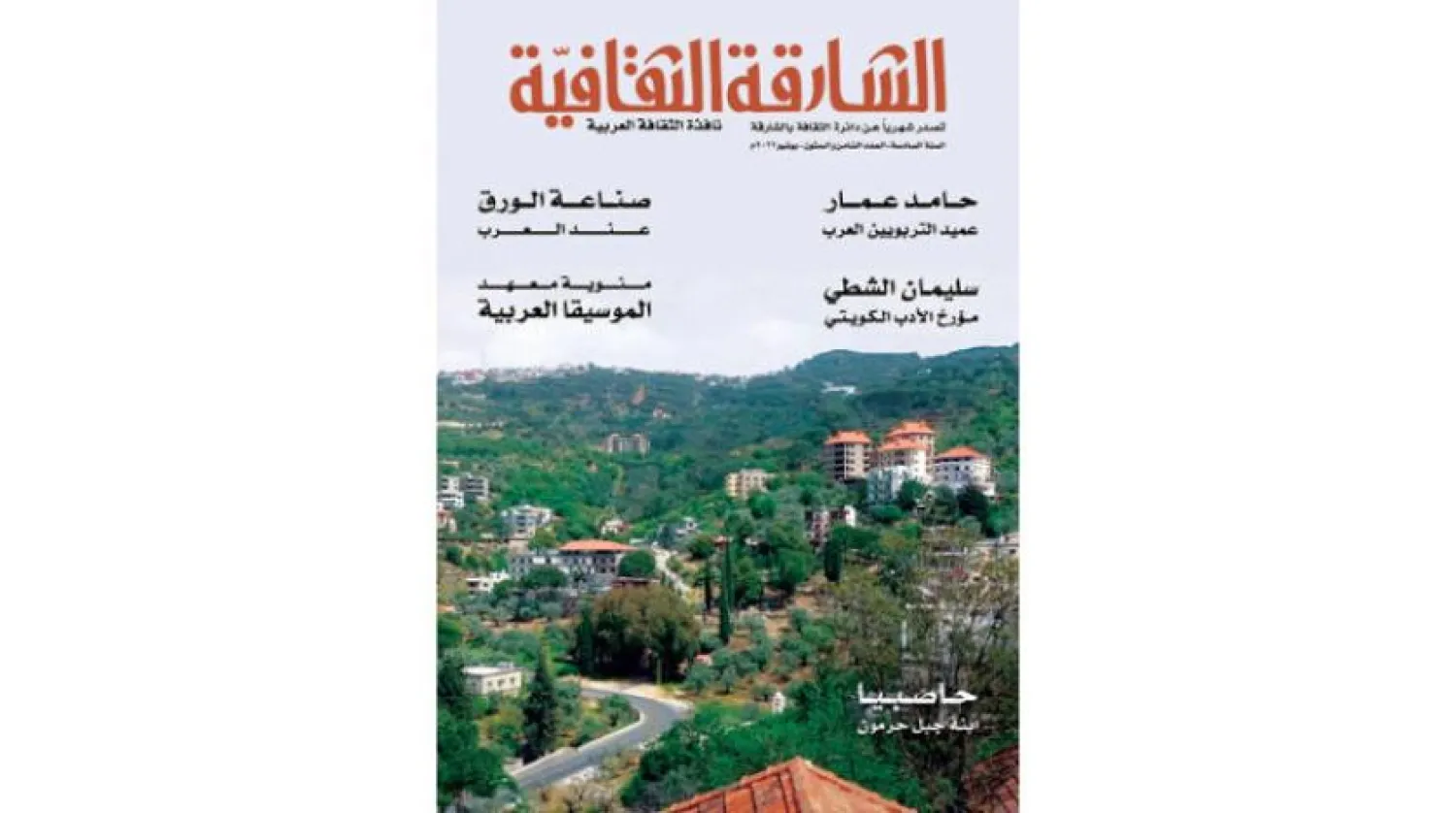

Al Shariqa Al Thaqafiya Magazine: Arabic Language, Challenges of the Era

Al Shariqa Al Thaqafiya Magazine: Arabic Language, Challenges of the Era
TT

Al Shariqa Al Thaqafiya Magazine: Arabic Language, Challenges of the Era

Al Shariqa Al Thaqafiya Magazine: Arabic Language, Challenges of the Era

The 68th edition of Al Shariqa Al Thaqafiya Magazine, curated by the Sharjah Culture Department, has been released.

“The Islamic arts are known for resilience and flow that allowed them to overcome many obstacles, and renew their identity through cultural blending and exchange,” read the editorial.

In his article “Our Arabic Language… Challenges of the Era”, editor-in-chief Nawaf Younes discussed major problematics that are facing, affecting, and challenging the Arabic language.

“We see that binary our classic Arabic language has with the slang Arabic; it’s a challenge we see across our Arab region. Our mother language includes another language that promotes different accents among us,” he explained.

Yakzan Mustapha wrote about al-Battani, an Arabic math scientist, who created the geometric concepts and equations, while Walid Ramadan wrote about Prince Leone Caetani, founder of the modern Italian Orientalist School. Suleima Hamdan took the readers in a tour in the Lebanese city of Hasbaya, known for its pottery production and olive trees, and Adel Atiya wrote about Banha, the Egyptian city of honey, antiquities, and flower-based perfumes.

In the “Literature and Novelists” section, we read Dr. Mohammed Saber Arab's article about “Hamed Ammar, leader of the Arab pedagogues”, who inspired the young Arabic generations. We also read several articles including “Nicholas Ziade: One of Best Arab Historians in 20th Century” by Abdul Rahman al-Hloush; and “World of Novelist Suleiman al-Shati…Best short story writer in Kuwait” by Amira al-Miligi.

This issue also explored the experience of Algerian author Al Hbib al-Saleh in an article by Dr. Hani Mohammed.

Nabil Suleiman wrote about the project that documents the immigration literature and its revival, while Dr. Reda Atiya shed light on the experience of Majid Toubia and his project. Zakaa Maredly discussed the experience of poet Suleiman al-Issa, while Tharaa Hani showcased the works of Khalifa al-Talisi, a prominent contributor to the intellectual and literary movement in Libya.

The "Under Light Circle” section includes the following articles: “Between Two Cultures…Zaki Najib Mahmoud and New Cultural Formula,” by Najlaa Maamoun; “Hanged Mirror…From Explanations to Al-Hajjaj’s Eloquence” by Abrar al-Agha; “Praise of Heroism between Drama and Symbolism (in the novel ‘Sea Stories’)” by Mustapha Ghanayem; and “Awareness Current in Novels (in the novel ‘Good Enough’)” by Dr. Huwaida Saleh.

The also issue included several short stories and translations of Arabic novels including “The Story of Letters” by Sulaf Hilal, and “Reflections on Roaming Soul”, short story by Awatef al-Jarouf.



Saudi Arabia, Syria Underline Depth of their Cultural Ties

Syrian President al-Sharaa receives the Saudi minister of culture and the accompanying delegation at the Conference Palace in Damascus on Thursday. (SPA)
TT

Saudi Arabia, Syria Underline Depth of their Cultural Ties

Syrian President al-Sharaa receives the Saudi minister of culture and the accompanying delegation at the Conference Palace in Damascus on Thursday. (SPA)

Saudi Arabia and Syria underlined the strength of their cultural relationship during high-level meetings held in Damascus on Thursday, on the sidelines of the opening of the Damascus International Book Fair 2026, where the Kingdom is participating as guest of honor.

Syrian President Ahmad al-Sharaa received Saudi Minister of Culture Prince Badr bin Abdullah bin Farhan at the Conference Palace in the capital.

Earlier the same day, Prince Badr met with his Syrian counterpart, Minister of Culture Mohammad Yassin Saleh, during an official visit to attend the fair. T

he Saudi minister congratulated Syria on hosting the exhibition and expressed his wishes for continued prosperity, progress, and stability for the Syrian government and people.

Both meetings highlighted the depth of cultural relations between the two countries, the importance of expanding joint cultural cooperation across various fields, and the alignment of positions on issues of mutual interest in a way that serves both nations.

The Saudi delegation included senior officials and advisers, among them representatives from the Royal Court, the Ministry of Culture, and the King Abdulaziz Public Library, reflecting broad institutional engagement in the visit.

In the evening, Prince Badr attended the opening ceremony of the fair’s special session, held under the patronage and in the presence of al-Sharaa. The event drew wide official and cultural participation, including Arab ministers, political and intellectual figures, and a distinguished group of writers and cultural figures.

In a post on the X platform, Prince Badr thanked “our brothers in Syria for their generous hospitality and their efforts in organizing the Damascus International Book Fair.”

The minister also inaugurated the Kingdom’s pavilion at the fair in the presence of the Syrian minister of culture and the Qatari minister of culture.

Saudi Arabia’s guest-of-honor participation continues until Feb. 16 and reflects its growing prominence and leadership in the Arab and global cultural landscape.

This participation aligns with Saudi Vision 2030, which places culture at the heart of national development, viewing it as a space for dialogue, a bridge for civilizational communication, and a tool for strengthening ties among Arab peoples.

The Saudi Literature, Publishing and Translation Commission is leading the Kingdom’s participation, highlighting the development of the cultural sector and reaffirming the central role of books as carriers of knowledge and awareness.

The Saudi pavilion boasts a comprehensive cultural program featuring intellectual seminars, poetry evenings, a manuscript exhibition, traditional Saudi fashion displays, hospitality corners, archaeological replicas, and performing arts that express the depth of the Kingdom’s cultural heritage.

On the sidelines of the visit, Prince Badr, accompanied by Minister Saleh, toured the National Museum of Damascus, which houses rare artifacts spanning prehistoric eras, ancient Syrian civilizations, classical and Islamic periods, as well as traditional and modern art.


UNESCO Honors Al-Bisht Al-Hasawi as Thousands Flock to Al-Ahsa Festival

Visitors can explore interactive displays, participate in live workshops, and witness the meticulous process of tailoring this iconic symbol of prestige - SPA
TT

UNESCO Honors Al-Bisht Al-Hasawi as Thousands Flock to Al-Ahsa Festival

Visitors can explore interactive displays, participate in live workshops, and witness the meticulous process of tailoring this iconic symbol of prestige - SPA

The third edition of Al-Bisht Al-Hasawi Festival is drawing thousands of regional and international visitors to Ibrahim Palace in historic Al-Hofuf.

Organized by the Heritage Commission, this year’s festival celebrates the inscription of the Bisht on UNESCO’s Representative List of the Intangible Cultural Heritage of Humanity.

The event showcases Al-Ahsa’s centuries-old tradition of hand-weaving and gold embroidery, a craft passed down through generations of local families, SPA reported.

Visitors can explore interactive displays, participate in live workshops, and witness the meticulous process of tailoring this iconic symbol of prestige.

With UNESCO's participation and representatives from six countries, the festival has evolved into a global platform for cultural dialogue, cementing the Bisht’s status as a world-class cultural treasure.


Saudi, Syrian Culture Ministers Tour National Museum of Damascus

The ministers observed the museum’s extensive collections spanning prehistoric eras to modern art. SPA
TT

Saudi, Syrian Culture Ministers Tour National Museum of Damascus

The ministers observed the museum’s extensive collections spanning prehistoric eras to modern art. SPA

Saudi Minister of Culture Prince Badr bin Abdullah bin Farhan and his Syrian counterpart, Mohammed Yassin Saleh, have toured the National Museum of Damascus during the Kingdom’s participation as guest of honor at the 2026 Damascus International Book Fair.

The ministers observed on Thursday the museum’s extensive collections spanning prehistoric eras to modern art.

A particular focus was placed on the Arab-Islamic wing, featuring significant artifacts from the Umayyad period.

The Kingdom's participation as guest of honor at the 2026 Damascus International Book Fair, which runs until February 16, stems from the role culture plays within Saudi Vision 2030.