

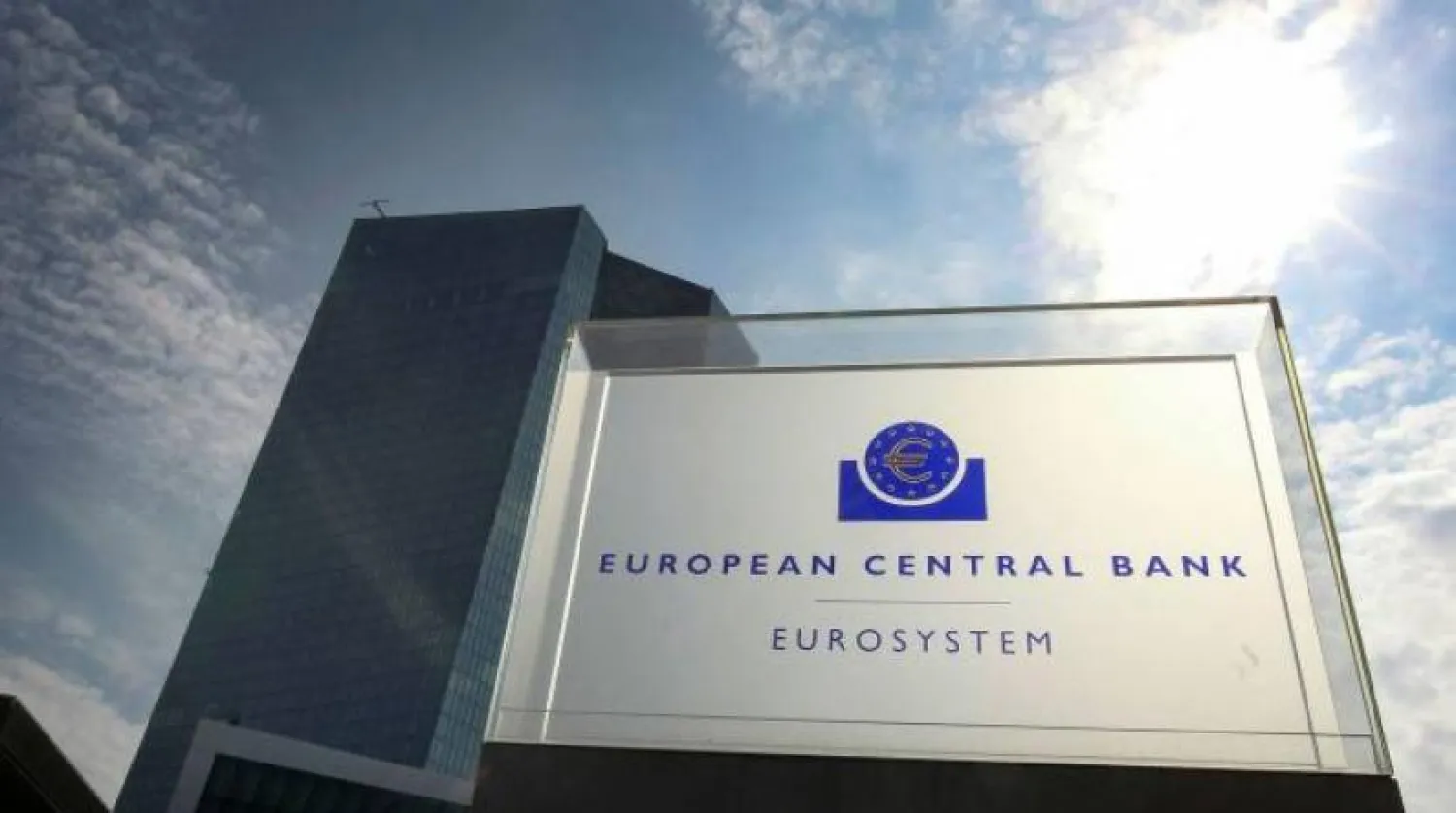

With Inflation on Rise, ECB Readies Tougher Action

The European Central Bank is pushing back against market expectations that it will lift borrowing costs in 2022 - AFP via Getty Images
TT

With Inflation on Rise, ECB Readies Tougher Action

The European Central Bank is pushing back against market expectations that it will lift borrowing costs in 2022 - AFP via Getty Images

The European Central Bank is set to announce the end date to its bond-buying stimulus on Thursday, as concerns over the accelerating pace of inflation in the eurozone grip policymakers.

The stop is a prelude to the ECB hiking rates for the first time in over a decade in the weeks that follow, turning the page on an era of ultra-loose monetary policy, AFP said.

Inflation in the eurozone rose to 8.1 percent in May, the highest level in the history of the currency club and well above the ECB's own two-percent target.

The surge has largely been driven by the war in Ukraine, which has decisively pushed up the cost of energy, food and raw materials.

Persistent price pressures have forced the ECB into an "enormous U-turn" since December, said Carsten Brzeski, head of macro at ING bank.

From saying inflation would be "temporary" and warding off interest rate hikes in 2022, the ECB is now racing to catch up with other major central banks in the United States and Britain.

With inflation picking up, "the only really interesting question is why they don't start hiking rates immediately instead of waiting until July", Brzeski said.

- 'Lift off' -
Under pressure to show the ECB was responding to inflation, President Christine Lagarde set out the likely next steps for the central bank in a blog post in late May.

The unusually clear statement foresaw an end to the ECB's crisis-era stimulus program "very early in the third quarter".

The so-called asset purchase program, or APP, is the last in a series of debt-purchasing measures worth a total of around five trillion euros ($5.4 trillion) deployed by the ECB since 2014.

Lagarde then went on to reveal ECB policy through the second half of the year, predicting a "lift off" in rates at the governing council's next meeting in July, with the central bank bringing an end to negative interest rates by the end of September.

Of the ECB's three main interest rates, the so-called deposit rate -- which is normally the interest commercial banks would receive for parking their cash with the ECB overnight -- has been negative since 2014.

- 'Benchmark pace' -
Still up for discussion in Amsterdam, where the governing council is meeting instead of at its usual venue in Frankfurt, is the size of the first step.

Some members have called on the ECB to follow the US Federal Reserve and bring the curtain down on negative interest rates with a single half-point hike.

The head of the Dutch central bank, Klaas Knot, said in May that such a move was "clearly not off the table".

But the ECB's chief economist, Philip Lane, pushed back against suggestions of a big hike, calling 25 basis points -- or a quarter of a percentage point -- the "benchmark pace".

ECB followers will be listening carefully to Lagarde's press conference at 2:30 pm (1230 GMT) for some indication of the prevailing thinking among policymakers.

Lagarde could "give a nod to the hardliners" by leaving the door open to a steeper rise, said Franck Dixmier, head of fixed income at Allianz Global Investors.

The decision will depend to a large extent on how the outlook for the economy changes.

The ECB is scheduled to publish new economic forecasts alongside its policy decisions on Thursday.

Its previous estimates -- published in the immediate aftermath of Russia's invasion of Ukraine -- cut projected growth in the eurozone in 2022 to 3.7 percent and saw inflation rising to 5.1 percent.

Looking ahead, the ECB will be keeping a particularly close eye on any serious divergence in borrowing costs across the eurozone, as measured by the difference between yields on individual countries' bonds and those of Germany -- seen as a benchmark of stability.

Currently, the spread between Italian and German 10-year bonds is at its widest since the early stages of the coronavirus pandemic.

Lagarde has previously vowed to act "promptly" if needed, raising the possibility of designing a new instrument "in short order".


Aljadaan: Emerging Markets Account for 70% of Global Growth

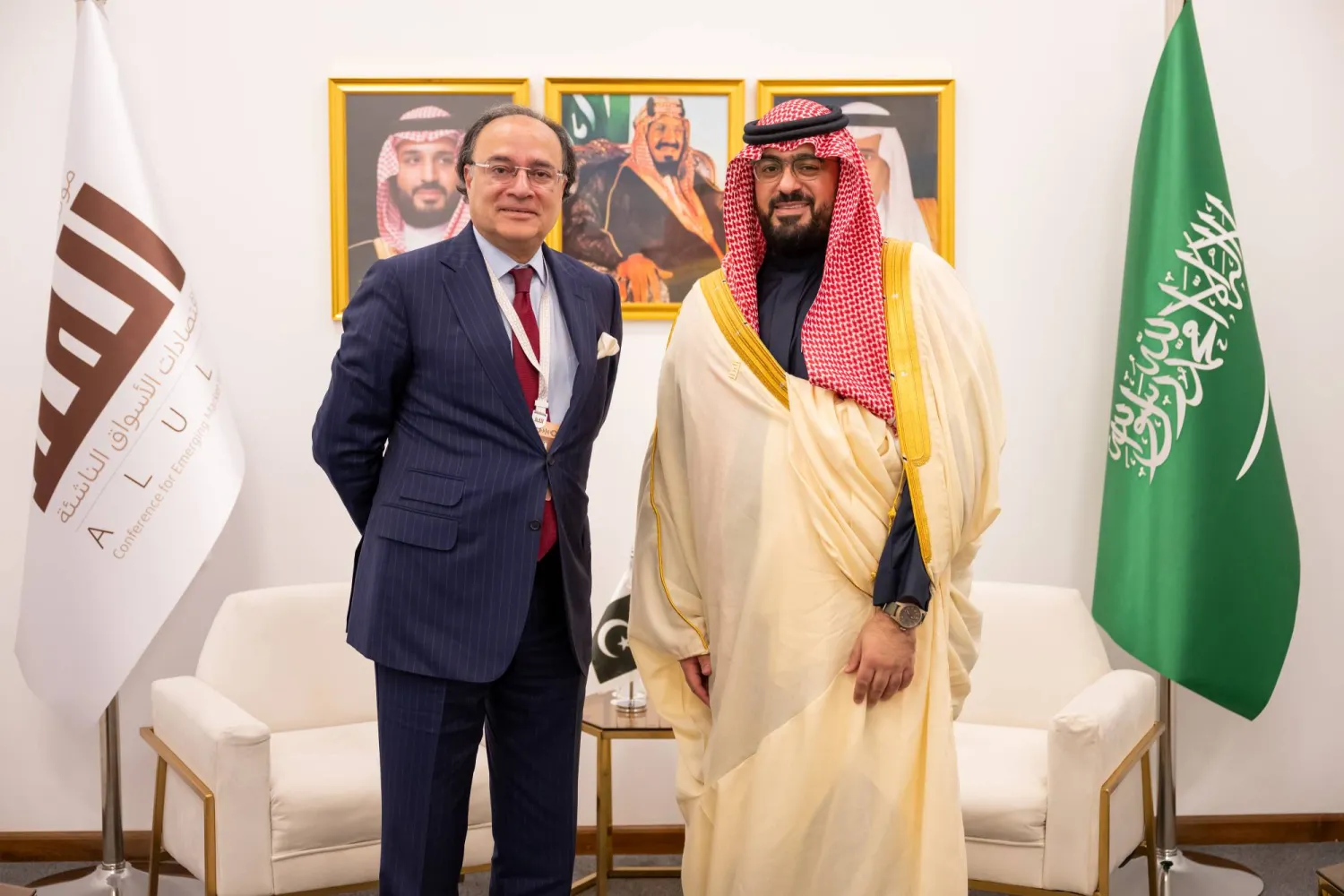
Al-Jadaan speaking to the attendees at the "AlUla Conference for Emerging Market Economies" (Asharq Al-Awsat
TT

Aljadaan: Emerging Markets Account for 70% of Global Growth

Al-Jadaan speaking to the attendees at the "AlUla Conference for Emerging Market Economies" (Asharq Al-Awsat

Saudi Minister of Finance Mohammed Aljadaan stressed Sunday that the world economy is going through a “profound transition,” saying emerging markets and developing economies now account for nearly 60 percent of the global Gross Domestic Product (GDP) in purchasing power terms and over 70 percent of global growth.

In his opening remarks at the AlUla Conference for Emerging Market Economies, organized by the Saudi Ministry of Finance and the IMF in AlUla, the minister said these economies have become an increasingly important driver of global growth with their share of global economy more than doubling since 2010.

“Today, the 10 emerging economies in the G20 alone account for more than half of the world growth. Yet, they face a more complex and fragmented environment, elevated debt levels, slower trade growth and increasing exposure to geopolitical shocks.”

“Unfortunately, more than half of low income countries are either in or at the risk of debt distress. At the same time global trade growth has slowed at around half of what it was pre the pandemic,” Aljadaan added.

The Finance Minister stressed that the Saudi experience over the past decade has reinforced three lessons that may be relevant to the discussions at the two-day conference, which brings together a select group of ministers and central bank governors, leaders of international organizations, leading investors and academics.

“First, macroeconomic stability is not the enemy of growth. It is actually the foundation,” he said.

“Structural reforms deliver results only when institutions deliver. So there is no point of reforming ... if the institutions are unable to deliver,” he stated.

Finally, he said that “international cooperation matters more, not less, in a fragmented world.”


Georgieva from AlUla: Growth Still Lacks Pre-pandemic Levels

Kristalina Georgieva speaking to attendees at the second edition of the AlUla Conference for Emerging Market Economies (Asharq Al-Awsat)
TT

Georgieva from AlUla: Growth Still Lacks Pre-pandemic Levels

Kristalina Georgieva speaking to attendees at the second edition of the AlUla Conference for Emerging Market Economies (Asharq Al-Awsat)

International Monetary Fund (IMF) Managing Director Kristalina Georgieva said Sunday that world growth still lacks pre-pandemic levels, expressing concern as she expected more shocks amid high spending and rising debt levels in many countries.

Georgieva spoke at the AlUla Conference for Emerging Market Economies, organized by the Saudi Ministry of Finance and the IMF in AlUla.

The two-day conference brings together a select group of ministers and central bank governors, leaders of international organizations, leading investors and academics to deliberate on policies to global stability, prosperity, and multilateral collaboration.

Georgieva said that the conference was launched last year in recognition of the growing role of emerging market economies in a world of sweeping transformations.

“I came out of this gathering .... With a sense of hope for the pragmatic attitude and determination to pursue good policies and build strong institutions,” she said.

Georgieva stressed that “good policies pay off,” and said that growth rates across emerging economies reached four percent this year, exceeding by a large margin those of advanced economies that are around 1.5 percent.


Saudi Arabia’s flynas, Syrian Civil Aviation Authority Partner to Launch 'flynas Syria'

The new airline will operate commercial air transport services in accordance with approved regulations and standards (flynas)
TT

Saudi Arabia’s flynas, Syrian Civil Aviation Authority Partner to Launch 'flynas Syria'

The new airline will operate commercial air transport services in accordance with approved regulations and standards (flynas)

Saudi budget carrier flynas has signed an agreement with the Syrian General Authority of Civil Aviation and Air Transport to establish a new commercial airline under the name "flynas Syria," with operations scheduled to begin in the fourth quarter of 2026.

Saturday’s agreement comes within the framework of bilateral cooperation between Saudi Arabia and Syria, as well as the strategic investment agreements between the two countries, coordinated with the Saudi Ministry of Investment and the Syrian General Authority of Civil Aviation and Air Transport.

The new airline will operate commercial air transport services in accordance with approved regulations and standards, meeting the highest safety and aviation security requirements. All licensing and operational procedures will be completed in coordination with the relevant authorities.

The carrier will be established as a joint venture, with 51% ownership held by the Syrian General Authority of Civil Aviation and Air Transport and 49% by flynas.

The new airline will operate flights to several destinations across the Middle East, Africa, and Europe. This expansion aims to bolster air traffic to and from Syria, enhance regional and international connectivity, and meet growing demand for air travel.

"This step is part of our commitment to supporting high-quality cross-border investments. The aviation sector is a key enabler of economic development, and the establishment of 'flynas Syria' serves as a model for constructive investment cooperation,” said Saudi Minister of Investment Khalid Al-Falih.

“This partnership enhances economic integration and market connectivity and supports development goals by advancing air transport infrastructure, ultimately serving the mutual interests of both nations and promoting regional economic stability,” he added.

President of the Syrian General Authority of Civil Aviation and Air Transport Omar Hosari also stated that the establishment of flynas Syria represents a strategic step within a comprehensive national vision aimed at rebuilding and developing Syria's civil aviation sector on modern economic and regulatory foundations.

“This will be achieved while balancing safety requirements, operational sustainability, investment stimulation, and passenger services. The partnership reflects the state's orientation toward smart cooperation models with trusted regional partners, ensuring the transfer of expertise, the development of national capabilities, and the enhancement of Syria's air connectivity with regional and international destinations, in line with global best practices in the air transport industry."

flynas Chairman Ayed Al-Jeaid stated that the company continues to pursue strategies aimed at growth and international expansion, describing the agreement as a historic milestone in the company's journey and a promising investment model in partnership with Syria.

flynas CEO Bander Al-mohanna said the step represents a qualitative leap in the company's strategy and financial performance, highlighting the transfer of the company's low-cost aviation experience to the Syrian market to support regional and international air connectivity.

flynas currently operates 23 weekly flights from Riyadh, Jeddah, and Dammam to Damascus, including two daily direct flights from Riyadh, one daily flight from Jeddah, and two weekly flights from Dammam.

The airline made history on June 5, 2025, by adding the Syrian capital to its network, becoming the first Saudi carrier to resume scheduled flights to Damascus.