


Saudi Arabia, Morocco Stress Importance of Joint Arab Action, Countering Terrorism

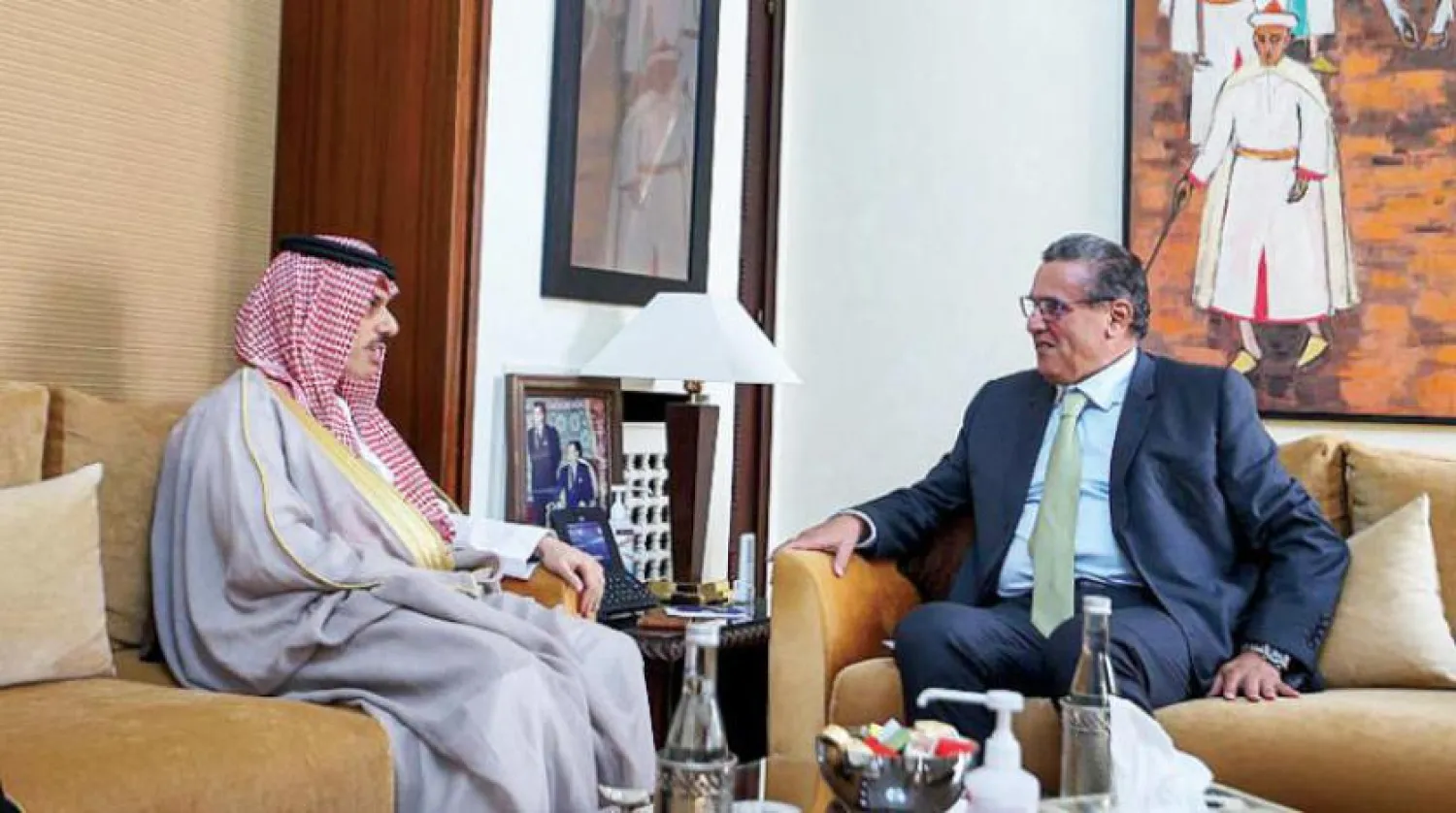
Saudi Foreign Minister Prince Faisal bin Farhan bin Abdullah meets with Moroccan Prime Minister Aziz Akhannouch. (SPA)
TT

Saudi Arabia, Morocco Stress Importance of Joint Arab Action, Countering Terrorism

Saudi Foreign Minister Prince Faisal bin Farhan bin Abdullah meets with Moroccan Prime Minister Aziz Akhannouch. (SPA)

Morocco reiterated its absolute solidarity with Saudi Arabia and its constant support for all measures taken by the country to protect its security and stability and ensure the safety of its territories, citizens, and residents.

Rabat hosted the 13th session of the Joint Moroccan-Saudi Commission on June 15 and 16, under the co-chairmanship of Moroccan Foreign Minister, Nasser Bourita, and Saudi Foreign Minister, Prince Faisal bin Farhan bin Abdullah.

The Commission condemned the launch of Iranian-made ballistic missiles and drones by the Houthi militias in Yemen against vital and civilian facilities in Saudi Arabia and the United Arab Emirates.

Morocco welcomed the Saudi initiatives to bring peace to Yemen.

The Commission stressed the importance of joint Arab action allowing Arab countries to maintain their unity, sovereignty, security, and stability while refraining from interfering in the internal affairs of states and threatening their territorial integrity.

It hoped the crises in Syria, Yemen, and Libya will be resolved through political solutions that preserve their territorial and national unity, guarantee their security and stability, and meet the aspirations of their peoples for development and freedom according to United Nations resolutions.

Saudi Arabia reiterated its firm and continuous support for the territorial integrity of Morocco and reiterated its support for Morocco's sovereignty over the Sahara.

It backs Morocco's efforts to reach compromise-based realistic political solution within the framework of relevant Security Council resolutions and under the supervision of the UN Secretary-General.

It stressed its support for a solution that is consistent with the international law and the resolutions of the Security Council and the UN General Assembly.

The Joint Commission called for more efforts to support stability, promote sustainable development, and the fight against extremism, terrorism, and separatist movements in the Sahel region.

Saudi Arabia praised Morocco's three-dimensional approach toward the Sahel region, which focuses on security, development, and training of human resources.

The Commission renewed its condemnation of extremism and terrorism in all forms and manifestations, stressing the importance of combining regional and international efforts to confront and eradicate terrorism and eliminate its causes.

It reviewed the efforts made by the two countries and the pioneering initiatives they have developed to counter terrorism and extremism, stressing the need to continue coordination at the international multilateral level, including the UN, the Global Forum on Countering extremism, and the International Coalition against ISIS.

The Saudi delegation welcomed the continuous efforts made by King Mohammed VI, Chairman of the al-Quds Committee, to defend Jerusalem and its residents, preserve its civilizational identity and protect its status as a symbol of tolerance and coexistence between the different monotheistic religions.

The Commission reiterated its constant solidarity with the Palestinian people to establish an independent state based on the1967 borders, with East Jerusalem as its capital, in line with the relevant international resolutions and the Arab Peace Initiative.

In this regard, the Commission called for efforts to break the deadlock in the peace process and ensure the resumption of negotiations within a clear timetable, resulting in an agreement addressing all the issues under the Arab Peace Initiative, international resolutions, and two-state solution.

Prince Faisal's meetings

During his visit to Morocco, Prince Faisal discussed with Prime Minister Aziz Akhannouch several regional and international issues and developments of common interest.

They addressed ways to boost bilateral cooperation and opportunities to develop ties in various fields.

Prince Faisal met with Speaker Rachid Talbi Alami. They reviewed bilateral relations and ways to enhance them. They reiterated the importance of cooperation in the political and multilateral fields to achieve the interests of their countries.

Ahead of the Joint Commission meeting, the Saudi FM reviewed with his Moroccan counterpart all aspects of cooperation.

They voiced their satisfaction with the high level of cooperation between Riyadh and Rabat and praised the momentum and development it is undergoing on the political, economic, cultural, and social levels under the patronage King Mohammed VI and Custodian of the Two Holy Mosques King Salman bin Abdulaziz.

Prince Faisal and Bourita discussed several regional and international issues of common interest.

Bourita said Morocco and Saudi Arabia share a distinguished relationship, saying it is "unparalleled in Morocco's foreign relations."

Speaking at a joint press conference, the Moroccan FM said the discussions with his Saudi counterpart are an opportunity to address bilateral and regional issues.

Bourita stated that he also addressed with his Saudi counterpart coordinating positions on various issues based on the bilateral interests, whether relating to North Africa and the Middle East or international issues.
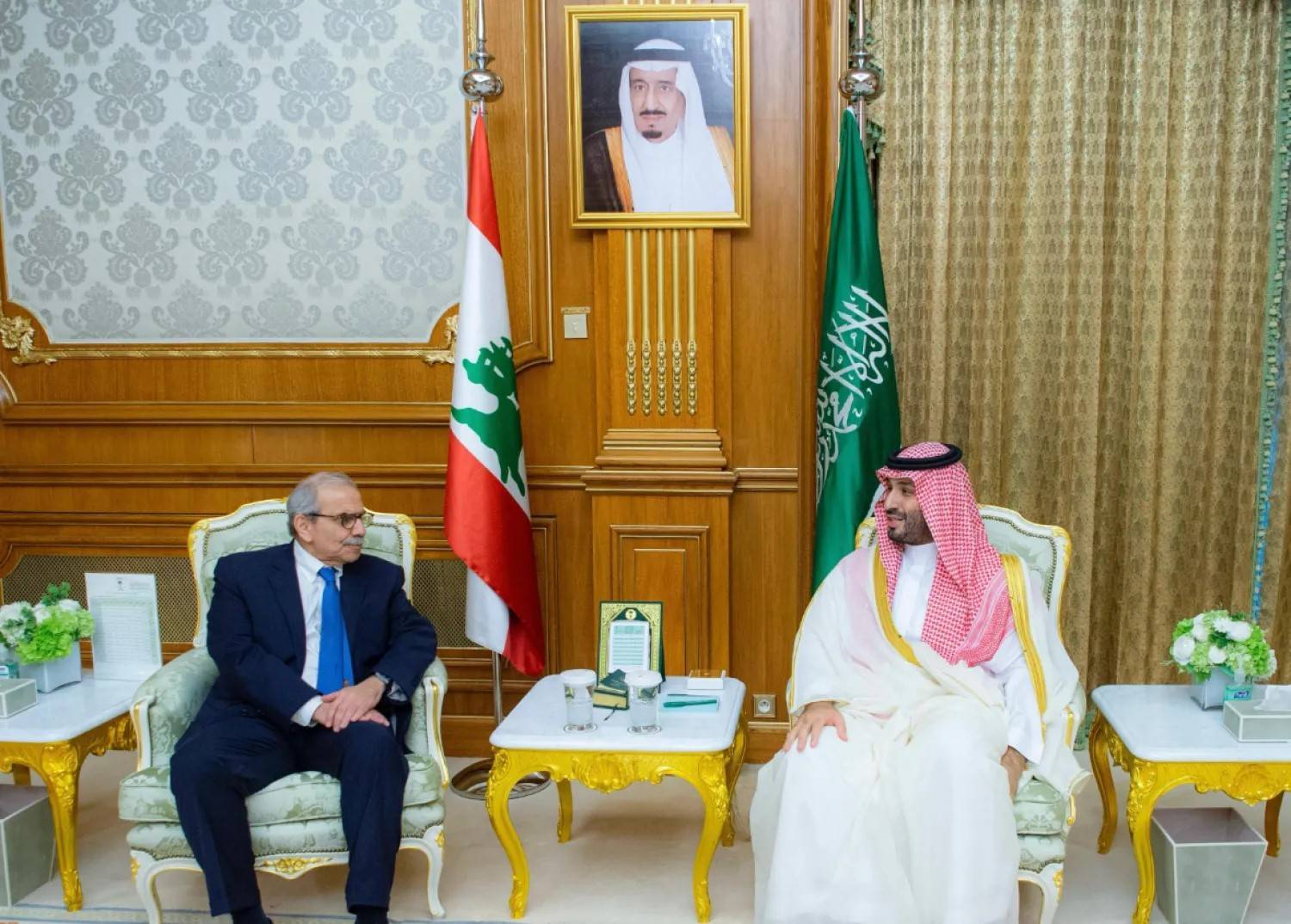
Sultan of Oman, Saudi FM Discuss Regional, International Developments

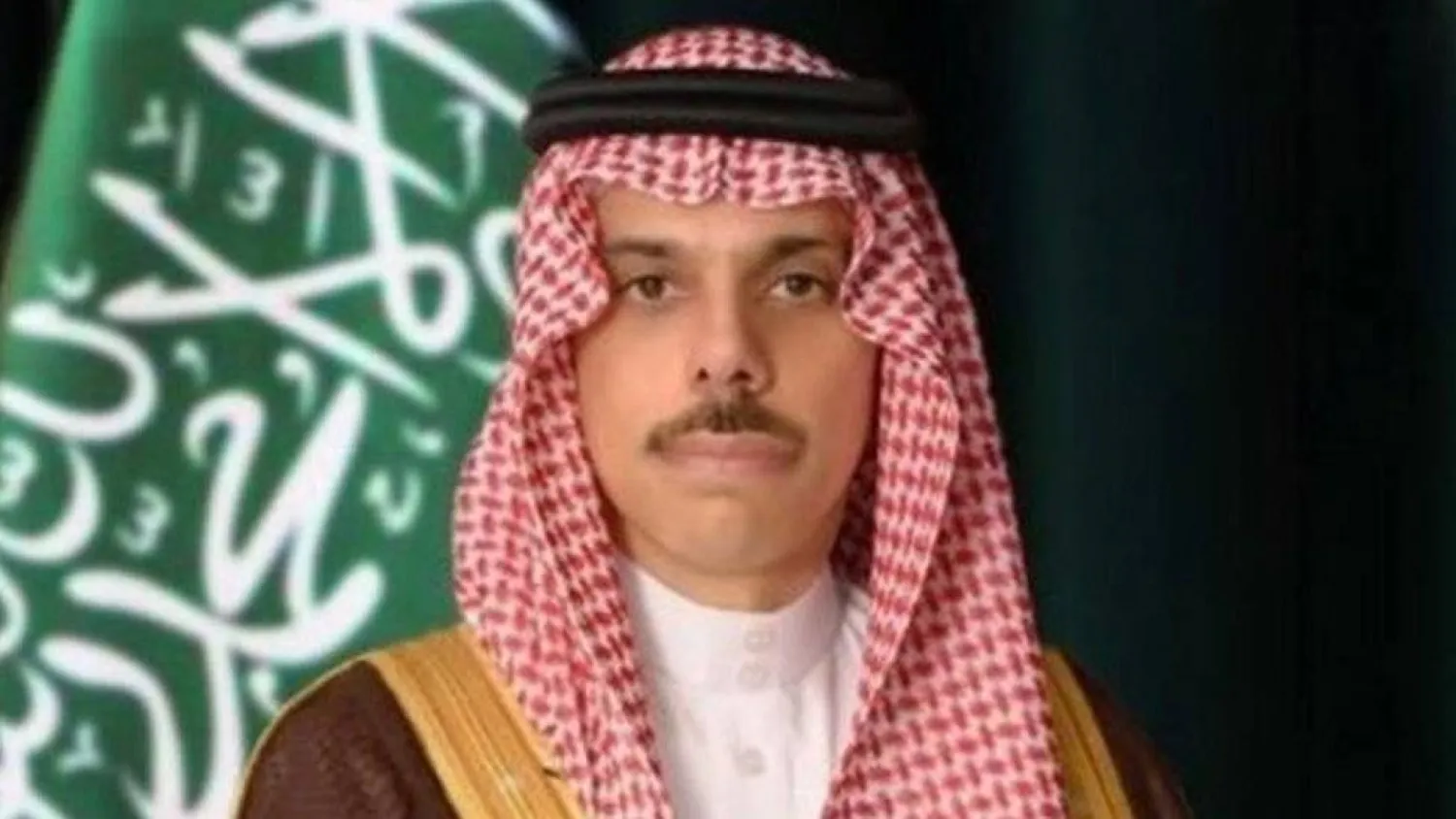
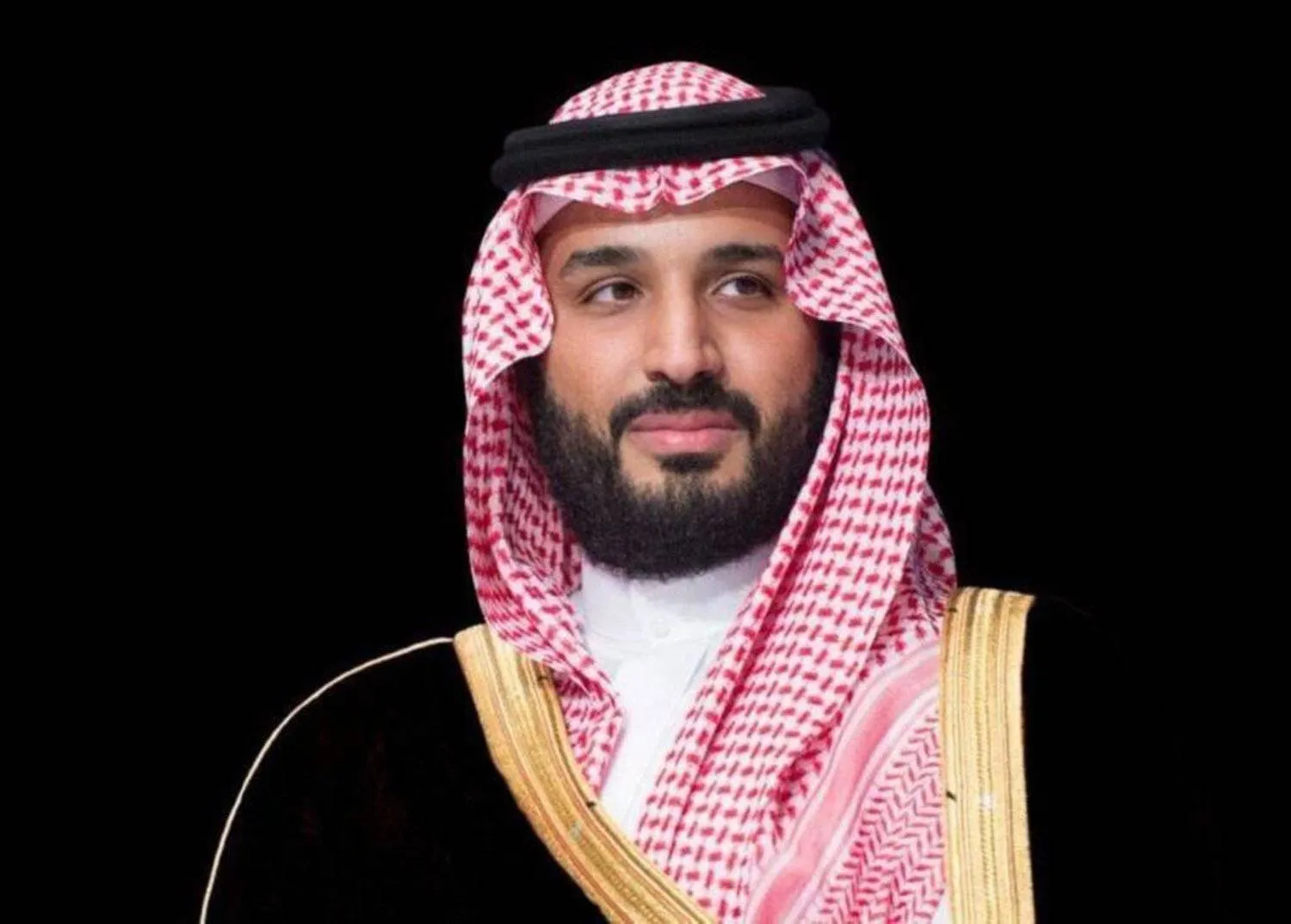
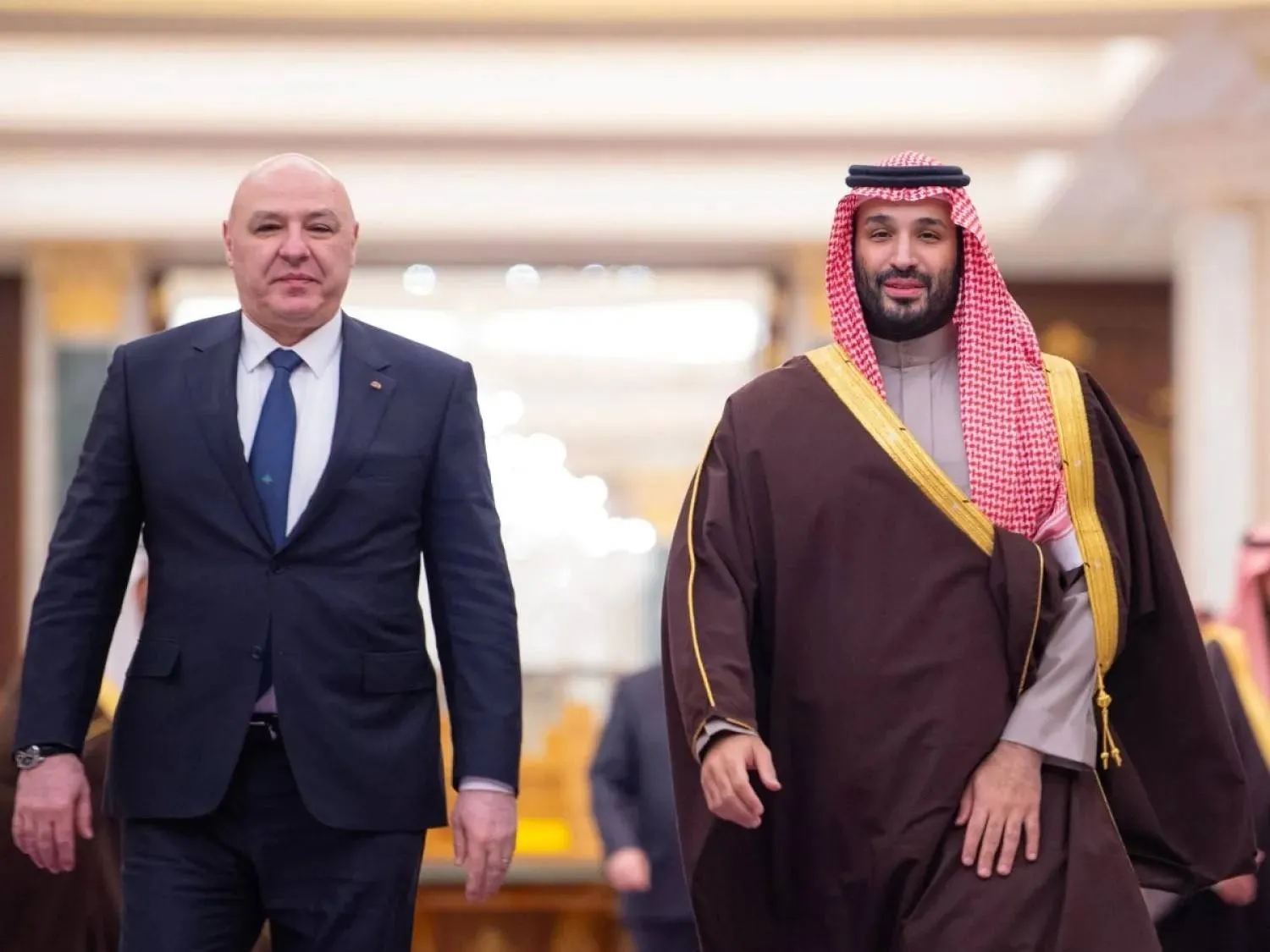
Oman’s Sultan Haitham bin Tarik and Saudi Minister of Foreign Affairs Prince Faisal bin Farhan bin Abdullah meet in Muscat on Tuesday. (SPA)
TT

Sultan of Oman, Saudi FM Discuss Regional, International Developments

Oman’s Sultan Haitham bin Tarik and Saudi Minister of Foreign Affairs Prince Faisal bin Farhan bin Abdullah meet in Muscat on Tuesday. (SPA)

Oman’s Sultan Haitham bin Tarik received in Muscat on Tuesday Saudi Minister of Foreign Affairs Prince Faisal bin Farhan bin Abdullah.

Prince Faisal conveyed the greetings of Custodian of the Two Holy Mosques King Salman bin Abdulaziz Al Saud and Prince Mohammed bin Salman bin Abdulaziz Al Saud, Crown Prince and Prime Minister, as well as their hopes for continued progress and prosperity to the Sultan and the Omani people.

Sultan Haitham sent his greetings and appreciation to the Custodian of the Two Holy Mosques and the Crown Prince, along with his wishes for further progress and prosperity for the government and people of the Kingdom.

Sultan Haitham and Prince Faisal reviewed the fraternal relations between their countries and discussed the latest regional and international developments.


Saudi Arabia Hails Yemen Prisoner Swap Agreement in Muscat

Officials are seen at the announcement of the prisoner exchange agreement in Muscat on Tuesday. (Saudi Ambassador to Yemen on X)
TT

Saudi Arabia Hails Yemen Prisoner Swap Agreement in Muscat

Officials are seen at the announcement of the prisoner exchange agreement in Muscat on Tuesday. (Saudi Ambassador to Yemen on X)

Saudi Arabia’s ambassador to Yemen Mohammed al-Jaber welcomed on Tuesday an agreement reached by Yemen’s warring parties to exchange detainees, describing it as a step that would bolster de-escalation efforts and confidence-building in the country.

In a post on X, al-Jaber praised the work of the negotiating teams from both sides, stating that the deal between the legitimate government and Iran-backed Houthi militants addressed an issue with a clear humanitarian dimension and would allow all detainees to return to their families.

He expressed appreciation for the guidance of the Saudi leadership, the follow-up by the defense minister, the cooperation of the Yemeni government, and what he described as Oman’s sincere mediation efforts.

A Yemeni government delegation and the Houthis announced on Tuesday that they had reached an agreement to exchange 2,900 detainees and prisoners.

Under the deal, 1,700 Houthi prisoners would be released in exchange for 1,200 detainees held by the government, including seven Saudis and 23 Sudanese members of the Saudi-led coalition forces in Yemen.

The International Committee of the Red Cross welcomed the preliminary agreement to release, transfer and repatriate the detainees, urging all parties to turn their commitments into concrete action on the ground.

Christine Cipolla, the ICRC’s head of delegation in Yemen, said the organization is “ready and determined to carry out the release, transfer and repatriation of detainees so that people separated from their families can be reunited in a safe and dignified manner”.

Britain’s Ambassador to Yemen Abda Sharif welcomed the efforts of the ICRC and Oman, stressing that continued cooperation by all parties was vital to making progress toward the release of detainees.

Oman’s foreign ministry said it welcomed the agreement and praised the positive spirit that prevailed during negotiations held from December 9 to 23.

It highlighted the role of Saudi Arabia, the efforts of the UN special envoy’s office for Yemen, the ICRC, and all parties involved in the success of what it described as a humanitarian endeavor.

Humanitarian step, expectations

In a statement, Yemen’s information minister Moammar al-Eryani welcomed the agreement, which he said included prominent political figures such as Mohammed Qahtan.

He described it as “an important and long-awaited humanitarian step that would ease the suffering of thousands of Yemeni families and mark tangible progress in one of the most painful humanitarian crises.”

Al-Eryani said the agreement was the result of directives and close follow-up by the political leadership of the Presidential Leadership Council, headed by Dr. Rashad al-Alimi, and reflected the government’s commitment to handling the detainee issue as a humanitarian and moral matter, free of political considerations or selectivity, to ensure the release of all without exception.

He praised Saudi Arabia’s pivotal role and its leadership’s efforts in pursuing the humanitarian file in cooperation with the Yemeni government, saying the Kingdom was keen to alleviate the suffering of the Yemeni people and strengthen prospects for de-escalation and confidence building.

Al-Eryani noted Oman’s role in hosting the negotiation rounds and creating an atmosphere conducive to reaching the agreement, expressing appreciation for international efforts and UN initiatives that helped bridge differences.

The Yemeni government will continue to implement the agreement responsibly to ensure the full release of all detainees, abductees and those forcibly disappeared, and to put an end to the suffering of thousands of Yemeni families who have waited years for this moment, he added.


Saudi Arabia Welcomes Yemen Prisoner Exchange Agreement

Officials are seen at the announcement of the prisoner exchange in Muscat. (Saudi Ambassador to Yemen on X)
TT

Saudi Arabia Welcomes Yemen Prisoner Exchange Agreement

Officials are seen at the announcement of the prisoner exchange in Muscat. (Saudi Ambassador to Yemen on X)

Saudi Arabia welcomed on Tuesday the agreement signed in Muscat earlier to exchange prisoners and detainees in Yemen.

It deemed the development “an important humanitarian step that contributes to alleviating human suffering and boosting confidence-building opportunities.”

The Kingdom praised “the sincere efforts and generous initiatives exerted by Oman in hosting and sponsoring the talks, as well as its support for the negotiating efforts conducted from December 9 to 23.”

The Kingdom also hailed the efforts by the Office of the United Nations Special Envoy for Yemen, the International Committee of the Red Cross, and all parties who participated in the negotiations.

It reiterated its support for all efforts to achieve peace, security, and stability in a manner that fulfills the aspirations of the Yemeni people.

Yemen’s legitimate government and the Iran-backed Houthi militants reached an agreement to free 2,900 detainees held during the 11-year war.

Saudi Ambassador Mohamed Al-Haber said in a statement on X that the agreement was signed under the supervision of the Office of the UN Special Envoy for Yemen and the ICRC, “which will enable all detainees to return to their families.”

“I commend the efforts of the negotiation teams from both sides who succeeded in reaching an understanding and concluding this agreement, which addresses a humanitarian issue and strengthens efforts to bring calm and build confidence in Yemen,” he added.

The UN special envoy, Hans Grundberg, said the agreement was a “positive and meaningful step that will hopefully ease the suffering of detainees and their families across Yemen.”

“We are ready and determined to carry out the release, transfer and repatriation of detainees so that people separated from their families can be reunited in a safe and dignified manner,” said Christine Cipolla, the ICRC’s head of delegation in Yemen.
