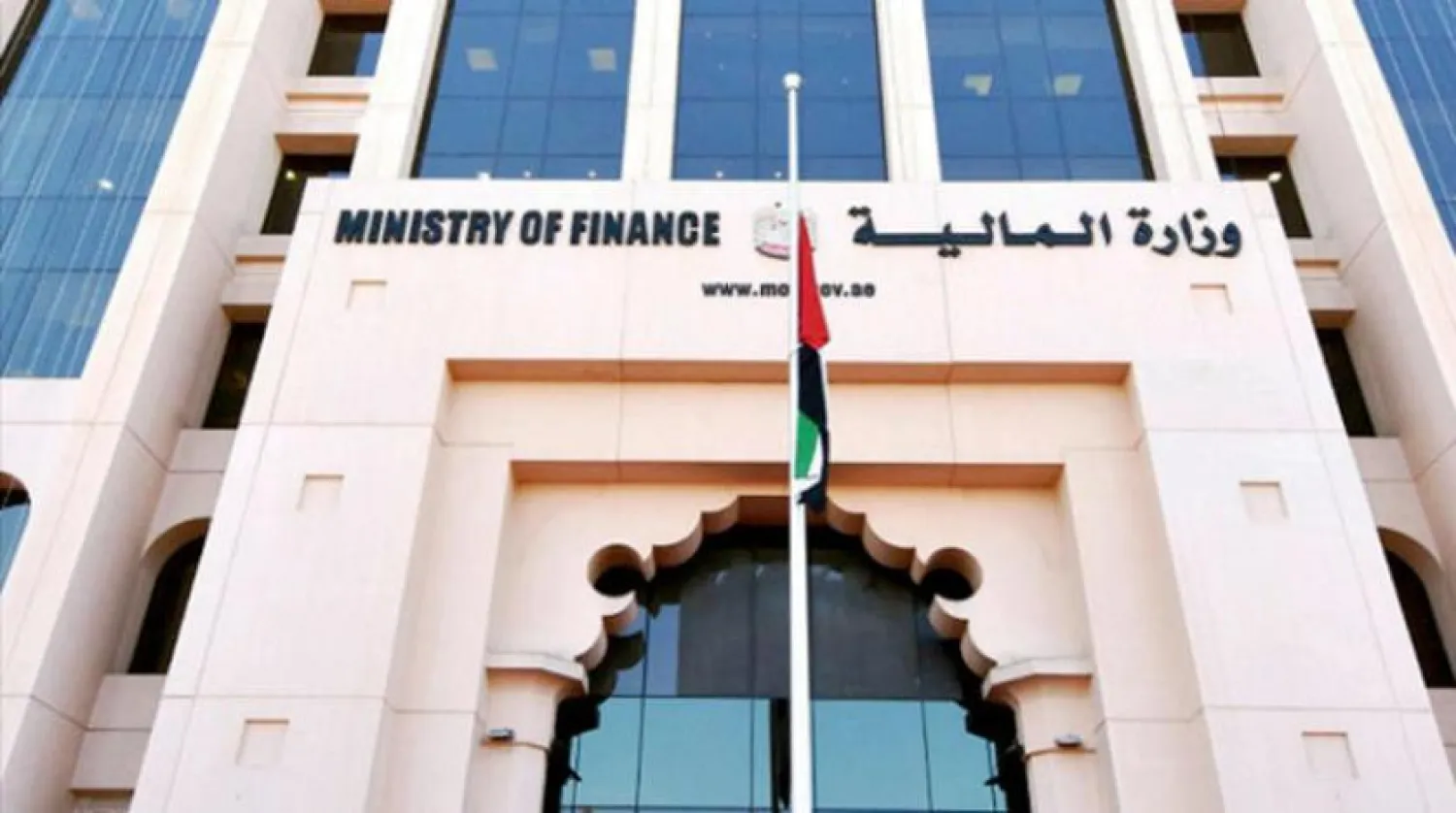
UAE to Hold Second Auction of Dirham T-Bonds Worth $408Mln

The UAE will continue to implement its plan to issue local bonds for 2022 through more subsequent periodic auctions. (WAM)
TT

UAE to Hold Second Auction of Dirham T-Bonds Worth $408Mln

The UAE will continue to implement its plan to issue local bonds for 2022 through more subsequent periodic auctions. (WAM)

The UAE Finance Ministry said Saturday that a second auction of federal treasury bonds (T-Bonds) would be held on June 20.

The auction size will be AED1.5 billion ($408 million) distributed over two tranches: a two-year tranche valued at AED 750 million and a three-year tranche valued at AED750 million ($204 million).

It explained that the re-opening of bonds will be exercised in this auction to increase the volume of individual bonds issued with the aim of improving liquidity in the secondary market.

The first auction of the AED denominated T-Bonds program witnessed a wide turnout from local and international investors, with a total issuance of AED1.5 billion ($408.3 million) divided into two tranches - of two and three years – and a uniform coupon rate fixed at 3.01% and 3.24%, respectively.

The UAE will continue to implement its plan to issue local bonds for 2022 through more subsequent periodic auctions.

The conventional T-bonds will be denominated in UAE dirhams to develop the local bonds debt market.

It aims to develop the mid-term yield curve, with tranches of two and three years, and in principle of five years as well, while 10-year tranches will be issued at a later time.

The auction, represented by the Ministry of Finance as the issuer, in collaboration with the Central Bank of the UAE (CBUAE) as the issuing and payment agent, is part of the AED9 billion ($2.4 billion) T-Bonds issuance program for 2022, the ministry announced in May.

The first auction of the dirham denominated UAE T-Bonds, with a benchmark auction size of AED1.5 billion ($400 million), drew bids worth AED9.4 billion ($2.5 billion), an oversubscription of 6.3 times.

Sheikh Maktoum bin Mohammed bin Rashid Al Maktoum, Deputy Ruler of Dubai, Deputy Prime Minister and Minister of Finance, said then that the success of the first auction is part of strengthening the UAE’s economic competitiveness and supporting the sustainability of economic growth.


Egypt's January-March Current Account Deficit Widens to $5.1 billion

The headquarters of the Central Bank of Egypt in downtown Cairo (Asharq Al-Awsat)
TT

Egypt's January-March Current Account Deficit Widens to $5.1 billion

The headquarters of the Central Bank of Egypt in downtown Cairo (Asharq Al-Awsat)

Egypt's current account deficit more than doubled to $5.1 billion in the January-March quarter from $2.3 billion a year earlier, central bank data showed on Sunday.

Net foreign direct investment inflows edged down to $3.7 billion from $3.8 billion in the same period of 2025, Reuters reported.

The central bank attributed the wider July-March current account deficit mainly to a larger merchandise trade deficit, partly offset by higher remittances, tourism revenue and Suez Canal receipts.

Remittances from Egyptians working abroad rose to $12.8 billion from $9.3 billion in the same quarter last year, Reuters reported.

Tourism revenue increased to $4.2 billion from $3.8 billion in the same period last year. Suez Canal revenues rose to $1 billion from $800 million a year earlier.

Oil imports increased to $5.7 billion in the same quarter, from $4.8 billion a year earlier, while exports rose slightly to $1.6 billion from $1.2 billion.


Focus Turns to Building Stronger Institutions in Africa to Speed Shift to Renewable Energy

A solar power plant in Burkina Faso (Reuters)
TT

Focus Turns to Building Stronger Institutions in Africa to Speed Shift to Renewable Energy

A solar power plant in Burkina Faso (Reuters)

Africa’s biggest clean energy challenge is shifting from building projects to building the institutions, markets and regulatory systems needed to deliver them at scale, experts say.

That challenge is emerging even as clean energy reaches a historic milestone globally.

Renewables generated 34% of the world’s electricity in 2025, overtaking coal’s 33% share. Together with nuclear power, renewables are expected to provide half of global electricity by 2030.

As industrialization, artificial intelligence and electrification push demand higher, experts say the bottleneck in transitioning to cleaner energy has shifted from technology to the systems supporting it, including funding.

Overcoming such obstacles is vital for securing access to power for the 600 million people in Africa who are yet to be connected.

“Clean energy is now cheaper than fossil fuels in virtually every part of the world,” former New York City Mayor Michael R. Bloomberg, the UN Secretary-General’s Special Envoy on Climate Ambition and Solutions, said in late June while announcing a new $285 million Bloomberg Philanthropies initiative to strengthen clean energy industries in emerging and developing economies.

“But fixable obstacles are still slowing down deployment, and with energy demand rising at an unprecedented speed, we can’t allow those obstacles to continue standing in the way,” The Associated Press quoted him as saying.

Rather than financing solar farms or wind projects directly, the initiative will invest in strengthening market design, regulatory capacity, technical expertise and industry institutions, areas increasingly viewed as essential for attracting private investment and accelerating use of renewable energy.

It reflects a growing consensus that Africa’s energy transition is constrained less by a lack of renewable resources or viable technologies than by the institutional capacity needed to turn those advantages into financially viable projects and electricity on the grid.

Many projects remain delayed by weak market design, limited grid planning, slow permitting processes and fragmented regulatory systems.

“What has been missing is not the potential, but the institutional infrastructure and capabilities to unlock it,” said Saliem Fakir, executive director of the African Climate Foundation.

“Philanthropy that targets those gaps directly is the kind of intervention that can shift the trajectory of a continent’s energy system.”

Across Africa, renewable energy costs have fallen sharply while investment appetite continues to grow. However, investors say policy uncertainty, slow permitting processes and limited regulatory capacity are hindering projects.

Wangari Muchiri, founder and chief executive of RE.Think Energy, said the commitment signals that “the next phase of the energy transition is not about proving clean energy works, it’s about removing the barriers preventing it from scaling fast enough.”

The Bloomberg initiative is looking beyond ambitious renewable energy targets to focus on helping projects attract long-term investments and connect to national grids.

“The next chapter of Africa's renewable energy story will not be only by the projects it builds, but the institutions that make these projects possible,” Muchiri said.


Volkswagen CEO Looks to Avoid Plant Closures as Automaker Moves to Cut Costs

FILE PHOTO: Oliver Blume, CEO of Volkswagen AG and Porsche AG, speaks during the annual Volkswagen Group press conference in Wolfsburg, Germany March 11, 2025. REUTERS/Liesa Johannssen/File Photo
TT

Volkswagen CEO Looks to Avoid Plant Closures as Automaker Moves to Cut Costs

FILE PHOTO: Oliver Blume, CEO of Volkswagen AG and Porsche AG, speaks during the annual Volkswagen Group press conference in Wolfsburg, Germany March 11, 2025. REUTERS/Liesa Johannssen/File Photo

Volkswagen's CEO indicated in comments published Sunday that he's trying to avoid closing plants as he seeks to turn around the automaker's performance.

The Wolfsburg, Germany-based company faces pressure to cut costs at home and increasingly intense competition in the lucrative Chinese market, in particular.

Last week, Volkswagen said its “fundamental realignment” over the past three years had reached its next phase, announcing plans to streamline the model lineup by up to half.

It didn't provide specifics, and questions remain over how else it will cut costs. There has been renewed speculation about the future of several plants in Germany.

“There are more intelligent solutions than closing plants,” CEO Oliver Blume told the Bild am Sonntag newspaper, according to The Associated Press.

He added that a cost-cutting program in Germany already is producing effects. “We were able to improve our factory costs in Germany by an average 20% last year alone,” he said, describing that as “strong progress.”

Blume argued that Volkswagen's products are very popular, but “we just earn too little money with them. So we must continue to reduce our costs. In all kinds of costs.”