


Future King William's Influence Grows as He Hits 40

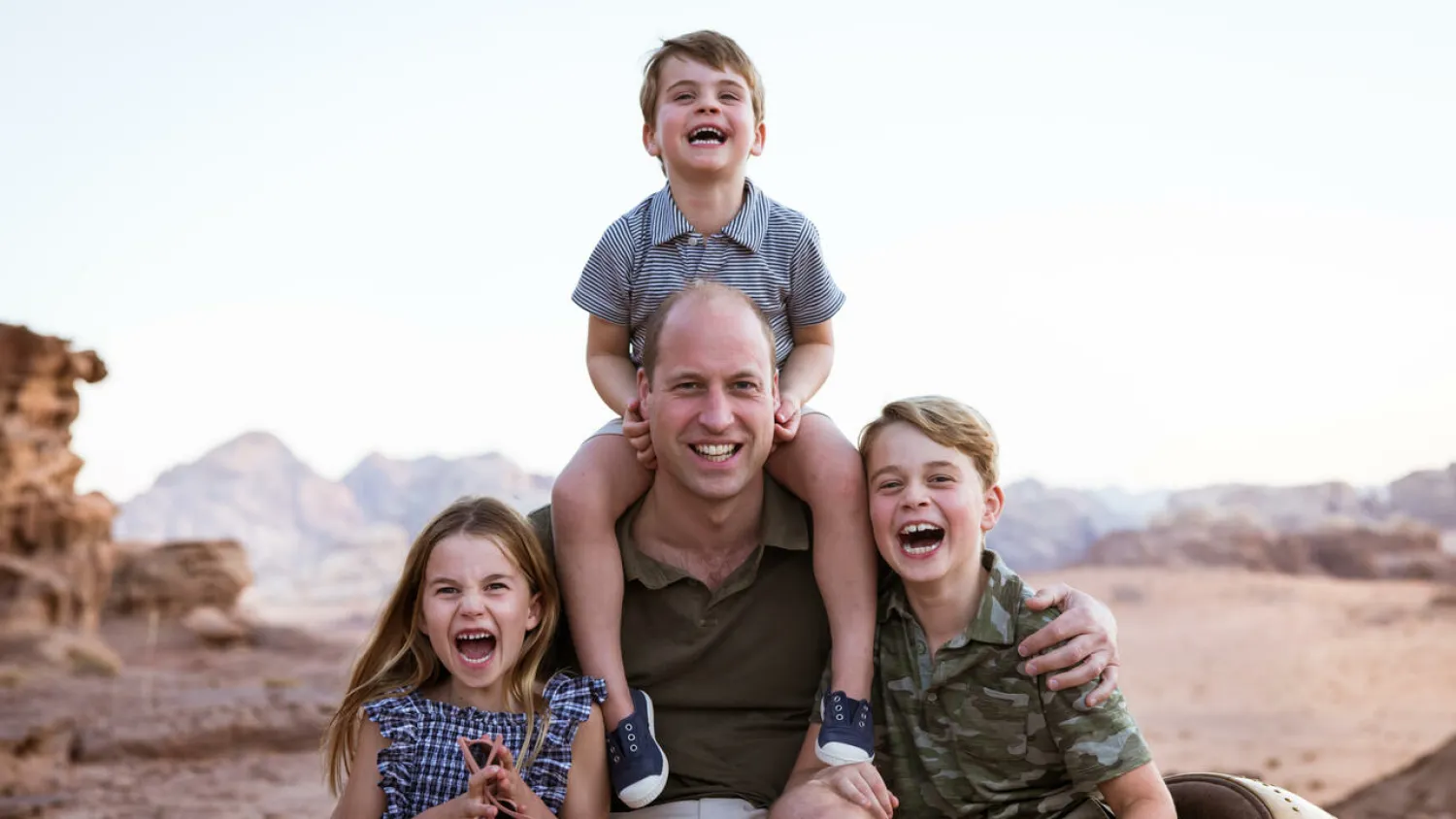
Prince William turns 40 on Tuesday - KENSINGTON PALACE/AFP
TT

Future King William's Influence Grows as He Hits 40

Prince William turns 40 on Tuesday - KENSINGTON PALACE/AFP

Prince William's 40th birthday this week marks a significant milestone for the future king, who is rapidly stamping his authority on the British royal family by plotting a course between tradition and modernity.

William's wife Catherine celebrated her landmark birthday in January and only Queen Elizabeth II is held in higher regard by the public than the close-knit couple, who are often held up as a model for the future of the monarchy.

According to pollsters YouGov, William, whose birthday is on Tuesday, is the most popular royal behind the queen, with a 66-percent approval rating, followed by Kate on 60 percent.

"It's a very important milestone for him because, with his father Prince Charles, he's stepping up to support the queen, and also to continue to create an identity as the future king," royal commentator Richard Fitzwilliams told AFP.

Such is William's popularity that many even want him to leapfrog his father and become king when his grandmother dies.

Since the 96-year-old sovereign began winding down her duties due to ill health and old age last year, second-in-line to the throne William has been an increasingly influential figure.

The Duke of Cambridge, as he is officially known, accompanied his father when the queen missed the State Opening of Parliament in May and has also weighed in on important family decisions.

He was reportedly a prime mover in blocking the participation of Prince Andrew, his sex scandal-hit uncle, in the traditional Order of the Garter ceremony this month.

"They (William and Kate) are the monarchy's future, that was underlined at the balcony appearance at the end of the Jubilee" celebrations to mark the queen's record-breaking 70-year reign, said Fitzwilliams.

- Central role -
William's time has been devoted to the family since giving up his role as a helicopter ambulance pilot in 2017.

Significantly, he is reportedly planning to move out of London's Kensington Palace and into a four-bedroom cottage, described as modest, on the grounds of the queen's Windsor Castle home west of London where she spends most of her time.

The move will allow him to get closer to the queen and strengthen his role in the family's inner sanctum, commentators said.

While he is becoming more committed to his royal duties, he is also determined to provide a normal life for his three children -- Prince George, aged eight, Princess Charlotte, seven, and four-year-old Prince Louis.

This is partly driven by his own childhood, which was marked by the trauma of his parents' very public separation and divorce, and the death of his mother Diana in a car accident in 1997 when he was only 15.

His mother's example is evident in his more modern outlook, which saw him break with the traditions of royal fathers and get his hands dirty with nappy changing, and help the older two with homework.

The tall, blond, partially bald prince is also keen to carry on his mother's legacy of helping society's most vulnerable members.

He was spotted in London earlier this month selling The Big Issue, the UK's homeless magazine, and has spoken out frequently on other issues such as the environment and mental health.

- Diana's legacy -
William was "moulded" by the "traditional" queen during Sunday lunches with her at Windsor when he was studying at the elite Eton College nearby, Marc Roche, author of several books on the monarchy, told AFP.

But "among William's assets, there is... perhaps due to the influence of his mother, a great sensitivity to diversity and the environment", he added.

The prince has revealed little about what goes on behind palace walls but defended the family after his brother Harry and wife Meghan gave a shock interview on US television, in which they accused members of being racist.

He vehemently denied the allegations and by all accounts, relations with Harry are strained.

But William recognizes the need to modernize the age-old institution to enable it to survive after Elizabeth II and fend off the forces of republicanism that are stronger among younger generations.

This need was emphasized during a recent tour of the Caribbean in March, which was criticized for being a throwback to colonial times.

"One of the things that William is particularly concerned with is the image of the monarchy and how it moves forward," said Fitzwilliams.


Sunbed Ads Spreading Harmful Misinformation

Cancer charities and doctors say sunbeds are linked to higher rates of melanoma and other skin cancers (Getty images) 
TT

Sunbed Ads Spreading Harmful Misinformation

Cancer charities and doctors say sunbeds are linked to higher rates of melanoma and other skin cancers (Getty images) 

Harmful misinformation claiming sunbeds offer health benefits in winter is being spread by tanning companies on social media, the BBC has found.

BBC identified hundreds of adverts on TikTok, Instagram and Facebook saying sunbeds can boost energy and treat skin conditions or mental health problems.

One suggested that going on a sunbed for “eight minutes” could prevent colds and flu, while another claimed that UV rays could “stimulate the thyroid gland” to help someone lose weight.

Claims like these are “irresponsible” and “potentially dangerous,” the government told BBC - while an NHS dermatologist described the amount of sunbed misinformation on social media as “genuinely terrifying.”

The findings come after the Advertising Standards Authority (ASA) banned six tanning adverts for making irresponsible health claims or suggesting sunbeds were safe.

Cancer charities and doctors are clear about the risks of using sunbeds - and say the machines are linked to higher rates of melanoma and other skin cancers.

Using a bed before the age of 35 increases the risk of melanoma by 59% later in life, according to the World Health Organization (WHO).

The Sunbed Association, which represents half the UK's tanning shops, says the ASA and WHO are using “outdated data,” but encourages its members not to use medical claims in advertising.

Young people are by far the biggest sunbed users in the UK - about one in seven 18-to-24-year-olds say they used one in the past year, double the average for all age groups, according to a 2025 YouGov survey.

Other data suggests nearly a quarter of under-25s wrongly believe sunbeds actually reduce the risk of getting skin cancer.


Rain Further Batters Storm-Hit Portugal, Thousands Evacuated

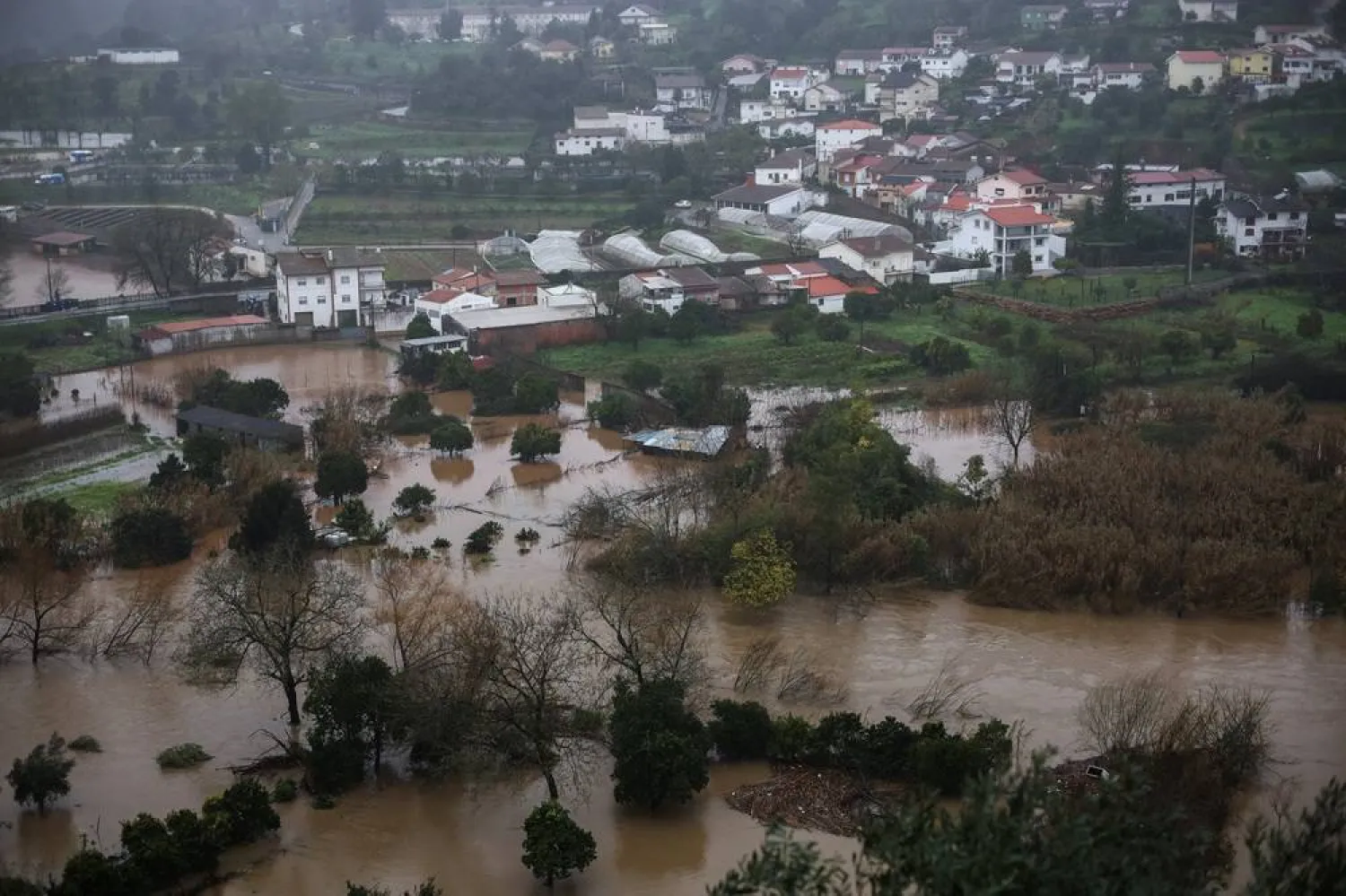
 A flooded area in Ceira, Coimbra, Portugal, February 11, 2026. (Reuters)
A flooded area in Ceira, Coimbra, Portugal, February 11, 2026. (Reuters)
TT

Rain Further Batters Storm-Hit Portugal, Thousands Evacuated

 A flooded area in Ceira, Coimbra, Portugal, February 11, 2026. (Reuters)
A flooded area in Ceira, Coimbra, Portugal, February 11, 2026. (Reuters)

More ‌heavy rain flooded several rural areas in the north of storm-battered Portugal on Wednesday, leaving levees at risk of bursting around the medieval city of Coimbra and forcing authorities to evacuate about 3,000 residents as a precaution.

A succession of deadly storms has hammered mostly central and southern parts of the country since late January, blowing roofs off houses, flooding several towns and leaving hundreds of thousands without electricity for days. At least 15 people have died as a consequence of the storms, including indirect ‌victims.

As the ‌storms let up this week, a weather ‌phenomenon ⁠known as an "atmospheric river" - ⁠a wide corridor of concentrated water vapor carrying massive amounts of moisture from the tropics - brought new downpours, affecting the north to a greater extent.

RISK OF DAM OVERFLOWING

Municipal authorities in Coimbra ordered the precautionary evacuation late on Tuesday of around 3,000 people most at risk from the River Mondego bursting its banks, ⁠and the operation was still under way on ‌Wednesday, with police making door-to-door checks ‌and bussing residents to shelters.

Regional Civil Protection official Carlos Tavares ‌said on Wednesday the situation could worsen between late Wednesday ‌and midday Thursday, as the rain could cause the Aguieira dam, 35 km northeast of Coimbra, "to overflow, sweep away levees and trigger further flooding".

Part of Coimbra's ancient city wall, on a hillside in one ‌of Europe's oldest university towns and a UNESCO World Heritage site, collapsed, shutting the road below ⁠and forcing ⁠the closure of the municipal market, the city hall said.

Prime Minister Luis Montenegro was due in Coimbra to oversee the emergency response after Interior Minister Maria Lucia Amaral resigned following criticism from opposition parties and local communities over what they described as the authorities' slow and failed response to devastating Storm Kristin two weeks ago.

In central Portugal, just across the River Tagus from Lisbon, authorities evacuated the village of Porto Brandao due to the risk of landslides, and around 30 people were removed from their homes after a landslide in the neighboring beachside area of Caparica.


Record Heat and Raging Fires Ring in 2026 Across the Southern Hemisphere 

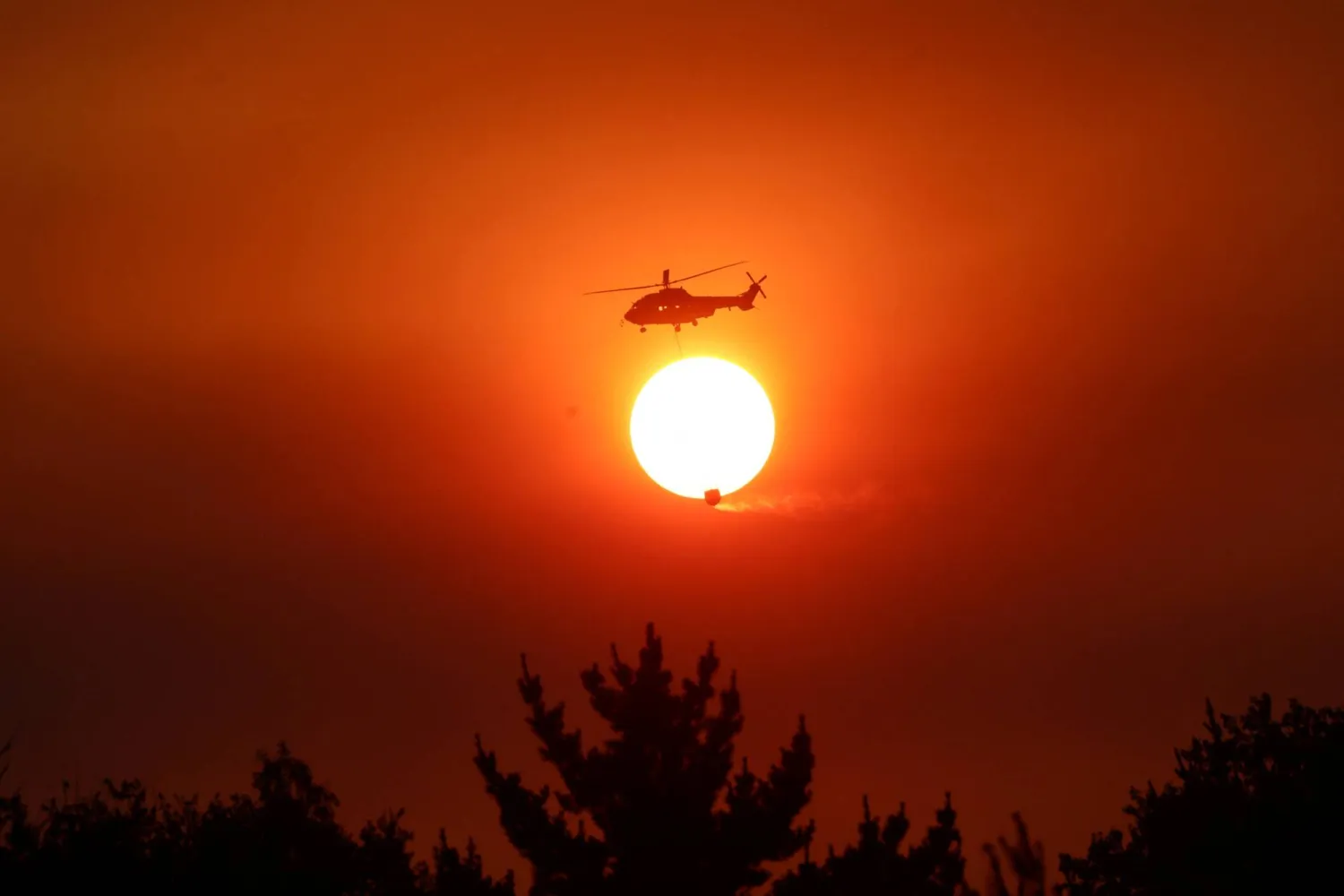
A helicopter battles a forest fire in the Biobio region, where multiple wildfires have prompted emergency evacuations, in Florida, Chile, January 21, 2026. (Reuters)
TT

Record Heat and Raging Fires Ring in 2026 Across the Southern Hemisphere 

A helicopter battles a forest fire in the Biobio region, where multiple wildfires have prompted emergency evacuations, in Florida, Chile, January 21, 2026. (Reuters)

From Argentina to Australia to South Africa, record heat and raging wildfires are rampaging through the Southern Hemisphere at the start of 2026, with scientists predicting that even more extreme temperatures could lie ahead - and possibly another global annual high - after three of the hottest years on record.

In January, a record-setting heat dome enveloped Australia, sending temperatures near 50 degrees C (122 degrees F) while heat and catastrophic wildfires gripped parts of South America, setting remote parts of Argentina's Patagonia ablaze and killing 21 people in coastal towns in Chile. In addition, South Africa has been experiencing its worst wildfires in years.

The extremes are occurring even as the world remains under the cooling influence of a weak La Nina, a climate cycle marked by cooler waters in the central and eastern Pacific that began in December 2024. Despite this moderating factor, temperatures are reaching record highs in various locales.

"This means the effect of human-caused climate change is overwhelming natural variability," said climate scientist Theodore Keeping of Imperial College London and the international research collaboration World Weather Attribution, who specializes in research on wildfires and extreme heat.

"As we transition into a neutral or even El Nino phase, we'll expect the incidence of extreme heat events around the world to be further amplified," Keeping added.

El Nino typically has the opposite effect of La Nina, warming the central and eastern Pacific and boosting global temperatures.

This year is forecast to be about 1.46 degrees C (2.6 degrees F) above pre-industrial levels, which would make it the fourth consecutive year to be higher than 1.4 degrees C (2.5 degrees F) above pre-industrial levels, according to Adam Scaife, head of the long-range prediction at the United Kingdom's national weather ‌and climate service.

The 2015 ‌international climate treaty, known as the Paris Agreement, aimed to keep warming below 1.5 degrees C (2.7 degrees F) above pre-industrial levels.

"If a big ‌El Nino ⁠were to develop ⁠quickly in 2026 then it's still possible 2026 could be a record," Scaife said. The World Meteorological Organization said last month that the past three years were the warmest on record.

FIRE RAGES FROM WOODS TO WATER

While most wildfires are caused by human activity, they are also a natural part of many ecosystems. Persistent heat, drought and extreme temperatures, however, are turning once-manageable fires into increasingly uncontrollable and destructive events.

Many ecosystems are not adapted to such hot, dry conditions, allowing fires to grow larger and more intense, often causing permanent damage, Keeping said.

The fires that burned through Argentina's Los Alerces National Park illustrate the shift, according to meteorologist Carolina Vera of the Center for Ocean and Atmospheric Research at the University of Buenos Aires.

The park, a UNESCO World Heritage site, is home to trees that have lived more than 3,000 years.

Local officials determined that a lightning strike caused the fire. The blaze initially was under control. But Vera said a heat wave and strong winds caused it to spread about 20 km (12 miles) in a single day, making it the worst wildfire there ⁠in two decades.

The region has been drought-stricken since 2008. Temperatures during the first two weeks of January were about 6 degrees C (11 degrees F) above ‌normal.

"These fires used to burn themselves out and form part of the forest's natural dynamics," Vera said.

"This is an example of ‌how climate change can alter a natural fire, because it appeared to be caused by lightning," Vera said.

There are no towns in that remote area.

Fires erupted in the southern part of neighboring Chile later in January and ‌crossed into the greater Concepcion area, the country's third-largest metropolitan region, destroying hundreds of homes and killing 21 people in coastal communities.

Keeping said the blazes mirrored recent disasters in places such as ‌Los Angeles, Athens and the Hawaiian island of Maui.

"Where there's been the greatest loss of life, it almost always comes down to evacuation being difficult or impossible," Keeping said. "That's particularly true in regions affected by strong downslope winds toward the coast."

WHIRLWINDS OF FIRE

About 80% of Punta de Parra, a small coastal town in southern Chile surrounded by hills and forests, was destroyed.

Punta de Parra residents said they had little time to evacuate. Doralisa Silva, 34, said she heard about a fire in a nearby community the night the blaze reached the town.

"Out of nowhere, the forest started burning and all the houses caught fire," Silva said. "The fire was on us in the blink ‌of an eye. There was nothing we could do."

Silva said her family was among the last to try to flee because they had no vehicle. Silva said flames blocked their exit as embers rained down as she and her partner Hermes Barrientos fled with their ⁠2-year-old daughter.

Barrientos said winds of nearly 70 km ⁠per hour (43.5 mph) whipped through the area, creating whirlwinds of fire that spread to the beach and trapped residents. The family and others eventually found refuge in a large dirt field at the center of town, and spent the night watching their community burn.

A FUTURE FILLED WITH FIRES

Record-breaking heat in southeastern Australia has also fueled the country's worst fires since the deadly 2019-2020 season, when 33 people were killed.

In addition, the 2025-2026 fire season has been the most severe in South Africa in a decade, according to officials, killing wildlife and hitting tourist destinations such as Mossel Bay and Franschhoek.

"The hot, dry and windy conditions that drive the most extreme wildfires are becoming more intense and more likely," Keeping said. "And it's happening all around the world."

The Southern Hemisphere has warmed by about 0.15 to 0.17 degrees C (0.27 to 0.30 degrees F) per decade since the 1970s, compared to 0.25 to 0.30 degrees C (0.45 to 0.54 degrees F) in the Northern Hemisphere - largely because its vast oceans absorb heat more slowly and because of Antarctic meltwater.

Still, southern land masses are now warming at similar rates to northern land masses, and contrasts between warming land and cold meltwater can intensify weather patterns, leading to prolonged heat waves, droughts or flooding.

Keeping said adaptation is critical, including authorities managing vegetation near cities and developing effective evacuation plans, and builders using fire-resistant materials. Wildfires are inflicting mounting economic damage. A 2026 report by insurance broker Aon estimated global insured wildfire losses at $42 billion in 2025, up from an average of $4 billion annually between 2000 and 2024. The Los Angeles fires last year were the costliest on record.

Swiss Re, the world's second-largest reinsurer, found that wildfires accounted for about 1% of global insured losses from natural disasters before 2015, but now represent 7%, with economic losses linked to fires rising by about $170 million a year since 1970.

"You actually cannot stop a lot of these really large intense wildfires. They're simply too big," Keeping said.

The most important way forward, Keeping said, is to "have a serious conversation about limiting future climate change to prevent this issue from worsening."