


Saudi Crown Prince, Turkish President Stress Cooperation in All Fields

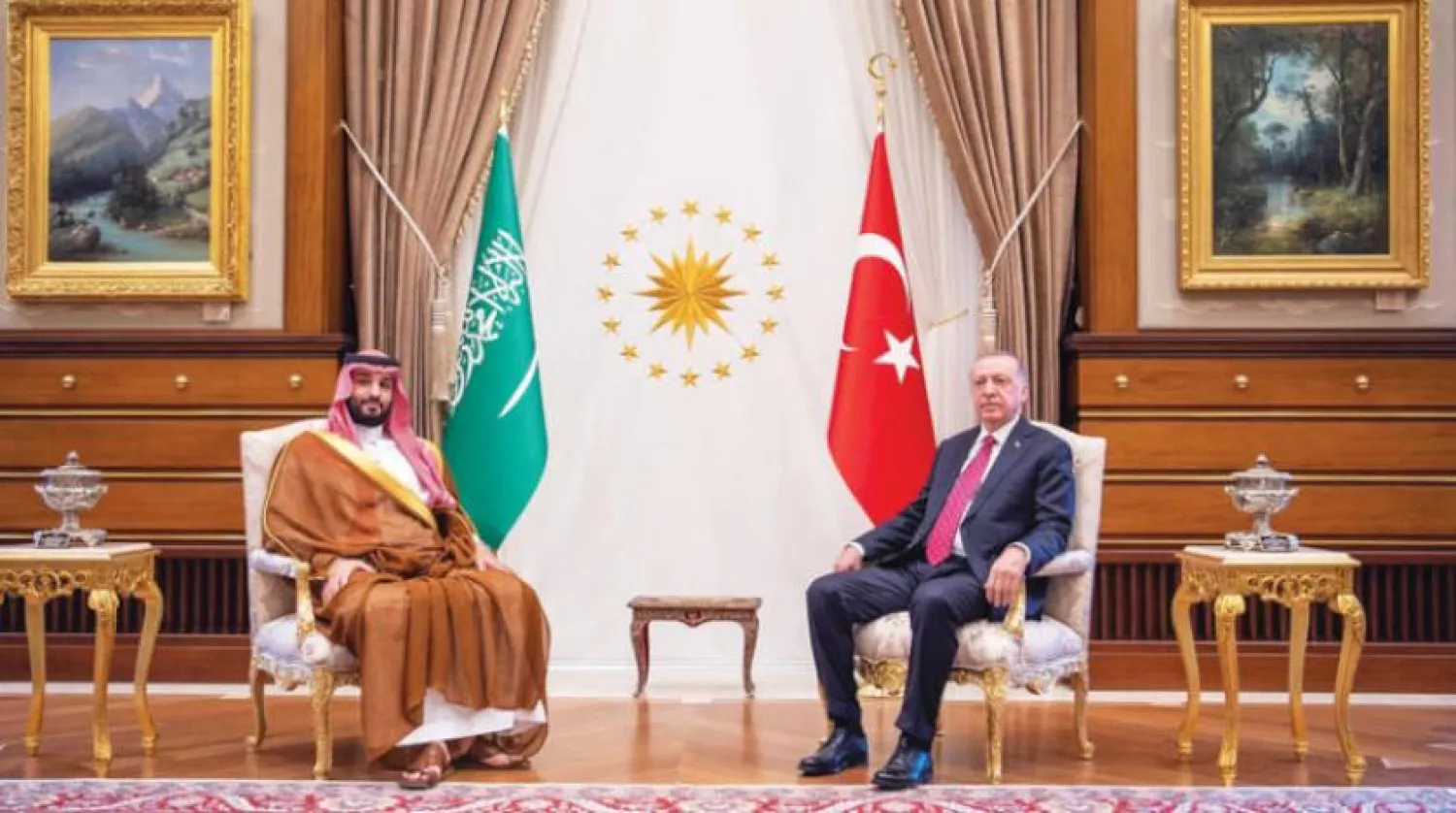
Turkish President Recep Tayyip Erdogan and Saudi Crown Prince Mohammed bin Salman held a bilateral meeting and a session of talks that reviewed relations and developments in the region (SPA)
TT

Saudi Crown Prince, Turkish President Stress Cooperation in All Fields

Turkish President Recep Tayyip Erdogan and Saudi Crown Prince Mohammed bin Salman held a bilateral meeting and a session of talks that reviewed relations and developments in the region (SPA)

Saudi Crown Prince Mohammed bin Salman concluded a regional tour that saw him visiting each of Egypt, Jordan, and Turkey, where he discussed enhancing ties and reinforcing regional stability with the leaders of those countries.

Strategic files, development and economic relations were also reviewed.

The Turkish capital, Ankara, was the final leg of the Crown Prince’s tour. He arrived there on Wednesday heading a senior delegation. Turkish President Recep Tayyip Erdogan welcomed Crown Prince Mohammed at the presidential palace in Ankara with an official ceremony.

The two sides held a bilateral meeting during which the Crown Prince conveyed the greetings and appreciation of King Salman bin Abdulaziz. In turn, Erdogan asked the Crown Prince to convey his greetings and appreciation to the Saudi King.

Moreover, the two sides reviewed bilateral relations and aspects of cooperation and ways to develop them in various fields, in addition to going over the latest regional and international developments and a number of issues of common interest.

In a statement following the talks, the two countries emphasized determination on ushering in a new period of cooperation in bilateral relations.

“The two sides discussed ways of developing and diversifying intra-trade, facilitating trade exchange between the two countries, overcoming any difficulties in this regard, and intensifying communication between the public and private sectors in the two countries to discuss investment opportunities and translate them into tangible partnerships in various fields, praising the great economic potentials of the two countries as members of the Group of Twenty (G20),” the statement read.

Additionally, the statement highlighted the opportunities being offered by the Kingdom’s Vision 2030 in the fields of investment, trade, tourism, entertainment, development, industry, mining, construction projects, transportation and infrastructure (including contracting), agriculture, food security, health, communications and information technology, media, and sports.

“They agreed to activate the work of the Saudi-Turkish Coordination Council, raise the level of cooperation and coordination on issues of common interest, and work on exchanging expertise between specialists in the two countries,” it added.

“The two sides also expressed their aspiration to cooperate in the fields of energy, including petroleum, refining and petrochemicals, energy efficiency, electricity, renewable energy, innovation and clean technologies for hydrocarbon resources, low-carbon fuels and hydrogen, and to work on localizing energy sector products and associated supply chains, and developing projects related to these fields.”

Turkey Welcomes Saudi Arabia’s Middle East Green Initiative

In the field of environment and climate change, Turkey welcomed the Kingdom's launch of the Saudi Green Initiative (SGI) and Middle East Green Initiative (MGI) and expressed its support for the Kingdom's efforts in the field of climate change through the application of the circular carbon economy approach, launched by the Kingdom and endorsed by the leaders of the G20 countries.

The two sides reiterated the importance of adhering to the principles of the Framework Convention on Climate Change and the Paris Agreement, and the need to develop and implement the climate agreement by focusing on emissions without sources.

The two sides affirmed their support for the two initiatives launched during the Kingdom's presidency of the G20 summit meetings 2020, namely (the global initiative to reduce land degradation and enhance the conservation of terrestrial habitats) and the initiative (the platform to accelerate research and development in the field of global coral reefs).

The two parties agreed to develop productive and investment partnerships in the fields of artificial intelligence, digital technologies, and smart cities, as well as to encourage private sector actors working in these areas to cooperate.

The Turkish side called on investment funds operating in the Saudi entrepreneurship environment to invest in emerging companies in Turkey, and to establish partnerships with them.

The two parties agreed to strengthen and continue the relations between the "Turkish Standards Institution" and the "Saudi Standards and Metrology Organization" within the framework of the cooperation agreements signed between the two concerned institutions.

The two parties agreed to exchange visits of scientists, within the framework of the cooperation protocol signed between the Scientific and Technological Research Council of Turkey “TUBITAK” and “King Abdulaziz City for Science and Technology” in 2016.

They stressed the need to strengthen and develop cooperation activities between the Small and Medium Enterprises Development and Support Administration in Turkey and the General Authority for Small and Medium Enterprises in the Kingdom of Saudi Arabia.

Defense Agreements, Judicial Cooperation

On the defense issue, the two sides agreed to activate the agreements signed between the two countries in the fields of defense cooperation, and to strengthen and develop them in a way that serves the interests of the two countries and contributes to achieving security and stability in the region.
They also agreed to enhance judicial cooperation and work on exchanging expertise between specialists in the judicial and judicial fields.

Tourism Cooperation

The two sides stressed the importance of cooperation in the field of tourism, developing the tourism movement between the two countries, exploring the tourism potentials of each country, and strengthening joint work for the benefit of the sector and its development according to the bilateral agreements signed between the two states.

The two parties stressed the importance of enhancing cooperation between the national civil aviation authorities and facilitating administrative procedures for the operations of airlines.

They also agreed on their intention to develop the existing cooperation between the two countries in the field of health. The two parties will explore opportunities for cooperation in the field of health investments.

The Saudi side expressed its gratitude for Turkey’s support for Riyadh's candidacy to host World Expo 2030.

The two parties affirmed their endeavor to intensify cooperation, coordination and exchange of views on important issues and issues on the regional and international arenas, in a way that contributes to supporting and strengthening security and stability in the region and support for political solutions to all crises in the countries of the region, while emphasizing not to prejudice the sovereignty of any of them, and seeking everything that would keep the countries of the region away from tensions, and lay the foundations for security and stability of the region.



Türkiye: 'Makkah Agreement' a Strong Step Toward Regional Solutions

Saudi Crown Prince Mohammed bin Salman signed the "Makkah Joint Defense Agreement" with Turkish President Recep Tayyip Erdogan and Pakistani Prime Minister Shehbaz Sharif on August 7 (Turkish Presidency).
TT

Türkiye: 'Makkah Agreement' a Strong Step Toward Regional Solutions

Saudi Crown Prince Mohammed bin Salman signed the "Makkah Joint Defense Agreement" with Turkish President Recep Tayyip Erdogan and Pakistani Prime Minister Shehbaz Sharif on August 7 (Turkish Presidency).

Turkish President Recep Tayyip Erdogan described the "Makkah Joint Defense Agreement" as a strong step in the right direction toward finding solutions to the region's problems from within the region.

Parliament Speaker Numan Kurtulmus said he expects the agreement to be submitted to parliament for discussion and ratification when its new session begins on October 1.

Meanwhile, Türkiye's Defense Ministry announced that Chief of General Staff General Selcuk Bayraktaroglu would take part in an urgent meeting in Riyadh with his Saudi counterpart, General Fayyad bin Hamed Al-Ruwaili, and Pakistan's Field Marshal Asim Munir, as part of the "Makkah Joint Defense Agreement."

Saudi Arabia's Foreign Ministry said earlier Friday that the three chiefs of staff would hold an urgent meeting to discuss ways to support Saudi Arabia under the "Makkah Joint Defense Agreement," which stipulates that an armed attack on any one of the parties constitutes an attack on all of them.

Talks in New York

The foreign ministers of Saudi Arabia, Pakistan, and Türkiye discussed in New York on Thursday preparations for the urgent meeting of the chiefs of staff, aimed at discussing ways to support the Kingdom under the "Makkah Joint Defense Agreement" and its provision that an attack on any one party constitutes an attack on all parties, according to a statement by the Saudi Foreign Ministry.

Saudi Foreign Minister Prince Faisal bin Farhan held a meeting in New York on the sidelines of the 81st session of the United Nations General Assembly with Pakistan's Deputy Prime Minister and Foreign Minister Muhammad Ishaq Dar and Turkish Foreign Minister Hakan Fidan. The three ministers strongly condemned the "heinous attacks" by the Houthis targeting Makkah and civilian and economic facilities in Saudi Arabia, and praised the vigilance of the Saudi Armed Forces and their ability to defend the country's security.

The ministers affirmed Saudi Arabia's right to take the measures it deems appropriate to defend its security under Article 51 of the United Nations Charter.

Sources at the Turkish Foreign Ministry said the meeting also discussed the final stages of ongoing technical negotiations aimed at institutionalizing cooperation to be implemented under the agreement, which was signed by Saudi Crown Prince Mohammed bin Salman, Turkish President Recep Tayyip Erdogan, and Pakistani Prime Minister Shehbaz Sharif on August 7. The agreement aims to enhance regional and international security, peace, stability, and prosperity, and increase joint deterrence capabilities in response to growing instability in the region.

The agreement stipulates that an attack on one of the member states constitutes an attack on all parties.

According to the sources, the ministers also discussed preparations for the next meeting of the Political and Defense Strategic Committee established under the agreement. The committee held its first meeting in Istanbul on August 31, attended by foreign and defense ministers and chiefs of staff. The parties agreed to establish a general secretariat in Riyadh, headed by Pakistan for three years.

Erdogan: We Trust Our Brothers

Speaking to Turkish journalists upon his return from New York late Thursday after attending the UN General Assembly meetings, President Recep Tayyip Erdogan described the "Makkah Agreement" as "a strong step in the right direction."

He said that when undertaking an initiative of such importance in a challenging geographical region, it is not surprising to face some challenges. He said it is natural for some to reject a new idea or a new will when it emerges, adding that Türkiye has enough experience to avoid being drawn into provocations or falling into traps.

Erdogan said he had no doubt that the three countries would move forward more strongly with their efforts to complete the agreement's institutional framework. He said the agreement had established a foundation for finding solutions to the region's problems from within the region, after everyone had seen how those who come from outside to prescribe security solutions for the region often leave behind greater instability.

He concluded: "This seed we have planted, the Makkah Agreement, will grow and expand in a short time to become a deeply rooted tree. We trust our country and our people, and we trust our brothers."

In the same context, Turkish Parliament Speaker Numan Kurtulmus said the "Makkah Agreement" had not yet been submitted to parliament for ratification. He said he expects it to be presented when parliament resumes after its summer recess and begins its new session on October 1.

Kurtulmus said Friday that the "Makkah Agreement" does not target any country, but is primarily intended to ensure the security of the countries of the region amid ongoing conflicts and what he described as "Israeli hostile policies." He added that "the agreement is not directed against Iran, and it should not be. Rather, we hope it will become a broader agreement for the Muslim world, and Iran can join it. We also hope the agreement will become stronger with the participation of other countries in the region."


UN Security Council Condemns Houthi Attacks on Saudi Arabia

A side of a UN Security Council meeting (United Nations)
TT

UN Security Council Condemns Houthi Attacks on Saudi Arabia

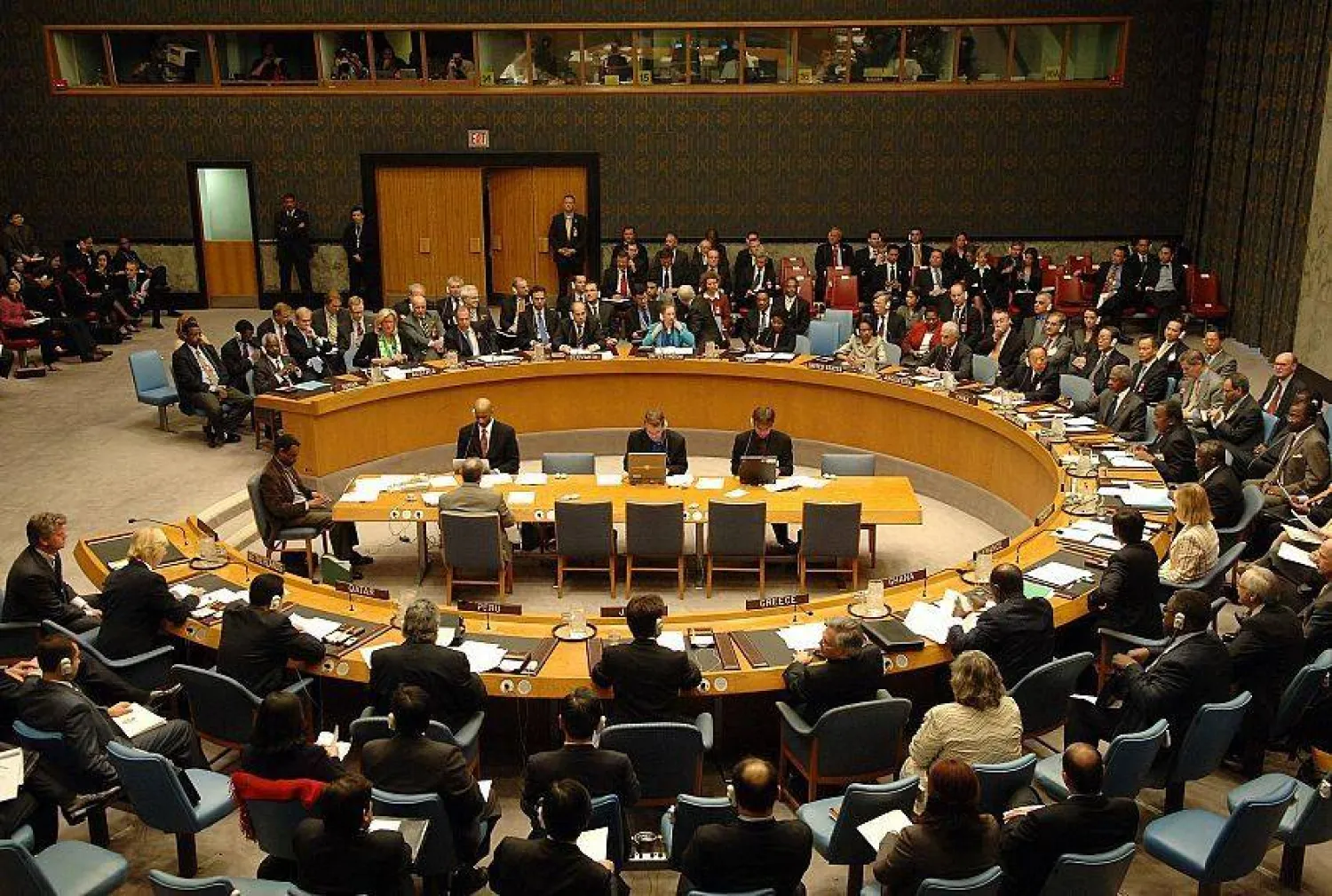
A side of a UN Security Council meeting (United Nations)

The United Nations Security Council on Friday condemned escalating attacks on Saudi Arabia by Yemeni Houthis.

The Houthis have imposed a naval blockade on Saudi Arabia, hitting its tankers and territory and seizing swathes of Yemen's Red Sea coast, which is vital for Saudi oil exports, causing energy prices to jump.

"The members of the Security Council condemned, in the strongest terms, continued Houthi attacks against the Kingdom of Saudi Arabia, including attacks impacting civilian and energy infrastructure, which have resulted in the injury of civilians, including women and children," said the rotating president of the Council, French UN envoy Jerome Bonnafont, delivering a joint statement.

The Security Council "further stressed the importance of acting in accordance with international law, in particular the United Nations Convention on the Law of the Sea, and of upholding navigation rights and freedoms."

The body "demanded the Houthis immediately cease their military escalation and their attacks impacting civilians and civilian objects," according to the statement.


Saudi Grand Mufti: Houthis Are a Corrupt Group of Evil with Flawed Creed, Methodology

Saudi Arabia's Grand Mufti, Sheikh Dr. Saleh Al-Fawzan (SPA).
TT

Saudi Grand Mufti: Houthis Are a Corrupt Group of Evil with Flawed Creed, Methodology

Saudi Arabia's Grand Mufti, Sheikh Dr. Saleh Al-Fawzan (SPA).

Saudi Arabia's Grand Mufti, Sheikh Dr. Saleh Al-Fawzan, described the Houthi group as a "group of evil" and "a plot by enemies," saying it was "founded on corruption in creed and methodology" and had turned against those in authority, leading to successive periods of turmoil over many years "until it divided the country and its people."

The remarks came in a statement addressed to soldiers serving on the front lines and coalition forces, urging them to "stand united against this misguided faction and deviant group," which he said "declares the Prophet's Companions to be unbelievers, deems the blood of Muslims lawful, and destroys and demolishes their mosques." He added: "God is your supporter and will grant you victory, so put your trust in Him."

Al-Fawzan said: "God has blessed us with this upright religion, Islam, and unity in this blessed and good land, as well as unity around our leaders." He said one of the great blessings bestowed upon Saudi Arabia was that it was established on the Quran and the Sunnah of the Prophet and honored with serving the Two Holy Mosques, adding that they had received a level of service and care "unprecedented since the era of the Rightly Guided Caliphs."

He said protecting this great nation, defending its borders, and punishing anyone who seeks to lay a hand on even an inch of its territory were among the greatest duties and most virtuous acts of devotion, for which lives and souls may be sacrificed in seeking God's pleasure.

He noted that the country is home to the sacred sites of Muslims, and that one of the pillars of Islam, the Hajj, as well as the major Islamic rite of Umrah, is performed there.

The Grand Mufti stressed that troops serving on the front lines have great virtues and rewards, saying they "must always be prepared to perform their duty, obey the rulers and their field commanders, and carry out orders with the utmost precision, as God Almighty commanded the Companions of His Prophet to do."

He continued: "You are following in the footsteps of the Prophet's Companions, defending the sacred sites of Muslims and raising the banner of monotheism." He also urged them to remain patient, steadfast, and committed to their duty.

Al-Fawzan said the coalition forces were "guarding a vital frontier and carrying out an honorable and noble mission," adding: "Hold firmly to the rope of God, unite your ranks, cooperate with one another, and unite your word. Know that you are fighting an enemy, the Houthi group, which has caused corruption in the country, divided its people, turned against those in authority, and sought to harm the sacred sites of Muslims. But God is watching over them."

The Grand Mufti stressed that asserting the authority of Yemen's legitimate government over the country was "among the most pressing obligations," so that Yemenis can live in security, safety, prosperity, and stability, and so that their country can join the rest of the Islamic world in progress, development, and cohesion.

He prayed that God protect Saudi Arabia and Yemen from all harm, support the troops stationed on the front lines, and bring about the complete defeat of the Houthi group and those who assist and support them.