

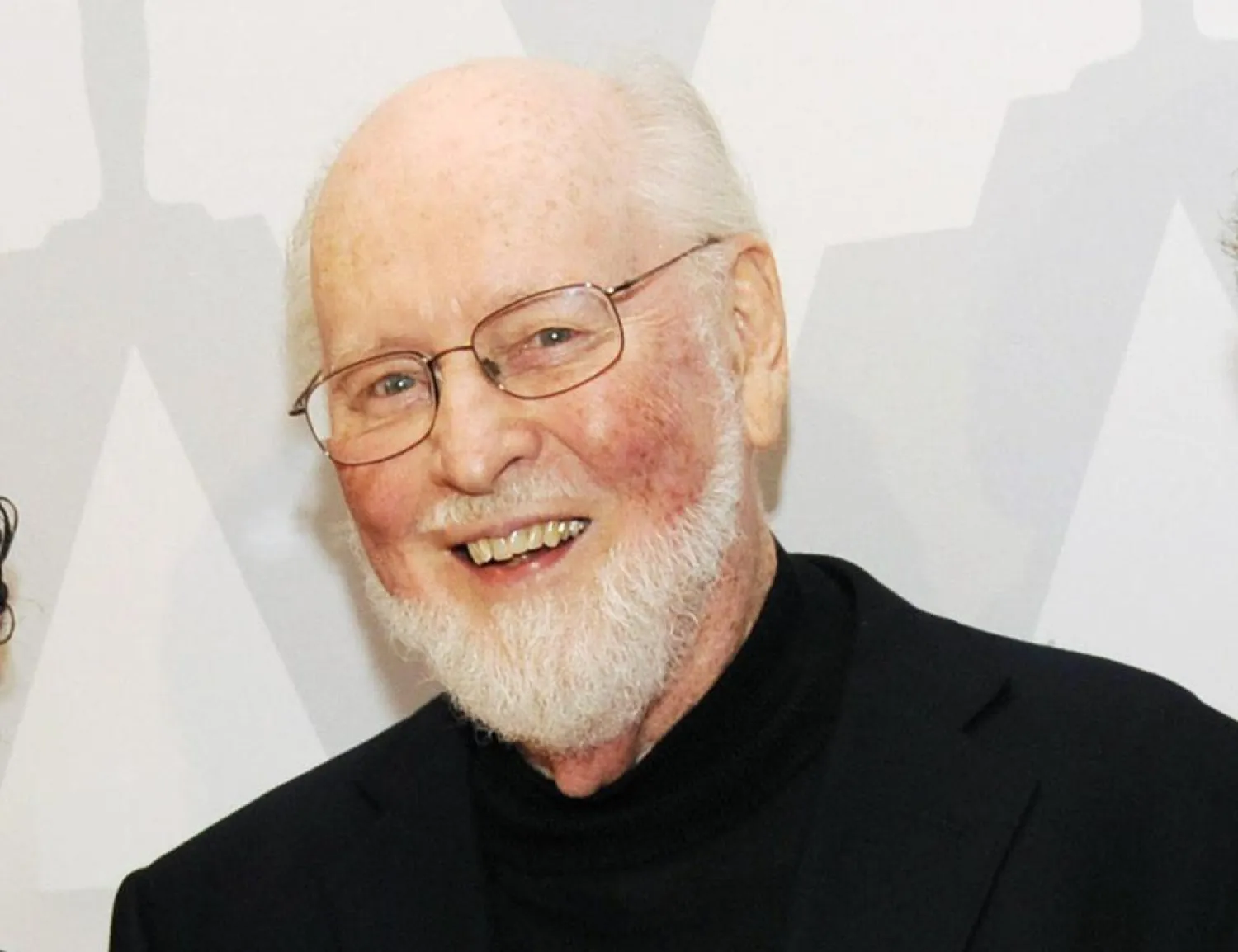

John Williams, 90, Steps Away from Film, but Not Music

Composer John Williams poses at the Academy of Motion Picture Arts and Sciences event "Behind the Score: The Art of the Film Composer" in Los Angeles on July 21, 2014. (AP)
TT

John Williams, 90, Steps Away from Film, but Not Music

Composer John Williams poses at the Academy of Motion Picture Arts and Sciences event "Behind the Score: The Art of the Film Composer" in Los Angeles on July 21, 2014. (AP)

After more than six decades of making bicycles soar, sending panicked swimmers to the shore and other spellbinding close encounters, John Williams is putting the final notes on what may be his last film score.

“At the moment I’m working on ‘Indiana Jones 5,’ which Harrison Ford — who’s quite a bit younger than I am — I think has announced will be his last film,” Williams says. “So, I thought: If Harrison can do it, then perhaps I can, also.”

Ford, for the record, hasn’t said that publicly. And Williams, who turned 90 in February, isn’t absolutely certain he’s ready to, either.

“I don’t want to be seen as categorically eliminating any activity,” Williams says with a chuckle, speaking by phone from his home in Los Angeles. “I can’t play tennis, but I like to be able to believe that maybe one day I will.”

Right now, though, there are other ways Williams wants to be spending his time. A “Star Wars” film demands six months of work, which he notes, “at this point in life is a long commitment to me.” Instead, Williams is devoting himself to composing concert music, including a piano concerto he’s writing for Emanuel Ax.

This spring, Williams and cellist Yo-Yo Ma released the album “A Gathering of Friends,” recorded with the New York Philharmonic, Pablo Sáinz-Villegas and Jessica Zhou. It’s a radiant collection of cello concertos and new arrangements from the scores of “Schindler’s List,” “Lincoln” and “Munich,” including the sublime “A Prayer for Peace.”

Turning 90 — an event that the Kennedy Center and Tanglewood are celebrating this summer with birthday concerts — has caused Williams to reflect on his accomplishments, his remaining ambitions and what a lifetime of music has meant to him.

“It’s given me the ability to breathe, the ability to live and understand that there’s more to corporal life,” Williams says. “Without being religious, which I’m not especially, there is a spiritual life, an artistic life, a realm that’s above the mundanities of everyday realities. Music can raise one’s thinking to the level of poetry. We can reflect on how necessary music has been for humanity. I always like to speculate that music is older than language, that we were probably beating drums and blowing on reeds before we could speak. So it’s an essential part of our humanity.

“It’s given me my life.”

And, in turn, Williams has provided the soundtrack to the lives of countless others through more than 100 film scores, among them “Star Wars,”“Jurassic Park,” “Jaws,” “Close Encounters of the Third Kind,” “E.T.,” “Indiana Jones,”“Superman,” “Schindler’s List” and “ Harry Potter.”

“He’s lived through the better part of a century, and his music encompasses all of the events and changes of those times,” says Ma, a longtime friend. “He is one of the great American voices.”

It’s an amount of accomplishment that’s hard to quantify. Five Oscars and 52 Academy Award nominations, a number bested only by Walt Disney, is one measurement. But even that hardly hints at the cultural power of his music. A billion people might be able to instantly hum Williams’ two-note ostinato from “Jaws” or “The Imperial March” from “Star Wars.”

“I’m told that the music is played all over the world. What could be more rewarding than that?” says Williams. “But I have to say it seems unreal. I can only see what’s in front of me at the piano right at this moment, and do my best with that.”

Williams has a warm, humble, courteous manner despite his stature. He began an interview by offering: “Let me see if I can give you anything that might be useful.” All those indelible, perfectly constructed themes, he believes, are the product less of divine inspiration than daily hard work. Williams does most of his work sitting for hours at a time at his Steinway, composing in pencil.

“It’s like cutting a stone at your desk,” he says. “My younger colleagues are much faster than I am because they have electronic equipment and computers and synthesizers and so on.”

When Williams began (his first feature film score was 1958′s “Daddy-O”), the cinematic tradition of grand, orchestral scores was beginning to lose out to pop soundtracks. Now, many are gravitating toward synthesized music for film. Increasingly, Williams has the aura of a venerated old master who bridges distant eras of film and music.

“Recording with the New York Philharmonic, the whole orchestra to a person were awestruck by this gentleman at now 90 who hears everything, is unfailingly kind, gentle, polite. People just wanted to play for him,” says Ma. “They were floored by the musicianship of this man.”

This late chapter in Williams’ career is in some ways a chance to place his mammoth legacy not just in connection with cinema but among the classical legends. Williams, who led the Boston Pops from 1980 to 1993, has conducted the Berlin, Vienna and New York philharmonics, among others. In the world’s elite orchestras, Williams’ compositions have passed into canon.

“A purist may say that music represented in film is not absolute music. Well, that may be true,” says Williams. “But some of the greatest music ever written has been narrative. Certainly in opera. Film offers that opportunity — not often but occasionally it does. And in a rewarding way musically. Occasionally we get lucky and we find one.”

Williams’ enduring partnership with Steven Spielberg has, of course, helped the composer’s odds. Spielberg, who first sought out a lunch with Williams in 1972 after being captivated by his score to “The Reivers,” has called him “the single most significant contributor to my success as a filmmaker.”

“Without John Williams, bikes don’t really fly,” Spielberg said when the AFI honored Williams in 2016.

They remain irrevocably linked. Their offices on the Universal lot are just steps from one another. Along with “Indiana Jones,” Williams recently scored Spielberg’s upcoming semi-autobiographical drama about growing up in Arizona, “The Fabelmans.” The two movies make it 30 films together for Spielberg and Williams.

“It’s been 50 years now. Maybe we’re starting on the next 50,” says Williams with a laugh. “Whatever our connections will be, whether it’s music or working with him or just being with him, I think we will always be together. We’re great, close friends who have shared many years together. It’s the kind of relationship where neither one of us would ever say no to the other.”

In Spielberg’s films and others, Williams has carved out enough perfectly condensed melodies to rival the Beatles. Spielberg once described his five-note “Communication Motif” from “Close Encounters” as “a doorbell.”

“Simple little themes that speak clearly and without obfuscation are very hard to find and very hard to do,” says Williams. “They really are the result of a lot of work. It’s almost like chiseling. Move one note, change a rhythmic emphasis or the direction of an interval and so on. A simple tune can be done in dozens of ways. If you find one that, it seems like you discovered something that wanted to be uncovered.”

One thing you won’t hear from Williams is a grand pronouncement about his own legacy. He’s much more comfortable talking like a technician who tinkers until a gleaming gem falls out.

“My own personality is such that I look at what I’ve done — I’m quite pleased and proud of a lot of it — but like most of us, we always wish we might have done better,” he says.

“We live with examples like Beethoven and Bach before us, monumental achievements people have made in music, and can feel very humbled. But I also feel very fortunate. I’ve had wonderful opportunities, particularly in film where a composer can have an audience of not millions of people, but billions of people.”

Williams has a number of concerts planned for the rest of the year, including performances in Los Angeles, Singapore and Lisbon. But while Williams may be stepping away from film, he remains enchanted by cinema, and the ability of sound and image, when combined, to achieve liftoff.

“I’d love to be around in 100 years to see what people are doing with film and sound and spatial, aural and visual effects. It has a tremendous future, I think,” says Williams. “I can sense great possibility and great future in the atmospherics of the whole experience. I’d love to come back and see and hear it all.”



How the Coveted Bronze BAFTA Mask Trophies Are Made

Completed British Academy Film Awards masks at the FSE Foundry in Braintree, England on Tuesday, Feb. 10, 2026. (AP)
TT

How the Coveted Bronze BAFTA Mask Trophies Are Made

Completed British Academy Film Awards masks at the FSE Foundry in Braintree, England on Tuesday, Feb. 10, 2026. (AP)

Those winning a prize at the upcoming British Academy Film Awards will bag a coveted bronze mask trophy — and get a bit of an arm workout taking it home.

Along with the honor of being named the best of the year in the industry, winners at the BAFTA ceremony on Feb. 22 will be awarded one of the dozens of the 3-kilogram (6.6-pound) prizes.

This year the cast and crew of “One Battle After Another,” “Sinners,” “Hamnet,” “Marty Supreme,” and “Sentimental Value” are in the running for the trophies at the EE BAFTA ceremony, to be held at London's Royal Festival Hall.

As with many things in show business, all that glitters is not gold. The BAFTA masks are made of phosphor bronze, polished to a mirror finish that will reflect the happy face of its new owner.

Craftsmen at the AATi Foundry in Braintree, about 50 miles (80 kilometers) northeast of London, use a sandcasting technique to make about 350 bronze trophies each year for all the BAFTA ceremonies — covering the film, television and gaming industries.

They are created in batches, and making one from start to finish takes around a week, the foundry's director Hugh Bisset said Tuesday.

The process starts with a pattern by the tooling team, often out of timber or 3D printing. That tool moves to the molding team which uses sand to make two recessed impressions of the mask, one each side. They are then closed together, ready for molten hot bronze — up to 1,200 degrees Celsius (2,192 Fahrenheit) — to be poured into it.

The metal takes about three or four hours to cool down, when it can then be removed from the sand. The masks' surfaces look dull and a bit rough around the edges at this stage, but after fettling, threading and polishing they are ready to be assembled before being checked over extremely carefully.

Bisset says it’s important that the masks are shiny and have no polish left on them.

“The thing I’m always conscious of is that these amazing actors and actresses, they pick up their awards and my big concern is that a smudge of polish will end up over their lovely, beautiful white dress,” he said. “There’s lots of things we need to think about.”

Bisset reckons the diligence and care that his skilled team puts into the making of the masks reflects the hard work of the winning filmmakers and movie stars.

While it’s still unknown if favorites Jessie Buckley, Timothée Chalamet and Teyana Taylor will get the glory on Sunday, whoever does win will take home something worth more than its heavy weight in bronze.

“There’s a lot of metal in it,” but each mask also has “a lot of time and love being put into it,” Bisset said.


Britney Spears Sells Rights to Music Catalogue

FILE PHOTO: Singer Britney Spears arrives at the 2016 MTV Video Music Awards in New York, US, August 28, 2016.  REUTERS/Eduardo Munoz/File Photo/File Photo
FILE PHOTO: Singer Britney Spears arrives at the 2016 MTV Video Music Awards in New York, US, August 28, 2016. REUTERS/Eduardo Munoz/File Photo/File Photo
TT

Britney Spears Sells Rights to Music Catalogue

FILE PHOTO: Singer Britney Spears arrives at the 2016 MTV Video Music Awards in New York, US, August 28, 2016.  REUTERS/Eduardo Munoz/File Photo/File Photo
FILE PHOTO: Singer Britney Spears arrives at the 2016 MTV Video Music Awards in New York, US, August 28, 2016. REUTERS/Eduardo Munoz/File Photo/File Photo

Pop star ‌Britney Spears has sold her rights to her music catalogue to independent music publisher Primary Wave, the ​latest artist to strike a deal for her work.

Entertainment site TMZ, citing legal documents it had obtained, first reported the news, saying the "Oops!... I Did It Again" and "Toxic" singer had signed the deal on December 30.

According to Reuters, it quoted sources as saying it ‌was "in the ‌ballpark" of Canadian singer Justin ​Bieber's ‌reported $200 ⁠million ​agreement to sell ⁠his music rights to Hipgnosis in 2023.

A person familiar with the situation said news of the Spears and Primary Wave deal was accurate. No further details were given.

Primary Wave, which is home to artists ⁠including Whitney Houston, Prince and Stevie ‌Nicks, did not ‌immediately respond to a request for ​comment. Spears has ‌not commented publicly.

The 44-year-old, one of ‌the most successful pop artists of all time, has topped charts around the world, starting off with "...Baby One More Time" in 1998. The ‌deal includes her songs such as "(You Drive Me) Crazy", "Circus", "Gimme More" and "I'm a Slave ⁠4 ⁠U", TMZ said.

Spears' ninth and last studio album, "Glory", came out in 2016.

In 2021, she was released from a 13-year court-ordered conservatorship set up and controlled by her father, Jamie Spears. The arrangement had governed Spears' personal life, career and $60 million estate from 2008 until it was terminated in November 2021.

Spears follows artists such as Sting, ​Bruce Springsteen and Justin ​Timberlake who have struck deals to cash in on their work.


Glitzy Oscar Nominees Luncheon Back One Year After LA Fires 

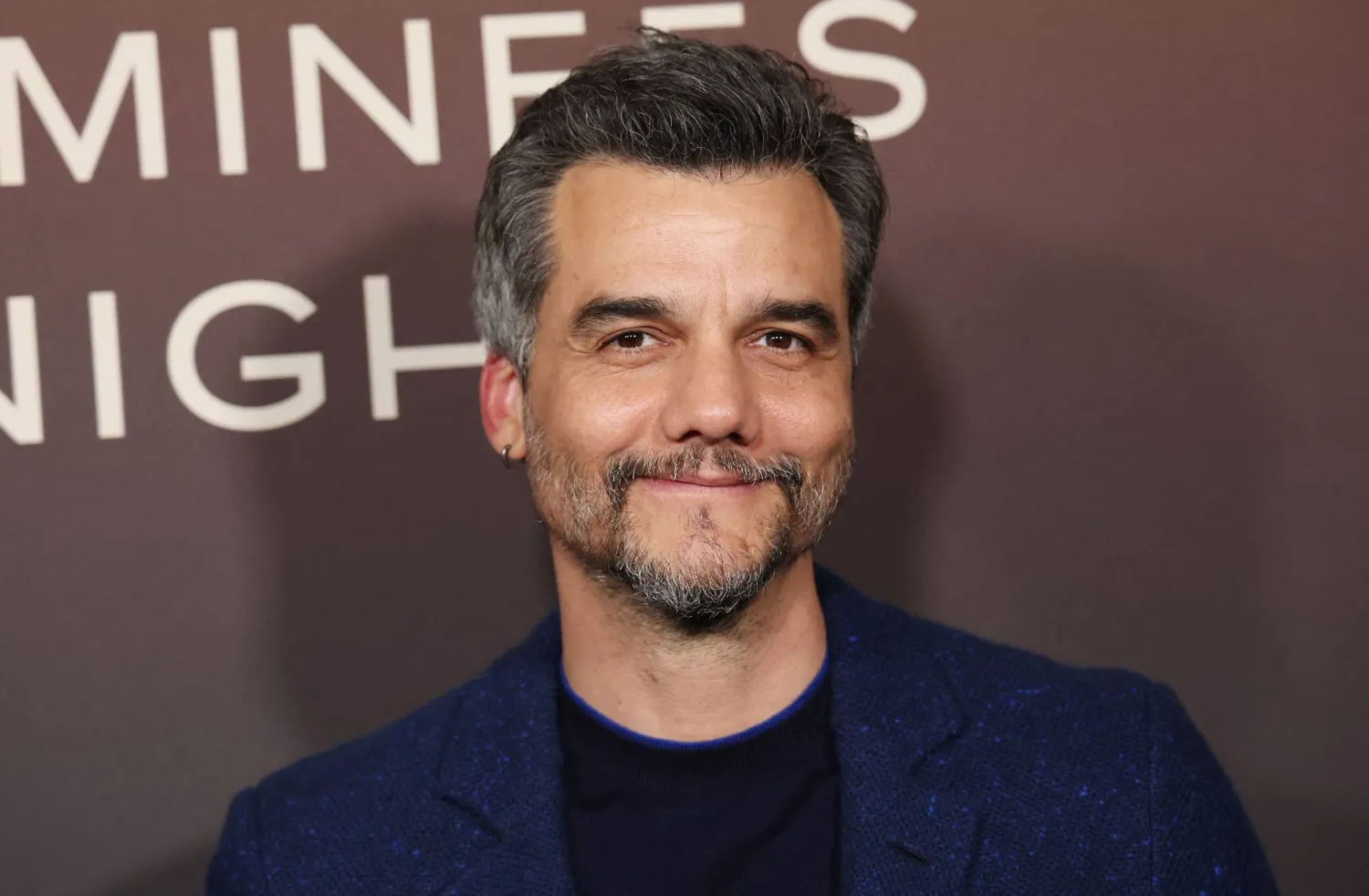
Brazilian actor Wagner Moura arrives to The Hollywood Reporter's Nominees Night held at the Chateau Marmont in Los Angeles, on February 10, 2026. (AFP)
TT

Glitzy Oscar Nominees Luncheon Back One Year After LA Fires 

Brazilian actor Wagner Moura arrives to The Hollywood Reporter's Nominees Night held at the Chateau Marmont in Los Angeles, on February 10, 2026. (AFP)

Hollywood stars embraced at this year's Oscars nominee lunch, the glamorous pre-show gathering that was canceled amid last year's devastating Los Angeles wildfires.

Timothee Chalamet, nominated for best actor in "Marty Supreme," flashed a smile while fellow Best Actor contenders Micahel B. Jordan and Ethan Hawke also flitted around the annual luncheon in Beverly Hills.

Mexican director Guillermo del Toro chatted with his tablemates as Wagner Moura, the Brazilian star of "The Secret Agent," enthusiastically embraced Stellan Skarsgard and Oliver Laxe -- the latter of whom has his film "Sirat" up for best international feature film.

Academy of Motion Picture Arts and Sciences President Lynette Howell Taylor praised the diversity of this year's nominees.

"Ballots were cast from 88 countries and regions," the British producer said, adding that "the mission of the Academy is to amplify your art, movies and your voices."

The more than 200 nominees enjoyed a buzzy afternoon, all the more energetic after last year's lunch was canceled as huge fires razed whole communities around Los Angeles. That year the lunch was replaced with a smaller dinner at the Academy's museum.

"This is a recognition of Brazilian cinema, and of the cinema of our region," Moura told AFP.

Nearby, "The Secret Agent" director Kleber Mendonca Filho joked he was feeling animated -- "like a generator."

Skarsgard said that the impact of international films is growing, as evidenced by his historic nomination for Best Supporting Actor for Norwegian film "Sentimental Value."

Foreign films and their stars typically notch nominations in the international categories, but Skarsgard is competing against nominees from US blockbusters, including Benicio del Toro in "One Battle After Another" and Delroy Lindo in "Sinners."

Benicio del Toro meanwhile told AFP he was doubly thrilled after watching fellow Puerto Rican Bad Bunny perform at the Super Bowl halftime show over the weekend.

"I got goosebumps," he told AFP, adding: "It was beautiful."

The luncheon's other legendary del Toro, the director Guillermo, meanwhile said he was "calm."

While his "Frankenstein" is nominated for Best Picture, del Toro himself is off the hook for Best Director, which he said took the pressure off him and meant he could focus on promoting his team.

"I'm happy because nine nominations don't happen every day," he said.

Lanky heartthrob Jacob Elordi, up for best supporting actor, offered a similarly toned down vibe at an impromptu photo shoot.

"I'm chilling," he said. "It's all good."