


Borrell Visits Iran to Bring Nuclear Deal Back to Full Implementation

EU High Representative Josep Borrell, EU Deputy Sec-Gen Enrique Mora, and US envoy to Iran, Robert Malley (Photo published by Borell)
TT

Borrell Visits Iran to Bring Nuclear Deal Back to Full Implementation

EU High Representative Josep Borrell, EU Deputy Sec-Gen Enrique Mora, and US envoy to Iran, Robert Malley (Photo published by Borell)

EU High Representative Josep Borrell visited Iran as part of the ongoing efforts to bring the Joint Comprehensive Plan of Action (JCPOA) back to full implementation.

Borrell arrived in Tehran Friday, accompanied by his deputy Enrique Mora, where he will meet Iranian Foreign Minister Hossein Amir-Abdollahian and other officials.

Senior diplomatic sources told Asharq Al-Awsat that Borrell would not offer any "new initiatives" to Tehran and that the visit aimed to "re-launch negotiations" on the nuclear talks.

"Diplomacy is the only way to go back to full implementation of the deal and reverse current tensions," Borrell tweeted ahead of his visit.

Borrell met the US envoy to Iran, Robert Malley, Thursday evening in Brussels, accompanied by Mora.

After the meeting, Mora tweeted: "In-depth conversation about JCPOA and regional perspectives in the wider Middle East. Malley reiterated firm US commitment to come back to the deal."

Mora toured several Gulf and Arab countries in the past few days, during which he discussed Iran, its interference in the region, its nuclear program, and regional developments.

Two weeks ago, the Board of Governors of the International Atomic Energy Agency (IAEA) in Vienna passed a Western resolution condemning Iran's lack of compliance in investigating undisclosed sites.

The resolution calls for immediate cooperation after the United States and the three European countries, France, Britain, and Germany, submitted the draft resolution.

Iran responded by reducing its cooperation with the IAEA within the Safeguards Agreement and shutting down nearly 20 surveillance cameras that the Agency had installed in nuclear and other facilities.

IAEA Director Rafael Grossi warned there is a window of opportunity of three to four weeks to restore at least some of the monitoring that is being scrapped, or the Agency will lose the ability to piece together Iran's most critical nuclear activities.

"I think this would be a fatal blow (to reviving the deal)," Grossi said of what would happen if that window went unused.

Western diplomatic sources told Asharq Al-Awsat that the European countries and the US "expected" a strong response from Iran and that they will focus on efforts to revive the nuclear agreement, despite knowing that the matter has become more challenging than ever.

The past few days witnessed active diplomatic visits, including Russian Foreign Minister Sergei Lavrov's trip to Iran.

The Iranian Foreign Minister held telephone consultations on the nuclear agreement with the foreign minister of China, Wang Yi, and his Omani counterpart, Sayyid Badr al-Busaidi.

A statement by the Iranian Foreign Ministry said that Amir-Abdollahian briefed Wang on the latest progress in the negotiations on resuming the nuclear deal's implementation, saying that Washington's “bullying” actions are the major obstacle to current talks.

He added that Tehran will unswervingly safeguard its national interests and is firmly committed to resolving differences through negotiations to achieve an agreement at an early date.

Amir-Abdollahian also expressed gratitude to China for its constructive role on the Iranian nuclear issue.

At a joint press conference with his Russian counterpart, Amir-Abdollahian said Iran is ready to resume the Vienna negotiations soon.

He urged the US to be "realistic" in reaching an agreement on reviving the deal.

Washington has reiterated that Tehran must abandon its demands "outside the nuclear agreement," in reference to the request to remove the Revolutionary Guard Corps (IRGC) from the list of terrorist entities.

Several reports claimed that Tehran waived its demand, hindering the talks' conclusion. The Iranian government is yet to comment on the matter.

It is not yet clear whether the re-launch of the nuclear talks that Borrell seeks to achieve in Tehran means bringing back the parties to the negotiation table in Vienna or addressing the contentious points from a distance.

Strikes Near Iran, Israel Nuclear Sites Risk ‘Unmitigated Catastrophe’, Says UN

 A drone view shows a damage in a residential neighborhood, following a night of Iranian missile strikes which injured dozens of Israelis, amid the US-Israel conflict with Iran, in Dimona, southern Israel March 22, 2026. (Reuters)
A drone view shows a damage in a residential neighborhood, following a night of Iranian missile strikes which injured dozens of Israelis, amid the US-Israel conflict with Iran, in Dimona, southern Israel March 22, 2026. (Reuters)
TT

Strikes Near Iran, Israel Nuclear Sites Risk ‘Unmitigated Catastrophe’, Says UN

 A drone view shows a damage in a residential neighborhood, following a night of Iranian missile strikes which injured dozens of Israelis, amid the US-Israel conflict with Iran, in Dimona, southern Israel March 22, 2026. (Reuters)
A drone view shows a damage in a residential neighborhood, following a night of Iranian missile strikes which injured dozens of Israelis, amid the US-Israel conflict with Iran, in Dimona, southern Israel March 22, 2026. (Reuters)

Strikes around Iran and Israel's nuclear sites risk unleashing an "unmitigated catastrophe", the United Nations rights chief said Wednesday, warning that the Middle East war had created an "extremely dangerous" situation.

Speaking before the UN Human Rights Council, where countries were holding an urgent debate on Tehran's attacks across the Gulf, Volker Turk warned that many of the strikes in the weeks-long war "raise serious concerns under international law".

In particular, Turk cautioned that "recent missile strikes near nuclear sites in both Israel and Iran underscore the immense danger of further escalation".

"States are flirting with unmitigated catastrophe."

His comments came after the UN nuclear watchdog said Iran had informed it that "another projectile hit the premises" of the Bushehr nuclear power plant on Tuesday, without damaging it.

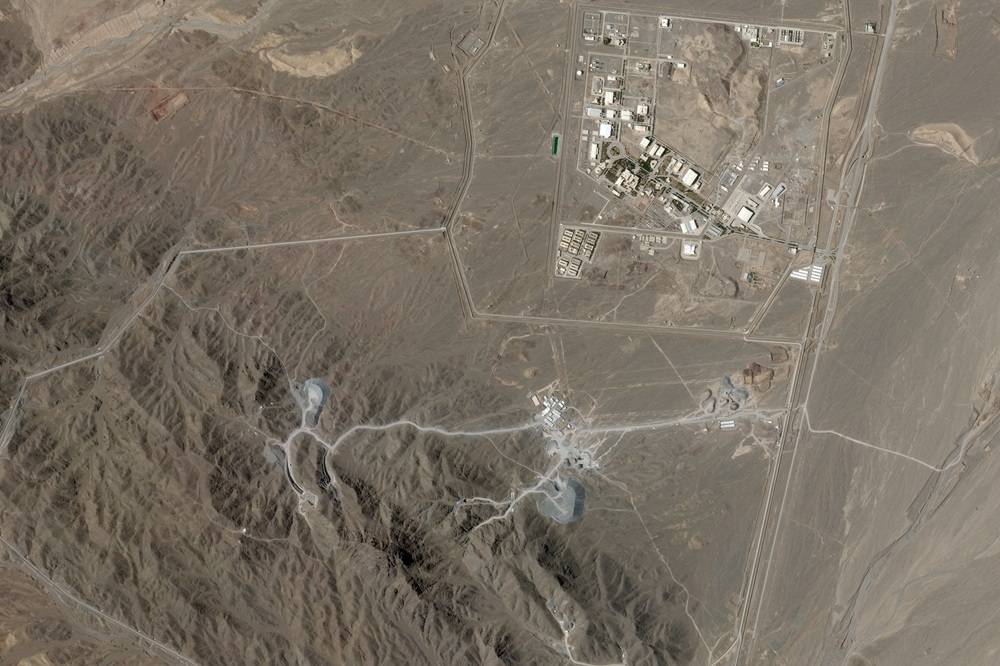
Over the weekend, an Iranian strike hit the southern Israeli town of Dimona, home to a nuclear facility, in what Tehran said was in response to an earlier attack on its nuclear site at Natanz.

"The situation is extremely dangerous and unpredictable, and has created chaos across the region," Turk said, insisting that "we cannot go back to war as a tool of international relations".

The UN rights chief also warned that "this conflict has an unprecedented power to ensnare countries across borders and around the world".

"The complex dynamics could ignite further national, regional or global crises at any moment, with an appalling impact on civilians and people everywhere."


Hungary Says Will ‘Progressively’ Stop Gas Deliveries to Ukraine

Hungarian Prime Minister Viktor Orban speaks during an assembly of European far-right parties with Orban’s Patriots for Europe group, in Budapest, Hungary, Monday, March 23, 2026. (AP)
TT

Hungary Says Will ‘Progressively’ Stop Gas Deliveries to Ukraine

Hungarian Prime Minister Viktor Orban speaks during an assembly of European far-right parties with Orban’s Patriots for Europe group, in Budapest, Hungary, Monday, March 23, 2026. (AP)

Hungary's prime minister said on Wednesday that Budapest would phase out gas deliveries to Ukraine, the latest salvo in a feud between the two countries over a damaged oil pipeline.

"To break the oil blockade and guarantee the security of Hungary's energy supply, new measures are now necessary," Viktor Orban said in a video posted on Facebook.

Hungary has locked horns with Ukraine over damage to the Druzhba (Friendship) pipeline through Ukraine, which has choked the flow of cheap Russian oil to Hungary and Slovakia.


Iran Speaker Warns US Not to Test 'Resolve to Defend Our Land'

FILED - 12 October 2024, Lebanon, Beirut: Iranian Parliament speaker Mohammad Bagher Ghalibaf speaks during a press conference in Beirut. Photo: Hassan Ibrahim/Lebanese Parliament/dpa
TT

Iran Speaker Warns US Not to Test 'Resolve to Defend Our Land'

FILED - 12 October 2024, Lebanon, Beirut: Iranian Parliament speaker Mohammad Bagher Ghalibaf speaks during a press conference in Beirut. Photo: Hassan Ibrahim/Lebanese Parliament/dpa

Iran's parliament speaker on Wednesday warned Washington not to test Tehran’s determination to defend its territory after the United States was reported to be sending more troops to the Middle East.

"We are closely monitoring all US movements in the region, especially troop deployments.

What the generals have broke, the soldiers can't fix; instead, they will fall victim to (Israeli Prime Minister Benjamin) Netanyahu's delusions," said Mohammad Bagher Ghalibaf in an X post in English.

"Do not test our resolve to defend our land."

At least 1,000 troops from the 82nd Airborne Division will be sent to the Mideast in the coming days, three people with knowledge of the plans told The Associated Press. They spoke on condition of anonymity to discuss sensitive military plans.

The Pentagon is also in the process of deploying two Marine units that will add about 5,000 Marines and thousands of sailors to the region.
