


Russia Abandons Snake Island in Strategic Victory for Ukraine

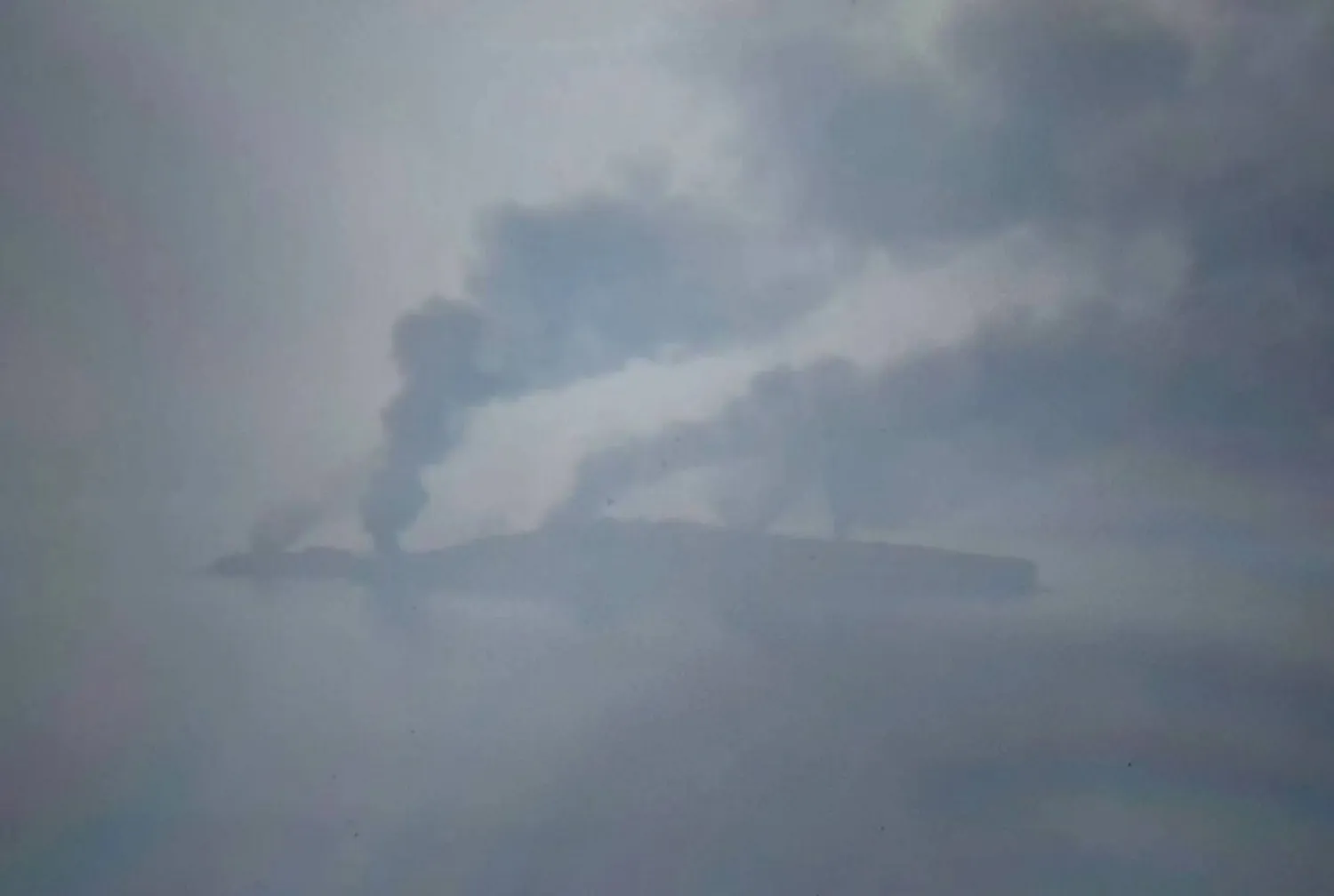
A general view of Snake Island, Ukraine, in this handout still image obtained by Reuters on June 30, 2022. (Ukraine Operational Command South/Handout via Reuters)
TT

Russia Abandons Snake Island in Strategic Victory for Ukraine

A general view of Snake Island, Ukraine, in this handout still image obtained by Reuters on June 30, 2022. (Ukraine Operational Command South/Handout via Reuters)

Russian forces abandoned the strategic Black Sea outpost of Snake Island on Thursday, in a major victory for Ukraine that could loosen a Russian grain export blockade threatening to worsen global hunger.

Russia's defense ministry said it had decided to withdraw from the outcrop as a "gesture of goodwill" that showed Moscow was not obstructing UN efforts to open a humanitarian corridor allowing grains to be shipped from Ukraine's ports.

Ukraine said it had driven the Russian forces out after a massive artillery and assault overnight.

"KABOOM!" tweeted Andriy Yermak, Ukrainian President Volodymyr Zelenskiy's chief of staff. "No Russian troops on the Snake Island anymore. Our Armed Forces did a great job."

Ukraine's southern military command posted an image on Facebook of what appeared to be the island, seen from the air, with at least five huge columns of black smoke rising above it from what it described as an assault by missiles and artillery.

"The enemy hurriedly evacuated the remains of the garrison with two speed boats and probably left the island. Currently, Snake Island is consumed by fire, explosions are bursting."

Reuters could not immediately verify the photograph or either side's battlefield accounts.

The bare rocky outcrop controls sea lanes to Odesa, Ukraine's main Black Sea port, where Russia's blockade has prevented grain exports from one of the world's main suppliers, creating a global shortage, price inflation and risk of famine.

Russia captured the island on the war's first day, when a Ukrainian guard there, ordered by Russian cruiser Moskva to surrender, radioed back "Russian warship: go [expletive] yourself."

That incident was immortalized on a Ukrainian postage stamp. The day the stamp was issued, Ukraine sank the ship, the flagship of Russia's Black Sea fleet.

Last month Britain's defense ministry said that if Russia were able to consolidate its grip on Snake Island with air defense and coastal defense cruise missiles, it could dominate the north-western Black Sea.

Russia had defended the island since February, despite Ukraine increasingly claiming to inflict severe damage, sinking supply vessels and destroying Russian fortifications.

The island falls within range of HIMARS fired from the Ukrainian mainland. Ukraine began fielding the powerful new rocket system sent by the United States last week.

"Ukraine's receipt of Harpoon anti-ship missiles and HIMARS put Russian forces on the island at increasing risk," wrote Rob Lee, a senior fellow at the US-based Foreign Policy Research Institute wrote on Twitter.

"The most significant aspect is that this could open the door to Ukrainian grain exports from Odesa, which is critical for Ukraine's economy and for the global food supply."

Ukraine's armed forces chief said Ukrainian-made howitzers firing on the island had played a role in driving the Russians off it, but also thanked foreign countries for their support.



Russia’s Lavrov, China’s Wang Discuss Cooperation, Ukraine, Iran at Asia Security Meeting

In this handout photograph taken and released by the Russian Foreign Ministry on October 14, 2026, Russia's Foreign Minister Sergei Lavrov and China's Foreign Minister Wang Yi hold a meeting on the sidelines of the Seventh Summit of the Conference on Interaction and Confidence Building Measures in Asia (CICA) in Baku. (Handout /Russian Foreign Ministry / AFP)
TT

Russia’s Lavrov, China’s Wang Discuss Cooperation, Ukraine, Iran at Asia Security Meeting

In this handout photograph taken and released by the Russian Foreign Ministry on October 14, 2026, Russia's Foreign Minister Sergei Lavrov and China's Foreign Minister Wang Yi hold a meeting on the sidelines of the Seventh Summit of the Conference on Interaction and Confidence Building Measures in Asia (CICA) in Baku. (Handout /Russian Foreign Ministry / AFP)

The Russian ‌and Chinese foreign ministers discussed the state of bilateral cooperation as well as the crises in Ukraine and Iran during an Asia security meeting, the Russian Foreign Ministry said on Wednesday.

Russian President Vladimir Putin and his Chinese counterpart Xi Jinping reaffirmed ‌their strategic ‌alliance at a ‌regional summit ⁠last August and ⁠both praised prospects for closer cooperation.

The statement on Wednesday said Russian Foreign Minister Sergei Lavrov and his Chinese counterpart Wang Yi met in Azerbaijan at ⁠a meeting of the ‌Conference on ‌Interaction and Confidence Building Measures in Asia.

It ‌said the two ministers "praised the ‌development dynamics of comprehensive partnership and strategic cooperation" and "synchronized watches on bilateral political dialogue".

It said discussions ‌also focused on "relations with the United States and the situation ⁠around ⁠the Ukrainian and Iranian crises".

Both Russia and China have called for an end to the Iran conflict, saying it could expand and threaten stability throughout the region.

China has affirmed its "no limits" partnership with Russia throughout the 4-1/2-year-long war in Ukraine, while calling for diplomatic efforts to end the conflict.


Netanyahu Says He Is Not Seeking to Attack Iran Again Before Israel Election

Israeli Prime Minister Benjamin Netanyahu (C) attends a ceremony marking the opening of Colombia's new embassy in Jerusalem, at the Ministry of Foreign Affairs in Jerusalem, Israel, 14 October 2026. (EPA)
TT

Netanyahu Says He Is Not Seeking to Attack Iran Again Before Israel Election

Israeli Prime Minister Benjamin Netanyahu (C) attends a ceremony marking the opening of Colombia's new embassy in Jerusalem, at the Ministry of Foreign Affairs in Jerusalem, Israel, 14 October 2026. (EPA)

Israeli Prime Minister Benjamin Netanyahu said on Wednesday that he was not in favor of a preemptive strike against Iran before Israel's October 27 election but also warned Tehran and its proxies against striking Israel.

"It is not convenient for us, it's no good," Netanyahu said in an interview on Israel's Army Radio, when asked about the possibility of a preemptive strike and allegations by his political rivals that he was seeking a military confrontation ahead of the election.

"Even if Iran fires missiles at us they will blame me," Netanyahu ‌said, though ‌he also repeated his previous warnings to Iran, saying ‌Israel ⁠would respond forcefully ⁠if attacked.

He would not elaborate on the possibility of a preemptive strike after the election or about his recent discussions with Washington about Iran.

The United States and Iran have been at war since February 28 when the US and Israel attacked Iran and Tehran responded with its own strikes on Israel and Gulf states.

Israel and Iran have not traded ⁠fire since June.

Netanyahu said that Iran's proxies were looking to launch attacks ‌on Israel before the election.

Defense Minister Israel Katz, speaking from the self-declared security zone Israeli forces are ⁠occupying in southern Lebanon, ⁠warned Iran-backed Lebanese group Hezbollah against attacking Israel.

"Hezbollah will suffer a severe blow and lose additional territories in southern Lebanon within the Nabatieh and Litani regions, which will become part of Israel's permanent security zone. The army is prepared to carry out the maneuver," Katz said.

Katz said that a million Shiites would be displaced and that Hezbollah's stronghold in Beirut would not be spared.

Israel launched air strikes and a ground invasion in southern Lebanon this year in parallel with the war in Iran, after Hezbollah fired into Israel in revenge for the attacks against Tehran.

Hundreds of thousands of people from Lebanon's Shiite community, from which Hezbollah draws its support, were uprooted by the fighting.


Israel Army Chief Says Reinforcing Troops on All Fronts

Israeli army chief Lieutenant General Eyal Zamir. (Reuters file)
TT

Israel Army Chief Says Reinforcing Troops on All Fronts

Israeli army chief Lieutenant General Eyal Zamir. (Reuters file)

Israel's army chief said on Wednesday that the military was reinforcing troop levels "across all fronts", citing an increased risk of escalation as the country heads into elections this later month.

On a visit to the occupied West Bank, Lieutenant General Eyal Zamir said the potential for incidents on Israel's borders had grown because of the election period, with Prime Minister Benjamin Netanyahu facing a tight race to stay in power in the October 27 poll.

"In light of the increased number of alerts across all fronts and the sensitivity of this period, the potential for escalation has grown," he said, according to an Israeli military statement.

"We have reinforced our forces across all areas."

He added that the military had raised its level of readiness as it prepares "for scenarios in which attempts may be made to catch us by surprise".

Israel recently marked the third anniversary of Hamas's surprise October 7 attack, in which the group's fighters stormed into Israel with pickup trucks and paragliders and opened fire at sites including a music festival.

Citing the need for "vigilance", Zamir said the military was "at a high level of readiness to launch extensive offensive operations against anyone who attempts to harm Israeli civilians".

In Gaza, a year after a US-brokered ceasefire agreement between Israel and Hamas took effect, the Israeli army now controls more than 60 percent of the devastated Palestinian territory and its strikes are ongoing.

In Lebanon, violence has decreased in the south since a framework agreement between the government and Israel, which includes the disarmament of Hezbollah. But the implementation of that deal has stalled.

Israel has also faced incoming fire from Iran during the Middle East war, which began in February with US-Israeli strikes on the country.