


UN: 2.3 Billion People Severely or Moderately Hungry in 2021

The World Food Program (WFP) Executive director David Beasley attends a news conference on the food security in Yemen at the United Nations in Geneva, Switzerland, December 4, 2018. (Reuters)
TT

UN: 2.3 Billion People Severely or Moderately Hungry in 2021

The World Food Program (WFP) Executive director David Beasley attends a news conference on the food security in Yemen at the United Nations in Geneva, Switzerland, December 4, 2018. (Reuters)

World hunger rose in 2021, with around 2.3 billion people facing moderate or severe difficulty obtaining enough to eat -- and that was before the Ukraine war, which has sparked increases in the cost of grain, fertilizer and energy, according to a UN report released Wednesday.

"The State of Food Security and Nutrition in the World" paints a grim picture, based on 2021 data, saying the statistics "should dispel any lingering doubts that the world is moving backwards in its efforts to end hunger, food insecurity and malnutrition in all its forms."

"The most recent evidence available suggests that the number of people unable to afford a healthy diet around the world rose by 112 million to almost 3.1 billion, reflecting the impacts of rising consumer food prices during the (COVID-19) pandemic," the heads of five UN agencies that published the report said in the forward.

They warned that the war in Ukraine, which began on Feb. 24, "is disrupting supply chains and further affecting prices of grain, fertilizer and energy" resulting in more price increases in the first half of 2022. At the same time, they said, more frequent and extreme climate events are also disrupting supply chains, especially in low-income countries.

Ukraine and Russia together produced almost a third of the world’s wheat and barley and half of its sunflower oil, while Russia and its ally Belarus are the world’s No. 2 and 3 producers of potash, a key ingredient of fertilizer.

"The global price spikes in food, fuel and fertilizers that we are seeing as a result of the crisis in Ukraine threatened to push countries around the world into famine," World Food Program Executive Director David Beasley said at a UN event launching the report. "The result will be global destabilization, starvation and mass migration on an unprecedented scale."

He said in an online briefing that WFP’s latest analysis reveals that "a record 345 million acutely hungry people are marching to the brink of starvation," and "a staggering 50 million people in 45 countries are just one step away from famine."

There’s a real danger that the number of people facing famine will rise in the coming months, Beasley said, urging world leaders "to act today to avert this looming catastrophe."

According to the report, of the estimated 2.3 billion people who were moderately or severely "food insecure" in 2021, the number facing severe food insecurity rose to about 924 million.

The prevalence of "undernourishment" -- where food consumption is insufficient to maintain an active and healthy life -- is used to measure hunger. Undernourishment continued to rise in 2021, and the report estimates that between 702 million and 828 million people faced hunger last year.

The report said hunger kept rising in Africa, Asia, Latin America and the Caribbean in 2021, but at a slower pace than from 2019 to 2020.

"In 2021, hunger affected 278 million people in Africa, 425 million in Asia and 56.5 million in Latin America and the Caribbean," it said.

UN development goals call for ending extreme poverty and hunger by 2030, but the report says projections indicate that 8% of the world’s population -- nearly 670 million people -- will be facing hunger at the end of the decade. That’s the same number of people as in 2015 when the goals were adopted.

The gender gap in food insecurity, which grew during the COVID-19 pandemic, widened even further from 2020 to 2021, the report said.

Driven largely by widening differences in Latin America and the Caribbean as well as in Asia, it said that "in 2021, 31.9% of women in the world were moderately or severely food insecure compared to 27.6% of men."

In 2020, the report said, an estimated 22% of children under the age of 5 - or 149 million - had stunted growth and development while 6.7% - or 45 million - suffered from wasting, the deadliest form of malnutrition. At the other end of the scale, it said 5.7% of youngsters under 5, or 39 million, were overweight.

"Looking forward, the gains we made in reducing the prevalence of child stunting by one-third in the previous two decades -- translating into 55 million fewer children with stunting -- are under threat by the triple crises of climate, conflict, and the COVID-19 pandemic," the five UN agency chiefs said. "Without intensified efforts, the number of children wasting will only increase."

The heads of the UN Food and Agriculture Organization, World Food Program, UN Children’s Fund, World Health Organization and International Fund for Agricultural Development said the intensification of these three crises combined with growing inequalities require "bolder action" to cope with future shocks.

With forecasts for global economic growth in 2022 revised downward significantly, the five agencies expected more limited financial resources to invest in "agrifood systems" -- the production, handling, transportation, processing, distribution, marketing and consumption of agricultural products.

But the agency chiefs said the almost $630 billion annually that governments spend to support food and agriculture globally can be invested "in agrifoood systems equitably and sustainably."

Currently, they said, "a significant proportion of this support distorts market prices, is environmentally destructive, and hurts small-scale producers and indigenous peoples, while failing to deliver healthy diets to children and others who need them the most."

The five agency heads said evidence shows that if governments redirect their resources to prioritize consumers of food and give incentives for producing and supplying nutritious foods "they will help make healthy diets less costly and more affordable for all."

The report said a key recommendation "is that governments start rethinking how they can reallocate their existing public budgets to make them more cost-effective and efficient in reducing the cost of nutritious foods and increasing the availability and affordability of healthy diets."

WFP’s Beasley called for an urgent political solution that allows Ukrainian wheat and grain to re-enter global markets, substantial new funding for humanitarian organizations to deal with "the skyrocketing levels of hunger" around the world, governments to resist protectionism and keep trade flowing, and investments to help the poorest countries protect themselves against hunger and other shocks.

"If we had successfully threaded this needle in the past," he said, "the war in Ukraine wouldn’t be having such a disastrous global impact today."


Trump Hints at Land Strike as Venezuela Pressure Mounts

A US Air Force C-130J Super Hercules aircraft approaches for landing at Rafael Hernandez Airport, amid tensions between US President Donald Trump's administration and the government of Venezuelan President Nicolas Maduro, in Aguadilla, Puerto Rico, December 28, 2025. (Reuters)
TT

Trump Hints at Land Strike as Venezuela Pressure Mounts

A US Air Force C-130J Super Hercules aircraft approaches for landing at Rafael Hernandez Airport, amid tensions between US President Donald Trump's administration and the government of Venezuelan President Nicolas Maduro, in Aguadilla, Puerto Rico, December 28, 2025. (Reuters)

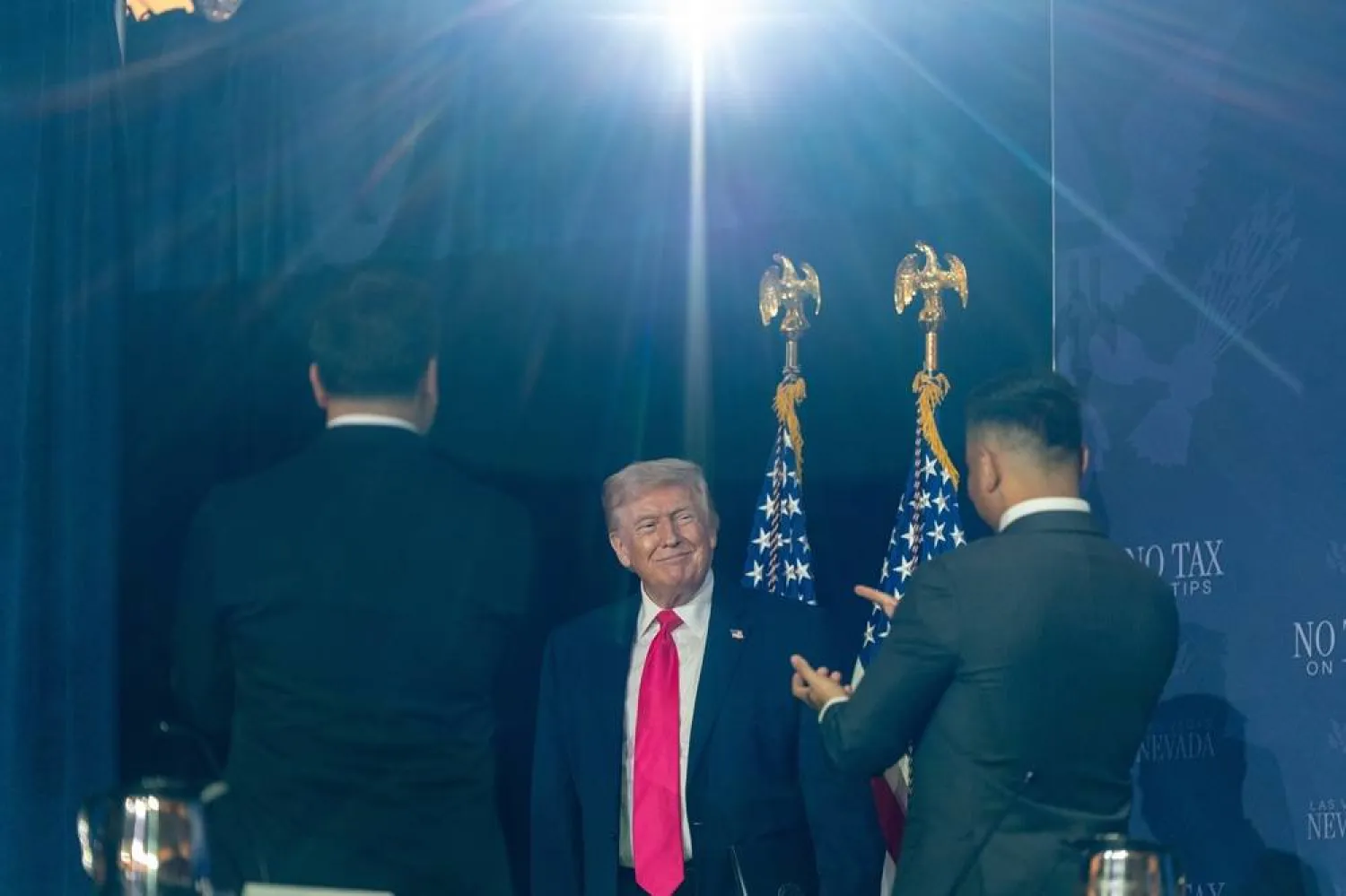
A throwaway remark last week by President Donald Trump has raised questions about whether US forces may have carried their first land strike against drug cartels in Venezuela.

Trump said the US knocked out a "big facility" for producing trafficking boats, as he was discussing his pressure campaign against Venezuelan President Nicolas Maduro in an interview broadcast Friday.

"They have a big plant or a big facility where they send, you know, where the ships come from," Trump said in an interview with billionaire supporter John Catsimatidis on the WABC radio station in New York.

"Two nights ago we knocked that out. So we hit them very hard."

Trump did not say where the facility was located or give any other details. US forces have carried out numerous strikes in both the Caribbean Sea and eastern Pacific Ocean since September, killing more than 100 people.

The Pentagon referred questions about Trump's remarks to the White House. The White House did not respond to requests for comment from AFP.

There has been no official comment from the Venezuelan government.

Trump has been saying for weeks that the United States will "soon" start carrying out land strikes targeting drug cartels in Latin America, but there have been no confirmed attacks to date.

The Trump administration has been ramping up pressure on Maduro, accusing the Venezuelan leader of running a drug cartel himself and imposing an oil tanker blockade.

Maduro has accused Washington of attempting regime change.


UN Chief Says ‘Get Serious’ in Grim New Year Message

 UN Secretary-General Antonio Guterres. (AFP)
UN Secretary-General Antonio Guterres. (AFP)
TT

UN Chief Says ‘Get Serious’ in Grim New Year Message

 UN Secretary-General Antonio Guterres. (AFP)
UN Secretary-General Antonio Guterres. (AFP)

The United Nations urged global leaders Monday to focus on people and the planet in a New Year's message depicting the world in chaos.

"As we enter the new year, the world stands at a crossroads. Chaos and uncertainty surround us. Division. Violence. Climate breakdown. And systemic violations of international law," UN Secretary-General Antonio Guterres said in a video message.

In 2026, as war rages in Ukraine and elsewhere, world leaders must work to ease human suffering and fight climate change, he added.

"I call on leaders everywhere: Get serious. Choose people and planet over pain," said Guterres, criticizing the global imbalance between military spending and financing for the poorest countries.

Military spending is up nearly 10 percent this year to $2.7 trillion, which is 13 times total world spending on development aid and equivalent to the entire gross domestic product of Africa, he said.

Wars are raging at levels unseen since World War II, he added.

"In this New Year, let's resolve to get our priorities straight. A safer world begins by investing more in fighting poverty and less in fighting wars. Peace must prevail," said Guterres, who will be serving his last year as secretary general.


Türkiye and Armenia Agree to Simplify Visa Procedures to Normalize Ties

Türkiye’s President Recep Tayyip Erdogan, right, and Armenia's Prime Minister Nikol Pashinyan shake hands before a meeting at Prague Castle in Prague, Czech Republic, Thursday, Oct. 6, 2022. (Turkish Presidency via AP, File)
TT

Türkiye and Armenia Agree to Simplify Visa Procedures to Normalize Ties

Türkiye’s President Recep Tayyip Erdogan, right, and Armenia's Prime Minister Nikol Pashinyan shake hands before a meeting at Prague Castle in Prague, Czech Republic, Thursday, Oct. 6, 2022. (Turkish Presidency via AP, File)

Türkiye and Armenia have agreed to simplify visa procedures as part of efforts to normalize ties, Türkiye’s Foreign Ministry announced Monday, making it easier for their citizens to travel between the two countries.

Relations between Türkiye and Armenia have long been strained by historic grievances and Türkiye’s alliance with Azerbaijan. The two neighboring countries have no formal diplomatic ties and their joint border has remained closed since the 1990s.

The two countries, however, agreed to work toward normalization in 2021, appointing special envoys to explore steps toward reconciliation and reopening the frontier. Those talks have progressed in parallel with efforts to ease tensions between Armenia and Azerbaijan.

Türkiye supported Azerbaijan during its 2020 conflict with Armenia for control of the Karabakh region, known internationally as Nagorno-Karabakh, a territorial dispute that had lasted nearly four decades.

The Turkish Foreign Ministry said in a statement posted on social platform X that Ankara and Yerevan agreed that holders of diplomatic, special and service passports from both countries would be able to obtain electronic visas free of charge as of Jan. 1.

“On this occasion, Türkiye and Armenia reaffirm once again their commitment to continue the normalization process between the two countries with the goal of achieving full normalization without any preconditions,” the ministry said.

Türkiye and Armenia also have a more than century-old dispute over the deaths of an estimated 1.5 million Armenians in massacres, deportations and forced marches that began in 1915 in Ottoman Türkiye. Historians widely view the event as genocide.

Türkiye denies the deaths constituted genocide, saying the toll has been inflated and those killed were victims of civil war and unrest. It has lobbied to prevent countries from officially recognizing the massacres as genocide.