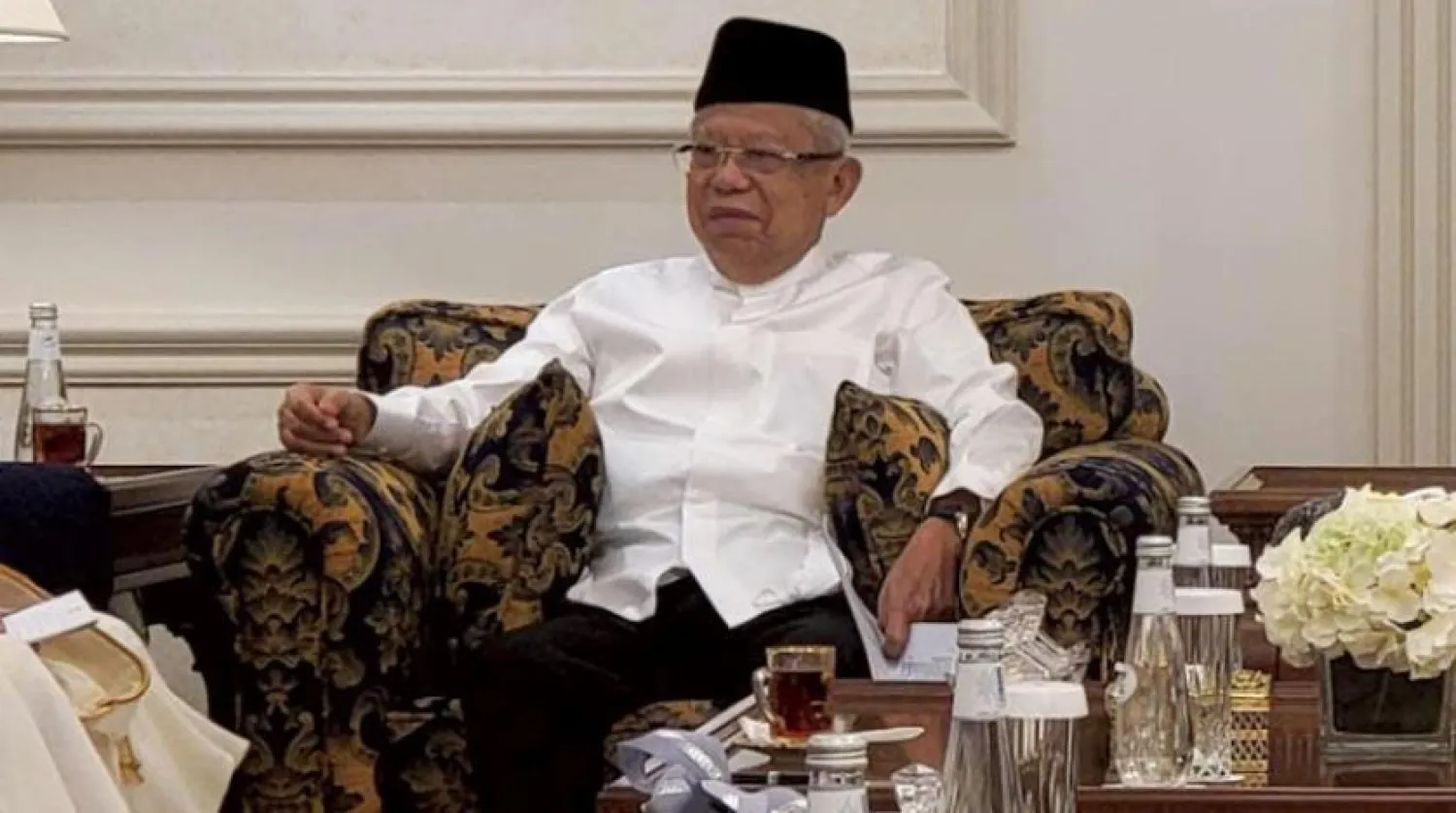
Indonesian VP to Asharq Al-Awsat: We will Invite Russia, Ukraine Presidents to G20 Summit

Indonesian Vice President Maaruf Amin (Asharq Al-Awsat)
TT

Indonesian VP to Asharq Al-Awsat: We will Invite Russia, Ukraine Presidents to G20 Summit

Indonesian Vice President Maaruf Amin (Asharq Al-Awsat)

Indonesian Vice President Maaruf Amin stressed that the ongoing Russian-Ukrainian conflict creates geopolitical division, slows global economic development, and increases the prices of essential commodities.

Indonesia is one of the G20 countries and the group's president for 2022. It presents itself as a neutral and fair country, prioritizing global interests.

In an interview with Asharq Al-Awsat from the holy sites after performing the Hajj, Amin said President Joko Widodo's visit to Ukraine and Russia aimed to bridge peace efforts between the two countries.

He asserted that Indonesia is optimistic that there will be concrete steps to move forward and end the war.

The VP acknowledged that the G20 Summit was full of geopolitical challenges, stressing his country's commitment to extending an invitation to the Russian President despite the objection of many member states.

Indonesia also invited Ukraine's President to attend and participate in the G20 Summit to find solutions for the global economic recovery.

Amin said that the world is facing multiple crises due to climate change and geopolitical dynamics, which created the food and energy crisis that impacted the rising prices and increased economic inflation.

Indonesia sees the importance of managing geopolitical dynamics so that all parties can sit together and open dialogue for an inclusive global recovery.

The G20 Summit in Indonesia will be held on the island of Bali from November 15-16, under the theme of "Recover Stronger, Recover Together."

Amin explained three main priorities to be highlighted at the Summit: global health infrastructure, digital economic transformation, and sustainable energy transformation.

He explained there are about 441 events in 25 Indonesian cities and regions, in addition to 20 meetings at the ministerial and central bank governor levels, 17 sessions at the level of Sherpa and Sherpa deputy, 63 meetings at the level of the working group, and 90 engagement group level meetings.

Amin pointed out that the Summit's activities will be implemented through the Bubble System amid COVID-19 precautionary measures, reiterating that it is imperative for each party participating to strictly adhere to health protocols and policies set by the Indonesian government.

Indonesia will ensure that the G20 Summit is the main forum for international economic cooperation to discuss the priorities of the agendas.

Addressing Saudi-Indonesian relations, the VP stressed his country's strategic relationship with Saudi Arabia, acknowledging at the same time that his country benefits from the Indonesian Hajj and Umrah system to maximize economic cooperation and marketing of Indonesian products in the Kingdom.

Amin stressed that Riyadh was and always will be a strategic partner for Jakarta.

“The Indonesian-Saudi trade reached $5.5 billion,” Amin said, recalling that diplomatic relations date back to 1947.

He asserted the importance of Widodo's visit to Saudi Arabia between 2015 and 2019 and the visit of the Custodian of the Two Holy Mosques, King Salman, to Indonesia in 2017.

Amin explained many opportunities to develop the economic system of Hajj and Umrah for Indonesia within Vision 2030.

He said that the Hajj Financial Management Agency (BPKH) focuses on increasing the use of Hajj management funds by exploring investments in the Middle East through the involvement of Indonesian SMEs.

The Vice President explained that the Kingdom allows Indonesia the largest quota of Hajj and Umrah pilgrims annually.

Before the coronavirus pandemic, Jakarta was allowed to send 230,000 pilgrims annually, dropping to 10,151 pilgrims, while Saudi Arabia receives one million pilgrims annually.

Amin pointed out that Indonesia pays an amount of money reused for Hajj and Umrah operations, some of which goes to small and medium-sized companies in the field.

He pointed out that his country's government enhances the needs of the Saudi economy through Hajj Financial Management, including projects to establish housing for Indonesian Hajj and Umrah pilgrims.

Bilateral trade and investment movements still face some problems, said Amin, asserting that they will be addressed and solved.

Jakarta sees the importance of concluding the comprehensive bilateral agreement with Riyadh, adding that his country just concluded the comprehensive economic partnership agreement with the United Arab Emirates.

Amin added that between January and December 2021, Indonesia's exports to the Kingdom amounted to $1.5 billion, a 12.78 percent increase, compared to the same period in 2020.

Indonesia imports a third of its crude oil needs from the Kingdom.

Bilateral relations between the two countries face challenges that need to be resolved to move forward with the strategy of long-term relations and promote mutual benefit and reciprocity, asserted Amin.

UAE Sentences 8 Sudanese Defendants to Life in Prison over Arms Trafficking

The Abu Dhabi Federal Court of Appeal sentenced eight defendants, including Sudanese military and security officials, to life imprisonment (Asharq Al-Awsat)
TT

UAE Sentences 8 Sudanese Defendants to Life in Prison over Arms Trafficking

The Abu Dhabi Federal Court of Appeal sentenced eight defendants, including Sudanese military and security officials, to life imprisonment (Asharq Al-Awsat)

The Abu Dhabi Federal Court of Appeal sentenced eight defendants, including Sudanese military and security officials, to life imprisonment in a case involving the illicit trafficking of weapons, ammunition and military equipment for the Sudanese Army, as well as money laundering through commercial companies and bank accounts in the UAE.

Those sentenced to life imprisonment include Salah Abdullah Mohammed Mohammed Saleh, known as Salah Gosh; Yasser Abdulrahman Al Atta; Othman Al Zubair; Rashid Omar Abdul Qadir Ali; Ahmed Abdullah, known as Abdullah Khalafallah; Ahmed Rabie' Sayed Ahmed; Mohammed Fath Al Beik; and Maher Abdul Jalil.

The court also ordered the confiscation of seized items and the deportation of those convicted after serving their sentences.

Seven defendants were also sentenced to three years in prison for money laundering offenses, with those subject to fines ordered to pay AED1 million ($272,000) each. The court also ordered the confiscation of AED1.545 million ($421,000).

Six companies were fined AED1 million each, their licenses were revoked, and funds linked to the offenses were confiscated. Two other defendants were acquitted.

The grounds of the judgment revealed that the defendants had arranged two deals to supply weapons, ammunition and military equipment to the Sudanese Army without the required licenses.

The deals involved bringing Goryunov-type ammunition into the UAE in preparation for its transportation by air to Port Sudan, with shipping documents falsely declaring the cargo as medical equipment and supplies.

The court said payments for the military equipment were made through bank transfers and cash transactions, including AED8 million ($2.18 million) that Rashid Omar received from Maher Abdul Jalil as part of the payment for one of the deals.

According to the judgment, Yasser Al Atta, Assistant to the Commander-in-Chief of the Sudanese Armed Forces, requested the purchase of weapons and arranged for the aircraft to land in Port Sudan.

Othman Al Zubair, the Sudanese Army's financial official, oversaw payments to suppliers.

The court also established that Salah Gosh and several intermediaries played roles in coordinating the deals and collecting commissions.

The court concluded that the defendants had used companies, bank accounts and forged documents to channel funds associated with the arms deals and conceal their sources and destinations.

It found that the use of UAE territory and its financial system for these activities during the armed conflict in Sudan could harm the country's international relations and endanger its interests.

UAE Attorney-General Dr. Hamad Saif Al Shamsi had ordered the defendants to be referred to trial following investigations that uncovered an organized network engaged in illicit arms trafficking and money laundering linked to weapons deals.


Qatar Denies Interference in Israeli Elections

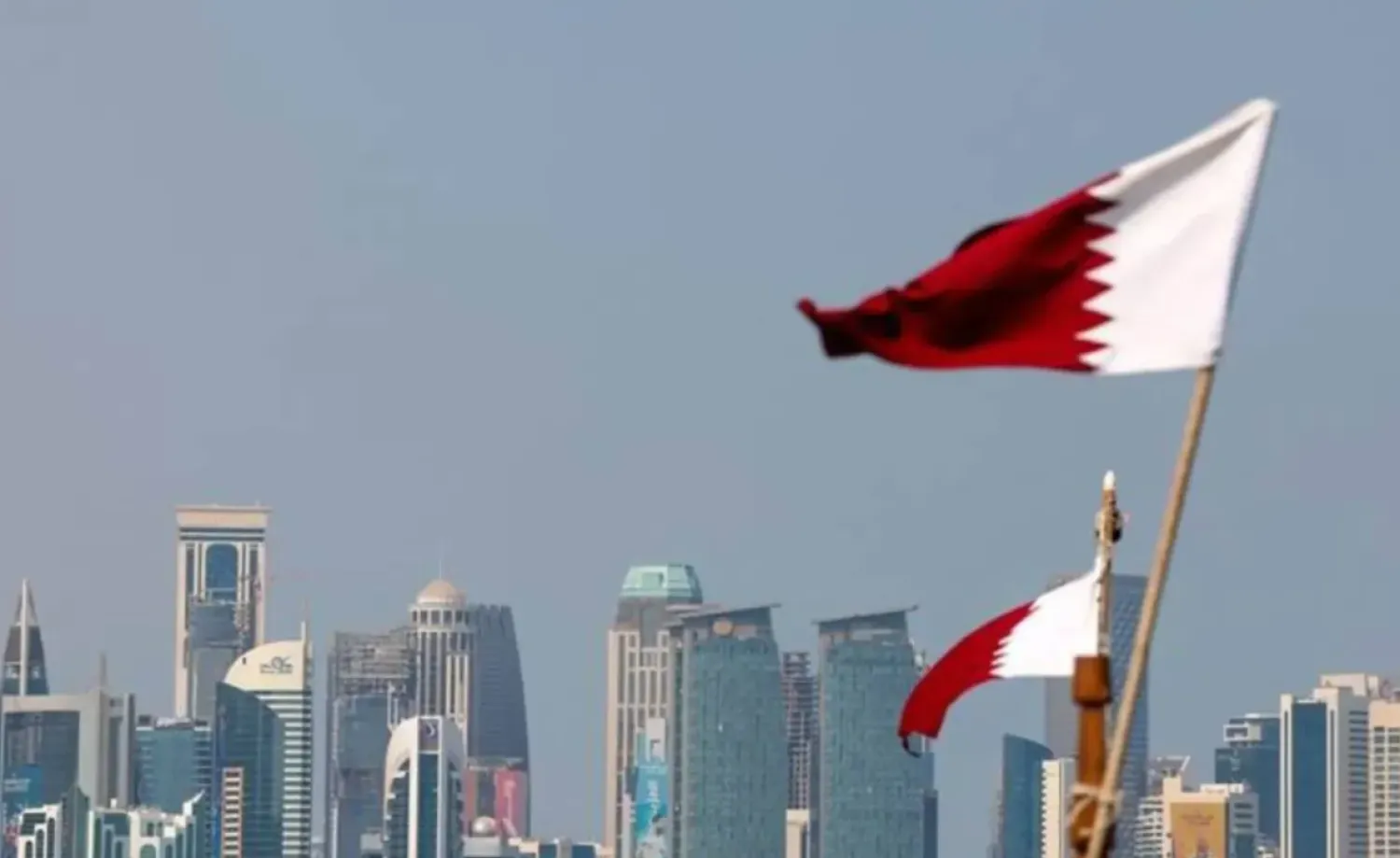
A view of Doha, the capital of Qatar (Qatar News Agency)
TT

Qatar Denies Interference in Israeli Elections

A view of Doha, the capital of Qatar (Qatar News Agency)

Qatar has categorically denied allegations that it interfered in Israel's elections or financed activities aimed at influencing their outcome, rejecting accusations promoted by some Israeli politicians and affiliated media outlets as part of a new disinformation campaign seeking to drag Doha into Israel's domestic political disputes following this week's elections.

Qatari Foreign Ministry spokesperson Majed Al-Ansari highlighted the contradictory nature of the allegations, which range from claims that Qatar bought Benjamin Netanyahu's loyalty to accusations that it financed the Israeli left and influenced Arab voters, as though Doha, according to these claims, controlled the entire Israeli political landscape.

Al-Ansari stressed that the baseless accusations were both absurd and dangerous, saying the persistent attempts to inject Qatar's name into Israel's election discourse reflected an "excessive obsession" that defied logic in certain Israeli political and media circles.

He emphasized that Qatar refused to be made "a scapegoat for the political failures of certain Israeli politicians," adding that rather than trying to divert attention toward Doha, those politicians would be better served by responding to their voters' aspirations and addressing the consequences of their disastrous policies in the region.

The spokesperson reiterated that Qatar has no interest in Israel's political and electoral competition, describing it as an internal matter in which Doha does not interfere and refusing to allow the country to be drawn into its disputes.

He also stressed that any government emerging from the elections must comply with international law and relevant international resolutions, engage seriously and sincerely with the Palestinian issue, and respect the inalienable rights of the Palestinian people, foremost among them their right to self-determination and the establishment of an independent state along the 1967 borders, with East Jerusalem as its capital.

Al-Ansari added that such campaigns would not deter Qatar from continuing its mediation role, diplomatic and humanitarian efforts, support for the Palestinian people, and commitment to achieving a just and comprehensive peace that strengthens regional security and stability.

He affirmed that Doha would continue working closely with its regional and international partners to resolve conflicts through diplomatic means, stressing that remaining silent would not be Qatar's response to attempts to exploit its name for electoral agendas or narrow political gains.


Saudi Leadership Extends Condolences to Spain over Victims of Train Crash

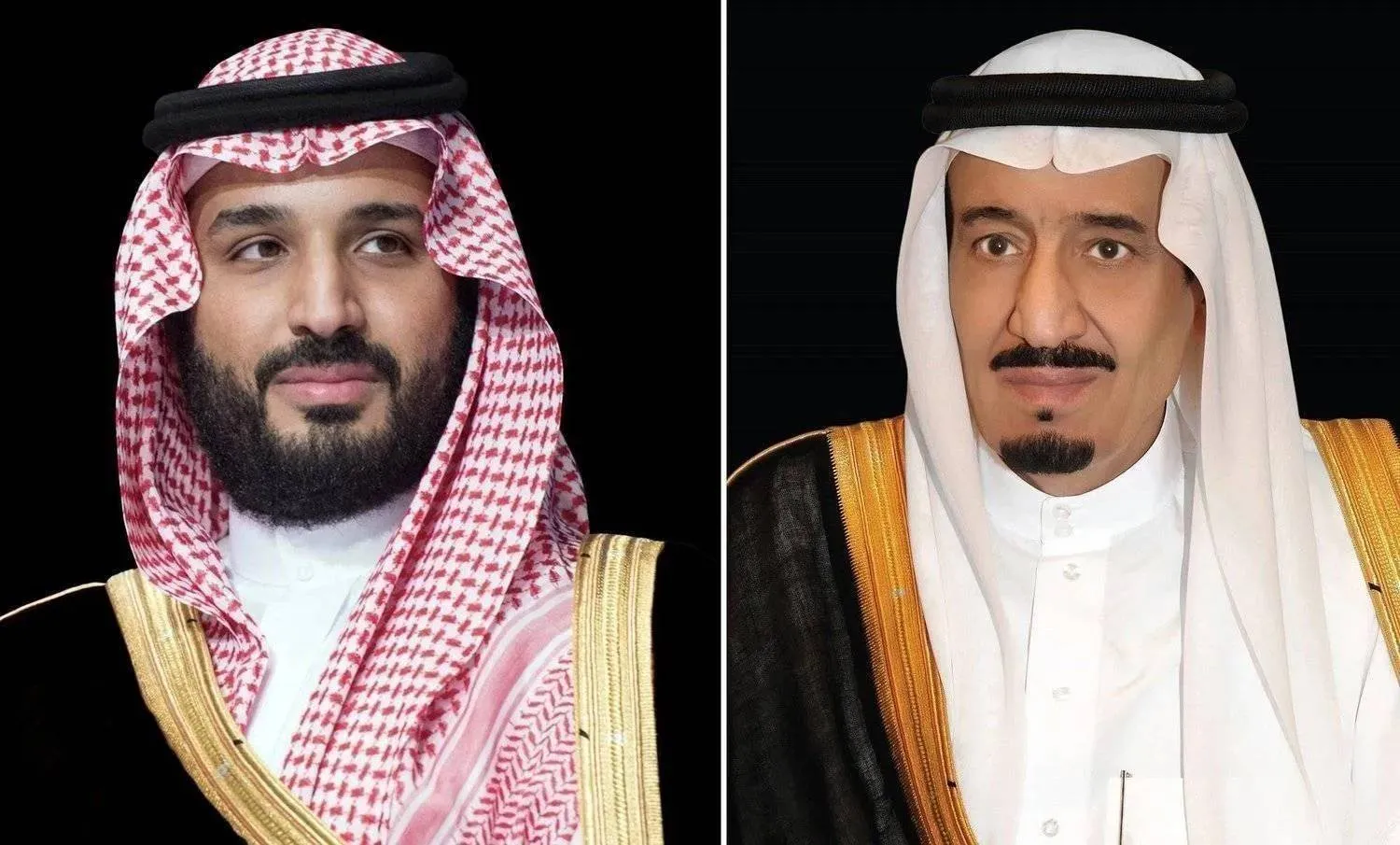
Saudi King Salman bin Abdulaziz and Crown Prince and Prime Minister Mohammed bin Salman
TT

Saudi Leadership Extends Condolences to Spain over Victims of Train Crash

Saudi King Salman bin Abdulaziz and Crown Prince and Prime Minister Mohammed bin Salman

Saudi King Salman bin Abdulaziz and Crown Prince and Prime Minister Mohammed bin Salman sent separate cables of condolences to Spanish King Felipe VI following a train collision in central Spain that left dozens dead and scores injured, the Saudi Press Agency said on Wednesday.

Both leaders expressed their deepest sympathies to the Spanish monarch, the families of the victims and the Spanish people, and wished those injured a speedy recovery.

On Wednesday, a high-speed train slammed into another that had stopped on the tracks in Spain, killing at least 68 people and injuring dozens.