


How Saudi Arabia Changed Hajj Management over 100 Years

The first color photograph of the Grand Mosque in 1952 (SPA)
TT

How Saudi Arabia Changed Hajj Management over 100 Years

The first color photograph of the Grand Mosque in 1952 (SPA)

This year’s Hajj season, which concluded yesterday, saw great success despite the political, health and economic woes worldwide. More so, Hajj 2022 marks a centennial passing on the Saudi government’s organization of the annual Islamic pilgrimage to Makkah.

Over the course of a century, the Kingdom demonstrated exceptional ability in overcoming challenges, confronting difficulties, and delivering the finest of services to pilgrims.

Organizing and supervising Hajj seasons posed serious challenges to Saudi leadership. In turn, the Kingdom spent tremendous efforts in building an integrated system that is centered around institutional development and that focuses on managing crowds, crises, and resources.

Saudi leadership efforts are directly overseen by the Kingdom’s monarch, who also holds the title of the Custodian of the Two Holy Mosques.

At the beginning of the state’s emergence, King Abdulaziz was able to confront many issues and worked to build an integrated system to serve the Two Holy Mosques and their pilgrims. This coincided with the Kingdom founding and developing several primary state sectors such as security, health, media, transport and so much more.

All the efforts spent by the Kingdom reflect its dedication to reconstructing the Two Holy Mosques and holy sites in the service of the pilgrims.

It is remarkable that despite all these efforts, campaigns, fallacies, rumors, and conspiracies related to Hajj are still repeated.

After the pledge of allegiance to King Abdulaziz, propaganda campaigns led some countries to prevent their citizens from performing Hajj under the pretext of threat to their safety.

There were also calls for the Two Holy Mosques to be under Islamic administration. Some Muslims even demanded that the two holy sites be under British protection!

But endless pages can be devoted to the magnanimous efforts spent by King Abdulaziz to ensure the safety of Hajj and pilgrims.

Although some do not believe the stories of how bad the security situation was before King Abdulaziz unified the Kingdom, many historians, such as Abd al-Rahman al-Jabarti, have produced works that document the horrendous experiences lived by pilgrims during those dark times.

Fourteenth century Islamic jurist (Faqih) Alwan al-Hammawi even went as far as redacting one of his books to remove the part pertaining to Hajj over his belief that people at the time mustn’t perform the pilgrimage for security reasons.

Centuries later, Ahmed Shawqi, nicknamed the Prince of Poets, wrote a poem that goes to show how Hajj has evolved over time.

Despite the establishment of security under Saudi rule, many campaigns were launched to incite Muslims around the world against the Hijaz, a region in the west of Saudi Arabia which includes Makkah and Medina, becoming a part of the Kingdom.

Saudi Arabia had to also fight off rumors targeting its integrity in safeguarding Islam’s holy sites.

In September 1926, Zafar Ali Khan, a Pakistani journalist who owned a newspaper in India, wrote to King Abdulaziz about rumors spreading over the Saudi leadership having plans to alter the green-colored dome built above the tomb of Islam’s prophet Muhammad (pbuh).

The founding king then replied by denying the rumors and labeling them as utter lies. King Abdulaziz assured Khan that all holy sites in Saudi Arabia are safe and are being protected by the Saudi people and leadership.

In October 1926, a conference held in the Indian city of Lucknow decided that the greatest Islamic governments have come under the shadow of the British government and that they had the right to demand that it helps with cutting political chords.

For years, several countries, including Iran and Turkey, barred their citizens from performing Hajj pilgrimage in Saudi Arabia for different reasons. They used Hajj as a pressure card to advance their agendas, especially those opposing the rule of King Abdulaziz.

Worse than that, some of those governments demanding to place the Two Holy Mosques under Islamic administration are the same ones who toyed with the endowments of the holy sites.

Commenting on the matter, Shakib Arslan, dubbed as Amir al-Bayan, accused these governments of unrightfully seizing proceeds and endowments meant for the Two Holy Mosques.

Talaat Harb Pacha, a leading Egyptian entrepreneur, noted that performing the Hajj pilgrimage was once an arduous task that was unsafe until King Abdulaziz rose to power and made the desert “safer than any city in the world.”

The founding king not only provided the pilgrims with security, but he also harnessed all possibilities - despite the scarcity of state resources at the time - to expand and build the Two Holy Mosques and provide all services to visiting Hajj pilgrims.

In the same fashion, King Abdulaziz’s successors also dedicated all possible resources to build the Two Holy Mosques and serve pilgrims.

Today, these giant achievements and distinguished services provided by Saudi Arabia, under the leadership of the Custodian of the Two Holy Mosques King Salman bin Abdulaziz and his Crown Prince Mohammed bin Salman, come to serve and care for pilgrims as an extension of what the founder had started.

The Kingdom's government has spent hundreds of billions of riyals on projects of the Two Holy Mosques and the holy sites, in addition to annual operating budgets of tens of billions of riyals.

There are many aspects and details related to Hajj that deserve to be highlighted and published, but an article like this cannot cover all aspects and services provided for Hajj and pilgrims, especially when compared to what pilgrims suffered before the Saudi era.

Under Saudi rule, the sites of the Two Holy Mosques have substantially expanded in size to accommodate the large influx of pilgrims.

The area of the Grand Mosque was developed from about 30 thousand square meters to about 1.5 million square meters. Its capacity has grown to accommodate around two million worshippers. Before, it used to hold a mere 60,000 worshipers.

Other mega projects in Holy Sites have made it possible for millions of pilgrims to visit at the same time.

As the centenary coincides with the Hajj season this year, we must recall the efforts of the Saudi leadership, government, and people in the service of the Two Holy Mosques and in providing facilities for pilgrims.

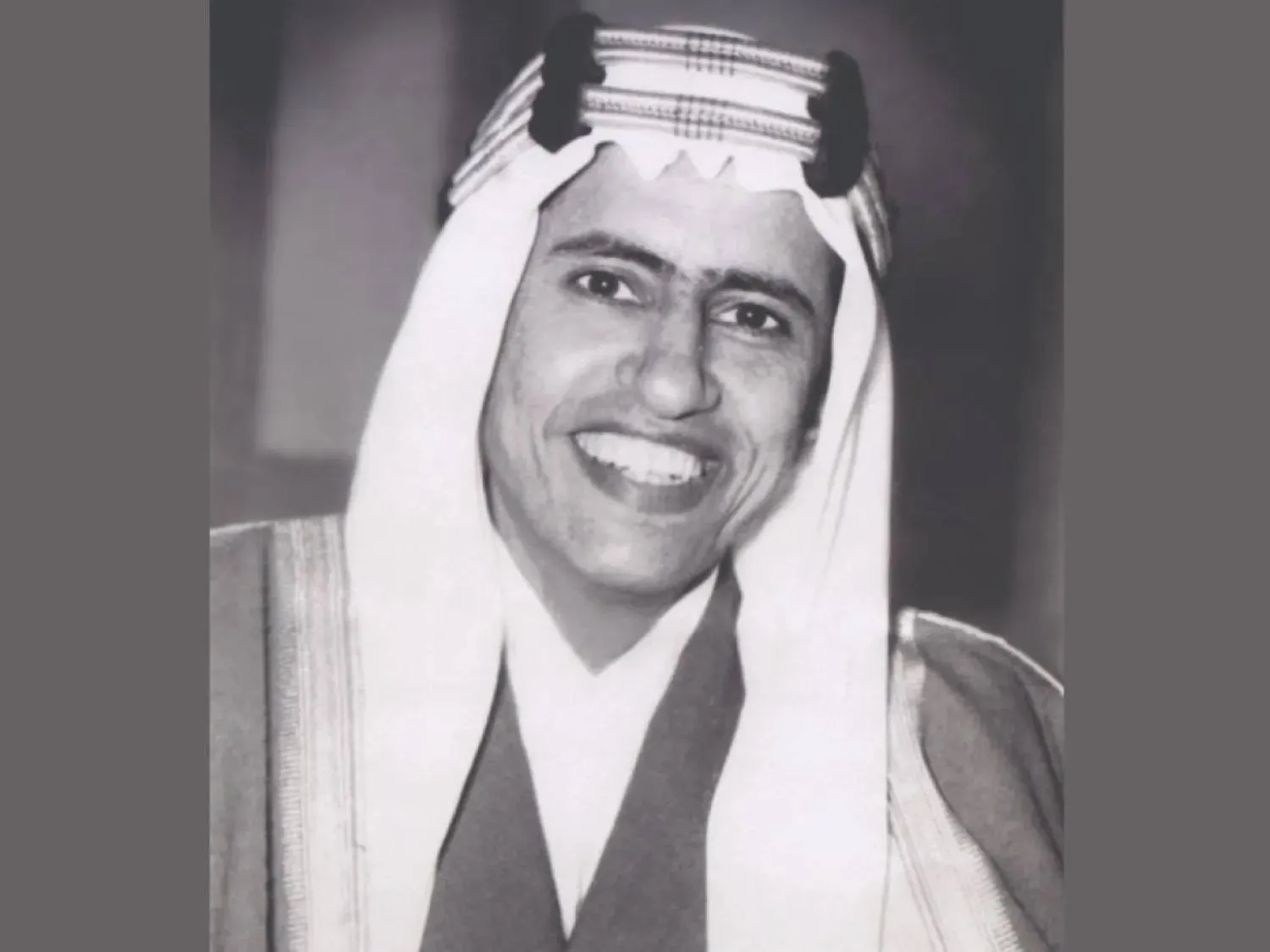


Saudi Defense Minister: Time for STC to Withdraw from Yemen's Hadhramaut and Al-Mahra

Saudi Defense Minister Prince Khalid bin Salman. (Asharq Al-Awsat)
TT

Saudi Defense Minister: Time for STC to Withdraw from Yemen's Hadhramaut and Al-Mahra

Saudi Defense Minister Prince Khalid bin Salman. (Asharq Al-Awsat)

Saudi Defense Minister Prince Khalid bin Salman said on Saturday it “was time for the Southern Transitional Council in Yemen to listen to reason and prioritize public interest and unity of ranks and respond to the Saudi-Emirati mediation to end the escalation.”

In a post on the X platform, he called on the STC to withdraw its forces from the eastern Hadhramaut and al-Mahra provinces and restore control to the National Shield and local authorities.

Prince Khalid said Saudi Arabia formed the Arab coalition to restore legitimacy in Yemen to help the country reclaim control over all of its territories.

The liberation of southern provinces was a pivotal development towards that goal, he stressed.

Saudi Arabia “views the southern issue as fundamental” to Yemen and it will not “exploit it in conflicts that do not serve” the nation, he added.

The Kingdom had brought together all Yemeni components to the Riyadh conference to come up with a clear path for a comprehensive political solution, including the southern issue, he went on to say.

The conference paved the way for a “just solution to their cause through dialogue and without the use of forces.”

“Saudi Arabia approved the decision to move the base of power so that the southerners could have a greater role in state institutions. It consolidated partnership instead of elimination or imposing a status quo through forces. Saudi Arabia also presented Yemen with economic support, as well as development and humanitarian initiatives that helped ease the suffering of the people,” Prince Khalid added.

“Saudi Arabia and its partners in the coalition offered sacrifices with their Yemeni brothers in liberating Aden and other provinces,” he noted. “The Kingdom has always sought that these sacrifices be made in the name of reclaiming territories and restoring the state, not as a path towards new conflicts.”

It had hoped that these sacrifices would have been “invested in the security of all Yemeni people, not exploited for petty gains, whereby the unfortunate developments in Hadhramaut and al-Mahra since the beginning of December 2025 have led to the division in ranks that should be united against the enemy.”

“The developments have laid waste to the sacrifices of our sons and Yemeni people and have harmed the just southern issue,” stressed Prince Khalid.

He noted that several southern leaderships and figures have exhibited “awareness and wisdom in supporting efforts to end the escalation in Hadhramaut and al-Mahra and prevent the secure southern provinces from being dragged into futile conflicts.”

“They are aware of the major challenges facing Yemen and will not allow saboteurs to achieve their goals in the country and the region,” he remarked.

He declared that the “southern issue will remain part of any comprehensive political solution. The cause will not be neglected or marginalized. It should be resolved through consensus, adhering to commitments and building trust between all Yemeni segments, not through adventures that only serve everyone's enemy.”


Arab Coalition: We Will Deal with Military Moves that Violate De-escalation Efforts

Coalition spokesman Brigadier General Turki al-Malki. (SPA)
TT

Arab Coalition: We Will Deal with Military Moves that Violate De-escalation Efforts

Coalition spokesman Brigadier General Turki al-Malki. (SPA)

Spokesman of the Arab coalition to support legitimacy in Yemen Brigadier General Turki al-Malki said on Saturday that “any military moves that violate de-escalation efforts will be dealt with directly to protect lives and ensure the success of Saudi and Emirati efforts.”

The statement is in response to a request by Yemen’s Presidential Leadership Council Chairman Dr. Rashad al-Alimi, who called for immediate steps to protect civilians in the eastern Hadhramaut and al-Mahra provinces in wake of the “grave and horrific” violations by members of the Southern Transitional Council (STC).

It is also in continuation of the strenuous joint efforts by Saudi Arabia and the United Arab Emirates to de-escalate the situation and ensure the withdrawal of STC forces, who have been demanded to cede control to the National Shield forces and allow the local authorities to carry out their duties.

Malki underlined the Arab coalition’s continued firm support for the legitimate Yemeni government.

He also urged all sides to assume their national responsibility, exercise restraint and comply with efforts to reach peaceful solutions that preserve security and stability.


Saudi Arabia Carries out Warning Strike on Yemen’s Hadhramaut, STC Says ‘Open to Coordination’

Southern forces patrol during a rally calling for South Yemen's independence, in the southern port city of Aden, Yemen, 25 December 2025. (EPA)
TT

Saudi Arabia Carries out Warning Strike on Yemen’s Hadhramaut, STC Says ‘Open to Coordination’

Southern forces patrol during a rally calling for South Yemen's independence, in the southern port city of Aden, Yemen, 25 December 2025. (EPA)

Saudi Arabia called for calm in eastern Yemen, urging an end to unilateral military moves and for the Southern Transitional Council (STC) forces to return to their former positions outside of the Hadhramaut and al-Mahra provinces.

Riyadh, meanwhile, demonstrated its stance on the ground by carrying out a warning air strike, informed sources told Asharq Al-Awsat.

The strike sought to deliver a message that it will not allow a new status quo to be imposed on the ground by force and that it will not allow the violation of institutional frameworks that handle security in the eastern provinces.

It warned that any further escalation will be met with firmer measures.

Meanwhile, the STC, in an attempt to justify its military moves, said they were in “response to calls from residents of the south” and an attempt to confront terrorist threats and block Houthi smuggling routes.

The STC added that it was “open to any coordination or arrangements with Saudi Arabia”, questioning the airstrike, which it said “does not serve understandings.”

Observers told Asharq Al-Awsat that Saudi Arabia will welcome the coordination and arrangements if they helped end the escalation, led to the withdrawal of the STC and allowed the National Shield forces and the local authority to take over Hadhramaut and al-Mahra without needing to resort to force.

They stressed that the strike will lead to delivering the clear message that Riyadh may impose red lines by force to prevent any escalation.

Sourced told Asharq Al-Awsat that any future settlement over restoring the unity of Yemeni ranks will condition a return to the former status quo.