

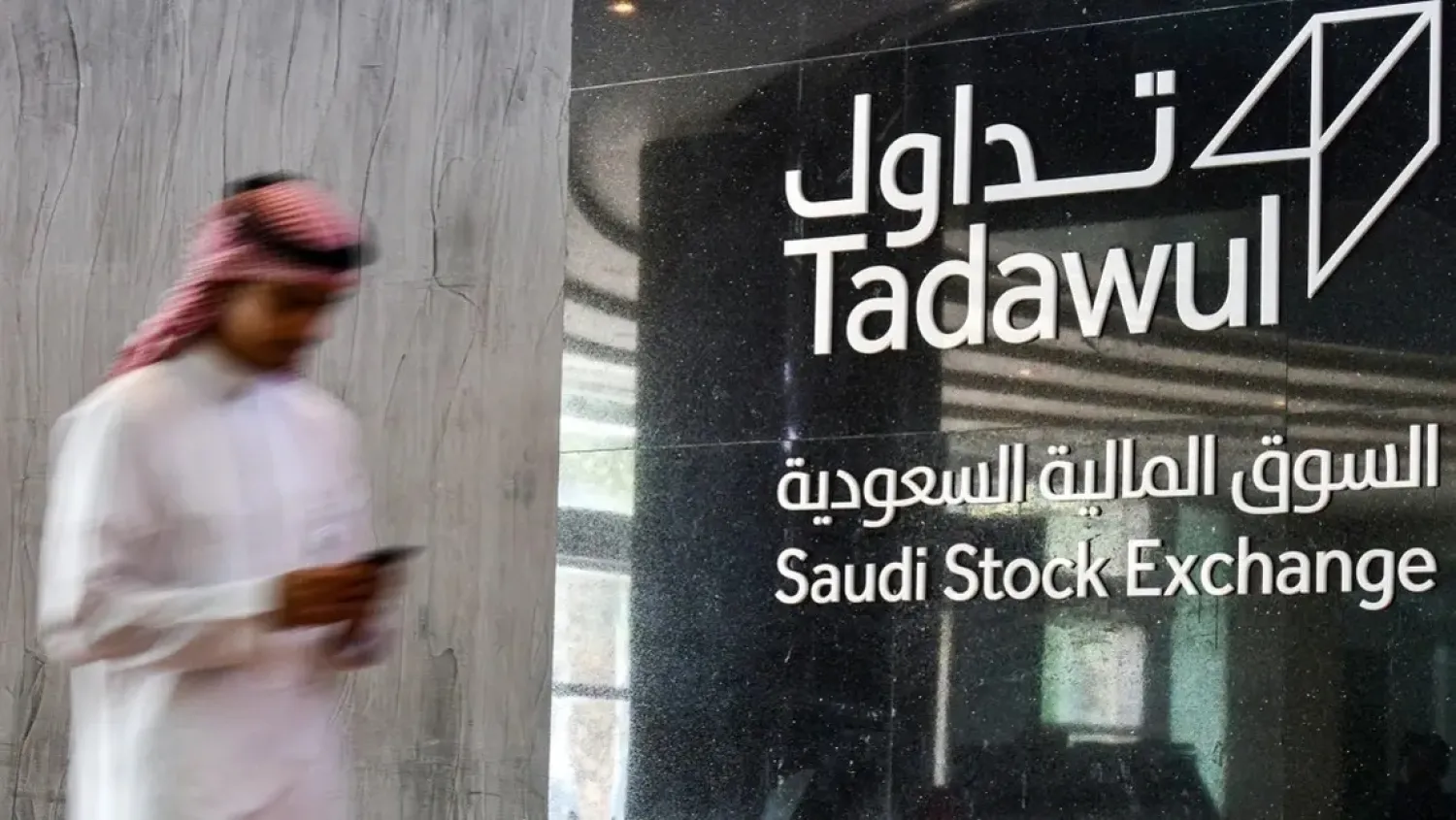

Saudi Tadawul Launches TASI Islamic Index

This picture taken December 12, 2019 shows a view of the sign showing the logo of Saudi Arabia's Stock Exchange Market (Tadawul) bourse in the capital Riyadh. (Reuters)
TT

Saudi Tadawul Launches TASI Islamic Index

This picture taken December 12, 2019 shows a view of the sign showing the logo of Saudi Arabia's Stock Exchange Market (Tadawul) bourse in the capital Riyadh. (Reuters)

The Saudi Stock Exchange (Tadawul) announced on Sunday the launch of its first Shariah Compliant Index, the TASI Islamic Index. This comes in response to growing demand and interest from local and international investors for Shariah-compliant investment tools.

The Index tracks the performance of Shariah-compliant companies listed on the Saudi Exchange under the supervision of an independent Shariah Advisory Committee.

It will act as a tool for investors and wider market participants to guide and inform decisions when looking into Shariah-compliant investments, while also allowing asset managers to benchmark the performance of their Shariah-compliant portfolios.

Mohammed Al Rumaih, CEO of Saudi Exchange, said: "The launch of the TASI Islamic Index complements the Exchange’s ongoing product and indices development efforts to provide best-in-class services and diversified offerings to investors."

"The Index will facilitate the launch of new financial products in the market to satisfy the increasing demand for Shariah compliant investment tools."

"The introduction of such tools will ultimately boost the Islamic investment sector in the Kingdom. It will also strengthen the Saudi Exchange’s position as the investors’ exchange of choice and an attractive investment destination in line with Vision 2030’s Financial Sector Development Program," Al Rumaih continued.

The Saudi Exchange will collaborate with the Shariah Advisory Committee, which consists of representatives from leading financial institutions, will work towards maintaining the highest standards of governance, while ensuring Index constituents abide by the unified Shariah-compliant principles based on clear and transparent criteria.

They will also undertake the responsibility of overseeing and approving the list of Shariah-compliant listed companies on a periodic basis.

The launch of the Index represents the Saudi Exchange’s ongoing efforts to deliver best-in-class services, diversified offerings, and investment opportunities, ultimately increasing the Saudi capital market’s attractiveness among local and international investors.



Gold Drops Over 1% on Higher Oil Prices; US Payrolls Data in Focus

Gold bracelets displayed in a shop window on Green Street, east London, UK, April 30, 2024. (AFP)
TT

Gold Drops Over 1% on Higher Oil Prices; US Payrolls Data in Focus

Gold bracelets displayed in a shop window on Green Street, east London, UK, April 30, 2024. (AFP)

Gold prices slipped on Friday as oil prices rebounded, fanning inflation worries and higher-for-longer interest rate expectations, while investors awaited key US payrolls data later in the day.

Spot gold fell 1.1% to $4,044.09 per ounce by 0501 GMT, but was on track for its best week since late August.

US gold futures for ‌December delivery ‌dropped 1.5% to $4,053.30.

"Crude oil has rebounded mostly over ‌the ⁠past day, which remains ⁠one of the inflationary knockbacks pressuring gold," said Ilya Spivak, head of global macro at Tastylive.

Oil rose more than 1% even as it was on track for a sharp weekly drop on expectations of a de-escalation in the Iran conflict after the US election results, while persistent Middle East supply concerns continued to support prices.

Higher ⁠energy costs can reinforce expectations that the Federal ‌Reserve will keep interest rates ‌elevated for longer, pressuring the non-yielding bullion.

Asia's tech-heavy markets crumbled as fear of ‌increased regulatory scrutiny and a slowdown in AI build-out unleashed ‌the steepest fall in US stocks since the tariff-triggered "Liberation Day" rout in April 2025.

"In risk-off conditions like this, we’re seeing gold positions get liquidated to free up cash and cover margin calls elsewhere. It’s not the ‌first time we’ve watched this dynamic temporarily override gold’s usual safe-haven appeal," said Tim Waterer, chief market ⁠analyst at ⁠KCM Trade.

The US non-farm payrolls report is due at 1330 GMT.

Traders currently see a 68% chance that the Fed will raise rates in December, down from the near certainty expected last month, according to CME's FedWatch tool.

On Thursday, two Fed officials made a case for modest and steady rate increases to tackle above-target inflation.

Elsewhere, Goldman Sachs on Thursday lowered its end-2026 gold price forecast to $4,150 per ounce from $4,650, citing the Fed's more hawkish stance.

Among other metals, spot silver fell 0.5% to $51.51 per ounce; platinum dipped 0.3% to $1,512.83 and palladium dropped 1.1% to $1,020.10.

However, all three metals were headed for weekly gains.


Oil Set for Sharp Weekly Drop but Middle East Supply Concerns Provide Floor

A pumpjack operates near Bakersfield, California, on Oct. 16. (AFP)
TT

Oil Set for Sharp Weekly Drop but Middle East Supply Concerns Provide Floor

A pumpjack operates near Bakersfield, California, on Oct. 16. (AFP)

Oil prices are set for a sharp weekly drop on expectations of a de-escalation of the Iran war after US President Donald Trump's party suffered election losses, but Middle East supply concerns from the conflict continue to provide a floor for the market.

Brent crude futures for January rose on Friday by $1.29, or 1.31%, to $99.58 a barrel as of 0504 GMT. US West Texas Intermediate futures climbed 86 cents, or 0.95%, to $91.38 a barrel. Brent briefly breached the $100-a-barrel mark in ‌morning trade.

Both contracts ‌gained for a second day.

Still, the ‌Brent ⁠contract is on ⁠track to drop by 12% this week after the December contract expired on October 30, while WTI is set to drop 12.1%.

The contracts plunged earlier this week on expectations that US midterm elections on Tuesday, which swung the Senate and House of Representatives to the Democratic Party from Trump's Republicans, could lead to ⁠a de-escalation of the US-Israeli war against Iran, now ‌in its ninth month.

Oil prices ‌fell 8% on Wednesday alone after the Democrats swept the elections, ‌settling at two-month lows.

However, prices rebounded on a surge ‌in tanker attacks on Wednesday and Thursday in the Gulf and the Strait of Hormuz — the crucial sea outlet for a majority of Middle Eastern oil shipments — that renewed the concerns about supply flows from the ‌region.

KCM chief analyst Tim Waterer described Friday's rise as a "technical recovery" from the steep ⁠selloff after ⁠the US elections, but said the underlying driver was a realization that the problem had not disappeared and attacks in the Strait of Hormuz were unaffected by a Democratic win.

"Until there is a credible path to safer, cheaper transit through the Gulf, oil is likely to remain supported on dips and prone to sharp moves on any escalation headlines," he said.

Iran said on Thursday that three more tankers had been attacked in the Strait of Hormuz, and data from Britain's maritime security agency UKMTO suggested that attacks on oil-carrying ships are still running at close to record pace.


Tech Firms Suffer Bloodbath as US Midterms Fuel AI Fears

Stock markets in Tokyo, Seoul and Taipei led a tech rout that tracked a selloff on Wall Street. Andrew Caballero-Reynolds / AFP
TT

Tech Firms Suffer Bloodbath as US Midterms Fuel AI Fears

Stock markets in Tokyo, Seoul and Taipei led a tech rout that tracked a selloff on Wall Street. Andrew Caballero-Reynolds / AFP

Asian tech firms suffered a bloodbath Friday as investors tracked a collapse on Wall Street fueled by fears that Democrats will ramp up regulation of the AI industry following their blowout victory in this week's US midterm elections.

Trading boards were a sea of red in early business, with Seoul and Tokyo taking the brunt of the selling as traders fled to the hills amid uncertainty about a sector that had pushed stock markets to record highs just five months ago, said AFP.

While the historic "blue wave" in Tuesday's vote had been initially welcomed on hopes it could put pressure on President Donald Trump to wind down his war against Iran, fears about the impact on the AI buildout soon came to the fore.

Data centers have faced broad opposition from US voters across the political spectrum, and many midterm winners have pledged to put the brakes on such projects.

Analysts said investors were also spooked by a call from progressive US Senator Bernie Sanders for a national moratorium on their building.

The results compounded already heightened fears about the hundreds of billions firms had pumped into the sector and when they would see a return, while the recent spike in borrowing costs also fueled concerns about their financial position.

The eye-watering rally in many companies' valuations had also caused unease on trading floors.

Michael Hewson at MCH Market Insights said investors were selling up because of "concerns that we might see greater opposition to AI buildout plans, with the results in Texas prompting concerns that politicians in the state might target Elon Musk's Tesla and SpaceX due to his support for Trump".

New York's Nasdaq plunged 5.5 percent in its worst day -- percentage-wise -- since April last year when Trump unveiled his wide-ranging global tariffs. The S&P 500 tanked more than four percent and the Dow more than three percent.

Bloomberg said the Philadelphia Semiconductor Index had collapsed around 16 percent this week, putting it on course for its worst run since April last year.

Trump blamed the collapse on the Democrats, writing on Truth Social: "The Stock Market crashed today because the Dumocrats had a big Tuesday - So sad to see, you only have yourselves to blame! President DONALD J. TRUMP."

The heavy selling continued in Asia.

Seoul briefly plunged almost nine percent before ending six percent lower with chip giant SK hynix off more than 10 percent while rival Samsung was 6.4 percent down.

The Kospi more than doubled between the end of December and mid-June, when it hit a record, and has since then lost almost 50 percent.

Tokyo dived six percent as SoftBank gave back more than 10 percent, with Kioxia off 8.7 percent and Advantest lower percent lower.

TSMC's 4.7 percent drop dragged Taipei's Taiex down about the same.

Hong Kong, Shanghai, Sydney, Singapore, Jakarta, Bangkok, Wellington and Manila were also in the red.

"The blood is in the streets, folks," said Neil Wilson at Saxo Markets.

"The fear is a total momentum unwind as Democrats pace the frontier and kibosh data center buildout... this looks totally overdone but the nature of sell-everything of this market means we need to look for some stability first."

The mood was also dampened by a more than one percent lift in oil prices, extending Thursday's gains after plunging on the midterm results amid hopes for an end to the Iran war.

Traders were keeping eyes on developments in the crisis after US and Iranian leaders had indicated progress earlier in the week.

US jobs data is also due later in the day, following broadly positive readings earlier in the week.