


Yemen Welcomes Jeddah Summits, Houthis Apprehensive

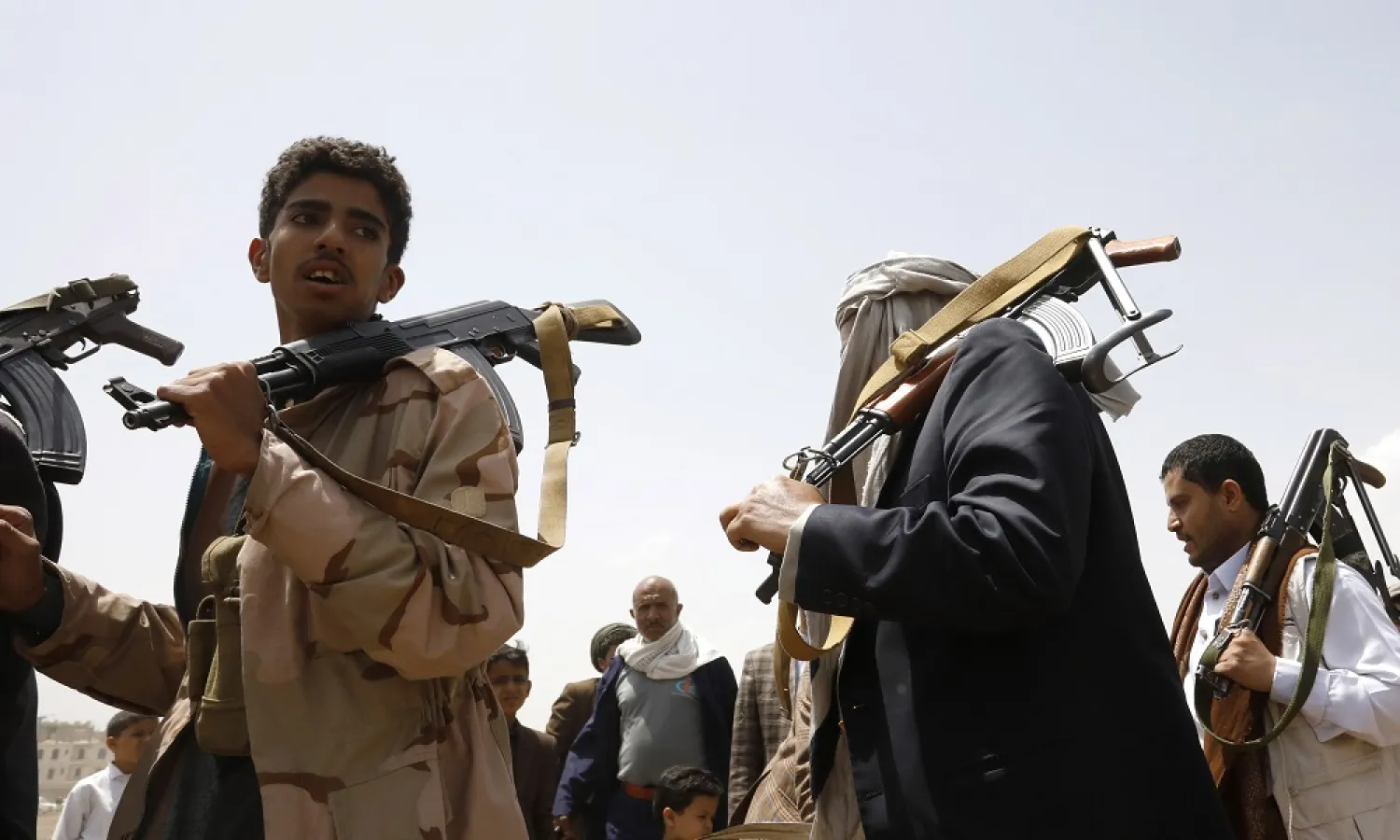
Houthi supporters attend a sectarian event in Sanaa, Yemen, 17 July 2022. (EPA)
TT

Yemen Welcomes Jeddah Summits, Houthis Apprehensive

Houthi supporters attend a sectarian event in Sanaa, Yemen, 17 July 2022. (EPA)

The Yemeni crisis, as expected, was present at all meetings held in Jeddah last week between Saudi, American and Arab Gulf leaders.

The crisis was present in the joint statement after Saudi-US talks on Friday and the concluding statement of the Gulf-US summit on Saturday. Head of the Presidential Leadership Council Dr. Rashad al-Alimi also met with US Secretary of State Antony Blinken on the sidelines of the summit.

The statements were welcomed by the legitimate Yemeni government, while the Iran-backed Houthi militias were apprehensive of them.

Secretary of the Yemeni media ministry Abdulbaset al-Qaedi told Asharq Al-Awsat that the most important outcomes related to Yemen declared at the summit were the support to the Leadership Council and urging the Houthis to return to peace talks.

The summit also underscored the importance of reopening the main routes to Taiz city, which has been besieged by the Houthis since 2015.

Above all else, the Houthi reaction to the summit will be the most important, said al-Qaedi, adding that the militias have long rejected the peace process.

The militias have been violating the nationwide truce since its announcement in early April and after it was extended for another two months in June.

The Houthis have also been refusing proposals to reopen the routes to Taiz, a key demand in the ceasefire, meaning they are the real hurdle in achieving any tangible progress in Yemen, added al-Qaedi.

US interests

Yemeni analysts, meanwhile, have questioned the American intentions behind the truce. They said Washington isn’t really serious about ending the crisis as much as it is exploiting it to achieve interests related to the upcoming midterm elections.

Analyst Mahmoud al-Taher said the war in Yemen has not received the attention it deserves from the US in that it has failed to address the real causes of the conflict and ways to end it.

All the Americans proposed was extending the truce, which the Houthis have not respected for three months, he told Asharq Al-Awsat.

Washington’s repeated statements over the truce and its extension reveal that it is not concerned about ending the war, but it is using it to support US President Joe Biden and his party in the midterm election, he added.

He explained that Biden is on the verge of losing the Congressional majority after his failure on all fronts, such as confronting Russia and China and in domestic affairs.

Biden has no other pledge he can claim to have fulfilled except for stopping the war in Yemen, al-Taher remarked, predicting that the conflict will heat up again after the midterms are held in November.

Houthi wariness

The Houthis were closely and warily watching the results of the Jeddah summits.

No sooner were they concluded that the militias’ ruling council issued a statement rejecting “talk of understandings over extending the truce.”

The statement also said the militias were “not pleased” with the truce in spite of the military and economic gains it helped them reap.

It said the truce was a “real shock and disappointment and cannot be repeated in the future.”

It reiterated the Houthi vision of peace in Yemen that would allow them free reign in the country, meaning having regional countries and the international community accept their coup against the legitimate government.

The militias condemned Biden’s visit to the Middle East, echoing remarks made by Iran and all of regional proxies.

Meanwhile, leading Houthi member Mohammed Ali al-Houthi, a cousin of the militias’ top leader, said the Houthis were still weighing the possibility of extending the truce.

Addressing Houth followers in Sanaa, he called on them to prepare to fight and attack liberated Yemeni regions.

He also alleged that the truce “failed to yield the desired fruit”.

“We will fight. We do not fear them and we have never feared them throughout the years,” he declared.



Hadhramaut Figures: Saudi Arabia's Historic Stance Paves Way for New Phase of Stability

Sheikh Essam Al-Kathiri, Secretary-General of the Hadhramaut National Council. (Asharq Al-Awsat)
TT

Hadhramaut Figures: Saudi Arabia's Historic Stance Paves Way for New Phase of Stability

Sheikh Essam Al-Kathiri, Secretary-General of the Hadhramaut National Council. (Asharq Al-Awsat)

Several prominent figures from Yemen's Hadhramaut praised on Monday's Saudi Arabia's stance on the governorate that prevented it from sliding towards deeper unrest and instability.

The figures told Asharq Al-Awsat that the Kingdom's position was not limited to tackling the current crisis, but paves the way for a new phase of stability and development as parties prepare for a Riyadh conference on the southern issue.

The conference will mark a turning point in "rearranging" the political scene in the South, they remarked.

Hadhramaut is at a pivotal moment that demands united ranks that will come up with a unified vision that preserves the governorate's interests and allows it to play an effective role in any future political process, they added

Sheikh Essam Al-Kathiri, Secretary-General of the Hadhramaut National Council, told Asharq Al-Awsat that the Saudi Arabia's "historic" stance and determination over the December 3 developments prevented the governorate from slipping into chaos.

Hadhramaut may have escaped the crisis, but it has embarked on a new path towards progress and development, he stated.

The call for intra-south dialogue is a sign that a secure and stable future is on the horizon, he noted.

"We are already seeing these signs with Saudi Arabia's brotherly support," he remarked.

Another member of the council, Al-Hakam Abdullah al-Nahdi, told Asharq Al-Awsat that the support offered by Saudi Arabia, led by Custodian of the Two Holy Mosques King Salman bin Abdulaziz, Prince Mohammed bin Salman, Crown Prince and Prime Minister, and Defense Minister Prince Khalid bin Salman, will be "etched in Hadhramaut's memory and relayed to generations to come."

"Hadhramaut represents a natural strategic depth to the Kingdom and its security is indivisible from Saudi Arabia's," he added.

"Were it not for Saudi Arabia's stance, we would have been mired in chaos," he went on to say.

He said he was optimistic about the future as long as Saudi Arabia was by Hadhramaut's side, calling on the people to "seize this opportunity by rallying together and shunning division."


Somalia Cancels All UAE Deals

A meeting of the Somali government. (Somali National News Agency)
TT

Somalia Cancels All UAE Deals

A meeting of the Somali government. (Somali National News Agency)

Somalia's government said on Monday that it was annulling all agreements with the United Arab Emirates, including port deals and defense and ‌security cooperation, ‌citing ‌evidence ⁠the UAE had ‌undermined its national sovereignty. 

"The Council of Ministers has annulled all agreements concluded with the United Arab Emirates, ⁠including those involving federal governmental ‌institutions, affiliated entities, and ‍regional administrations ‍operating within the territory ‍of the Federal Republic of Somalia," a statement from Somalia's Council of Ministers said. 

"This decision applies to all agreements ⁠and partnerships relating to the ports of Berbera, Bosaso, and Kismayo ... (and) bilateral security and defense cooperation agreements," the statement added. 


Somali Foreign Minister: Any Unilateral Recognition of Breakaway Regions Is Unviable

Somali Foreign Minister Abdisalam Abdi Ali (Somali Foreign Ministry)
TT

Somali Foreign Minister: Any Unilateral Recognition of Breakaway Regions Is Unviable

Somali Foreign Minister Abdisalam Abdi Ali (Somali Foreign Ministry)

At a highly sensitive regional juncture, Somali Foreign Minister Abdisalam Abdi Ali issued a clear warning against any unilateral recognition of breakaway regions, describing such moves as unviable and politically irresponsible, with negative repercussions for bilateral relations and regional stability.

In an interview with Asharq Al-Awsat, Ali stressed the alignment between Mogadishu and Riyadh on the need to shield the Red Sea and the Gulf of Aden from militarization, illicit activities and geopolitical rivalries.

He said his second visit to Saudi Arabia within two weeks reflects the depth of coordination with the Kingdom amid rapidly evolving regional developments, particularly those related to maritime security and the Horn of Africa.

Objectives of the Saudi visit

Ali said the primary aim of his visit was close consultation with Saudi Arabia on accelerating regional developments, notably those affecting the Red Sea, the Horn of Africa and maritime navigation security.

He added that discussions also focused on strengthening bilateral cooperation across political, economic, security and development fields, while ensuring full coordination on issues touching on Somalia’s sovereignty, unity and stability.

He noted that the visit — his second to Riyadh in less than two weeks — underscored the intensity of engagement with the Kingdom at a delicate moment, saying that his previous meeting with Saudi Foreign Minister Prince Faisal bin Farhan featured frank and constructive talks aimed at preventing escalation, maintaining regional balance and upholding international law.

Ali also highlighted the convening of an emergency meeting of foreign ministers of the Organization of Islamic Cooperation (OIC) to address what he described as the “illegal violation of Somalia’s sovereignty, unity and territorial integrity,” calling it further evidence of Saudi Arabia’s pivotal role in supporting regional stability.

Historic relations

The foreign minister described relations between Somalia and Saudi Arabia as “strong, historic and strategic,” grounded in shared faith, longstanding people-to-people ties and converging regional interests.

He said Somalia views the Kingdom as a key partner in national recovery, security-sector reform, economic stabilization and regional diplomacy, adding that current discussions are focused on translating this partnership into tangible outcomes that benefit both countries and reinforce wider regional stability.

Firm rejection of recognition of “Somaliland”

Ali stressed that the Somali federal government “categorically rejects” any declaration or action aimed at recognizing any part of Somalia as a separate entity. Such steps, he said, lack any legal basis, violate Somalia’s sovereignty and territorial integrity, and contravene international law, the UN Charter, the OIC charter and African Union principles.

He expressed Somalia’s appreciation for Saudi Arabia’s principled stance in support of Somali unity, as well as for regional and international partners that have voiced solidarity with Mogadishu.

He warned that unilateral recognition would not merely be a political position but a “destabilizing precedent” threatening the regional order. He added that Somalia is addressing the issue through balanced diplomacy and close coordination with regional and international partners.

A pivotal and constructive Saudi role

Ali said Saudi Arabia plays a “pivotal and constructive” role in promoting stability and security in the Arab world, the Red Sea region and the Horn of Africa, noting that its leadership in diplomacy, de-escalation and maritime security is widely recognized and appreciated.

Potential repercussions

The foreign minister warned that any unilateral recognition of Somaliland would be “legally and practically null and void,” further exacerbating fragility in a region already facing serious security, humanitarian and climate challenges. He said that such moves encourage fragmentation, fuel proxy conflicts and open the door to external interference, undermining the security of the Horn of Africa and international maritime navigation.

Militarization of the Red Sea

Ali said Mogadishu and Riyadh share a vital interest in protecting one of the world’s most strategic maritime corridors, stressing the need to keep the Red Sea and the Gulf of Aden free from militarization and illegal activities.

“We agree on the necessity of keeping the Red Sea and the Gulf of Aden away from militarization, illicit activities and geopolitical brinkmanship,” he underlined.