France Plans Fashion Revolution with Climate-impact Labels

File Photo: A model presents a creation from the Fall/Winter 2022/23 Haute Couture collection by French designer Virginie Viard for Chanel fashion house during the Paris Fashion Week, in Paris, France, 05 July 2022. (EPA)
TT

France Plans Fashion Revolution with Climate-impact Labels

File Photo: A model presents a creation from the Fall/Winter 2022/23 Haute Couture collection by French designer Virginie Viard for Chanel fashion house during the Paris Fashion Week, in Paris, France, 05 July 2022. (EPA)

Is it better for the environment if you buy a brand-new cotton T-shirt or a recycled one?

Well, it depends.

Recycling has obvious benefits, but the process shortens cotton fibers and so usually has to be mixed with some oil-based material to keep it from falling apart.

Such trade-offs make it tricky to figure out the real sustainability rating of clothes -- but brands in Europe will soon have no choice, AFP said.

By next year, every item of clothing sold in France will require a label detailing its precise climate impact -- with a similar rule expected for the rest of the European Union by 2026.

That means juggling many different and conflicting data points: Where and how were its raw materials grown? What was used to color it? How far did it travel? Was the factory powered with solar energy or coal?

The French Agency for Ecological Transition (Ademe) is currently testing 11 proposals for how to collect and compare data -- and what the resulting label might look like to consumers -- using 500 real-life items of clothing.

"The message of the law is clear -- it will become obligatory, so brands need to prepare, to make their products traceable, to organize the automatic collection of data," Erwan Autret, one of the coordinators at Ademe, told AFP.

"Some say the models are too simple, some say they're too complicated, but it's a sign of the maturity of the debate that no one questions the need for these calculations anymore."

- 'Transparent and informed' -
The need for change in fashion is urgent.

Statistics are notoriously hard to verify, but the UN says the industry is responsible for 10 percent of global carbon emissions, as well as a significant portion of water consumption and waste.

Labels can be a key part of the solution, say campaigners.

"It will force brands to be more transparent and informed... to collect data and create long-term relationships with their suppliers -- all things they're not used to doing," said Victoire Sotto, of The Good Goods, a fashion and sustainability consultancy.

"Right now it seems infinitely complex," she added. "But we've seen it applied in other industries such as medical supplies."

Seeing how the winds are blowing, the textile industry has been racing to come up with technical solutions.

A recent presentation by Premiere Vision, a Paris-based textiles conference, highlighted many new processes including non-toxic leather tanning, dyes drawn from fruits and waste -- and even biodegradable underwear that can be thrown on the compost.

But the key to sustainability is using the right fabric for the right garment, said Ariane Bigot, Premiere Vision's deputy head of fashion.

That means synthetic and oil-based fabrics will still have a place, she said: "A strong synthetic with a very long lifespan might be right for some uses, such as an over-garment that needs little washing."

Capturing all these trade-offs in one simple label on an item of clothing is therefore tricky.

"It's very complicated," said Bigot. "But we need to get the machine started."

- Sustainable options -
The French agency is due to collate the results of its testing phase by next spring before handing the results to lawmakers.

While many welcome the labels, activists say this should only be part of a wider crackdown on the fashion industry.

"It's really good to put an emphasis on life-cycle analysis but we need to do something about it beyond just labels," said Valeria Botta, of the Environmental Coalition on Standards.

"The focus should be on setting clear rules on product design to ban the worst products from the market, ban the destruction of returned and unsold goods, and set production limits," she told AFP.

"Consumers should not have to fight to find a sustainable option -- that should be the default."



Fashion Commission Launches 1st Executive Master’s Program in Riyadh

Fashion Commission Launches 1st Executive Master’s Program in Riyadh
TT

Fashion Commission Launches 1st Executive Master’s Program in Riyadh

Fashion Commission Launches 1st Executive Master’s Program in Riyadh

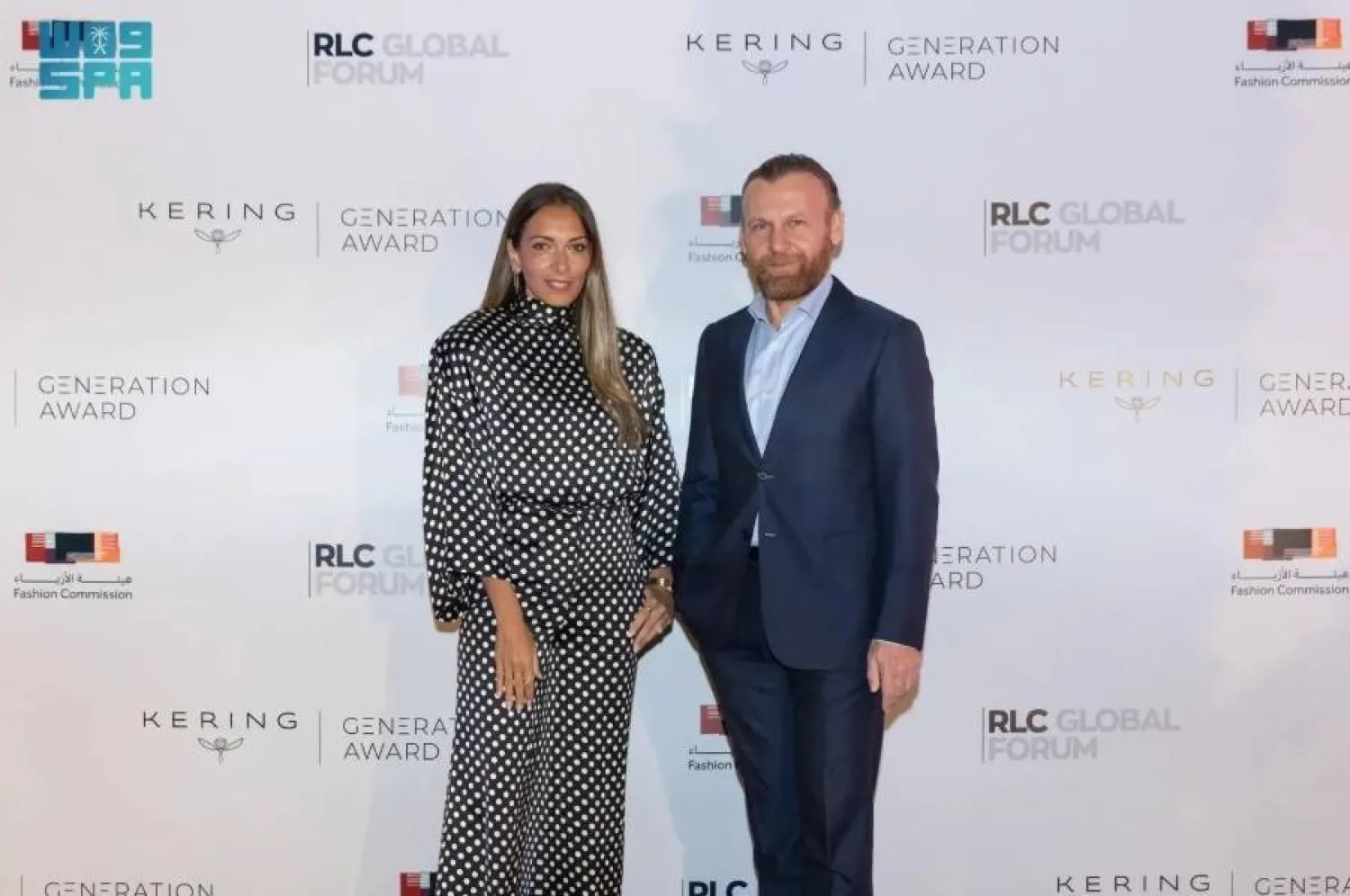
The Fashion Commission announced the launch of the first Executive Master’s program to be delivered in Riyadh, developed in collaboration with the world-renowned Institut Français de la Mode (IFM).

The new program marks a significant leap in advancing fashion education and executive training within the Kingdom, according to SPA.

The Executive Master’s in Strategic Management of Fashion & Luxury represents a new milestone in fashion education, taking place in Riyadh for the first time. It is a 15-month hybrid executive master’s degree track designed for high-potential professionals seeking advanced executive training while continuing their careers. Delivered through a blend of in-person modules in Riyadh and Paris, alongside supervised online learning, the program equips participants with strategic, managerial, and analytical expertise tailored to the rapidly evolving fashion and luxury sector.

Designed with market needs in mind, the executive master’s curriculum covers creation and design, brand strategies, sustainability, new consumer behaviors, retail innovation, fashion media, collection management, and future industry perspectives. Participants will also complete a thesis that contributes new knowledge to the regional and global fashion landscape.

The program is taught by IFM’s internationally recognized faculty, experts in fashion history, sustainability, consumer behavior, design, and luxury management, alongside industry leaders from major global houses, fashion federations, media groups, and innovation-driven organizations.

This landmark program builds on the Fashion Commission’s ongoing partnership with IFM since June 2022. Within the first year, the collaboration introduced high-level educational initiatives, including the Advanced Management Program for Luxury Fashion and the Executive Master’s in Luxury Fashion, designed to elevate local talent and strengthen the Kingdom’s creative workforce.

These programs have contributed to developing the skills and knowledge required to support a world-class fashion ecosystem.

The launch of the Executive Master’s marks a pivotal step in establishing Riyadh as an education hub for the fashion and luxury sectors. By bringing a master’s qualification of this caliber directly to the Kingdom, the Fashion Commission reinforces its commitment to enabling professional growth, supporting innovation, and creating globally competitive talent pipelines.


Nike Shares Rise as Apple’s Cook Doubles His Bet on CEO Hill’s Overhaul Effort

A jogger wearing Nike shoes runs along the Charles River in Cambridge, Massachusetts, US, March 18, 2019. (Reuters)
TT

Nike Shares Rise as Apple’s Cook Doubles His Bet on CEO Hill’s Overhaul Effort

A jogger wearing Nike shoes runs along the Charles River in Cambridge, Massachusetts, US, March 18, 2019. (Reuters)

Nike shares rose 5% in early trading on Wednesday after Apple CEO Tim Cook doubled his personal stake in the sportswear maker, raising his bets on the margin-pinching turnaround efforts led by CEO Elliott Hill.

Cook, who has been on Nike's board since 2005, bought 50,000 shares at $58.97 ‌each, according to ‌a regulatory filing. As of December ‌22, ⁠he holds about ‌105,000 shares, which is now worth nearly $6 million.

It was the largest open market stock purchase for a Nike director or executive and possibly the largest in more than a decade, said Jonathan Komp, analyst at Baird Equity Research.

"(We see) Cook's move as a positive signal for the progress under CEO Elliott Hill and Nike's 'Win ⁠Now' actions," Komp said.

The purchase comes days after Nike reported weaker quarterly margins and weak ‌sales in China even as CEO ‍Hill tries to revive demand ‍through fresh marketing plans and innovation focused on running and sports, ‍while phasing out lagging lifestyle brands.

He has also attempted to mend Nike's ties with wholesalers such as Dicks Sporting Goods to increase visibility among shoppers amid stiff competition from newer brands.

However, the strategy has strained Nike's margins, which have been declining for over a year, while its efforts to win back its ⁠premier position in discount-friendly China appears to be faltering.

Nike's shares have slumped nearly 13% since it reported results on December 18 and are on track for the fourth straight year of declines. They were trading at $60.19 on Wednesday.

Cook has been a lead independent director of Nike since 2016 when co-founder Phil Knight stepped down as its chairman.

The Apple CEO "remains extremely close" with Knight, Komp said, adding that he has advised Nike through key strategic decisions including Hill's appointment last year.

Board director and former Intel CEO ‌Robert Swan also bought about 8,700 shares for about $500,000 this week.


Etro Founding Family Exits Group as New Investors Including Türkiye's RAMS Global Join

L Catterton, a private equity firm backed by French luxury giant LVMH, will remain Etro's majority owner. Reuters
TT

Etro Founding Family Exits Group as New Investors Including Türkiye's RAMS Global Join

L Catterton, a private equity firm backed by French luxury giant LVMH, will remain Etro's majority owner. Reuters

The founding family of Italian fashion house Etro has sold the minority stake it still owned in the brand to a group of investors including Turkish group RAMS Global, the company said on Friday.

L Catterton, a private equity firm backed by French luxury giant LVMH, will remain Etro's majority owner and "will continue to actively support the brand's long-term growth strategy," Etro added, according to Reuters.

The new investors comprise also Italian fashion group Swinger International and small private equity firm ⁠RSI.

In addition to buying the stake, they all subscribed to a capital increase that will lower L Catterton's holding in Etro to between 51% and 55% from around 65%.

When including both the acquisition and the capital increase, the deal is worth around 70 ⁠million euros ($82 million), two sources close to the matter said. Etro did not disclose financial details.

Chief Executive Fabrizio Cardinali will remain at the helm, while Faruk Bülbül, representing RAMS Global, will become chairman of the board.

L Catterton bought a 60% stake in the brand known for its paisley motif four years ago, and it slightly increased the holding over the years.

The company, founded by Gimmo Etro in 1968, has ⁠been struggling with its turnaround. Last year it posted a net loss of 23 million euros with net revenues declining to 245 million euros from 261 million euros, according to filings with the local chambers of commerce reviewed by Reuters.

Rothschild advised L Catterton and the Etro family on the deal.

Rothschild had been hired in 2024 to look for a new investor who could buy all or part of the Etro fashion group, sources had previously told Reuters.