


UN Health Agency Chief Declares Monkeypox a Global Emergency

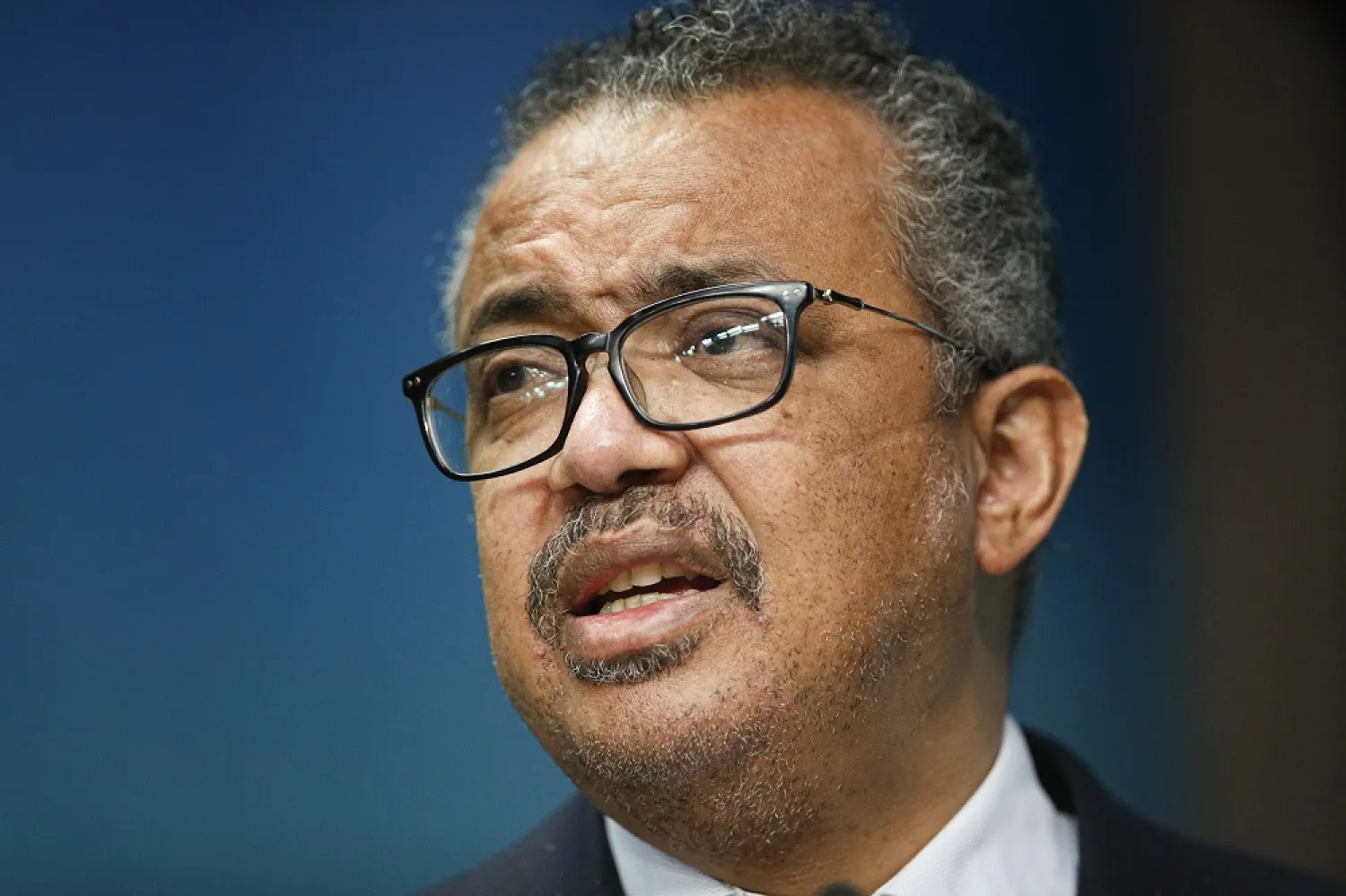
The head of the World Health Organization, Tedros Adhanom Ghebreyesus speaks during a media conference at an EU Africa summit in Brussels on Feb. 18, 2022. (AP)
TT

UN Health Agency Chief Declares Monkeypox a Global Emergency

The head of the World Health Organization, Tedros Adhanom Ghebreyesus speaks during a media conference at an EU Africa summit in Brussels on Feb. 18, 2022. (AP)

The expanding monkeypox outbreak in more than 70 countries is an “extraordinary” situation that qualifies as a global emergency, the World Health Organization chief said Saturday, a declaration that could spur further investment in treating the once-rare disease and worsen the scramble for scarce vaccines.

A global emergency is WHO’s highest level of alert but the designation does not necessarily mean a disease is particularly transmissible or lethal. Similar declarations were made for the Zika virus in 2016 in Latin America and the ongoing effort to eradicate polio, in addition to the COVID-19 pandemic and the 2014 Ebola outbreak in West Africa.

WHO Director-General Tedros Adhanom Ghebreyesus made the decision to call monkeypox a global emergency despite a lack of consensus among experts on the UN health agency's emergency committee, saying he acted as “a tiebreaker.” It was the first time a UN health agency chief has unilaterally made such a decision without an expert recommendation.

“We have an outbreak that has spread around the world rapidly through new modes of transmission, about which we understand too little,” Tedros said. “I know this has not been an easy or straightforward process and that there are divergent views.”

WHO’s emergencies chief, Dr. Michael Ryan, said the director-general declared monkeypox a global emergency to ensure that the world takes the current outbreaks seriously.

Although monkeypox has been established in parts of central and west Africa for decades, it was not known to spark large outbreaks beyond the continent or to spread widely among people until May, when authorities detected dozens of epidemics in Europe, North America and elsewhere.

Last month, WHO’s expert committee said the monkeypox outbreak did not yet amount to an international emergency, but the panel convened this week to reevaluate the situation.

According to the US Centers for Disease Control and Prevention, more than 16,000 cases of monkeypox have been reported in 74 countries since about May. To date, monkeypox deaths have only been reported in Africa, where a more dangerous version of the virus is spreading, mainly in Nigeria and Congo.

In Africa, monkeypox mainly spreads to people by infected wild animals like rodents in limited outbreaks that typically have not crossed borders. In Europe, North America and elsewhere, however, monkeypox is spreading among people with no links to animals or recent travel to Africa.

WHO’s top monkeypox expert, Dr. Rosamund Lewis, said this week that 99% of all the monkeypox cases beyond Africa were in men. Experts suspect the monkeypox outbreaks in Europe and North America were spread at two raves in Belgium and Spain.

The US Centers for Disease Control and Prevention said it was “supportive” of WHO's emergency declaration and hoped it would galvanize international action to stamp out the outbreaks. The US has reported more than 2,800 monkeypox cases and sent more than 370,000 vaccine doses to US states reporting cases.

Some experts had questioned whether such a declaration would help, arguing the disease isn’t severe enough to warrant the attention and that rich countries battling monkeypox already have the funds to do so. Most people recover without needing medical attention, although the lesions may be painful.

Michael Head, a senior research fellow in global health at Southampton University, said WHO’s emergency declaration could help donors like the World Bank make funds available to stop the outbreaks both in the West and in Africa.

In the US, some experts have speculated whether monkeypox might be on the verge of becoming an entrenched sexually transmitted disease in the country, like gonorrhea, herpes and HIV.

“The bottom line is we’ve seen a shift in the epidemiology of monkeypox where there’s now widespread, unexpected transmission,” said Dr. Albert Ko, a professor of public health and epidemiology at Yale University. “There are some genetic mutations in the virus that suggest why that may be happening, but we do need a globally-coordinated response to get it under control.”

Ko called for testing to be immediately scaled up, saying there are significant gaps in surveillance.

“The cases we are seeing are just the tip of the iceberg,” he said. “The window has probably closed for us to quickly stop the outbreaks in Europe and the US, but it’s not too late to stop monkeypox from causing huge damage to poorer countries without the resources to handle it.”

WHO's Tedros called for the world to “act together in solidarity” regarding the distribution of treatments, tests and vaccines. for monkeypox. The UN agency has previously said it's working to create a vaccine-sharing mechanism for the most-affected countries, but offered few details of how it might work. Unlike the numerous companies that made COVID-19 vaccines, there is only one maker for the vaccine used against monkeypox, Denmark's Bavarian Nordic.

Dr. Placide Mbala, a virologist who directs the global health department at Congo’s Institute of National Biomedical Research, said he hoped any global efforts to stop monkeypox would be equitable. Although countries including Britain, Canada, Germany and the US have ordered millions of monkeypox vaccine doses, none have gone to Africa.

“The solution needs to be global,” Mbala said, adding that any vaccines sent to Africa would be used to target those at highest risk, like hunters in rural areas.

“Vaccination in the West might help stop the outbreak there, but there will still be cases in Africa,” he said. “Unless the problem is solved here, the risk to the rest of the world will remain.”



Iran, US Race to Find Crew Member of Crashed American Fighter Jet

A US Air Force F-16 Fighting Falcon aircraft refuels from a KC-135 Stratotanker aircraft during a mission supporting Operation Epic Fury during the Iran war at an undisclosed location, April 2, 2026.  US Air Force/Handout via REUTERS
A US Air Force F-16 Fighting Falcon aircraft refuels from a KC-135 Stratotanker aircraft during a mission supporting Operation Epic Fury during the Iran war at an undisclosed location, April 2, 2026. US Air Force/Handout via REUTERS
TT

Iran, US Race to Find Crew Member of Crashed American Fighter Jet

A US Air Force F-16 Fighting Falcon aircraft refuels from a KC-135 Stratotanker aircraft during a mission supporting Operation Epic Fury during the Iran war at an undisclosed location, April 2, 2026.  US Air Force/Handout via REUTERS
A US Air Force F-16 Fighting Falcon aircraft refuels from a KC-135 Stratotanker aircraft during a mission supporting Operation Epic Fury during the Iran war at an undisclosed location, April 2, 2026. US Air Force/Handout via REUTERS

Iranian and American forces raced each other Saturday to recover a crew member from the first US fighter jet to go down inside Iran since the start of the war.

Tehran said it had shot down the F-15 warplane and US media reported United States special forces had rescued one of its two crew members, with the other was still missing.

Iran's military also said it downed a US A-10 ground attack aircraft in the Gulf, with US media saying the pilot of that plane was rescued, reported AFP.

The war erupted more than a month ago with US-Israeli strikes on Iran that killed supreme leader Ali Khamenei, triggering retaliation that spread the conflict throughout the Middle East, convulsing the global economy and impacting millions of people worldwide.

US Central Command did not immediately respond to a request for comment on the loss of the F-15, but White House Press Secretary Karoline Leavitt said: "The president has been briefed."

President Donald Trump told NBC the F-15 loss would not affect negotiations with Iran, saying: "No, not at all. No, it's war."

On Saturday, there were fresh strikes on Israel, Lebanon and Iran, as well as on Gulf states.

An AFP journalist saw a thick haze of grey smoke covering Tehran's skyline after hearing several blasts over the capital. It was not immediately clear what had been targeted.

- 'Valuable reward' -

A spokesperson for the Iranian military's central operational command earlier said "an American hostile fighter jet in central Iranian airspace was struck and destroyed by the IRGC Aerospace Force's advanced air defense system".

"The jet was completely obliterated, and further searches are ongoing."

An Iranian television reporter on a local official channel said anyone who captured a crew member alive would "receive a valuable reward".

Retired US brigadier general Houston Cantwell, who has 400 hours of combat flight experience, said a pilot's training would likely kick in before he or she parachutes to the ground.

"My priority would be, first of all, concealment, because I don't want to be captured," he told AFP.

Mohammad Ghalibaf, the speaker of Iran's parliament, mocked the Trump administration.

He wrote on X: "After defeating Iran 37 times in a row, this brilliant no-strategy war they started has now been downgraded from 'regime change' to 'Hey! Can anyone find our pilots? Please?'

"Wow. What incredible progress. Absolute geniuses."


Explosion Hits Pro-Israel Center in the Netherlands

Rotterdam Police officers. (Getty Images/AFP)
TT

Explosion Hits Pro-Israel Center in the Netherlands

Rotterdam Police officers. (Getty Images/AFP)

A blast hit a pro-Israeli center in the Netherlands, police said Saturday, adding it caused minimal damage and no injuries.

A police spokeswoman told AFP no one was inside the site run by Christians for Israel, a non-profit, in the central city of Nijkerk when the explosion went off outside its gate late on Friday.

An investigation was ongoing.

The incident comes after a string of similar night-time attacks on Jewish sites in the Netherlands and neighboring Belgium in recent weeks that has heightened concerns in the wake of the war in the Middle East.


Iran Says Strike Hit Close to Its Bushehr Nuclear Facility, Killing a Guard and Damaging a Building

Iran's Bushehr nuclear reactor (Reuters)
TT

Iran Says Strike Hit Close to Its Bushehr Nuclear Facility, Killing a Guard and Damaging a Building

Iran's Bushehr nuclear reactor (Reuters)

Iran’s atomic agency says an airstrike has hit near its Bushehr nuclear facility, killing a security guard and damaging a support building. It is the fourth time the facility has been targeted during the war.

The agency announced Saturday’s attack on social media.

The US AP’s military pressed ahead Saturday in a frantic search for a missing pilot after Iran shot down an American warplane, as Iran called on people to turn the pilot in, promising a reward.

The plane, identified by Iran as a US F-15E Strike Eagle, was one of two attacked on Friday, with one service member rescued and at least one missing. It was the first time the United States lost aircraft in Iranian territory during the war, now in its sixth week, and could mark a new turning point in the campaign.

The conflict, launched by the US and Israel on Feb. 28, has rippled across the region. It has so far killed thousands, upended global markets, cut off key shipping routes, spiked fuel prices and shows no signs of slowing as Iran responds to US and Israeli airstrikes with attacks across the region.