


Saudi Crown Prince Announces Designs for NEOM's THE LINE

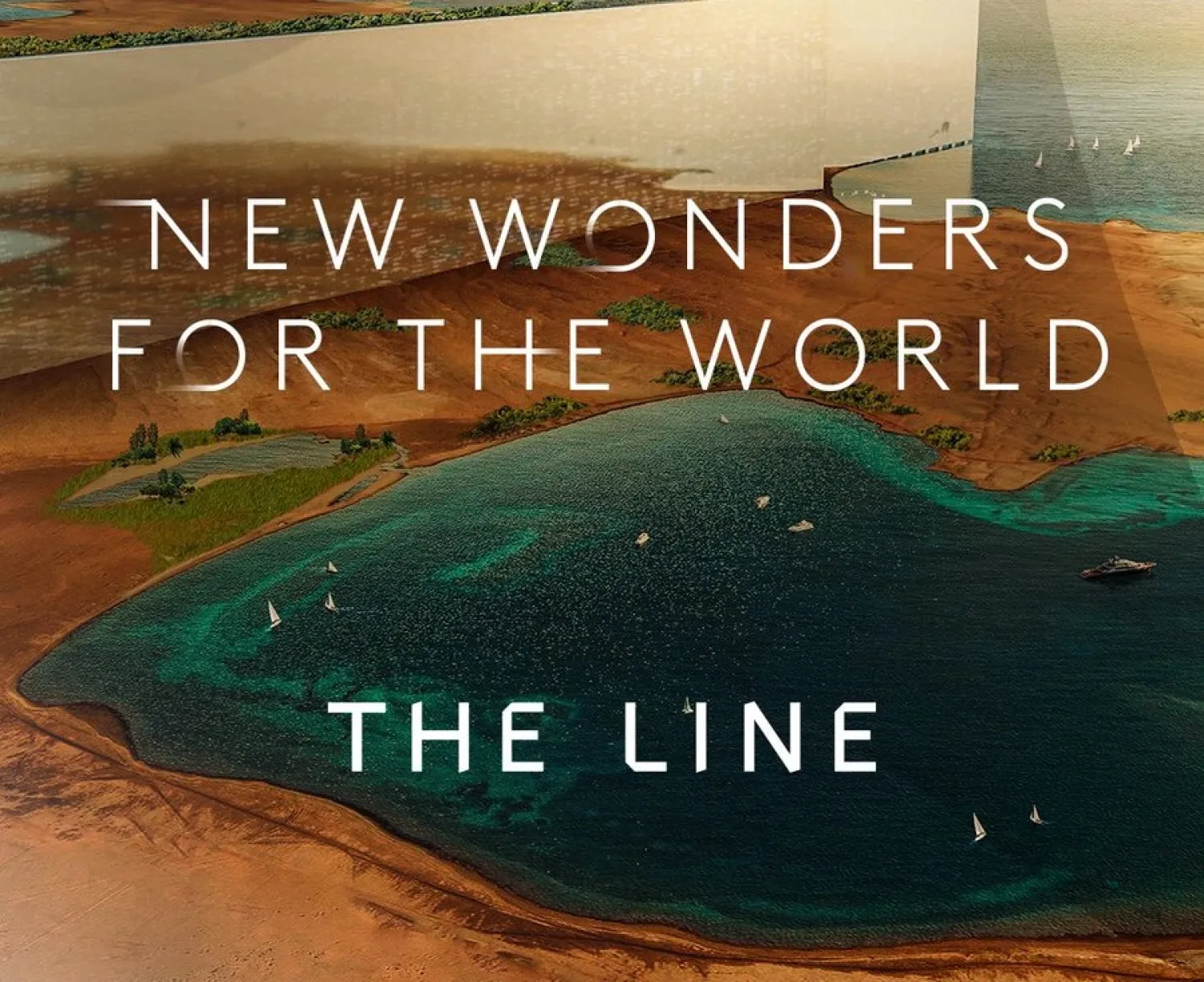
Saudi Crown Prince Mohammed bin Salman announced the designs of NEOM’s THE LINE, a civilizational revolution that puts humans first, providing an unprecedented urban living experience while preserving the surrounding nature. (NEOM)
TT

Saudi Crown Prince Announces Designs for NEOM's THE LINE

Saudi Crown Prince Mohammed bin Salman announced the designs of NEOM’s THE LINE, a civilizational revolution that puts humans first, providing an unprecedented urban living experience while preserving the surrounding nature. (NEOM)

Saudi Crown Prince Mohammed bin Salman, Chairman of the NEOM Board of Directors, announced on Monday the designs of NEOM’s THE LINE, a civilizational revolution that puts humans first, providing an unprecedented urban living experience while preserving the surrounding nature.

In January 2021, he launched the initial idea and vision of the city that redefines the concept of urban development and what cities of the future should look like.

The designs of THE LINE embody how urban communities will be in the future in an environment free from roads, cars and emissions. It will run on 100% renewable energy and prioritize people's health and well-being over transportation and infrastructure as in traditional cities. It puts nature ahead of development and will contribute to preserving 95% of NEOM’s land.

The announcement reveals the most important characteristics of THE LINE, which is only 200 meters wide, 170 kilometers long and 500 meters above sea level.

THE LINE will eventually accommodate 9 million residents and will be built on a footprint of 34 square kilometers, which is unheard of when compared to other cities of similar capacity. This in turn will reduce the infrastructure footprint and create never-before-seen efficiencies in city functions.

Its ideal climate all year round will ensure that residents can enjoy surrounding nature when walking around. Residents will also have access to all facilities in THE LINE within a five-minute walk, in addition to a high-speed rail with an end-to-end transit of 20 minutes.

Crown Prince Mohammed said: “At THE LINE’s launch last year, we committed to a civilizational revolution that puts humans first based on a radical change in urban planning. The designs revealed today for the city's vertically layered communities will challenge the traditional flat, horizontal cities and create a model for nature preservation and enhanced human livability.”

“THE LINE will tackle the challenges facing humanity in urban life today and will shine a light on alternative ways to live,” he added.

“We cannot ignore the livability and environmental crises facing our world’s cities, and NEOM is at the forefront of delivering new and imaginative solutions to address these issues,” he continued.

“NEOM is leading a team of the brightest minds in architecture, engineering and construction to make the idea of building upwards a reality,” he stressed.

“NEOM will be a place for all people from across the globe to make their mark on the world in creative and innovative ways. NEOM remains one of the most important projects of Saudi Vision 2030, and our commitment to delivering THE LINE on behalf of the nation remains resolute.”

THE LINE offers a new approach to urban design: The idea of layering city functions vertically while giving people the possibility of moving seamlessly in three dimensions (up, down or across) to access them is a concept referred to as Zero Gravity Urbanism. Different from just tall buildings, this concept layers public parks and pedestrian areas, schools, homes and places for work, so that one can move effortlessly to reach all daily needs within five minutes.

THE LINE will have an outer mirror facade that will provide its unique character and allow even its small footprint to blend with nature, while the interior will be built to create extraordinary experiences and magical moments. It will be created by a team of world-renowned architects and engineers, led by NEOM, to develop this revolutionary concept for the city of the future.

In order to change business as usual, the city’s design will be completely digitized, and the construction industrialized to a large degree by significantly advancing construction technologies and manufacturing processes.

The announcement of THE LINE’s designs is a continuation of NEOM’s progress in the development of its flagship projects such as OXAGON, its reimagined manufacturing and innovation city; and TROJENA, its global mountain tourism destination that will offer the Arabian Gulf’s first outdoor skiing; as well as the launch of two of NEOM’s subsidiaries: ENOWA, its energy, water and hydrogen company; and the NEOM Tech & Digital Company.



World Defense Show Ends in Riyadh with 220 Deals, 60 Arms Contracts

Governor of the General Authority for Military Industries says show drew 137,000 visitors (World Defense Show)
TT

World Defense Show Ends in Riyadh with 220 Deals, 60 Arms Contracts

Governor of the General Authority for Military Industries says show drew 137,000 visitors (World Defense Show)

Engineer Ahmad Al-Ohali, Governor of the General Authority for Military Industries, said the third edition of the World Defense Show was the product of two years of coordinated work by government entities and private sector partners to deliver what he described as a landmark event.

Speaking at a press briefing on Thursday in Malham, north of Riyadh, Al-Ohali said the exhibition was held under the patronage of the Custodian of the Two Holy Mosques, King Salman bin Abdulaziz, with the follow-up and supervision of Crown Prince and Prime Minister Prince Mohammed bin Salman, and inaugurated under the patronage of Minister of Defense Prince Khalid bin Salman.

The authority organizes the show every two years as part of its mandate to build and support the military industries sector, he said, in a drive to boost military readiness, advance self-sufficiency, and meet Saudi Vision 2030’s target of localizing more than 50 percent of military spending by 2030.

Held under the theme “Future of Defense Integration,” the exhibition showcased what Al-Ohali described as a shift toward a fully integrated defense ecosystem rooted in partnerships, innovation, technology transfer, stronger supply chains, and the development of national talent.

This year’s edition, he said, stood out for its local innovations, the Defense Industry Lab, Saudi capabilities and homegrown talent, alongside closer alignment between education, training and sector needs.

Saudi Arabia has made what Al-Ohali called a historic leap in localizing military spending, rising from 4 percent in 2018 to 25 percent by the end of 2024, a fourfold increase in eight years.

The national workforce in the sector grew from 25,000 in 2020 to 34,000, an increase of about 40 percent, with Saudis now accounting for 63 percent of total employees.

He said the gains reflect a structural transformation since the authority’s establishment in 2018, with the sector moving from full dependence on imports to building an integrated and sustainable national industrial base.

“This is still the beginning,” he said, reaffirming the goal of surpassing 50 percent localization and achieving high local content by 2030.

Al-Ohali said 26 government entities backed the preparation and execution of the show. Over five days, the third edition set records, attracting 1,486 local and international exhibitors from 89 countries, including the world’s top 10 defense companies.

The event hosted 513 official delegations representing 121 governments and attracted 137,000 visitors. Exhibition space expanded to more than 272,000 square meters, up 58 percent from the previous edition, with four halls compared with three in earlier editions.

One of the region’s largest specialized aerial and static displays featured 63 static aircraft and 25 aircraft in live air shows, including F-16, F-15, F-35, and Typhoon jets, with participation from the Saudi Falcons and South Korea’s Black Eagles.

The static display area included around 700 military assets. A dedicated naval platform featured participation from 10 countries, alongside an outdoor platform for unmanned systems and a zone for live land demonstrations.

Al-Ohali said the exhibition generated 73 memorandums of understanding and 220 agreements in total, including 93 intergovernmental deals and 127 agreements between companies. Sixty arms procurement contracts were signed, totaling 33 billion riyals, exceeding the totals recorded in the two previous editions.

He said the agreements, memorandums, meetings, and contracts were central to the exhibition’s objectives. The strong turnout, he added, signaled international confidence in Saudi Arabia as a strategic partner and an attractive destination for defense investment, reflecting growing trust in the Kingdom’s investment environment, particularly in military industries.

Planning has already begun for the next edition in 2028, Al-Ohali said, adding that the third edition demonstrated the sector’s ability to deliver results.

The exhibition is no longer just a display space, he said. It has become an active platform to shape the future of defense integration, reinforcing Saudi Arabia’s position as an international hub for integrated defense industries.

He said the Kingdom will continue strengthening its standing among nations that manufacture and develop military technologies, aiming to become a regional and global center in this strategic field.


UNRWA’s Lazzarini Warns Ignoring Gaza Risks New Generation of Anger

Philippe Lazzarini, the Commissioner-General of the United Nations Relief and Works Agency for Palestine Refugees in the Near East. Photo: Turky Alagili
TT

UNRWA’s Lazzarini Warns Ignoring Gaza Risks New Generation of Anger

Philippe Lazzarini, the Commissioner-General of the United Nations Relief and Works Agency for Palestine Refugees in the Near East. Photo: Turky Alagili

Philippe Lazzarini, the Commissioner-General of the United Nations Relief and Works Agency for Palestine Refugees in the Near East, says UNRWA’s future cannot remain “hostage indefinitely” to the absence of a political solution, as he prepares to leave his post next month.

In a wide-ranging interview with Asharq Al-Awsat, Lazzarini called for a gradual shift in how services are delivered, allowing Palestinian institutions to eventually build the capacity to take over.

At the same time, he warned that abandoning nearly 2 million people in Gaza, half of them children, to trauma and hopelessness risks sowing the seeds of new generations of anger.

Strong backing from Saudi Arabia

Lazzarini said UNRWA’s cooperation with Saudi Arabia is “strong,” both financially and politically.

Riyadh, he said, is deeply engaged in the political process and works with the EU under the umbrella of the “Global Alliance for the Implementation of the Two-State Solution,” where UNRWA has been invited to be part of the broader discussions.

For Lazzarini, sustainable access to essential services must rest on a clear political framework. Saudi Arabia and other partners in the alliance have helped provide that framework and voiced firm political support for the agency during what he described as a challenging period.

He said the Kingdom’s level of political engagement and the initiatives advanced within the alliance left a strong impression. Inviting a humanitarian-development agency such as UNRWA into discussions about the future of Palestinian institutions, he said, reflects the seriousness of that partnership.

A funding squeeze and a “silent war”

UNRWA is also battling a chronic funding crisis. After a year of austerity, Lazzarini said he was forced weeks ago to cut services by around 20%, including health care and education, affecting beneficiaries directly.

Beyond Gaza, he warned of what he called a “silent war” in the occupied West Bank, overshadowed by events in the enclave.

Over the past two years, developments there have come “close to de facto annexation of the occupied West Bank,” he said. Settlement expansion has accelerated. Settler violence has risen “with little accountability.” Large-scale security operations, especially in Jenin and Tulkarm, have emptied camps and displaced large numbers of residents.

Palestinian refugee children are seen at a camp in Gaza city. Reuters

Gaza pushed beyond the brink

What has happened in Gaza, Lazzarini said, “defies description.” The suffering, he added, is “unbearable.”

Once described as an open-air prison, Gaza has, after more than two years of unrelenting war, become a landscape of daily atrocities carried out almost around the clock, before the eyes of the world.

Between 80% and 90% of the territory has been destroyed, he said, leaving behind a “post-catastrophic” environment. The population is in constant flight. More than 70,000 people have been killed, according to estimates, not counting those still buried beneath the rubble.

He described systematic starvation driven by political decisions and efforts to make life in the enclave untenable, pushing residents toward departure.

More than 380 UNRWA staff members have been killed, he said. Others were detained and tortured. Agency facilities were struck. The violations of international law, he added, have gone largely unpunished, deepening what he called a climate of impunity.

Political targeting and pressure

Lazzarini said he himself faced “political and diplomatic targeting” during his tenure, tied not to his person but to his office and what UNRWA represents.

After his first visit to Gaza, he was declared persona non grata and barred from returning, with instructions issued not to engage with him.

The targeting was not directed personally as much as at the function and the symbolism of UNRWA, he said. Some Israeli officials, he noted, have openly stated that their objective is to end the agency’s role, seeing it as perpetuating the refugee issue.

UNRWA’s 75-year existence, he argued, does not explain the problem. Instead, it reflects the international community’s failure to reach a just and lasting political solution.

The two-state solution

Lazzarini reaffirmed that the two-state path remains “a fundamental option,” but warned that developments in Gaza and the West Bank are pushing any serious political horizon further out of reach.

The events after Oct. 7, he said, should have been “a wake-up call.” This conflict, he stressed, cannot be left unresolved.

Nearly 2 million people in Gaza, half of them children, are living in profound trauma with no clear future. Ignoring that reality, he warned, means planting anger in a new generation, with consequences for the region’s stability.

He also voiced concern that solidarity and compassion are no longer driving international responses as they once did. In both Gaza and Sudan, he said, he sensed “a great deal of indifference” toward vast humanitarian crises.

Yet he insisted the core lesson is to hold fast to humanitarian values, however bleak the circumstances. The alternative, he warned, is a world stripped of standards and restraint, ruled by the law of the jungle rather than international law.

For Lazzarini, sustainable access to essential services must rest on a clear political framework.

Rethinking UNRWA’s future

Looking ahead, Lazzarini said UNRWA cannot continue indefinitely in its current form.

He called for a phased transition in service delivery, enabling Palestinian institutions to build capacity to assume those responsibilities over time.

The agency must remain the custodian of the refugee cause until a just solution is achieved, he said. But the mechanics of delivering services should not remain frozen, waiting endlessly for a political breakthrough.


Saudi Arabia Issues Royal Orders Appointing New Ministers, Governors

File photo of Saudi Arabia’s King Salman bin Abdulaziz - SPA
TT

Saudi Arabia Issues Royal Orders Appointing New Ministers, Governors

File photo of Saudi Arabia’s King Salman bin Abdulaziz - SPA

Saudi Arabia’s King Salman bin Abdulaziz issued a series of Royal Decrees on Thursday including a decree appointing Fahd Al Saif as the new investment minister, replacing Khalid Al-Falih.

Al Saif was previously head of the PIF's investment strategy and economic insights division. Al-Falih has instead been appointed as a Minister of State and a member of the cabinet.

Other Royal Decrees were also issued as follows:

Abdullah Al-Maghlouth shall be appointed Vice Minister of Media.
Abdulmohsen Al-Mazyad shall be appointed Vice Minister of Tourism.
Khalid Al-Yousef shall be appointed Attorney General.
Sheikh Ali Al-Ahaideb shall be appointed President of the Board of Grievances.
Faihan Al-Sahli shall be appointed Director General of the General Directorate of Investigation.
Abdulaziz Al-Arifi shall be appointed Governor of the National Development Fund.
Haytham Al-Ohali shall be appointed Governor of the Communications, Space and Technology Commission.
Fawaz Al-Sahli shall be appointed President of the Transport General Authority.