


Tunisia Approves New Constitution

Tunisia's President Kais Saied greets his supporters after a referendum on a new constitution in Tunis on July 26, 2022. Tunisian presidency, handout via Reuters
TT

Tunisia Approves New Constitution

Tunisia's President Kais Saied greets his supporters after a referendum on a new constitution in Tunis on July 26, 2022. Tunisian presidency, handout via Reuters

Tunisia has approved a new constitution granting unchecked powers to the office of President Kais Saied, the electoral board said, after a referendum in which voters overwhelmingly backed the document.

Saied's rivals accused the electoral board controlled by Saied of "fraud" and said his referendum, held Monday, had failed.

On Tuesday evening, electoral commission head Farouk Bouasker told journalists the body "announces the acceptance of the new draft constitution for the Republic of Tunisia", based on preliminary results, with 94.6 percent of valid ballots voting "yes", on 30.5 percent turnout.

Monday's vote came a year to the day after the president sacked the government and suspended parliament, AFP reported.

For some Tunisians, his moves sparked fears of a return to autocracy, but they were welcomed by others, fed up with high inflation and unemployment, political corruption and a system they felt had brought few improvements.

There had been little doubt the "yes" campaign would prevail, a forecast reflected in an exit poll by independent polling group Sigma Conseil.

Most of Saied's rivals called for a boycott, and while turnout was low, it was higher than the single figures many had expected.

"Tunisia has entered a new phase," Saied told celebrating supporters after polling closed.

"What the Tunisian people did... is a lesson to the world, and a lesson to history on a scale that the lessons of history are measured on," he said.

But the US State Department said on Tuesday it noted "concerns that the new constitution includes weakened checks and balances that could compromise the protection of human rights and fundamental freedoms".

And Tunisia's National Salvation Front opposition alliance accused the electoral board of falsifying turnout figures.

- 'Opaque and illegal' -
NSF head Ahmed Nejib Chebbi said the figures were "inflated and don't fit with what observers saw on the ground".

The electoral board "isn't honest and impartial, and its figures are fraudulent", he said.

Saied, a 64-year-old law professor, dissolved parliament and seized control of the judiciary and the electoral commission on July 25 last year.

His opponents say the moves aimed to install an autocracy more than a decade after the fall of dictator Zine El Abidine Ben Ali, but his supporters say they were necessary after years of corruption and political turmoil.

"After 10 years of disappointment and total failure in the management of state and the economy, the Tunisian people wanted to get rid of the old and take a new step -- whatever the results are," said Noureddine al-Rezgui, a bailiff.

A poll of "yes" voters by state television suggested "reforming the country and improving the situation" along with "support for Kais Saied/his project" were their main motivations.

Thirteen percent cited being "convinced by the new constitution".

Rights groups have warned the draft gives vast, unchecked powers to the presidency, allows Saied to appoint a government without parliamentary approval and makes him virtually impossible to remove from office.

Said Benarbia, regional director of the International Commission of Jurists, told AFP the new constitution would "give the president almost all powers and dismantle any check on his rule".

"The process was opaque and illegal, the outcome is illegitimate," he added.

- 'Whatever he wants' -
Saied has repeatedly threatened his enemies in recent months, issuing video diatribes against unnamed foes he describes as "germs", "snakes" and "traitors".

On Monday, he promised to hold to account "all those who have committed crimes against the country".

Analyst Abdellatif Hannachi said the results meant Saied "can now do whatever he wants without taking anyone else into account".

"The question now is: what is the future of opposition parties and organizations?"

As well as remaking the political system, Monday's vote was seen as a gauge of Saied's personal popularity, almost three years since the political outsider won by a landslide in Tunisia's first democratic direct presidential election.

The country is now set to hold elections to the neutered parliament in December.

Participation in elections has gradually declined since the 2011 revolution, from just over half in a parliamentary poll months after Ben Ali's ouster to 32 percent in 2019.

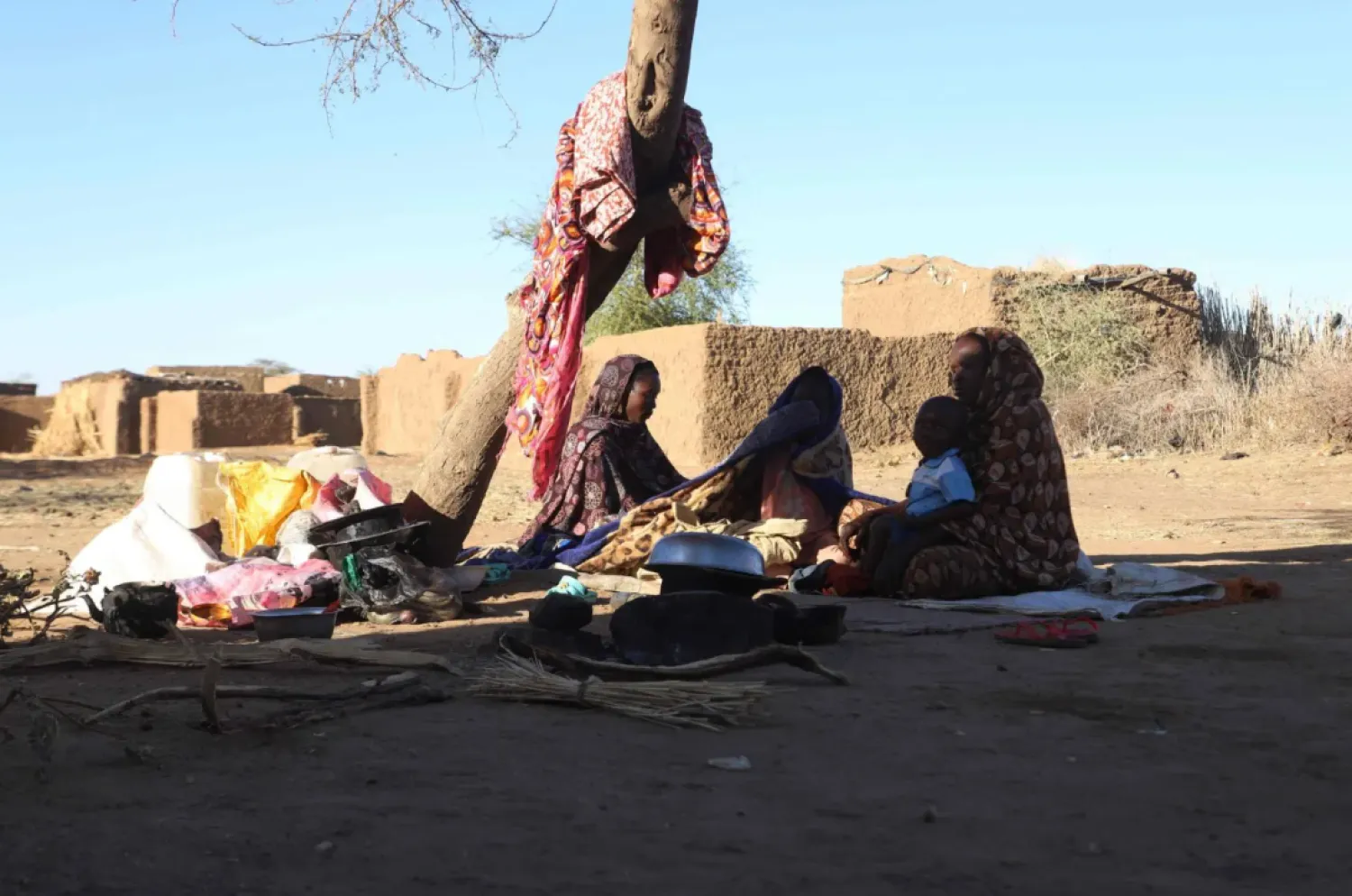


Atrocities in Sudan's El-Fasher were 'Preventable Human Rights Catastrophe'

Sudanese displaced people who left El Fasher after its fall, sit in the shade in Tawila at the Rwanda camp reception point on December 17, 2025. (Photo by AFP)
TT

Atrocities in Sudan's El-Fasher were 'Preventable Human Rights Catastrophe'

Sudanese displaced people who left El Fasher after its fall, sit in the shade in Tawila at the Rwanda camp reception point on December 17, 2025. (Photo by AFP)

The atrocities unleashed on El-Fasher in Sudan's Darfur region last October were a "preventable human rights catastrophe", the United Nations said Monday, warning they now risked being repeated in the neighbouring Kordofan region.

"My office sounded the alarm about the risk of mass atrocities in the besieged city of El-Fasher for more than a year ... but our warnings were ignored," UN rights chief Volker Turk told the Human Rights Council in Geneva.

He added that he was now "extremely concerned that these violations and abuses may be repeated in the Kordofan region".


Arab League Condemns Israel's Decisions to Alter Legal, Administrative Status of West Bank

A general view shows the opening session of the meeting of Arab foreign ministers at the Arab League Headquarters (Reuters)
TT

Arab League Condemns Israel's Decisions to Alter Legal, Administrative Status of West Bank

A general view shows the opening session of the meeting of Arab foreign ministers at the Arab League Headquarters (Reuters)

The General Secretariat of the Arab League strongly condemned decisions by Israeli occupation authorities to impose fundamental changes on the legal and administrative status of the occupied Palestinian territories, particularly in the West Bank, describing them as a dangerous escalation and a flagrant violation of international law, international legitimacy resolutions, and signed agreements, SPA reported.

In a statement, the Arab League said the measures include facilitating the confiscation of private Palestinian property and transferring planning and licensing authorities in the city of Hebron and the area surrounding the Ibrahimi Mosque to occupation authorities.

It warned of the serious repercussions of these actions on the rights of the Palestinian people and on Islamic and Christian holy sites.

The statement reaffirmed the Arab League’s firm support for the legitimate rights of the Palestinian people, foremost among them the establishment of their independent state on the June 4, 1967 borders, with East Jerusalem as its capital.


UN: 53 Migrants Dead or Missing in Shipwreck Off Libya

(FILES) Migrants sit on board a RHIB (Rigid inflatable boat) after being evacuated by crew members of the “Ocean Viking” rescue ship from the oil tanker the 'Maridive 703' in the search-and-rescue zone of the international waters between Malta and Tunisia, on December 31, 2025. (Photo by Sameer Al-DOUMY / AFP)
TT

UN: 53 Migrants Dead or Missing in Shipwreck Off Libya

(FILES) Migrants sit on board a RHIB (Rigid inflatable boat) after being evacuated by crew members of the “Ocean Viking” rescue ship from the oil tanker the 'Maridive 703' in the search-and-rescue zone of the international waters between Malta and Tunisia, on December 31, 2025. (Photo by Sameer Al-DOUMY / AFP)

The UN migration agency on Monday said 53 people were dead or missing after a boat capsized in the Mediterranean Sea off the Libyan coast. Only two survivors were rescued.

The International Organization for Migration said the boat overturned north of Zuwara on Friday.

"Only two Nigerian women were rescued during a search-and-rescue operation by Libyan authorities," the IOM said in a statement, adding that one of the survivors said she lost her husband and the other said "she lost her two babies in the tragedy.”

According to AFP, the IOM said its teams provided the two survivors with emergency medical care upon disembarkation.

"According to survivor accounts, the boat -- carrying migrants and refugees of African nationalities departed from Al-Zawiya, Libya, at around 11:00 pm on February 5. Approximately six hours later, it capsized after taking on water," the agency said.

"IOM mourns the loss of life in yet another deadly incident along the Central Mediterranean route."

The Geneva-based agency said trafficking and smuggling networks were exploiting migrants along the route from north Africa to southern Europe, profiting from dangerous crossings in unseaworthy boats while exposing people to "severe abuse.”

It called for stronger international cooperation to tackle the networks, alongside safe and regular migration pathways to reduce risks and save lives.