US Economy Shrinks for a 2nd Quarter, Raising Recession Fear

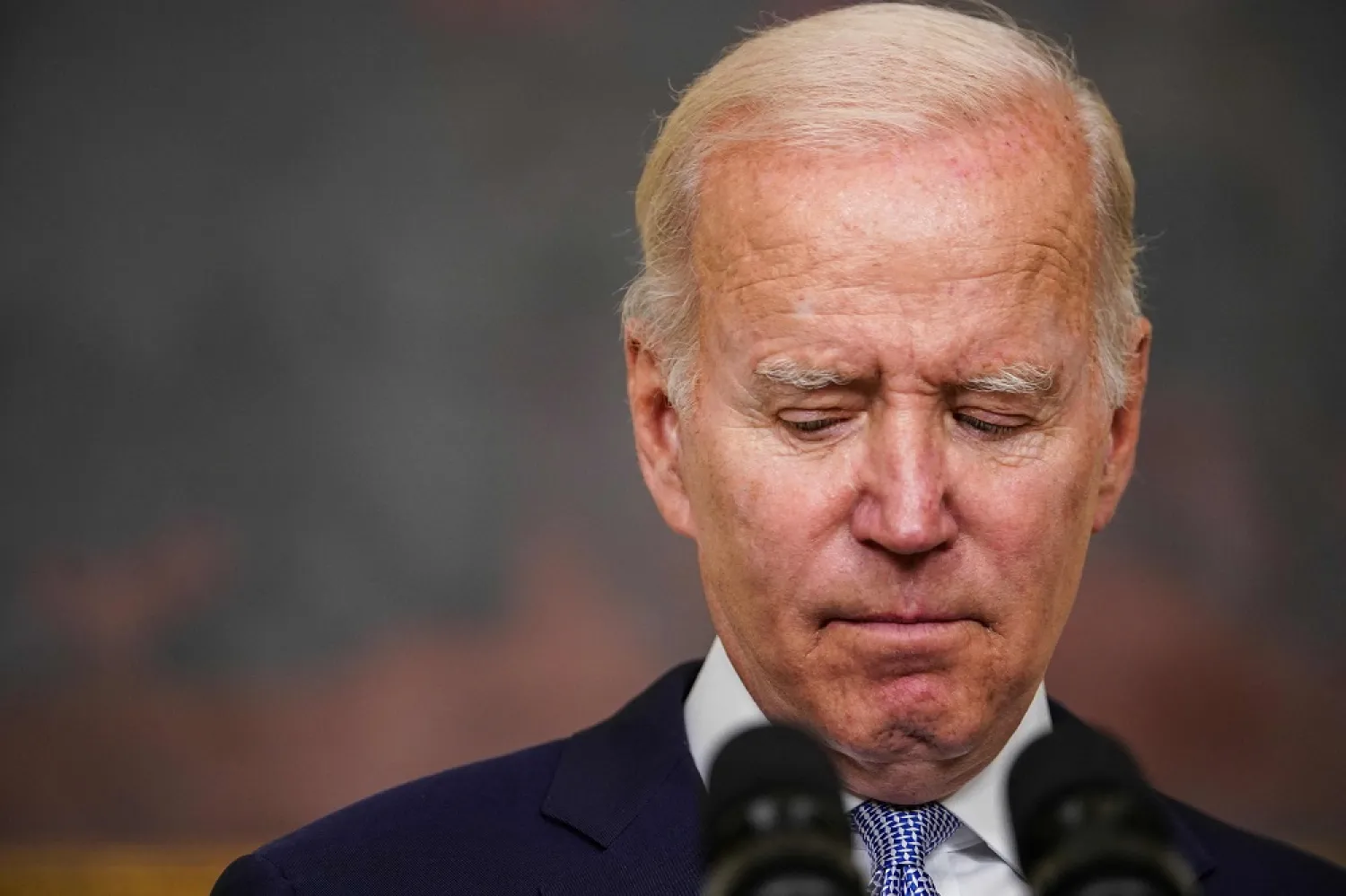
US President Joe Biden speaks about the Inflation Reduction Act of 2022 in the State Dining Room of the White House in Washington, DC, on July 28, 2022. (AFP)
TT

US Economy Shrinks for a 2nd Quarter, Raising Recession Fear

US President Joe Biden speaks about the Inflation Reduction Act of 2022 in the State Dining Room of the White House in Washington, DC, on July 28, 2022. (AFP)

The US economy shrank from April through June for a second straight quarter, contracting at a 0.9% annual pace and raising fears that the nation may be approaching a recession.

The decline that the Commerce Department reported Thursday in the gross domestic product — the broadest gauge of the economy — followed a 1.6% annual drop from January through March. Consecutive quarters of falling GDP constitute one informal, though not definitive, indicator of a recession.

The GDP report for last quarter pointed to weakness across the economy. Consumer spending slowed as Americans bought fewer goods. Business investment fell. Inventories tumbled as businesses slowed their restocking of shelves, shedding 2 percentage points from GDP.

Higher interest rates, a consequence of the Federal Reserve's series of rate hikes, clobbered home construction, which shrank at a 14% annual rate. Government spending dropped, too.

The report comes at a critical time. Consumers and businesses have been struggling under the weight of punishing inflation and higher borrowing costs. On Wednesday, the Fed raised its benchmark interest rate by a sizable three-quarters of a point for a second straight time in its push to conquer the worst inflation outbreak in four decades.

The Fed is hoping to achieve a notoriously difficult "soft landing": An economic slowdown that manages to rein in rocketing prices without triggering a recession.

Apart from the United States, the global economy as a whole is also grappling with high inflation and weakening growth, especially after Russia's invasion of Ukraine sent energy and food prices soaring. Europe, highly dependent on Russian natural gas, appears especially vulnerable to a recession.

In the United States, the inflation surge and fear of a recession have eroded consumer confidence and stirred public anxiety about the economy, which is sending frustratingly mixed signals. And with the November midterm elections nearing, Americans’ discontent has diminished President Joe Biden’s public approval ratings and could increase the likelihood that the Democrats will lose control of the House and Senate.

Fed Chair Jerome Powell and many economists have said that while the economy is showing some weakening, they doubt it’s in recession. Many of them point, in particular, to a still-robust labor market, with 11 million job openings and an uncommonly low 3.6% unemployment rate, to suggest that a recession, if one does occur, is still a way off.

"The back-to-back contraction of GDP will feed the debate about whether the US is in, or soon headed for, a recession," said Sal Guatieri, senior economist at BMO Capital Markets. "The fact that the economy created 2.7 million payrolls in the first half of the year would seem to argue against an official recession call for now."

Still, Guatieri said, "the economy has quickly lost steam in the face of four-decade high inflation, rapidly rising borrowing costs and a general tightening in financial conditions."

In the meantime, Congress may be moving toward approving action to fight inflation under an agreement announced Wednesday by Senate Majority Leader Chuck Schumer and Sen. Joe Manchin, a West Virginia Democrat.

Among other things, the measure would allow Medicare to negotiate prescription drug prices with pharmaceutical companies, and the new revenue would be used to lower costs for seniors on medications. The measure would also extend subsidies that were provided early in the pandemic to help some Americans who buy health insurance on their own.

In the wake of Thursday’s second straight negative GDP report, Biden downplayed the news, pointing to continued low unemployment and strong hiring.

"Coming off of last year’s historic economic growth — and regaining all the private sector jobs lost during the pandemic crisis — it’s no surprise that the economy is slowing down as the Federal Reserve acts to bring down inflation," the president said in a statement. "But even as we face historic global challenges, we are on the right path and we will come through this transition stronger and more secure."

The government’s first of three estimates of GDP for the April-June quarter marks a drastic weakening from the 5.7% growth the economy achieved last year. That was the fastest calendar-year expansion since 1984, reflecting how vigorously the economy roared back from the brief but brutal pandemic recession of 2020.

But since then, the combination of mounting prices and higher borrowing costs have taken a toll. The Labor Department’s consumer price index skyrocketed 9.1% in June from a year earlier, a pace not matched since 1981. And despite widespread pay raises, prices are surging faster than wages. In June, average hourly earnings, after adjusting for inflation, slid 3.6% from a year earlier, the 15th straight year-over-year drop.

Americans are still spending, though more tepidly. Thursday's report showed that consumer spending rose at a 1% annual pace from April through June, down from 1.8% in the first quarter and 2.5% in the final three months of 2021.

Spending on goods like appliances and furniture, which had soared while Americans were sheltering at home early in the pandemic, dropped at a 4.4% rate last quarter. Bit spending on services like airline trips and dinners out rose at a 4.1% rate, indicating that millions of consumers are venturing out more.

Before accounting for surging prices, the economy actually grew at a 7.8% annual pace in the April-June quarter. But inflation wiped out that gain and then some and produced a negative GDP number.

Against that backdrop, Americans are losing confidence. Their assessment of economic conditions six months from now has reached its lowest point since 2013, according to the Conference Board, a research group.

Recession risks have been growing as the Fed’s policymakers have pursued a campaign of rate hikes that will likely extend into 2023. The Fed’s hikes have already led to higher rates on credit cards and auto loans and to a doubling of the average rate on a 30-year fixed mortgage in the past year, to 5.5. Home sales, which are especially sensitive to interest rate changes, have tumbled.

Even with the economy recording a second straight quarter of negative GDP, many economists do not regard it as constituting a recession. The definition of recession that is most widely accepted is the one determined by the National Bureau of Economic Research, a group of economists whose Business Cycle Dating Committee defines a recession as "a significant decline in economic activity that is spread across the economy and lasts more than a few months."

The committee assesses a range of factors before publicly declaring the death of an economic expansion and the birth of a recession — and it often does so well after the fact.

"If we aren’t yet in a recession, we soon will be," said Joshua Shapiro, chief US economist for the economic consulting firm Maria Fiorini Ramirez Inc. "An economy rapidly losing momentum combined with aggressive monetary tightening is not a recipe for a soft landing or any other type of happy ending."


Iraq Oil Output Exceeds 5 million bpd

Majnoon oil field near the Iraqi city of Basra (Reuters)
TT

Iraq Oil Output Exceeds 5 million bpd

Majnoon oil field near the Iraqi city of Basra (Reuters)

Iraq produces more than 5 million barrels of oil per day (bpd), Oil Minister Basim Mohammed told state news agency INA on Saturday.

According to Reuters, Iraq is pushing for a higher OPEC production quota as the economic fallout from the Iran war and new investment by oil majors increase pressure on Baghdad to boost output, potentially putting it at odds with the producer group.

The conflict has hit Iraq particularly hard, forcing major export cuts and depriving the state of oil revenue, which accounted for 88% of government income last year.


IMF: Any Slowdown in AI-driven Growth Would be Factor for Central Banks

IMF Managing Director Kristalina Georgieva speaks during the Annual Meetings Plenary at the Annual Meetings of the International Monetary Fund (IMF) and the World Bank Group (WBG) at the Queen Sirikit National Convention Center (QSNCC) in Bangkok on October 16, 2026. (Photo by Lillian SUWANRUMPHA / AFP)
TT

IMF: Any Slowdown in AI-driven Growth Would be Factor for Central Banks

IMF Managing Director Kristalina Georgieva speaks during the Annual Meetings Plenary at the Annual Meetings of the International Monetary Fund (IMF) and the World Bank Group (WBG) at the Queen Sirikit National Convention Center (QSNCC) in Bangkok on October 16, 2026. (Photo by Lillian SUWANRUMPHA / AFP)

Central bankers around the world would need to consider any slowdown in AI-driven growth as they assess steps in their fight against inflation, International Monetary Fund Managing Director Kristalina Georgieva said on Friday.

Georgieva said concerns about dependence on the AI investment boom and high valuations were impacting markets around the world.

"Things are going up and down, and this is likely to continue," she told an audience at IMF headquarters in Washington, adding that the volatility would complicate the job of central banks at a time when risks to price stability had been growing.

A steep rout in technology stocks on Thursday rippled through markets on fears that ⁠the Democrats' victory ⁠in the US midterm elections would increase regulatory scrutiny of AI and slow the data center build-out, sending investors to the safety of bonds.

The political jitters are hitting an AI trade already on shaky footing due to worry about return on massive spending on AI-related infrastructure, with the meltdown spurring margin calls and spooking retail investors and hedge ⁠funds alike.

Georgieva said the AI investment boom was lifting growth in some countries, helping to offset a negative oil-supply shock triggered by the war in the Middle East, but it was also adding to inflationary pressures and financial stability concerns.

The IMF last month flagged significant growth and financial stability risks from a potential ending of the AI investment boom, among other factors, including a prolonged Middle East war. At the time, it warned that a steep drop in AI investment could lead to a sharp fall in asset prices, ultimately cutting global GDP ⁠by 1.1% ⁠by 2028, including a 1.8% drop in US output.

Georgieva did not repeat the downside forecast on Friday, but acknowledged the recent market volatility.

"Should there be a slowdown in the AI-driven growth impulse, it would need to be factored in as central banks assess the necessary steps in the fight against stubborn inflation," she said.

Democrats are planning to unleash a flood of new legislation targeting artificial intelligence systems and data-center development when they take control of the US Congress in January, Reuters reported on Friday, citing congressional aides and advocates.

That would mark a sharp shift from the Republican-led Congress, where lawmakers largely focused on promoting AI development and declined to pass legislation restricting the technology.


World Food Prices Dip in October, but Remain Higher Than a Year Ago

A worker carries loaves of bread for sale at a bakery in the capital city of Cairo, Egypt November 4, 2026. (Reuters)
TT

World Food Prices Dip in October, but Remain Higher Than a Year Ago

A worker carries loaves of bread for sale at a bakery in the capital city of Cairo, Egypt November 4, 2026. (Reuters)

World food prices edged lower in October as weaker import demand contributed to monthly declines in cereal, dairy and meat prices, but were still nearly 6% higher than a year earlier, the United Nations' Food and Agriculture Organization said on Friday.

The FAO Food Price Index, which tracks monthly changes in international prices for a basket of food commodities, ‌averaged 133.9 points ‌in October, down from a revised ‌135.6 ⁠in September.

The index ⁠was 5.9% higher than a year earlier, but remained 16.4% below its March 2022 peak.

FAO's cereal price index fell 4.5% from September and was 12.6% lower than a year ago, as wheat and maize quotations declined. Wheat prices eased on weak import demand ⁠and improved production prospects, especially in Argentina.

"Expectations of ‌easing constraints on Black ‌Sea export flows added to the downward pressure on prices, ‌although continued disruptions to Black Sea logistics limited the decline," ‌FAO said in a statement.

Maize prices also eased after reaching a three-year high in September, pressured by the US harvest, expectations of ample supplies in South America and renewed ‌prospects of easing tensions in the Black Sea region.

Vegetable oil prices edged up 0.3%, ⁠as ⁠higher soybean and sunflower oil prices more than offset a fall in rapeseed oil prices.

Sugar prices rose 6.6%, their fourth straight monthly increase, to the highest level since December 2024, after rainfall disrupted harvesting in Brazil. They were now 28.8% above a year ago.

The dairy index fell 1.1%, as lower butter and cheese prices linked to ample supplies and subdued demand outweighed gains in milk powder.

The meat index declined 1.2%, while still slightly above its year-earlier level, as ovine and bovine meat prices fell.