


A Year on, Iran’s Raisi Faces Economy in Trouble

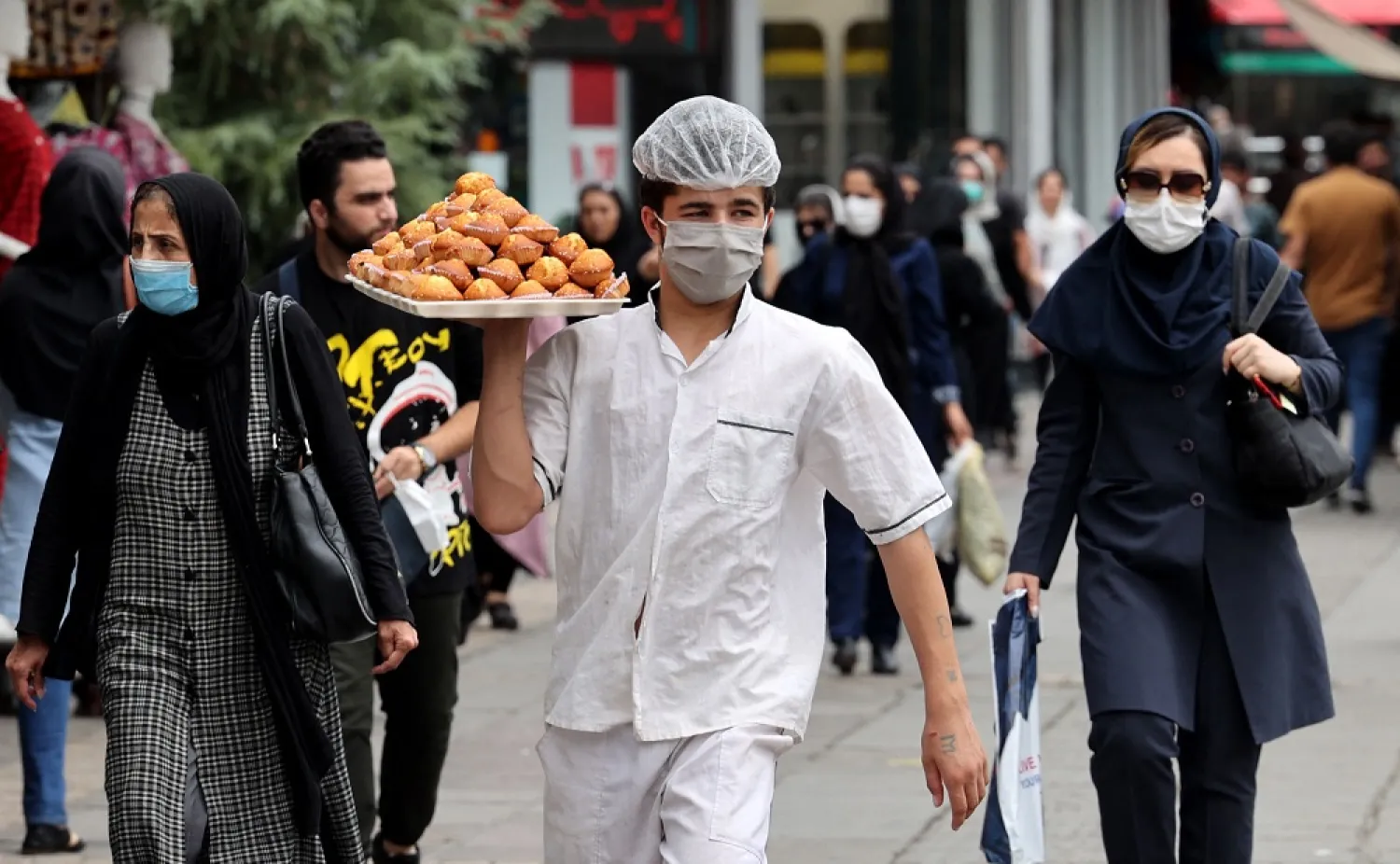
Iranians walk at Valiasr square in the capital Tehran, on July 31 2022. (AFP)
TT

A Year on, Iran’s Raisi Faces Economy in Trouble

Iranians walk at Valiasr square in the capital Tehran, on July 31 2022. (AFP)

A year after Iran's President Ebrahim Raisi took power, his government has curbed the Covid pandemic but faces a sharp downturn of the sanctions-hit economy as nuclear talks remain stalled.

Having pledged to help especially the poor, the ultraconservative cleric now faces runaway consumer prices that have sparked protests.

Raisi was elected in June last year in a ballot for which less than half of voters turned up, after his major rivals had been disqualified by electoral bodies.

He was inaugurated on August 3 by the supreme leader, Ali Khamenei, and sworn in two days later as head of government.

When he formed his cabinet, Raisi named his two top priorities: controlling the region's worst Covid outbreak, and turning around the battered economy.

Iran's vaccination campaign, long hampered by US sanctions, was massively stepped up using Chinese and Russian drugs.

For Hamidreza Taraqi, a top official in the Islamic Coalition Party, part of the conservative alliance backing the Raisi, the government has "succeeded in curbing the coronavirus and in eliminating its effects".

The UN World Health Organization says more than 58 million Iranians, or some 70 percent of the population, have now been fully vaccinated.

"Raisi's government did oversee widespread coronavirus vaccinations after the state reversed course and approved foreign vaccine imports," said Henry Rome of the US-based consultancy Eurasia Group.

But on the economic front, Raisi's record is more mixed as Iran remains hit by biting sanctions that keep it isolated from global financial systems.

Nuclear talks
Iran had hoped for greater prosperity after its 2015 nuclear deal with major powers gave it sanctions relief in exchange for curbs on its atomic program.

But former US president Donald Trump in 2018 unilaterally withdrew Washington from the agreement and reimposed a punishing sanctions regime.

The economic pain has deepened popular distrust in Iran toward the government, both under the previous president, the moderate Hassan Rouhani, and under Raisi.

The darker mood, say analysts, was reflected in the record abstention rate at last year's election, which came after the repression of protest movements, especially from December 2017 and again in November 2019.

Iran had returned to economic growth under Rouhani after the 2018-2019 recession.

But, hit by Trump's sanctions which dramatically curbed crucial oil exports, Iran's GDP per capita is now not expected to recover to its pre-crisis level until next year, according to the International Monetary Fund.

'Social turmoil'

In April 2021, with President Joe Biden in the White House, talks on rescuing the nuclear accord began in Vienna.

The negotiations resumed in November 2021 after a pause around Iran's presidential polls but have yet to produce a breakthrough, while the Raisi government faces a budget deficit that economists consider abysmal.

Inflation, which has been eroding household purchasing power for years, in June reached 54 percent from a year earlier, according to the latest official data.

And the rial currency, which had recovered somewhat early this year on hopes of a deal in the nuclear talks, has since resumed its rapid descent, and reached a new low in June against the dollar.

Then in May, the government started to lift state subsidies on flour and to raise prices on food staples such as oil and dairy products -- measures that especially penalized the poor whom Raisi had championed.

"The country's economic horizon is far from clear... and economists predict we will face more rising prices," Mehdi Rahmanian, editor of the reformist newspaper Shargh, told AFP.

The rising cost of living has driven protests in several Iranian cities in recent months.

Much now depends on how the nuclear talks go, said Rome.

"If the nuclear negotiations collapse, as appears likely," he said, "Iran will likely face more significant economic and social turmoil."



Top Trump Iran Negotiator Says Visits US Aircraft Carrier in Middle East

US Special Envoy Steve Witkoff delivers a press conference upon the signing of the declaration on deploying post-ceasefire force in Ukraine, during the so-called "Coalition of the Willing" summit, at the Elysee Palace in Paris, France, January 6, 2026. (Reuters)
TT

Top Trump Iran Negotiator Says Visits US Aircraft Carrier in Middle East

US Special Envoy Steve Witkoff delivers a press conference upon the signing of the declaration on deploying post-ceasefire force in Ukraine, during the so-called "Coalition of the Willing" summit, at the Elysee Palace in Paris, France, January 6, 2026. (Reuters)

US President Donald Trump's lead Iran negotiator Steve Witkoff on Saturday said he visited the USS Abraham Lincoln aircraft carrier currently in the Arabian Sea, with Washington and Tehran due to hold further talks soon.

"Today, Adm. Brad Cooper, Commander of US Naval Forces Central Command, Jared Kushner, and I met with the brave sailors and Marines aboard the USS Abraham Lincoln, her strike group, and Carrier Air Wing 9 who are keeping us safe and upholding President Trump's message of peace through strength," said Witkoff in a social media post.

Iranian Foreign Minister Abbas Araghchi said on Saturday he hoped talks with the United States would resume soon, while reiterating Tehran's red lines and warning against any American attack.


Israel’s Netanyahu Expected to Meet Trump in US on Wednesday and Discuss Iran

Israeli Prime Minister Benjamin Netanyahu delivers a speech during a special session to mark the 77th anniversary of the Knesset's establishment and the 60th anniversary of the dedication of the current building at the Knesset, the Israeli parliament, in Jerusalem, 02 February 2026. (EPA)
TT

Israel’s Netanyahu Expected to Meet Trump in US on Wednesday and Discuss Iran

Israeli Prime Minister Benjamin Netanyahu delivers a speech during a special session to mark the 77th anniversary of the Knesset's establishment and the 60th anniversary of the dedication of the current building at the Knesset, the Israeli parliament, in Jerusalem, 02 February 2026. (EPA)

Israeli Prime Minister Benjamin Netanyahu is expected to meet US President Donald Trump on Wednesday in Washington, where they will discuss negotiations with Iran, Netanyahu's office said on Saturday.

Iranian and US officials held indirect nuclear ‌talks in the ‌Omani capital ‌Muscat ⁠on Friday. ‌Both sides said more talks were expected to be held again soon.

A regional diplomat briefed by Tehran on the talks told Reuters Iran insisted ⁠on its "right to enrich uranium" ‌during the negotiations with ‍the US, ‍and that Tehran's missile capabilities ‍were not raised in the discussions.

Iranian officials have ruled out putting Iran's missiles - one of the largest such arsenals in the region - up ⁠for discussion, and have said Tehran wants recognition of its right to enrich uranium.

"The Prime Minister believes that any negotiations must include limiting ballistic missiles and halting support for the Iranian axis," Netanyahu's office said in a ‌statement.


Italy FM Rules Out Joining Trump’s ‘Board of Peace’

Italy's Minister for Foreign Affairs Antonio Tajani speaks to the press during the EPP Leaders’ meeting, in Zagreb, Croatia, 30 January 2026. (EPA)
TT

Italy FM Rules Out Joining Trump’s ‘Board of Peace’

Italy's Minister for Foreign Affairs Antonio Tajani speaks to the press during the EPP Leaders’ meeting, in Zagreb, Croatia, 30 January 2026. (EPA)

Italy will not take part in US President Donald Trump's "Board of Peace", Italian Foreign Minister Antonio Tajani said Saturday, citing "insurmountable" constitutional issues.

Trump launched his "Board of Peace" at the World Economic Forum in Davos in January and some 19 countries have signed its founding charter.

But Italy's constitution bars the country from joining an organization led by a single foreign leader.

Prime Minister Giorgia Meloni, a Trump ally, last month noted "constitutional problems" with joining, but suggested Trump could perhaps reopen the framework "to meet the needs not only of Italy, but also of other European countries".

Tajani appeared Saturday to rule that out.

"We cannot participate in the Board of Peace because there is a constitutional limit," he told the ANSA news agency.

"This is insurmountable from a legal standpoint," he said, the day after meeting US Secretary of State Marco Rubio and US Vice President JD Vance at the Olympics in Milan.

Although originally meant to oversee Gaza's rebuilding, the board's charter does not limit its role to the Palestinian territory and appears to want to rival the United Nations.