


Saudi Arabia: Stability of Oil Market Pivotal to Kingdom’s Energy Strategy

King Salman chairs the cabinet meeting in Jeddah on Tuesday. (SPA)
TT

Saudi Arabia: Stability of Oil Market Pivotal to Kingdom’s Energy Strategy

King Salman chairs the cabinet meeting in Jeddah on Tuesday. (SPA)

The Saudi government stressed on Tuesday the great need to commit to oil production in line with the agreements reached by OPEC and OPEC+.

Custodian of the Two Holy Mosques King Salman bin Abdulaziz chaired the cabinet meeting that was held in Jeddah.

The government tackled the outcomes of 31st OPEC and non-OPEC Ministerial Meeting, including a decision to adjust the production level for September. The meetings also reiterated the critical importance of adhering to full conformity.

The stability and balance of the oil market are one of the pillars of Saudi Arabia’s energy strategy, given that oil is an important element in supporting the growth of the global economy. This is reflected in the Kingdom’s pivotal role in establishing and maintaining the OPEC+ agreement through its initiatives to accelerate the stability of markets and the sustainability of its supplies.

King Salman briefed the ministers on the message he received from the president of Zambia that tackled bilateral relations and ways to boost them.

The ministers reviewed the latest regional and international developments. They stressed the Kingdom’s solidarity with the brotherly Palestinian people, calling on the international community to assume its responsibilities and stop the repeated Israeli violations and attacks against the people.

It must also exert the necessary efforts to resolve the Palestinian-Israeli conflict.

The ministers underlined the Kingdom’s firm support for everything that ensures the security and stability of Yemen and meets the aspirations of its people.

It praised United Nations efforts in boosting the commitment to the nationwide truce in line with the Kingdom’s March 2021 initiative aimed at ending the Yemeni conflict and reaching a comprehensive political solution.

The cabinet underlined Saudi Arabia’s remarks at the Tenth Review Conference of the Nuclear Non-Proliferation Treaty (NPT) where it expressed its support for international efforts aimed at preventing Iran from possessing nuclear weapons.

It also highlighted the importance of the UN General Assembly in calling on non-party states to accede to the Treaty, and placing all their nuclear facilities under the comprehensive safeguards system of the International Atomic Energy Agency (IAEA).

Furthermore, the cabinet hoped that the upcoming Riyadh International Humanitarian Forum will help reach innovative practical solutions that would provide humanitarian work according to the highest standards adopted to achieve sustainable development goals.

Set for February, the forum will be organized by the King Salman Humanitarian Aid and Relief Center (KSrelief) in partnership with the UN and its organizations.
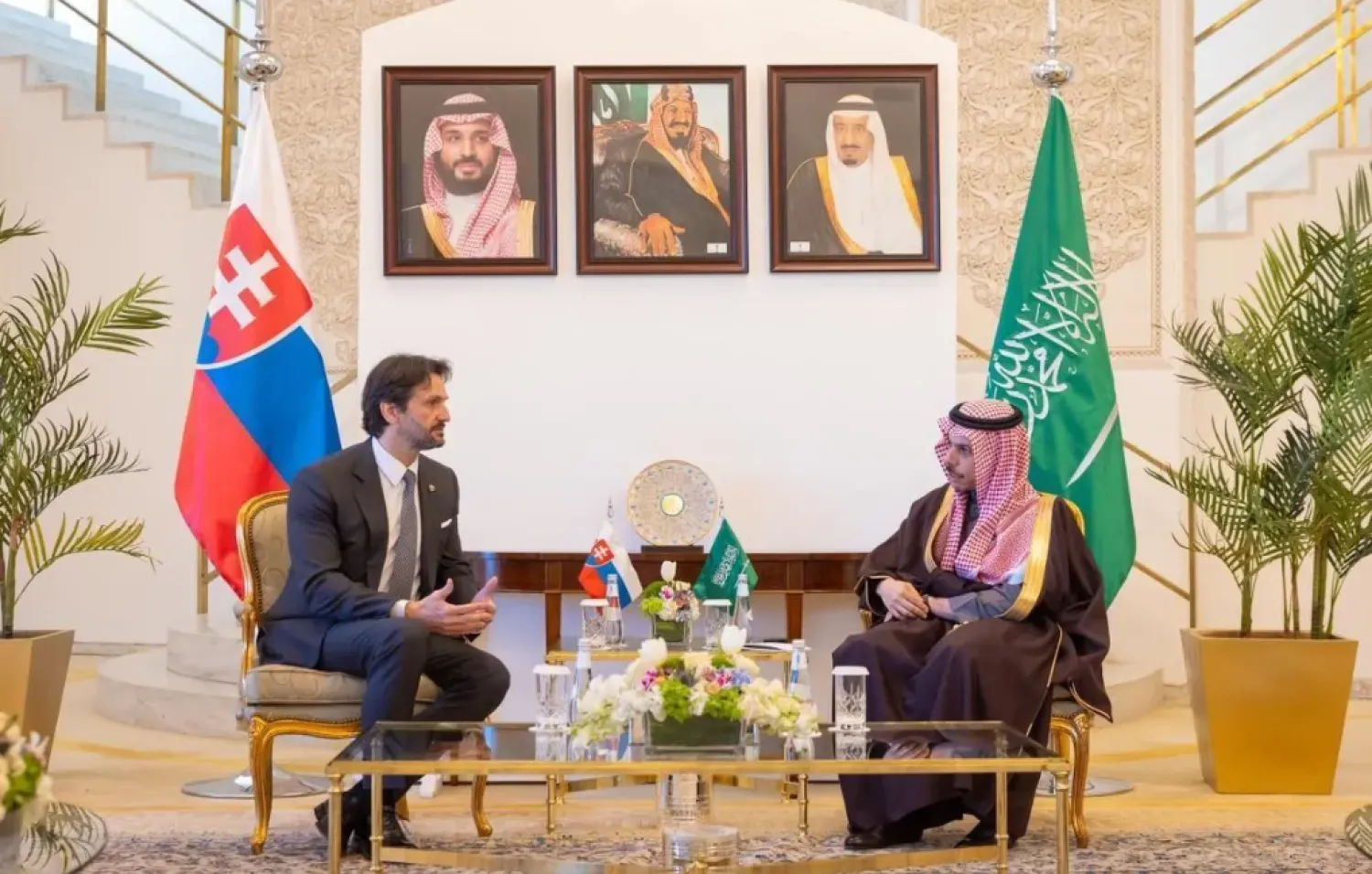



Saudi Foreign Minister, Slovak Deputy Prime Minister Sign General Cooperation Agreement

The two sides signed a general cooperation agreement aimed at enhancing cooperation and mutual understanding across various fields - SPA
TT

Saudi Foreign Minister, Slovak Deputy Prime Minister Sign General Cooperation Agreement

The two sides signed a general cooperation agreement aimed at enhancing cooperation and mutual understanding across various fields - SPA

Saudi Minister of Foreign Affairs Prince Faisal bin Farhan bin Abdullah met in Riyadh Monday Deputy Prime Minister and Minister of Defense of the Slovak Republic Robert Kaliňák.

They reviewed ways to strengthen cooperation between the two countries in a manner that serves their mutual interests and discussed regional and international developments, SPA reported.

The two sides signed a general cooperation agreement between the Government of the Kingdom of Saudi Arabia and the Government of the Slovak Republic, aimed at enhancing cooperation and mutual understanding across various fields.


Khalid bin Salman Visits Saudi Interior Ministry Pavilion at World Defense Show

Prince Khalid was briefed on the ministry’s operational capabilities to enhance decision-making. SPA
TT

Khalid bin Salman Visits Saudi Interior Ministry Pavilion at World Defense Show

Prince Khalid was briefed on the ministry’s operational capabilities to enhance decision-making. SPA

Saudi Minister of Defense Prince Khalid bin Salman bin Abdulaziz visited the Ministry of Interior's pavilion at the World Defense Show, held in Riyadh.

Prince Khalid was briefed on the ministry’s operational capabilities to enhance decision-making, command and control, and predictive intelligence, all aimed at protecting residents across the Kingdom.

During his tour, he explored how the ministry is advancing proactive security and efficient emergency management through innovative technical solutions.

The tour also underscored the role of the unified security operations centers (911) in the national response system and the ministry's commitment to international partnerships in security and smart systems.


OIC Condemns Israeli Cabinet's Legalization of Settlements

 Israeli soldier points his weapon towards the camera, during a weekly settlers' tour in Hebron, in the Israeli-occupied West Bank, February 7, 2026. (Reuters)
Israeli soldier points his weapon towards the camera, during a weekly settlers' tour in Hebron, in the Israeli-occupied West Bank, February 7, 2026. (Reuters)
TT

OIC Condemns Israeli Cabinet's Legalization of Settlements

 Israeli soldier points his weapon towards the camera, during a weekly settlers' tour in Hebron, in the Israeli-occupied West Bank, February 7, 2026. (Reuters)
Israeli soldier points his weapon towards the camera, during a weekly settlers' tour in Hebron, in the Israeli-occupied West Bank, February 7, 2026. (Reuters)

The General Secretariat of the Organization of Islamic Cooperation (OIC) condemned on Monday the Israeli cabinet’s approval of measures that aim to deepen Israeli control over the occupied West Bank and weaken the already limited powers of the Palestinian Authority.

The OIC said Israel’s “colonial settlement policy constitutes a war crime and a flagrant violation of international law and relevant United Nations resolutions, foremost among which is Security Council Resolution 2334 and the legal opinion issued by the International Court of Justice.”

It renewed its call on the international community, particularly the Security Council, “to shoulder its responsibilities and take immediate action to put an end to all crimes and violations committed by Israel against the Palestinian people, their land, and their holy sites.”

The office of Israeli far-right Finance Minister Bezalel Smotrich in a statement announced the decisions that would make it easier for Jewish settlers to force Palestinians to give up land, adding that “we will continue to bury the idea of a Palestinian state.”

Palestinian President Mahmoud Abbas in a statement called the decision “dangerous” and an “open Israeli attempt to legalize settlement expansion” and land confiscation. He called for the United States and UN Security Council to intervene immediately.

The decision was announced a few days before Israeli Prime Minister Benjamin Netanyahu is expected to meet with US President Donald Trump in Washington about Iran and other matters.

The measures announced Sunday include canceling a prohibition on sales of West Bank land to Israeli Jews, declassifying West Bank land registry records to ease land acquisition, transferring construction planning at religious and other sensitive sites in the volatile city of Hebron to Israeli authorities, and allowing Israeli enforcement of environmental and archaeological matters in Palestinian-administered areas.

The measures also would revive a committee that would allow the state of Israel to make “proactive” land purchases in the territory — “a step intended to guarantee land reserves for settlement for generations to come.”