Vietnam’s Co To Island Bans Plastic Products

Views from a beachside restaurant are seen at the Mango Bay resort in Phu Quoc island, Vietnam, June 13, 2020. REUTERS/James Pearson
TT

Vietnam’s Co To Island Bans Plastic Products

Views from a beachside restaurant are seen at the Mango Bay resort in Phu Quoc island, Vietnam, June 13, 2020. REUTERS/James Pearson

In a major ecological boost, Co To island in the northern province of Quang Ninh, Vietnam, is set to stop visitors from bringing in plastic bags and bottles.

As of September 1, visitors will be required to leave plastic behind before they board ferries at Van Don Wharf to visit the island, reported the German News Agency.

Nguyen Viet Dung, chairman of the district, said the ban would be trialed for several months before it becomes official. With the target of turning the island into an eco-tourism destination and making tourism sustainable, authorities have in recent years called on local people to limit the use of plastic products and opt for environment-friendly replacements.

The island district has yet to impose a ban on local residents using plastic products.

Situated around 80 kilometers from the mainland, Co To is world famous for its islets and lush forests and access used to be strictly controlled due to its proximity to the Chinese border.

Cu Lao Cham, or Cham Islands, a protected area treasured for its biosphere near Hoi An in central Vietnam, has prohibited visitors from bringing plastic bags since 2009.


New Road Lanes Open in Makkah to Ease Congestion, Aid Pilgrims

The expansion includes an additional 1.5-kilometer stretch on the Third Ring Road connecting the Prince Mutib intersection to the Grand Mosque intersection via the Prince Sultan intersection - SPA
TT

New Road Lanes Open in Makkah to Ease Congestion, Aid Pilgrims

The expansion includes an additional 1.5-kilometer stretch on the Third Ring Road connecting the Prince Mutib intersection to the Grand Mosque intersection via the Prince Sultan intersection - SPA

The Royal Commission for Makkah City and Holy Sites has opened traffic on several newly developed lanes along the Third Ring Road and Prince Saud Al Faisal Road, reducing travel times by more than 90%.

The expansion includes an additional 1.5-kilometer stretch on the Third Ring Road connecting the Prince Mutib intersection to the Grand Mosque intersection via the Prince Sultan intersection, SPA reported.

Traffic flow was also inaugurated on the final section of Prince Saud Al Faisal Road, linking the Prince Mohammed bin Salman axis to Abdulqadir Koshak Street through the Prince Naif bin Abdulaziz intersection.

These openings are part of integrated infrastructure projects designed to ease traffic congestion, improve road safety, and streamline access for residents, visitors, and pilgrims during the Hajj and Umrah seasons.


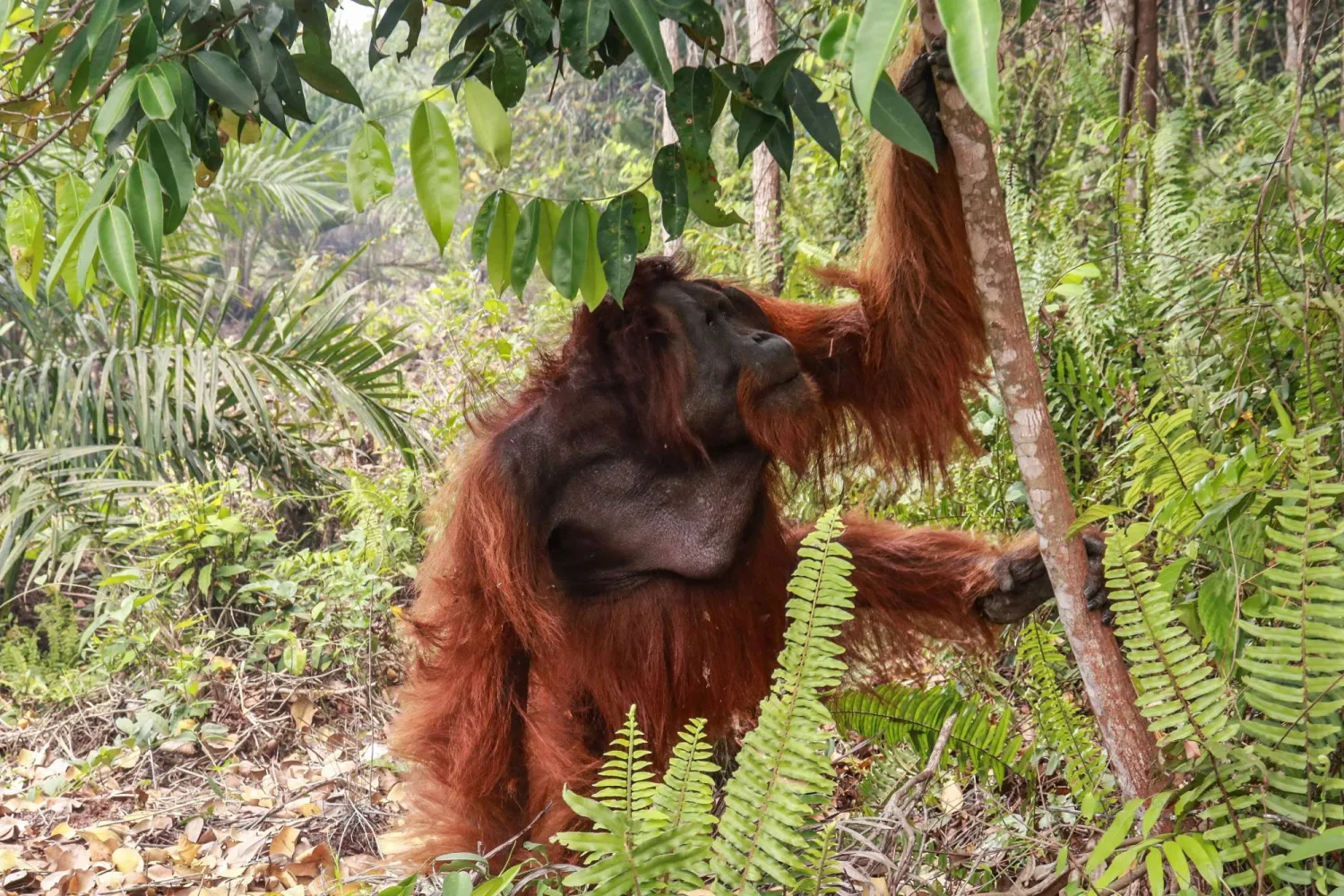
IUCN: Indonesia Fires Threatens Critically-endangered Orangutan

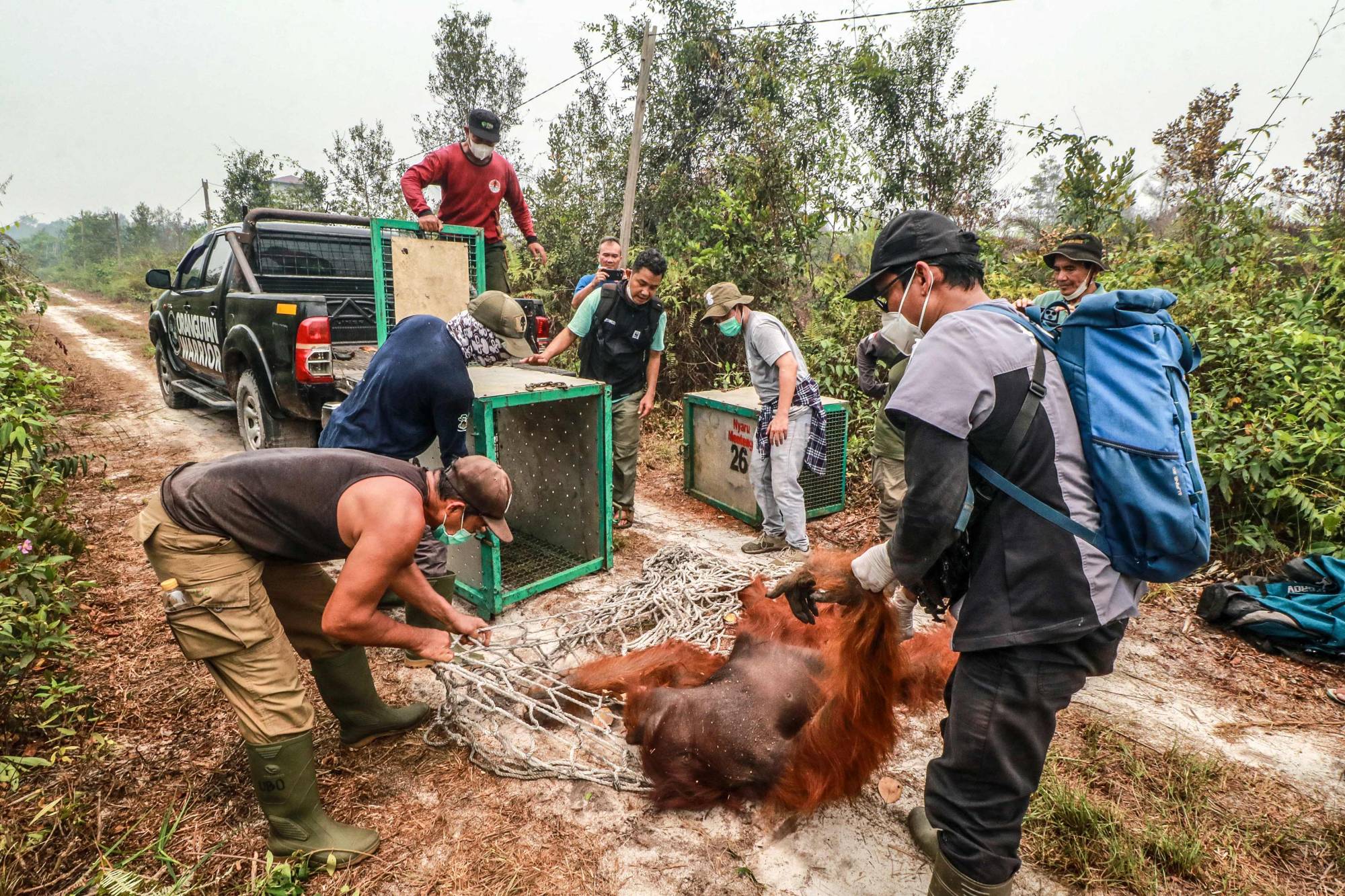
This handout image taken on September 18, 2026 and released on September 19 by Indonesia's Ministry of Forestry and International Animal Rescue Indonesia (YIARI) shows a mother orangutan and her baby being evacuated by joint team members from the West Kalimantan Natural Resources Conservation Agency (BKSDA) and YIARI after they were trapped by smoke from forest and land fires in a palm oil plantation area in Pelang village, Ketapang, West Kalimantan. (Photo by Handout / Yayasan Inisiasi Alam Rehabilitasi Indonesia (YIARI) / AFP)
TT

IUCN: Indonesia Fires Threatens Critically-endangered Orangutan

This handout image taken on September 18, 2026 and released on September 19 by Indonesia's Ministry of Forestry and International Animal Rescue Indonesia (YIARI) shows a mother orangutan and her baby being evacuated by joint team members from the West Kalimantan Natural Resources Conservation Agency (BKSDA) and YIARI after they were trapped by smoke from forest and land fires in a palm oil plantation area in Pelang village, Ketapang, West Kalimantan. (Photo by Handout / Yayasan Inisiasi Alam Rehabilitasi Indonesia (YIARI) / AFP)

Wildfires that tore through Indonesian Borneo's vast tropical forests have piled pressure on critically endangered Bornean orangutans, the International Union for Conservation of Nature (IUCN) said Saturday.

Indonesia has been battling fires for weeks in parts of Borneo and Sumatra, sending suffocating haze across the islands and neighboring Malaysia and Singapore.

Fires are currently burning within habitats containing 52 percent of Borneo's orangutan population, including 13 of the 20 largest remaining populations, it said.

"Fire and smoke exposure impose measurable physiological, behavioral and ecological costs on orangutans in peat forest habitats," the conservation network said, according to AFP.

During haze, orangutans show signs of fat breakdown despite eating more and resting more, suggesting elevated energy demands likely from an immune system forced to work harder, it said.

Wildfires have also been reported in the habitats of five gibbon species across Sumatra and Borneo, the conservation network said.

"Gibbons breathe the same smoke-laden air as the people living alongside them, and there is every reason to expect they suffer similar respiratory harm, on top of habitat loss and disruption to the behaviors that keep wild populations viable."

As of Tuesday, Indonesia had rescued 100 animals, including 53 orangutans, that were threatened by the blazes, a forestry ministry spokesman said.

Conservationists call on the authorities to go beyond first response and implement prevention measures.

"Emergency response must be followed by sustained investment in preventing future fires," Ronna Saab of Forum Konservasi Orangutan Indonesia (FORINA) said in a statement.

Those measures include "protecting and rewetting peatlands, addressing drainage and deforestation, and ensuring burned forests are protected from subsequent conversion and appropriately restored," Ronna said.

The Indonesian government said more than 202,000 hectares of land were burnt countrywide between January and July, the latest available data.

The Nusantara Atlas project has put the number at closer to 900,000 hectares between January and August.


7th Person Killed by Bear in Russian Region in a Month

FILE PHOTO: Buyan, a 15-year-old male Siberian brown bear, looks out from a pool inside an open-air cage at the Royev Ruchey Zoo in the Siberian city of Krasnoyarsk, Russia, May 15, 2015. REUTERS/Ilya Naymushin/File Photo
TT

7th Person Killed by Bear in Russian Region in a Month

FILE PHOTO: Buyan, a 15-year-old male Siberian brown bear, looks out from a pool inside an open-air cage at the Royev Ruchey Zoo in the Siberian city of Krasnoyarsk, Russia, May 15, 2015. REUTERS/Ilya Naymushin/File Photo

A Russian woman has been fatally mauled by a bear in her garden, the seventh such death in her Siberian region this month, state investigators said, amid a nationwide spate of killings that experts blame on climate change and human incompetence.

A video released by investigators in Siberia's Krasnoyarsk region some 3,000 km (1,864 miles) east of Moscow showed them walking through a wooded area and inspecting the corpse of the brown bear which carried out the attack.

The state TASS news agency said the bear had killed the 51-year-old woman in the village of Voznesenka after she saw the creature trying to get into a pen in her garden where she kept domestic animals.

"The bear lunged at the woman. The predator was shot dead by a neighbor of the deceased," TASS reported, according to Reuters.

Experts cited in Russian media said that bears — which have attacked humans in at least 11 regions across Russia this year and killed at least ⁠20 people — have ⁠been forced to look further afield for food this year because an early and dry spring meant there was a lack of berries for them to feed on in September.

People are also guilty of leaving food waste out in the open where it attracts bears and of ignoring safety rules, the experts said, while in at least one region the authorities stand accused of failing to keep bear numbers down.

Shorter and milder winters, among other factors, have seen bear numbers more than double from 130,000 in 1990.

Investigators in Krasnoyarsk, home to nearly 27,000 of Russia's 308,000 brown bears according to environment ministry data, said ⁠on Wednesday they had opened a criminal case into the local environment ministry, accusing it of negligence that led to the deaths of six people — now seven, including the woman in her garden — in the region in September alone.

It said the ministry and other agencies had a responsibility to monitor and control the bear population and act promptly if people's lives were at risk.

"Despite numerous warnings of danger, officials from the ministry and other authorized officials failed to take measures to regulate the predator population and prevent their appearance in areas inhabited by people," investigators said in a statement.

"Monitoring data show that the brown bear population in the Krasnoyarsk region has increased 2.5-fold, reaching over 26,000 animals. Residents... have submitted more than 120 reports of brown bears entering the boundaries of settlements in more than 15 districts of the region, as well as in the cities of Krasnoyarsk, Zheleznogorsk and Zelenogorsk," they said.

Investigators warned people to avoid visiting forests and to postpone any plans to go mushroom and ⁠berry picking in the woods, ⁠a popular Russian pastime.

"If you encounter a large predator, you have virtually no chance of survival," the statement said.

Other people killed by bears in the Krasnoyarsk region this month include a 39-year-old male logger and two women out picking mushrooms.

In Siberia's Irkutsk region, a male pensioner who also went out mushroom picking was killed by a bear this month as were two men gathering wild plants in a forest.

In one of the most high-profile attacks this year, a bear attacked two tourists in their tent in the Altai region in August. It dragged one of the tourists, a 29-year-old woman, out of the tent, killed her, and then buried her in the forest.

And in the Siberian region of Tuva, ice hockey coach Alexander Kuzmenko — father of NHL player Andrei Kuzmenko — was killed this week by a bear while on a fishing trip.

The environment ministry has sought to play down the spate of attacks.

"In recent years, around 20 to 30 cases of bear attacks have been recorded annually," it told the RBC news outlet.

"The only abnormal spike was in 2014, when there were 166 cases. The thing is, nowadays everyone has a smartphone, and information spreads quickly via the internet and social media, which creates the impression that the problem is widespread."