TikTok Stars Boycott Amazon in Activism Push

TikTok influencers reason that the power to reach tens of millions of young internet users comes with a responsibility to take stances on matters of equity or social fairness Lionel BONAVENTURE AFP
TT

TikTok Stars Boycott Amazon in Activism Push

TikTok influencers reason that the power to reach tens of millions of young internet users comes with a responsibility to take stances on matters of equity or social fairness Lionel BONAVENTURE AFP

TikTok influencers boasting collectively more than 51 million followers say they won't work with Amazon until the e-commerce colossus delivers key concessions to workers and halts anti-union efforts.

It's the latest example of creators lending their online stage to a cause on the massively growing platform more known for dance crazes and catchy songs.

An advocacy group calling itself Gen-Z for Change said it coordinated the pledge from more than 70 popular TikTok talents to stand in solidarity with Amazon workers through a "People Over Prime Pledge."

The vow references Amazon Prime -- a paid subscription from the online giant that includes benefits like rapid deliveries -- but also the pressure it puts on those working to fill the orders.

"We are calling on Amazon to listen to their workers and make tangible changes to their workplace environment," the group said in a letter, noting that TikTok has more than a billion users.

"Unless changes are made, we will prevent Amazon from monetizing one of the largest social media platforms in the world."

The coalition is pushing for the firm's workers to get a minimum hourly wage of $30, improved medical leave and easing of productivity requirements.

The group is also calling on Amazon, which has long resisted unionization efforts in its US facilities, to stop its opposition.

"We have always known how essential creators are to the Amazon marketing model," Gen-Z for Change director of strategy Elise Joshi told AFP on Monday.

"Creators, especially TikTok creators, are the gateway to young people; we are reclaiming that power," the 20-year-old added.

An Amazon Influencer Program launched five years ago offers creators at TikTok, YouTube, Instagram and other social media platforms ways to make money by recommending products in posts and steering buyers to the e-commerce service.

Some, but not all coalition members -- who began last week refusing to do business with Amazon, including direct sponsorships and use of the e-commerce titan's storefront -- were associated with that partnership initiative.

- 'Comfortable pace' -
The demands sought in this case are those put forth by labor organizers who early this year won a vote to launch the first union shop at one of Amazon's US warehouses.

The second largest employer in the United States behind retail mega-chain Walmart, Amazon has fiercely opposed attempts to unionize workers.

"The health, safety and welfare of our employees is our top priority," Amazon spokesman Paul Flanigan said in response to an AFP inquiry.

"We are committed to giving our employees the resources they need to be successful, creating time for regular breaks and a comfortable pace of work," he added.

Amazon has invested billions of dollars in safety measures, technology and more intended to protect employees, Flanigan said.

Joshi dismissed Amazon's response as "boilerplate" and hoped it would inspire social media influencers to get involved in the campaign, AFP said.

- TikTok activism -
Gen-Z for Change organizers reasoned that the power to reach tens of millions of young internet users comes with responsibility to advocate for social justice.

"We feel obligated because we have a large platform and a passion for equity," said 19-year-old Connor Hesse, a content specialist at Gen-Z for Change and TikTok creator with some 2.3 million subscribers.

Mobilizing on social media for Amazon employee rights can prompt other companies to improve worker conditions to avoid being targets of similar campaigns, argued Aly, a TikTok creator behind the account usa.mom.in.germany.

Gen-Z for Change has aimed pro-labor campaigns at coffee chain Starbucks and Kroger supermarket group.

TikTok users in 2020 took credit for duping former US president Donald Trump into bragging that an election rally in Oklahoma was going to be overflowing because of online ticket requests, only to have him met with a below-capacity audience.
Microsoft's Cloud Growth, Cash Flow Offer Respite from AI Spending Fears

FILE PHOTO: The logo of Microsoft at the 10th edition of the VivaTech technology startups and innovation fair in Paris, France, June 18, 2026. REUTERS/Gonzalo Fuentes/File Photo
TT

Microsoft's Cloud Growth, Cash Flow Offer Respite from AI Spending Fears

FILE PHOTO: The logo of Microsoft at the 10th edition of the VivaTech technology startups and innovation fair in Paris, France, June 18, 2026. REUTERS/Gonzalo Fuentes/File Photo

Microsoft on Wednesday delivered a big cash flow beat and forecast strong cloud growth, offering fresh evidence that its hefty AI bets were paying off even as concerns mount over Big Tech's spending spree.

The results underscore a widening financial divide among the industry's biggest AI spenders, as soaring infrastructure costs force some rivals to turn more heavily to capital markets.

Microsoft's shares rose more than 3% in after-hours trading. The company posted market-beating 48% growth in its Azure cloud business in its fiscal first quarter ended September, and generated $18.6 billion in free cash flow — some $10 billion more than analysts expected.

That financial firepower set the maker of the Windows operating system apart from rivals such as Alphabet and Meta, whose heavy AI investments have squeezed free cash flow and increased their reliance on borrowing.

Alphabet reported negative free cash flow of $9.07 billion in the third quarter as capital spending jumped and growth in its core ad business slowed, overshadowing a doubling of its cloud sales and sending its shares down 8% in extended trading. Meta last week posted its first cash burn in more than ⁠a decade, and said ⁠it planned to issue new stock to fund its growing capital costs.

"Microsoft's first-quarter report was about as clean as it gets for a company this size," said Jesse Cohen, senior analyst at Investing.com. "After Meta's and Alphabet's numbers revived AI-spending anxiety, this is the counterweight. Demand still exceeds supply, the commercial backlog is enormous, and returns are finally showing up in earnings and overall revenue."

The results also showed Microsoft capitalizing on corporate demand for AI, easing fears that the technology threatens its software empire and that its AI fortunes are too closely tied to unprofitable OpenAI. Still, its ties to the AI lab netted it $10 billion in revenue in the September quarter.

Microsoft shares have risen about 9% so far this year compared with a 13% rise in the S&P 500 ⁠index.

Microsoft's five-year credit default swaps — a measure of perceived default risk — remain the tightest among the largest tech companies, according to Truist, even as spreads have widened across much of the AI trade.

Reuters said that CEO Satya Nadella has sought to capture enterprise demand by giving customers cheaper options, as businesses grapple with the rising cost of deploying AI.

On a conference call with analysts, Nadella said the company was giving customers a range of AI options, some of them at lower cost than cutting-edge AI models such as Anthropic. The company is trying to make its Copilot products more useful with each model release by "consolidating the frontier gains for broad deployment," he added.

Last month, Microsoft said it would disclose Azure revenue in dollars, instead of just growth rates, offering a clearer picture of how its cloud business stacks up against rivals Amazon Web Services and Google Cloud.

Revenue at Microsoft's Azure cloud computing business grew to $33.17 billion in the quarter, topping Visible Alpha's estimate of $32.84 billion. Overall revenue rose by a fifth to $92.28 billion, and an adjusted profit of $4.89 per share beat an average estimate of $4.73 a share.

The company expects second-quarter Azure growth of 49% to 50%, above analyst estimates ⁠of 47.6%, according to Visible Alpha ⁠data. It forecast total sales of $96 billion to $97.1 billion, above estimates of $95.6 billion, according to LSEG data.

Capital expenditure for the quarter rose to $45.2 billion from $34.9 billion in the year-ago period, but came in below the company's own projection of $50 billion. So far in calendar 2026, Microsoft's capital expenditure has been $118.1 billion, which means it would have to spend $56.9 billion in the final three months of the year to hit its own forecast of $175 billion given in July.

Jonathan Neilson, Microsoft's vice president of investor relations, attributed the lower-than-expected capital expenditure to delays rather than any changes to the company's underlying spending plans.

"We did see some third-party capacity deliveries that we expected in first quarter were actually delayed," Neilson said.

Earlier on Wednesday, hyperscaler Oracle said it expects capital spending to peak this fiscal year and next, but pledged to raise no more than $20 billion in additional financing for AI through fiscal 2030.

Overall, Big Tech is expected to pump more than $700 billion this year into building data centers and securing the hardware and energy needed to develop and run AI technologies.

While faster revenue growth at these companies indicates their bets could be paying off, concerns over the cost of financing the outlay have heightened over the past few weeks.

Shrinking cash flows and rising debt loads at US tech companies, including recent stress at neocloud company CoreWeave as well as record-high costs to insure Meta's debt against default, have added to market turmoil.


Apple Shows First Touchscreen Laptops Amid Product Blitz

The Apple Inc logo is seen at the entrance to the Apple store in Brussels, Belgium November 28, 2022. (Reuters)
TT

Apple Shows First Touchscreen Laptops Amid Product Blitz

The Apple Inc logo is seen at the entrance to the Apple store in Brussels, Belgium November 28, 2022. (Reuters)

Apple CEO John Ternus unveiled the company's first touchscreen MacBooks on Wednesday, abandoning a long-held aversion to the technology as it caps a burst of product launches ahead of the holiday shopping season.

Ternus, a former Apple hardware veteran and the company's new CEO, took the stage at an Apple event in Los Angeles, part of a media blitz filled with new product launches.

He launched a folding iPhone, Duo, at Apple's Silicon Valley headquarters in September and a smart home hub in New York earlier this month. While those ‌products will test ‌new markets for Apple, the Los Angeles event ‌could ⁠rekindle an old question: should ⁠Apple put the touchscreens that it made mainstream in iPhones and iPads in its oldest product line?

Apple executives long resisted the idea, with Steve Jobs saying in 2010 that touchscreens on laptops were "ergonomically terrible" and then-CEO Tim Cook saying in 2012 that such devices would be as pleasing to users as converging a toaster and a refrigerator.

Before becoming Apple's ⁠latest CEO, Ternus argued that Apple already made a touchscreen ‌computer with its iPad lineup.

But touchscreens ‌have been widely available for more than a decade on Windows devices, ‌and with the iPhone nearing its two-decade anniversary, a new generation of ‌buyers expects screens to respond to touch.

"I believe they were always wrong on pushing back on touch, and this is the long arm of reality setting in," said Anshel Sag, an analyst at Moor Insights & Strategy. "Some things are purely ‌inevitable."

A key question for Apple is how customers will respond. The company has seen an uptick in ⁠Mac sales, ⁠but much of that growth has been among technology enthusiasts and businesses buying the machines to handle AI tasks on-device.

While Apple this week announced an upgraded base model of its MacBook Pro with a new M6 chip, Bloomberg News has reported that it plans to ship touchscreen models with its existing M5 Pro and M5 Max chips that already come in MacBook Pro models, meaning the new machines would not gain a significant performance boost over existing ones.

"The only thing people want is more memory and better processors for local models!" prominent tech commentator Jason Calacanis, the host of the All-In Podcast, wrote on X.


Data Center Next Door Divides Old Massachusetts Mill Town

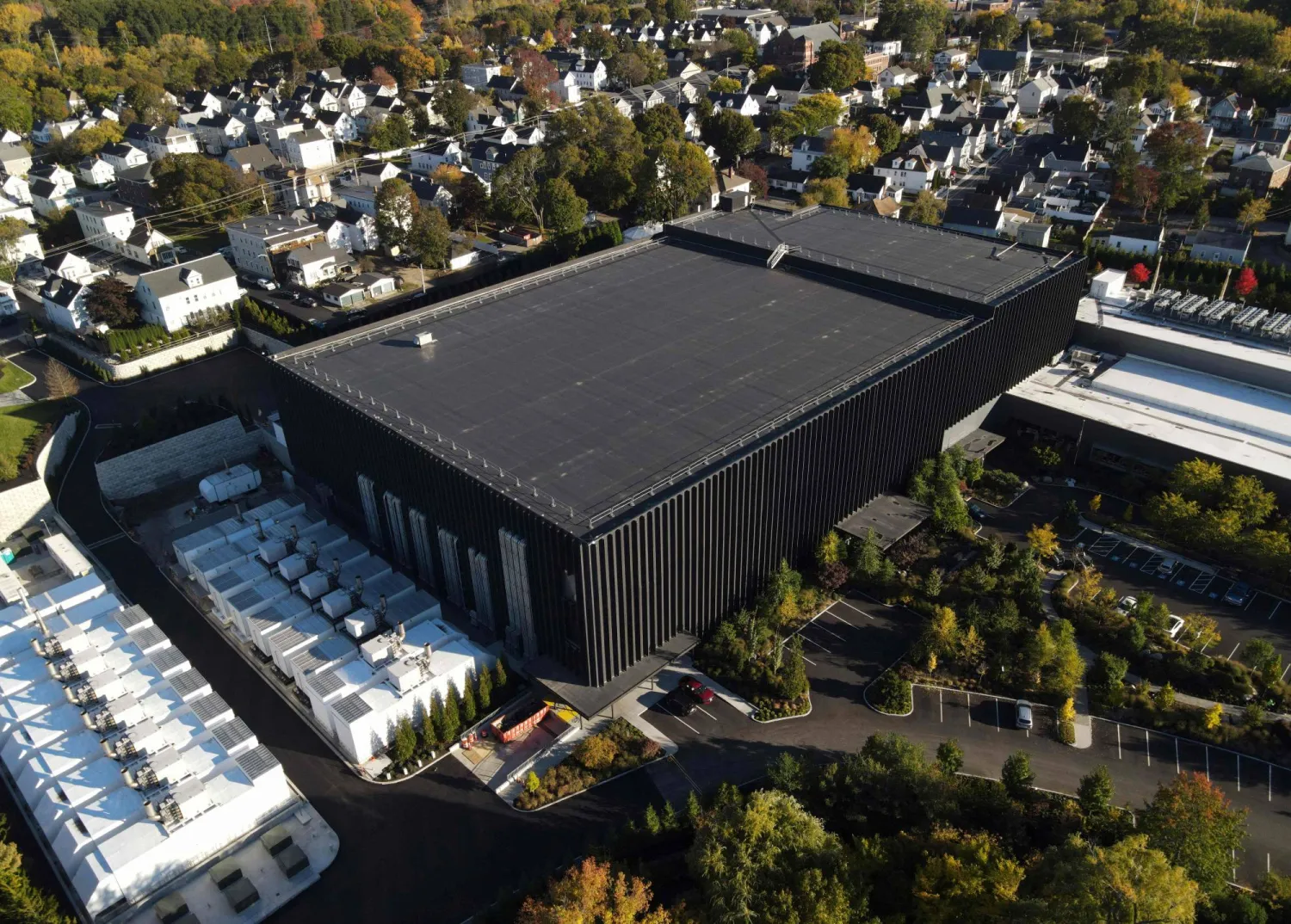
This aerial photo shows the Markley Lowell Data Center surrounded by residential neighborhood homes and apartment buildings in Lowell, Massachusetts, on October 15, 2026. (Photo by Lauren Owens Lambert / AFP)
TT

Data Center Next Door Divides Old Massachusetts Mill Town

This aerial photo shows the Markley Lowell Data Center surrounded by residential neighborhood homes and apartment buildings in Lowell, Massachusetts, on October 15, 2026. (Photo by Lauren Owens Lambert / AFP)

Retiree Eileen Castle hasn't been able to enjoy her backyard since a data center moved in next door in Lowell, Massachusetts, bringing noise, fumes, dust and water mist.

But a few streets away, contractor Louis Haas is grateful to Markley, the company running the facility, for redeveloping an abandoned site he says was rife with drug use.

Dubbed "the Dungeon" by some locals for the imposing black silhouette it casts over a residential neighborhood of this old milling city, those opposing views encapsulate how data centers are polarizing communities across the United States.

Republican-governed states, with their looser regulations, host most of the country's current AI build-out. But in liberal-leaning New England, some feel betrayed by their elected representatives, while others fear being left behind if the industry is curbed.

- 'Nothing but noise' -

Over the din of construction behind a spiked fence, Castle, 82, told AFP her great-great-grandparents bought the property.

But since the data center moved into a disused pasta factory a decade ago, "We have had nothing but noise.

We have dust, dirt. We have all kinds of mist" from the adjoining cooling towers, which she fears could carry Legionnaires' disease.

Noxious fumes made a long interview outdoors impossible, and she lamented that her grandchildren can no longer swim in her small pool.

"I think every once in a while that maybe I should sell my house," she says, but adds her property value has plummeted.

"The Markley Group serves more than 600 clients in Massachusetts and connects the digital infrastructure that powers our economy, our schools, and the everyday needs of our community," Markley Group CEO Jeff Markley said in a statement to AFP.

The company said its backup diesel generators run only for five minute tests each week and, thanks to abatement efforts, produce "about 44 decibels of sound, quieter than a soft conversation three feet away."

It said it tests its water twice a year for Legionnaires', and has planted 2,000 trees.

In 2015, the city council gave Markley a 20-year property and personal property tax break estimated at $77 million, the Lowell Sun newspaper reported at the time.

Enthusiasm has since cooled. In March, the council unanimously passed a 360-day moratorium on construction and expansion of commercial data centers, though Markley's 352,000-square-foot site was grandfathered in.

Residents represented by the Conservation Law Foundation (CLF) and others have sued to challenge its expansion, which included increasing the number of generators to 27, and won a temporary injunction in August.

CLF attorney Adam Reynolds told AFP that it is the "compounding effect of pollution that's really significant" in a historically industrial area.

- Community divisions -

Markley has supporters. Haas, 50, who supplies coffee to a major tech company, said the boom had been good to contractors like him.

"I'm a big liberal, I'm a Democrat. But I'm also pro-jobs and pro-economy," he told AFP.

Markley said it employs more than 100 full-time staff in Lowell, a third of them local. On top of that, over 100 unionized trades workers work on campus.

Another backer, Sarah Bibeau, a 43-year-old single mother of two who works in the defense sector, told AFP the company had been "kind and considerate," fixing roads and offering favors ranging from yard work to free Red Sox tickets.

Detractors include Jake Fortes, a 44-year-old travel agent who founded the group "Honest Future for Lowell" and whose property sits on the fence line.

"We're getting steamrolled by this company. So some of us have taken it to task," Fortes told AFP.

Like Castle, he feels let down by Democrats, including state Governor Maura Healey -- who signed a sales tax break for data centers into law but then paused new applications this year, a reversal that illustrates the party's dilemma.

Luz Marte, a 38-year-old lab technician, bought her house a year ago, without realizing the site was a data center.

"It sounds very loud, like an airplane is going to take off," she told AFP as her three-year-old son played.

Her home insurer recently moved to triple her premium, which she believes is linked to Markley buying a building even closer to her property.

"This is a home I bought for my son, to grow up, feel alive, and have a future," she said. "Now I'm doubting that idea."