

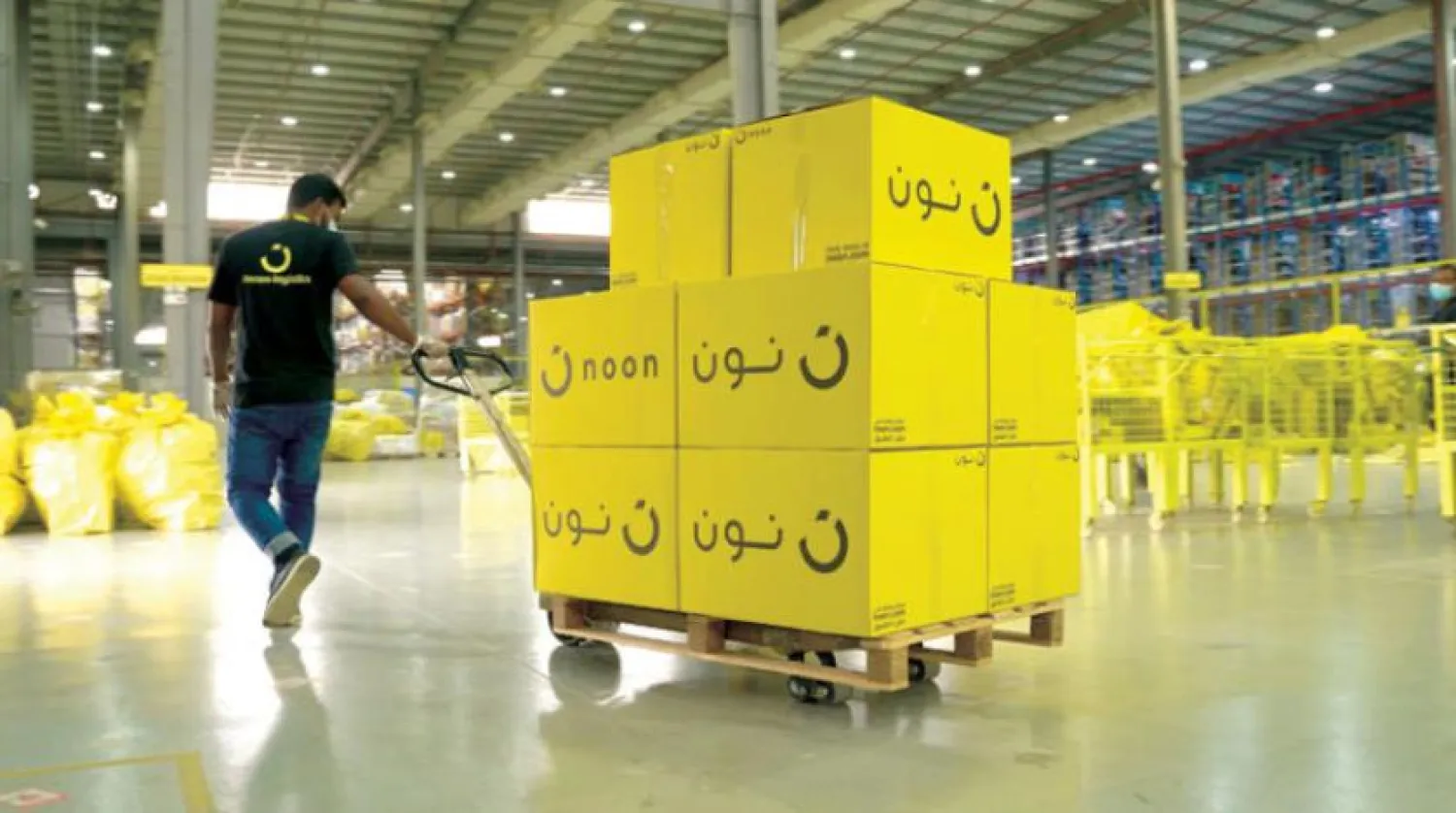

UAE’s Emaar, Noon Conclude Share Purchase Agreement Worth $335Mln

Noon looks forward to continuing the development process of Namshi. (Asharq Al-Awsat)
TT

UAE’s Emaar, Noon Conclude Share Purchase Agreement Worth $335Mln

Noon looks forward to continuing the development process of Namshi. (Asharq Al-Awsat)

UAE’s Emaar Malls Management, a wholly-owned subsidiary of Emaar Properties, and Noon AD Holdings announced Thursday that they have entered into definitive documentation for Emaar Malls to sell the entire share capital of Namshi Holding Limited to Noon for a total cash consideration of AED1.23 billion ($335.2 million).

According to a statement of which Asharq Al-Awsat obtained a copy, the consideration represents an excess of AED127 million on the total investment by Emaar Malls in Namshi including purchase consideration and subsequent investment.

The transaction is in line with Emaar’s strategy to divest assets that are not core to its primary business so as to create and sustain value for its shareholders.

Proceeds from the transaction will be invested by Emaar into its core real estate development business in line with Emaar’s strategy to redeploy capital across the group with a focus on investing in businesses that are of core strategic value.

The transaction is expected to close in the next six months, subject to meeting various conditions, including inter alia, final regulatory approvals and approval from Emaar’s shareholders.

“We are proud to have been part of Namshi’s journey and are confident that Namshi will reach greater heights and success under Noon’s ownership,” said a spokesperson for Emaar, the parent company of Emaar Malls Management.

“The capital generated through the divestment of Namshi, a non-core asset for Emaar, would be deployed in core focus areas of Emaar to generate shareholder value. Further, the sale of Namshi at a premium to its purchase price generates additional value for Emaar shareholders.”

A spokesperson for Noon said: "Namshi’s success and ambition are well-documented. The brand has evolved from a start-up to a beloved one, competing for local e-commerce with much larger international fashion and beauty players.”

He pointed out that Namshi has kept its lead and much of its story is similar to Noon's, adding that Noon is thrilled to be able to assist it in taking its growth and success to the next level.

Pakistan’s Finance Minister to Asharq Al-Awsat: We Draw Inspiration from Saudi Arabia

The Pakistani Finance Minister during his meeting with Saudi Minister of Economy and Planning Faisal Alibrahim on the sidelines of the AlUla Conference (SPA)
TT

Pakistan’s Finance Minister to Asharq Al-Awsat: We Draw Inspiration from Saudi Arabia

The Pakistani Finance Minister during his meeting with Saudi Minister of Economy and Planning Faisal Alibrahim on the sidelines of the AlUla Conference (SPA)

Pakistani Finance Minister Muhammad Aurangzeb discussed the future of his country, which has frequently experienced a boom-and-bust cycle, saying Pakistan has relied on International Monetary Fund (IMF) programs due to the absence of structural reforms.

In an interview with Asharq Al-Awsat on the sidelines of the AlUla Conference for Emerging Market Economies, Aurangzeb acknowledged that Pakistan has relied on IMF programs 24 times not as a coincidence, but rather as a result of the absence of structural reforms and follow-up.

He stressed the government has decided to "double its efforts" to stay on the reform path, no matter the challenges, affirming that Islamabad not only has a reform roadmap, but also draws inspiration from "Saudi Vision 2030" as a unique model of discipline and turning plans into reality.

Revolution of Numbers

Aurangzeb reviewed the dramatic transformation in macroeconomic indicators. After foreign exchange reserves covered only two weeks of imports, current policies have succeeded in raising them to two and a half months.

He also pointed out to the government's success in curbing inflation, which has fallen from a peak of 38 percent to 10.5 percent, while reducing the fiscal deficit to 5 percent after being around 8 percent.

Aurangzeb commented on the "financial stability" principle put forward by his Saudi counterpart, Mohammed Aljadaan, considering it the cornerstone that enabled Pakistan to regain its lost fiscal space.

He explained that the success in achieving primary surpluses and reducing the deficit was not merely academic figures, but rather transformed into solid "financial buffers" that saved the country.

The minister cited the vast difference in dealing with disasters. While Islamabad had to launch an urgent international appeal for assistance during the 2022 floods, the "fiscal space" and buffers it recently built enabled it to deal with wider climate disasters by relying on its own resources, without having to search "haphazardly" for urgent external aid, proving that macroeconomic stability is the first shield to protect economic sovereignty.


Privatization and Breaking the Stalemate of State-Owned Enterprises

Aurangzeb affirmed that the Pakistani Prime Minister adopts a clear vision that "the private sector is what leads the state."

He revealed the handover of 24 government institutions to the privatization committee, noting that the successful privatization of Pakistan International Airlines in December provided a "momentum" for the privatization of other firms.

Aurangzeb also revealed radical reforms in the tax system to raise it from 10 percent to 12 percent of GDP, with the adoption of a customs tariff system that reduces local protection to make Pakistani industry more competitive globally, in parallel with reducing the size of the federal government.


Partnership with Riyadh

As for the relationship with Saudi Arabia, Aurangzeb outlined the features of a historic transformation, stressing that Pakistan wants to move from "aid and loans" to "trade and investment."

He expressed his great admiration for "Vision 2030," not only as an ambition, but as a model that achieved its targets ahead of schedule.

He revealed a formal Pakistani request to benefit from Saudi "technical knowledge and administrative expertise" in implementing economic transformations, stressing that his country's need for this executive discipline and the Kingdom's ability to manage major transformations is no less important than the need for direct financing, to ensure the building of a resilient economy led by exports, not debts.


Oil Drops 1% as US, Iran Pledge to Continue Talks

The sun rises behind the Tishrin oil field in the eastern Hasakah countryside, northeastern Syria (AP)
TT

Oil Drops 1% as US, Iran Pledge to Continue Talks

The sun rises behind the Tishrin oil field in the eastern Hasakah countryside, northeastern Syria (AP)

Oil prices fell 1% on Monday as immediate fears of a conflict in the Middle East eased after the US and Iran pledged to continue talks about Tehran's nuclear program over the weekend, calming investors anxious about supply disruptions.

Brent crude futures fell 67 cents, or 1%, to $67.38 a barrel on Monday by 0444 GMT, while US West Texas Intermediate crude was at $62.94 a barrel, down 61 cents, or 1%.

"With more talks on the horizon the immediate ‌fear of supply disruptions ‌in the Middle East has eased ‌quite ⁠a bit," IG ‌market analyst Tony Sycamore said.

Iran and the US pledged to continue the indirect nuclear talks following what both sides described as positive discussions on Friday in Oman despite differences. That allayed fears that failure to reach a deal might nudge the Middle East closer to war, as the US has positioned more military forces in the area.

Investors are also worried about possible disruptions to supply ⁠from Iran and other regional producers as exports equal to about a fifth of the world's ‌total oil consumption pass through the Strait of ‍Hormuz between Oman and Iran.

Both ‍benchmarks fell more than 2% last week on the easing tensions, their ‍first decline in seven weeks.

However, Iran's foreign minister said on Saturday Tehran will strike US bases in the Middle East if it is attacked by US forces, showing the threat of conflict is still alive.

"Volatility remains elevated as conflicting rhetoric persists. Any negative headlines could quickly reignite risk premiums in oil prices this week," said Priyanka Sachdeva, senior market analyst at ⁠Phillip Nova.

Investors are also continuing to grapple with efforts to curb Russian income from its oil exports for its war in Ukraine. The European Commission on Friday proposed a sweeping ban on any services that support Russia's seaborne crude oil exports.

Refiners in India, once the biggest buyer of Russia's seaborne crude, are avoiding purchases for delivery in April and are expected to stay away from such trades for longer, refining and trade sources said, which could help New Delhi seal a trade pact with Washington.

"Oil markets will remain sensitive to how broadly this pivot away from Russian crude unfolds, whether ‌India’s reduced purchases persist beyond April, and how quickly alternative flows can be brought online," Sachdeva said.


Indian Refiners Avoid Russian Oil in Push for US Trade Deal

An employee walks inside the premises of an oil refinery of Essar Oil in Vadinar in the western state of Gujarat, India, October 4, 2016. REUTERS/Amit Dave/File Photo
TT

Indian Refiners Avoid Russian Oil in Push for US Trade Deal

An employee walks inside the premises of an oil refinery of Essar Oil in Vadinar in the western state of Gujarat, India, October 4, 2016. REUTERS/Amit Dave/File Photo

Indian refiners are avoiding Russian oil purchases for delivery in April and are expected to stay away from such trades for longer, refining and trade sources said, a move that could help New Delhi seal a trade pact with Washington, according to Reuters.

The US and India moved closer to a trade pact on Friday, announcing a framework for a deal they hope to conclude by March that would lower tariffs and deepen economic cooperation.

Indian Oil, Bharat Petroleum and Reliance Industries are not accepting offers from traders for Russian oil loading in March and April, said a trader who approached the refiners.

These refiners, however, had already scheduled some deliveries of Russian oil in March, refining sources said. Most other refiners have stopped buying Russian crude.

A foreign ministry spokesperson said: “Diversifying our energy sourcing in keeping with objective market conditions and evolving international dynamics is at the core of our strategy” to ensure energy security for the world's most-populous nation.

Although a US-India statement on the trade framework did not mention Russian oil, President Donald Trump rescinded his 25% tariffs on Indian goods, imposed over Russian oil purchases, because, he said, New Delhi had “committed to stop directly or indirectly” importing Russian oil.

New Delhi has not announced plans to halt Russian oil imports.

India became the top buyer of discounted Russian seaborne crude after Russia invaded Ukraine in 2022, spurring a backlash from Western nations that had targeted Russia's energy sector with sanctions aimed at curtailing Moscow's revenue and making it harder to fund the war.

One regular Indian buyer is Russia-backed private refiner Nayara, which relies solely on Russian oil for its 400,000-barrel-per-day refinery. Sources said Nayara may be allowed to keep buying Russian oil because other crude sellers pulled back after the European Union sanctioned the refiner in July.

Nayara also does not plan to import Russian crude in April due to a month-long refinery maintenance shutdown, a source familiar with its operations said.

Nayara did not respond to an email seeking comment.

Indian refiners may change their plan and place orders for Russian oil only if advised by the government, sources said.

Trump's order said US officials would monitor and recommend reinstating the tariffs if India resumed oil procurement from Russia.

Sources said last month that India was preparing to cut Russian oil imports below 1 million bpd by March, with volumes eventually falling to 500,000–600,000 bpd, compared with an average 1.7 million bpd last year. India's Russian oil imports topped 2 million bpd in mid-2025.

The intake of Russian oil by India, the world's third-biggest oil consumer and importer, declined to its lowest level in two years in December, data from trade and industry sources show.