IOM Trains Libyan Forces on Migrant Rescue Missions

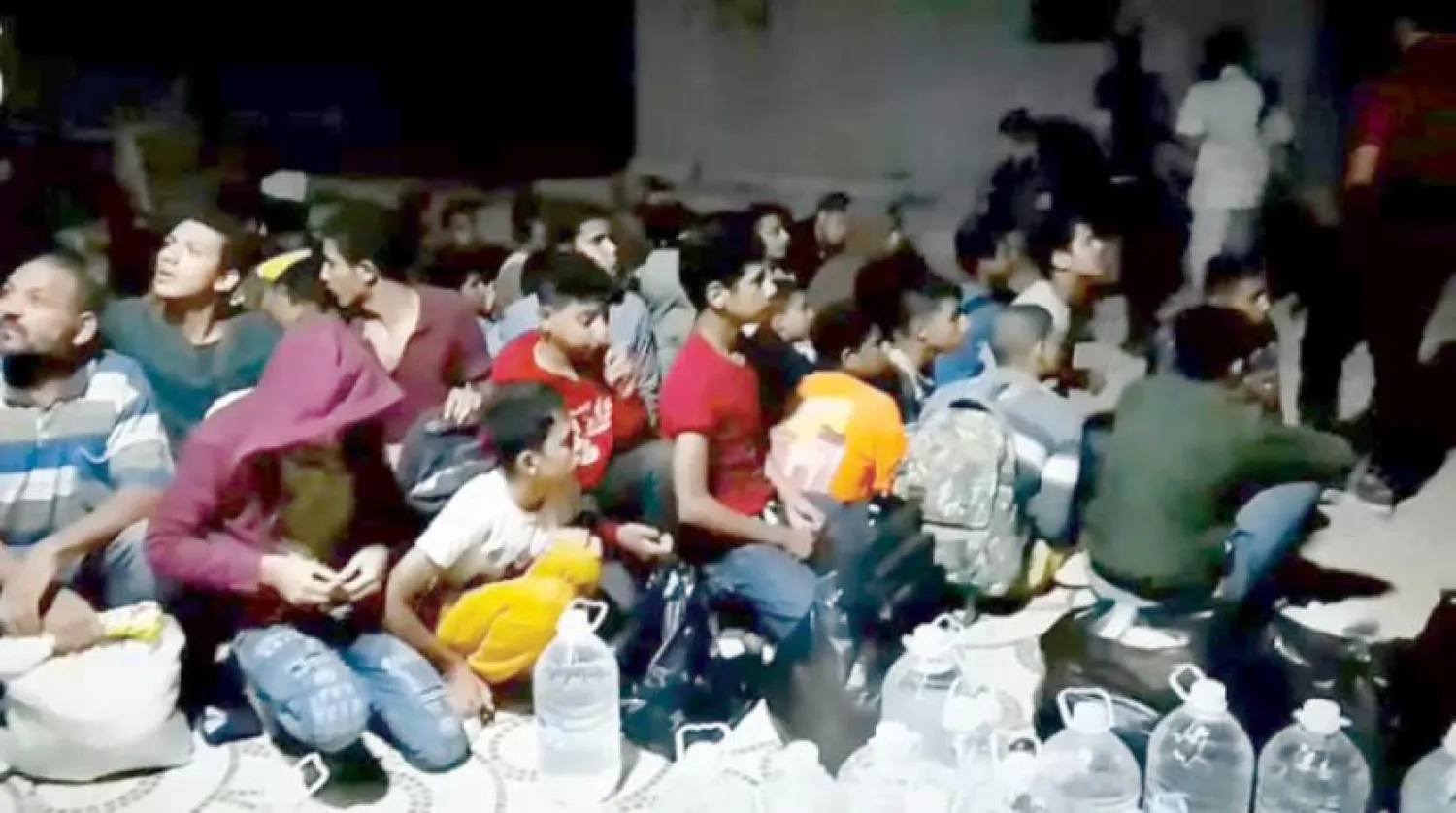
Migrants who were freed by security forces in Tobruk. (Tobruk security forces)
TT

IOM Trains Libyan Forces on Migrant Rescue Missions

Migrants who were freed by security forces in Tobruk. (Tobruk security forces)

The International Organization for Migration (IOM) said on Tuesday it organized a two-week training for Libyan officials to rescue irregular migrants from drowning in the Mediterranean.

The training is sponsored by the Organization under its project “Protecting Vulnerable Migrants and Stabilizing Communities in Libya,” which is financed by the European Union.

It aims to train concerned Libyan guards on search and rescue operations and provide them with a better understanding of safety concepts, including occupational safety and rescue swimming, and their implementation.

The IOM initiative comes at a time when Libya is suffering from an influx of thousands of migrants from Africa and Asia seeking to take the risky journey through the Mediterranean to reach Europe.

In a related development, security forces in Tobruk revealed that they raided a warehouse where they found 287 irregular Egyptian migrants, who were held by smugglers on the outskirts of the city, ahead of their transit to European shores.

The Security Directorate of Tobruk said a criminal investigations team and police members “are pursuing the gangs involved in the smuggling operation to bring them to justice.”

A week ago, the 444th Combat Brigade in Tripoli announced that its forces in Bani Walid had uncovered a den used by an outlaw gang that kidnaps and tortures migrants.

The Brigade said its forces liberated five kidnapped Egyptian workers who were subject to severe torture and beatings.

The coast guard has rescued 500 illegal migrants in nine successful operations off the Libyan coast.

The migrants were turned over to the Anti-Illegal Migration Authority to complete the procedures for their deportation to their countries.


200 Yemeni Scholars Urge Action to End Houthi Siege of Taiz

The conference of Yemeni scholars and preachers in Makkah discussed a range of religious issues and efforts to counter the Houthis. (Asharq Al-Awsat)
TT

200 Yemeni Scholars Urge Action to End Houthi Siege of Taiz

The conference of Yemeni scholars and preachers in Makkah discussed a range of religious issues and efforts to counter the Houthis. (Asharq Al-Awsat)

Two hundred Yemeni religious scholars and preachers have called for a concerted official and public campaign to break the Houthi siege of Taiz, urging that the group's violations against religious scholars, mosques, Quran memorization schools and religious institutions be documented and brought before Islamic and international forums to hold the international community to its responsibilities.

In a final statement issued at their conference in Makkah, the scholars rejected any armed groups that challenge or undermine state institutions, declaring the establishment of a state a religious necessity and urging Yemenis to rally behind it.

They warned that the Houthi movement threatened Yemen's religion, unity, identity and security, calling for a coordinated response through scholarship, intellectual debate, religious outreach and the media.

The scholars also condemned terrorism and extremism in all forms, firmly rejecting the use of religion or sectarian affiliation to justify either. They reaffirmed the sanctity of life, property and honor and urged Yemeni scholars, preachers and citizens to put national interests first, close ranks and overcome their differences.

The demands emerged from a conference of Yemeni scholars and preachers held in Makkah on Wednesday under the auspices of Saudi Arabia's Ministry of Islamic Affairs, Dawah and Guidance.

Its final statement praised the deep historical and fraternal ties between Saudi Arabia and Yemen, commending the kingdom's leadership and people for supporting Yemen, its government, scholars and institutions, and for promoting moderation and combating extremism and terrorism.

Participants condemned Houthi attacks on Saudi Arabia, its citizens and residents, as well as civilian sites and vital infrastructure in both countries.

They also denounced any attacks on Makkah and Madinah, stressing the sanctity of the two holy cities and declaring that Saudi Arabia's security was inseparable from Yemen's. Any threat to the kingdom, they said, threatened regional security and stability.

The gathering praised Yemeni religious scholars and the Yemeni Scholars Association for speaking out, supporting the state and confronting the Houthi movement.

It also criticized religious figures who had issued fatwas, or religious rulings, in support of the Houthi militias and to justify their actions, singling out the so-called Yemen Scholars League.

The scholars urged Muslim religious leaders, organizations and scholarly councils to expose and condemn Houthi violations and oppose the group's targeting of Islam's two holiest mosques.

They thanked Saudi King Salman bin Abdulaziz, Custodian of the Two Holy Mosques, and Crown Prince Mohammed bin Salman, the kingdom's prime minister, for their longstanding support of Yemen and its legitimate government against the Houthi takeover.

They credited Saudi Arabia's support with helping, "after God," to halt the expansion of what they called the "Safavid project" in Yemen.

The participants also praised Saudi Minister of Islamic Affairs, Dawah and Guidance Sheikh Abdullatif Al-Asheikh for sponsoring the Communication with Yemeni Scholars Program.

Scholars warn of threats to Yemen's identity

Held under the theme "Supporting the State and Protecting Identity," the conference examined the role of religious scholars in confronting the challenges facing Yemen.

Sheikh Mohammed al-Arifi, an adviser at the Saudi Ministry of Islamic Affairs and supervisor of the Communication with Yemeni Scholars Program, called for closer cooperation among scholars and preachers to confront the intellectual and religious challenges facing Yemen and the wider region.

He praised Saudi Arabia's support for Yemen under King Salman and Crown Prince Mohammed bin Salman, highlighting the kingdom's consistent backing of Yemen's legitimate government.

Al-Arifi said the conference addressed one of the gravest challenges in Yemen's modern history: the role of religious scholars in confronting what he called Houthi terrorism.

He accused the Houthis of hijacking the state and seeking to erase Yemen's identity and heritage, replacing them with an alien identity rooted in what he described as an Iranian expansionist project rejected by Yemenis.

He cited what he called grave Houthi violations, including the killing of innocent people, intimidation of civilians, destruction of mosques and Quranic schools, and the siege of Taiz, which he said had left residents facing hunger and fear.

He also accused the group of tampering with school curricula, targeting the religious beliefs of younger generations and undermining the standing of the Prophet Muhammad's companions.

Al-Arifi said the Houthis had crossed every red line with attacks and threats against Islam's two holiest mosques, describing them as a flagrant violation of the sanctity of Islamic holy sites.

He also condemned attacks on Saudi cities and civilian facilities, stressing that the security of Saudi Arabia and Yemen was indivisible.

The gravity of Yemen's crisis, he said, placed a profound responsibility on religious scholars to protect society from extremist ideas, expose Houthi ideology and counter its arguments.

He stressed that establishing a state was a religious necessity to protect religion, life, property and honor.

Yemeni minister urges support for state, armed forces

Yemeni Minister of Endowments and Guidance Sheikh Turki al-Wadei said the gathering reflected the depth of ties between Yemen and Saudi Arabia and underscored the responsibility borne by religious scholars and preachers.

He urged scholars to expose what he described as the ideological deviations of the Iranian-backed Houthi militia and the dangers of its sectarian rhetoric, which he said fueled division and conflict.

He stressed their role in shielding communities from misinformation and extremism while safeguarding religion and holy sites.

Al-Wadei pointed to the suffering and attacks resulting from the Houthi takeover, saying the group's actions had threatened security in both Yemen and Saudi Arabia, as well as the safety of Islam's two holiest mosques and their visitors.

He said supporting state institutions and the armed forces in protecting religion and the country, restoring state authority and securing stability was a core duty of scholars and preachers.

He placed that responsibility within the "Dawn of Yemen" campaign announced by Rashad al-Alimi, chairman of Yemen's Presidential Leadership Council.

Al-Wadei thanked Saudi Arabia's leadership, government and people for their longstanding support, citing continued military, political, economic, humanitarian and development assistance to Yemen.

He also praised the Saudi Ministry of Islamic Affairs, Dawah and Guidance for its efforts in serving Islam and Muslims.

Conference sessions examined scholars' responsibility to preserve Yemen's religious and national identity, counter extremist ideologies, uphold the state's position under Islamic law and support the legitimate government.

They also reviewed the history of Saudi-Yemeni relations, highlighting the historical bonds and shared destiny of the two countries.


Al-Zaidi Roadmap Divides Jurf al-Sakhar Security Duties Among Joint Forces

Members of Iraq’s Kataib Hezbollah patrol a road in Jurf al-Sakhar, south of Baghdad, November 17, 2026. (Reuters)
TT

Al-Zaidi Roadmap Divides Jurf al-Sakhar Security Duties Among Joint Forces

Members of Iraq’s Kataib Hezbollah patrol a road in Jurf al-Sakhar, south of Baghdad, November 17, 2026. (Reuters)

Iraqi Prime Minister Ali al-Zaidi has ordered a joint deployment of army, police and Popular Mobilization Forces (PMF) units to secure Jurf al-Sakhar, under a plan dividing security responsibilities among the forces, official documents showed on Wednesday.

Al-Zaidi, who is also commander-in-chief of the armed forces, issued the directive in response to a proposal from PMF chief Faleh al-Fayyad to put the area under the control of PMF, with the Energy Police protecting an oil pipeline.

A letter from the commander-in-chief's office to the PMF outlined a security plan assigning parts of Jurf al-Sakhar to Defense Ministry troops, Interior Ministry forces and PMF brigades.

A political source said the plan reflected al-Zaidi's vision for ending the crisis in Jurf al-Sakhar but cautioned that it was too early to expect political consensus on what he described as an "ambitious" proposal.

The directive comes amid a dispute over security control of Jurf al-Sakhar, where armed factions, including Kataib Hezbollah, have wielded influence for years.

The government is seeking to reorganize security deployments and extend state authority over the area. The Iran-backed faction has warned the government against sending troops to the region.

Informed Iraqi sources told Asharq Al-Awsat that al-Zaidi had rejected what they described as a compromise proposal from Esmail Qaani, commander of Iran's Revolutionary Guards' Quds Force, during talks that lasted until dawn last Wednesday.

The proposal concerned security arrangements for Jurf al-Sakhar.

Al-Zaidi insisted that government troops enter the area and Kataib Hezbollah withdraw, the sources said.

The dispute was not over whether to reach a settlement but how to cordon off Jurf al-Sakhar and deploy security forces without triggering a confrontation between Shiite factions and government troops, they added.

During meetings with Qaani and leaders of the Coordination Framework, al-Zaidi presented photographs, data and figures about the area, prompting several alliance leaders to shift their positions and back his position, according to the sources.

Fahd al-Jabouri, a senior figure in the Hikma Movement, said al-Zaidi showed Coordination Framework leaders satellite images and intelligence gathered through recently contracted satellites covering Iraqi territory.

The material revealed what was happening in Jurf al-Sakhar.

Al-Jabouri said the prime minister assured the alliance's leaders that he had no intention of launching an armed confrontation. Instead, his plan called for cordoning off the area, leaving further discussions over its administration for a later stage.

Al-Jabouri denied reports that disagreements within the Coordination Framework had prompted leaders to walk out of the meeting or caused a split over al-Zaidi's position.

Iraqi authorities shut several gates to Baghdad's fortified Green Zone early on Wednesday, coinciding with talks over the security arrangements in Jurf al-Sakhar.

The closures affected entrances providing direct access to key government and security institutions. Authorities gave no reason for the move.


Marib Raises Military Readiness Amid Houthi Escalation

Government airstrikes target Houthi fighters in Marib. (Military media)
TT

Marib Raises Military Readiness Amid Houthi Escalation

Government airstrikes target Houthi fighters in Marib. (Military media)

Yemen's government has intensified military, security and diplomatic efforts against the Iran-backed Houthis, ordering heightened readiness and preemptive action against threats. Meanwhile, its Human Rights Ministry reported more than 3,300 violations that left over 1,800 civilians dead or wounded in less than four months.

The violations, which also included mass displacement and extensive damage to vital infrastructure, come as the government seeks tougher Arab and international action against the group.

In Marib, Presidential Leadership Council member and Governor Lt. Gen. Sultan Al-Arada called for a shift from reacting to threats to anticipating them through early intelligence gathering, monitoring and risk assessment.

He said the latest Houthi escalation demanded greater military and security readiness and closer coordination between state institutions and local communities.

Al-Arada made the remarks at an expanded meeting in Marib attended by Lt. Gen. Sagheer bin Aziz, chief of the General Staff and other senior military and security officials.

The meeting reviewed battlefield developments in Marib and Al-Jawf, Houthi movements, emerging security threats and measures to strengthen coordination between military units and security agencies.

Al-Arada urged closer intelligence-sharing, tighter monitoring and stronger military capabilities, backed by improved training, discipline and regular readiness assessments to tackle threats before they escalate.

He praised the armed forces, security services and popular resistance fighters, as well as Saudi Arabia's support for Yemen.

3,334 Houthi violations

As military and security preparations intensified, the Human Rights Ministry reported documenting 3,334 violations against civilians and civilian property across several provinces between Aug. 1 and Nov. 15, 2026.

Human Rights Minister Mishdal Omar told a news conference in the interim capital Aden that the violations have killed 594 civilians and wounded 1,255 others, including women and children.

The ministry recorded 233 cases of abduction, arbitrary detention and enforced disappearance, along with the deaths of 260 children recruited by the Houthis and sent to the frontlines.

The violations included attacks on 412 civilian sites and 93 educational facilities, as well as 517 violations affecting the healthcare sector. Nineteen mosques were targeted, while 15 extrajudicial killings were recorded.

The figures reflect the mounting toll on civilians, infrastructure and essential services as fighting in western Yemen drives further displacement, said the ministry.

Citing figures from the International Organization for Migration, Omar said more than 347,000 people have been displaced.

Taiz hosted the largest number, with 143,130 people, followed by Lahj with 91,314 and Aden with 70,404. The rest were spread across Abyan, Hodeidah, Shabwa, Marib, Al-Mahra, Al-Dhale and Hadramout.

The ministry also documented 53 ballistic missile attacks on Marib, Al-Dhale, Hodeidah, Taiz, Shabwa and Hadramout, involving more than 121 missiles and at least 137 attack drones.

Landmines and explosive devices killed another 13 people and wounded 16, Omar said.

2.5 million people at risk in Taiz

The ministry also warned of worsening humanitarian conditions in Taiz, where the Houthi siege continues to restrict the flow of aid and essential supplies.

Omar said the siege has put around 2.5 million people at risk and blocked the delivery of 2,450 tons of food aid.

It has forced 186 healthcare facilities out of service, threatened the lives of 1,456 patients and newborns, and contributed to 1,400 reported cases of acute watery diarrhea and suspected cholera, he said.

Yemen seeks tougher international action against Houthis

On the diplomatic front, Foreign Minister Afrah Al-Zouba stepped up efforts to rally Arab support for the Yemeni government, warning that Houthi threats now extended beyond the country's borders to regional security and international shipping.

Briefing Arab ambassadors accredited to the Netherlands, Al-Zouba outlined the latest developments in Yemen, including Houthi military escalation and attacks on civilians, civilian property and infrastructure.

She warned that the group posed a growing threat to regional and international security through its activities targeting shipping in the Red Sea and the Bab Al-Mandeb Strait, as well as cooperation with terrorist organizations in the Horn of Africa, particularly Somalia's Al-Shabaab movement.

She said Yemen had designated the Houthis as a terrorist organization and approved measures targeting the group's leaders, financial backers and overseas networks to dismantle its financial and organizational structures and protect civilians.

The foreign minister called for similar international measures, including stronger cooperation to cut off Houthi funding and weapons supplies and hold those responsible for violations accountable.