Sadr Prevents His Bloc from Returning to Parliament ‘Under any Pretext’

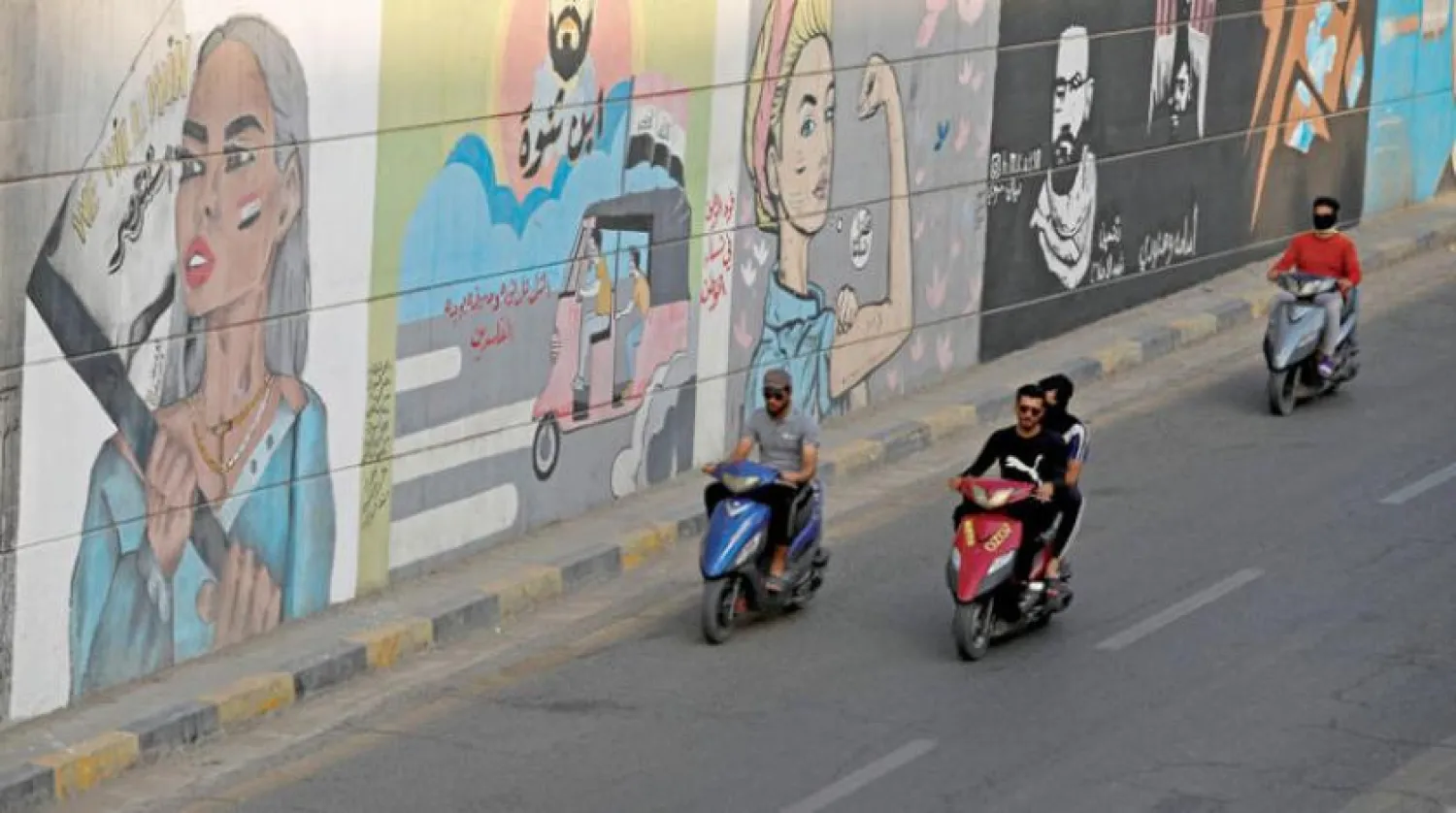
Part of Tahrir (Liberation) Square in the center of Baghdad (AFP)
TT

Sadr Prevents His Bloc from Returning to Parliament ‘Under any Pretext’

Part of Tahrir (Liberation) Square in the center of Baghdad (AFP)

The leader of the Sadr Movement announced on Thursday that he would not allow the return of his political bloc to Parliament.

The Sadr coalition had won 73 seats - the largest share in parliament - during the October elections before it decided to withdraw in June.

The announcement comes a day after the Federal Court refused to dissolve Parliament based on a petition submitted by the movement.

Al-Sadr reiterated his complete refusal to agree with his opponents in the Shiite Coordination Framework forces, accusing them of preventing him from forming a “national” government, by allying with some Kurdish and Sunni forces following the announcement of the election results.

In a lengthy statement posted by Saleh Mohammad al-Iraqi, who is known as Al-Sadr minister, the head of the movement said: “The return of the bloc to the House of Representatives signifies a possibility, even if weak, of reaching consensus with the Coordination Framework; thus, we reject such return…”

Al-Sadr acknowledged the pressure exerted on his allies, represented by the Kurdistan Democratic Party and the Sunni Sovereignty Alliance, by the Coordination Framework and other forces to force them to form a government away from the Sadrist movement.

But he said that his move was aimed at “ending the suffering of an entire people.”

“It is the people, not the movement, who refuse to have a corrupt government again,” he remarked.

A decisive step of this kind would make the country’s future and the shabby political process more complex, and dispel the hopes of resolving the political conflict between Shiite poles, mainly that circles within the Sadrist movement have hinted at an intention to stage massive street demonstrations.


Fighting Deepens Pressure on Taiz as Houthi Leaders Captured

Yemeni government forces move near the Jabal Han front west of Taiz city (AFP)
TT

Fighting Deepens Pressure on Taiz as Houthi Leaders Captured

Yemeni government forces move near the Jabal Han front west of Taiz city (AFP)

Fighting between Yemeni government forces and the Houthi group intensified on several fronts as Operation “Dawn of Yemen” entered its 10th day, with the southwestern province of Taiz emerging as the main strategic and operational battleground.

The clashes have seen government forces capture Houthi security officials, while fighting has spread to neighboring Lahj province and to Marib and al-Jawf in northeastern Yemen.

Ground battles are raging on five main fronts around Taiz city, while government forces continue to track and strike Houthi positions and fighters in Lahj, Marib and al-Jawf.

At the same time, the humanitarian situation in Taiz is worsening, amid accusations that the Houthis have attacked civilians in incidents that killed and wounded several people.

The media center of the Taiz Military Axis said fierce clashes broke out between its forces, backed by the Popular Resistance, and the Houthis on fronts west and northwest of Taiz.

Fighting has continued since Wednesday morning on the al-Dhabab front west of the city and on the al-Aqroud and al-Shaqab fronts to the south, intensifying later in the day.

According to the center, warplanes struck a convoy of Houthi tanks, vehicles and armored vehicles in the Ras al-Najd area of al-Misrakh district.

It said aircraft also carried out two strikes on Houthi positions on Sofitel Hill east of Taiz city, followed by two more strikes on Wednesday evening targeting a tank and a vehicle on the al-Dhabab front.

The center said more than 200 Houthi fighters were killed or wounded. It also reported the destruction of a vehicle and an armed convoy, damage to two tanks and the downing of a drone.

Yemeni Presidential Leadership Council Chairman Rashad al-Alimi announced on the fifth of this month the launch of the large-scale “Dawn of Yemen” operation, aimed at restoring state institutions, recapturing the capital Sanaa, ending the Houthi takeover and returning weapons and decisions over war and peace to the constitutional state.

Security blow hits Houthis

The Taiz Military Axis media office described fighting on the al-Dhabab front as the bloodiest, saying the Houthis were trying to break through the city’s western entrance around the strategic Jabal Han area, Wadi Hadharan and the outskirts of al-Sayahi.

At the same time, the group launched a heavy-weapons assault on the Jawlat al-Qasr front east of the city, it said.

An operational statement issued by the Yemeni armed forces’ media center said troops had thwarted a Houthi flanking attack near the al-Hangar checkpoint at the city’s western entrance.

It said artillery destroyed three armored vehicles and two ammunition supply vehicles.

In a separate statement, the Fifth Presidential Guard Brigade said army units carried out a swift flanking operation west of Taiz, capturing five Houthi security officials.

Footage released by military media showed the capture of intelligence official Mohammed Saeed al-Junaid, director of a branch of what the Houthis call their “Preventive Security” service in the al-Hawban area east of the city.

Also captured was Akram Amer, director-general of the anti-narcotics department at the Interior Ministry run by the internationally unrecognized Houthi government.

After government forces said they had captured five Houthi officials and the Fifth Presidential Guard Brigade released video of the detainees, Abdulqader al-Murtada, head of the Houthi prisoners’ committee, acknowledged that those detained were Interior Ministry employees.

He said they had gone to Taiz to arrange and secure the central prison after taking control of it but lost their way because of overlapping front lines.

Fierce clashes are also continuing around the strategic Jabal Han area west of Taiz, where government forces said they had repelled repeated Houthi attacks over the previous 24 hours despite the mountain being hit by hundreds of shells.

Jabal Han overlooks the Hadharan and al-Rubaie areas, as well as the road linking Taiz with the interim capital Aden and the road to Hodeidah, making it a key point for supply lines.

Residential neighborhoods in Taiz city have meanwhile come under heavy Houthi shelling, increasing the risks facing tens of thousands of civilians.

Humanitarian concerns are mounting as the siege of the city continues alongside severe shortages of basic and medical supplies.

The Information and Training Center for Human Rights documented the killing and wounding of five civilians, including two children, after three Houthi mortar shells struck homes in the village of Aad in Sabir al-Mawadim district.

The shelling also caused extensive damage to 11 homes, which were partially destroyed.

In al-Wazi'iyah district, one civilian was killed and another wounded after being run over by a Houthi military vehicle.

Separately, a woman was killed and three of her female relatives were wounded when a Houthi landmine exploded in Wadi Usus in al-Shamayatayn district in the south of the province.

Fighting spreads beyond Taiz

In Marib, the media center of the Third Military Region said army artillery, backed by drones, struck Houthi fortifications on the northwestern axis, helping government forces advance on high ground overlooking the strategic Mas military camp in Madghal district.

An operational report said a Houthi military convoy carrying combat vehicles was destroyed on the al-Kasara, al-Zour and southern Harib fronts.

Video released by the Yemeni army also showed warplanes striking Houthi barracks and fortifications in the area of responsibility of the Seventh Military Region in Marib.

In al-Jawf province, platforms affiliated with Yemen’s Defense Ministry said air strikes hit a military barracks and a gathering point for Houthi vehicles east of al-Hazm, the provincial capital.

The strikes paved the way for government forces to advance toward the outskirts of the city, they said.

In Lahj province, military media for the Nation’s Shield Forces, together with the Southern Giants Brigades, said they had detected heavy Houthi military movements and reinforcements in the al-Aghbara and al-Mansoura areas and on the al-Mudaraba front.

According to the statement, the forces responded with direct preemptive artillery strikes aimed at preventing any breach that could threaten the strategic coastal route leading to the Bab al-Mandab Strait.

Separately, the Southern Giants Brigades rejected as false a video released by the Houthis claiming the group had fought its forces in Bab al-Mandab, seized military positions, destroyed and captured vehicles and taken members of the force prisoner.

The brigades said the footage was fabricated and that their forces remained in position and in full control of the situation in the Bab al-Mandab area.



Hezbollah Says Explosives Shipment Seized by Authorities Belongs to Group

Hezbollah members take part in a military exercise during a media tour organized for the occasion of Resistance and Liberation Day, in Aaramta, Lebanon. REUTERS/Aziz Taher/File photo
TT

Hezbollah Says Explosives Shipment Seized by Authorities Belongs to Group

Hezbollah members take part in a military exercise during a media tour organized for the occasion of Resistance and Liberation Day, in Aaramta, Lebanon. REUTERS/Aziz Taher/File photo

A Hezbollah MP acknowledged Thursday that a 500-kilogram shipment of explosives seized last week by Lebanese authorities belonged to the group, a rare admission by the Iran-backed militants.

"The vehicle and its cargo belong to the resistance" against Israel, lawmaker Hassan Fadlallah said. He said Hezbollah also called for the immediate release of those arrested over the seizure.

A Hezbollah official and a Lebanese security source told Reuters that the explosives seized in the car last week were intended to be used in explosive drones targeting Israeli troops.

Fadlallah said Hezbollah had immediately contacted security agencies to clarify that it owned the vehicle and the cargo, and to demand the materials be returned and those detained be released.

Fadlallah's acknowledgment reflects Hezbollah's efforts to continue transporting weapons across Lebanon despite the government's vow to bring all arms in the country under state control.

On March 2, the government specifically banned Hezbollah's military activities hours after the movement launched rockets at Israel in solidarity with Tehran, pulling Lebanon into the regional war that erupted following US and Israeli strikes on Iran.

The government decisions were an attempt to reverse the relative freedom Hezbollah had enjoyed for years in transporting military equipment across Lebanon.

The group's main arms supply route through Syria was severed when its ally, then-president Bashar al-Assad, was ousted in late 2024. The new Syrian authorities have regularly announced seizures of weapons along their border with Lebanon that they say are intended for Hezbollah.

Throughout 2025, Lebanese troops seized and destroyed Hezbollah weapons depots in southern Lebanon in line with the government's plan to exert state control over all weapons, but that roadmap was put on pause when the new war erupted.

Under a deal reached through US-brokered talks between Lebanon and Israel this year, Beirut has vowed to disarm Hezbollah, which would in turn lead to Israeli troops gradually withdrawing from Lebanon.

But Hezbollah has refused to disarm as long as Israeli forces remain on Lebanese land and Israel has continued carrying out strikes across southern Lebanon.


Ali Kayali, Main Suspect in 2013 Baniyas Massacre, Arrested

A Syrian army officer puts on his blast suit during a demining operation, by the Syrian Ministry of Defense's military engineering department, to clear land mines in Qarah in the Damascus countryside on August 23, 2026. (Photo by Bakr ALkasem / AFP)
TT

Ali Kayali, Main Suspect in 2013 Baniyas Massacre, Arrested

A Syrian army officer puts on his blast suit during a demining operation, by the Syrian Ministry of Defense's military engineering department, to clear land mines in Qarah in the Damascus countryside on August 23, 2026. (Photo by Bakr ALkasem / AFP)

Syria's General Intelligence Service has arrested Ali Kayali, also known as Mihrac Ural, the main suspect in the 2013 Baniyas massacre, as he attempted to flee across the border, according to the Syrian Arab News Agency (SANA).

The agency did not specify where he was arrested or which country he was attempting to enter. Syrian sources say he had been spotted crossing the border into Lebanon several times.

However, according to Lebanon's MTV television, the Syrian-Turkish national known as Ali Kayali, or Mihrac Ural, and nicknamed the "Butcher of Baniyas" in Syria, was the same person reportedly abducted from his home in Mansourieh, in Lebanon's Metn district, after his wife and son were tied up.

Asharq Al-Awsat could not independently verify the accuracy of the report.

Who Is Mihrac Ural?

Mihrac Ural was born in 1956 in Türkiye's Hatay province, formerly known as the Sanjak of Alexandretta. He joined a far-left extremist party and was imprisoned several times in Türkiye before fleeing to Syria in the early 1980s.

There, he received special privileges, including Syrian citizenship, which was granted to him by then-President Hafez al-Assad.

Ural later adopted the Syrian name Ali Kayali and led an armed group known as the Syrian Resistance, which fought alongside forces loyal to Bashar al-Assad throughout the Syrian war.

The group has been linked to the massacres in al-Bayda and Baniyas and participated alongside Assad's forces in suppressing the Syrian uprising. Ural's name has also been associated with the 2012 Houla massacre and the bombings in Reyhanli, Türkiye.

According to the Syrian Network for Human Rights (SNHR), the al-Bayda massacre claimed the lives of 264 civilians, including 36 children and 28 women. The Ras al-Nabaa massacre killed another 195 civilians, including 56 children and 43 women.

Testimonies and reports documenting the two massacres described bodies scattered across streets, shops and even basements, as well as summary executions carried out with firearms and bladed weapons. Homes and bodies were also reportedly burned.

Militias affiliated with Kayali were also accused of carrying out massacres against Syrians in the countryside of Latakia, Aleppo and Idlib, leaving hundreds dead and wounded.

Human Rights Watch, in a report published in September 2013, documented the execution of at least 248 people, including 167 in al-Bayda and 81 in Baniyas, warning that the actual death toll could be higher.

Based on survivor testimonies and video evidence, the organization concluded that the vast majority of the victims had been killed after fighting had ended and opposition fighters had withdrawn from the two areas.

Following news of Kayali's arrest, chants of "Allahu Akbar" rang out from mosques in al-Bayda, a town near Baniyas in Syria's western Tartus province, on Thursday.

Videos circulating online showed mosques broadcasting the chants, which those sharing the footage said were in celebration of Ural's reported arrest, nearly 13 years after the massacre.

Marking the occasion, Fadel Abdul Ghany, executive director of the Syrian Network for Human Rights, wrote on X on Thursday:

"On May 10, 2013, we published our report documenting the killing of 459 civilians, including 92 children and 71 women. We named Ali Kayali in the report, based on testimonies from residents who identified him as one of the leaders of the massacre."

He described the killings as a massacre with a sectarian character, recalling the painstaking work of documenting the names of children, women and men, families that had lost several members or had been wiped out entirely, and survivors whose testimonies remained unforgettable.

"More than 13 years later, I feel how important it is that this case has finally reached a stage where one of its most prominent suspects can be investigated. Today, I am thinking especially of the victims' families, who have waited all these years," he added.

Ahmad Muwaffaq Zaidan, media adviser to the Syrian presidency, also welcomed the arrest in a post on X.

"We congratulate our people on the arrest by Syrian intelligence, in cooperation with the Interior Ministry, of the criminal Mihrac Ural, known as Ali Kayali, who carried out massacres against our people during the Syrian revolution, including the al-Bayda massacre in Baniyas," he wrote.

He vowed that those responsible for killings would be pursued regardless of how much time had passed, stressing that perpetrators would not escape Syria's security agencies.

Syrian authorities had previously announced on October 4 the arrest of Jamal Trabulsi, whom they identified as Ural's deputy, on suspicion of involvement in the same massacre.

Syrian authorities are pursuing individuals implicated in abuses against civilians during Assad's rule as part of their stated efforts to achieve transitional justice and hold those responsible for crimes accountable.

On December 8, 2024, Syrian rebels entered Damascus and announced the overthrow of Bashar al-Assad's regime, ending the rule he had inherited from his father, Hafez al-Assad.