


Yemeni Govt Calls for Deterrence against Houthi Militarization of Red Sea

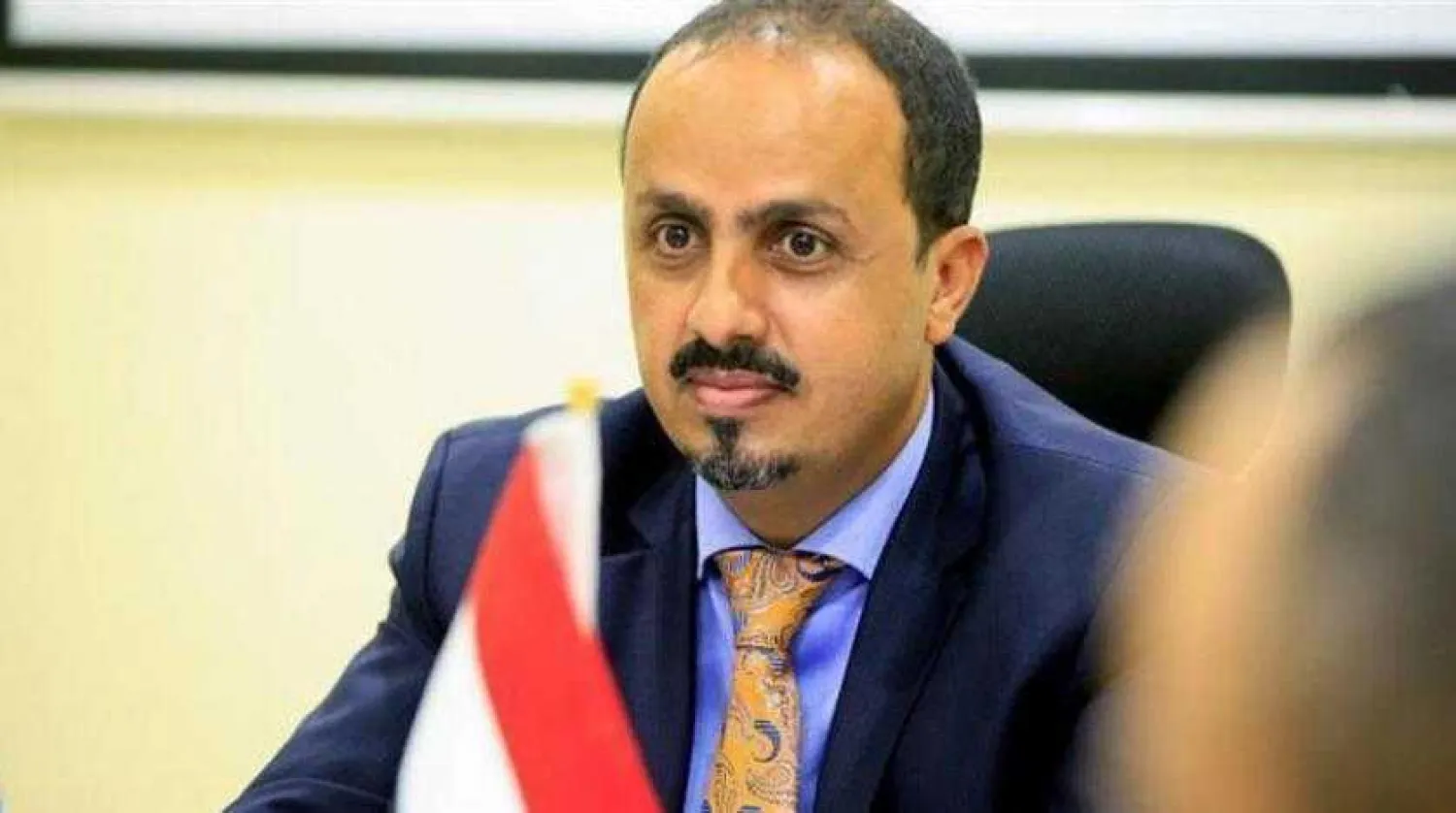
Yemen's Information Minister Muammar al-Iryani (Asharq Al-Awsat)
TT

Yemeni Govt Calls for Deterrence against Houthi Militarization of Red Sea

Yemen's Information Minister Muammar al-Iryani (Asharq Al-Awsat)

The Yemeni government demanded international deterrence against the Houthi group's threats to international shipping.

In a statement carried by Saba news agency, Yemen's Minister of Information Moammar al-Eryani said that the dangerous announcement made by the Houthis that the Red Sea, Bab el-Mandab, and the Arabian Sea are a military operations zone reveals the group's reality as a terrorist militia that does not care about international laws.

Eryani considered the announcement an affirmation of the warnings issued earlier that the Iran-affiliated militias continue to control parts of the Yemeni coast and the security and safety of international navigation in the Red Sea and Bab el-Mandab.

The statement called on the international community, the UN, and the Security Council permanent members to take a clear stance against this dangerous threat and carry out their legal responsibilities in confronting the terrorist activities of the Iranian regime and its Houthi tools.

Last Sunday, the so-called "Supreme Political Council" threatened oil companies in the Arab coalition countries.

For his part, Foreign Minister Ahmed Awad bin Mubarak affirmed Wednesday the legitimate government's keenness on renewing the nationwide truce, pointing out that it has implemented all its commitments for a comprehensive peace.

During a press conference in Rabat, bin Mubarak accused the Houthis of recanting their vow to implement the terms of the truce, including opening roads in Taiz, before refusing to extend the ceasefire again.

The Minister noted a strategic regional and global interest to end the Houthi coup, noting that the Houthi group imposed the war to implement Tehran's expansionist agenda in the region.

The Yemeni government "will not allow Iran to seize Yemen's oil resources," said the Minister.

Bin Mubarak stated that Yemeni army casualties during the truce amounted to 1,400 soldiers and civilians who fell due to Houthi violations, despite the government's keenness to maintain calm and provide opportunities for peace.

He added that Houthis plundered more than YR45 billion before the armistice and have not paid a single riyal in public employee salaries since the signing of the Stockholm Agreement.

Bin Mubarak recalled the militias' evasion of implementing the Stockholm Agreement on Hodeidah in exchange for halting military operations, recalling that they deployed naval mines in the Red Sea, a threat to maritime navigation.

On Wednesday, the Minister confirmed that his government implemented all its commitments toward the truce, and the Houthis refused to open Taiz roads.

During a telephone conversation with Russia's Special Presidential Envoy for the Middle East and Africa Mikhail Bogdanov, bin Mubarak discussed the prospects for a Yemeni settlement.

Saba news agency reported that the two officials discussed the bilateral relationship, marking the 94th anniversary of its founding next November.

Bin Mubarak reiterated the Houthis' intention to obstruct all efforts to move to the comprehensive political process per the three references, adding that the group insists on resorting to war and threatens national and regional oil companies.

He called on the Security Council to take a firm stance regarding the negative attitudes of the Houthi militia.

Bogdanov stressed Russia's support for the security and stability of Yemen and the region.

Meanwhile, international actors continue to exert efforts to extend the previous truce, despite UN Special Envoy Hans Grundberg's announcement last Sunday evening that the peace ended without an agreement.

On Tuesday, Yemeni and Western diplomatic sources revealed that the UN continued to try to extend the humanitarian truce for an additional period of up to six months.

According to the sources, the UN efforts are now directed toward Iran and the Presidential Leadership Council.

The UN envoy is pressuring the Council to approve the salaries of military and security employees in the Houthi-controlled areas and disburse them within the following year.

The truce entered into force last April for two months and stipulated ending the offensive military operations inside Yemen and across its borders, opening roads in Taiz and other governorates to improve the freedom of movement of civilians, and facilitating the entry of 18 ships carrying fuel to Hodeidah.

It also required allowing flights to and from Sanaa International Airport and paying the salaries of government employees.

The government accuses the Houthi militia of renouncing its obligations.

Yemeni political activist Mohammad Abdul-Mughni believes the failure of UN efforts to extend the ceasefire and achieve peace was expected due to the Houthi intransigence.

Speaking to Asharq Al-Awsat, Abdul-Mughni said the Houthi militias miscalculate their power and control, and they want to assure the international community and the Arab region that they are a force that cannot be ignored.

He believes the group determined several conditions that could increase risks and threats, cautioning that if these conditions were met, they would be one of the reasons for prolonging the war.

Surprisingly, the UN and the international community agreed to the Houthi militia's conditions to pay the salaries of state employees in their areas, as these salaries will probably be used in war efforts.

He concluded that the failure of the international community to persuade the militias would prolong the war in the areas identified by the militias for strategic gains.

Furthermore, the American Center for Justice (ACJ) regrets the international community's failure to extend the humanitarian truce in Yemen, its lax handling of the parties' terms to the conflict, and the ambiguity surrounding its discussions on the extension in the last days of the expired truce.

The Washington-based human rights organization believes the international community did not make sufficient efforts to extend the truce, nor did it disclose the details of the discussions between Grundberg and Houthi leaders n Sanaa or what obstacles and conditions complicated his mission, which did not allow an agreement to be reached.

Throughout the period of the ended truce, which was announced for humanitarian purposes and to alleviate the suffering of Yemeni civilians, the Houthi group evaded compliance with necessary conditions for the humanitarian situation.

The ACJ calls on the international community to assume its responsibilities to protect civilians from the effects of the end of the truce, the Houthi group's refusal to extend it, and what may result from such as the return of clashes, most of which occur in residential areas, or vital areas.

It also stressed the need for the international community, its bodies, and states to play a serious, effective, and resolute role in restoring the truce on the one hand and in continuing activities and efforts to end the war in Yemen in a just manner on the other hand.

It hoped this would lead to the cessation of all violations resulting from it and building a comprehensive and complete peace process.

US Senator Accuses Hamas and Hezbollah of Rearming

Sen. Lindsey Graham (R-SC) speaks to reporters after Secretary of War Pete Hegseth and Secretary of State Marco Rubio attend closed door meetings with lawmakers on Capitol Hill on December 16, 2025 in Washington, DC. (Getty Images via AFP)
TT

US Senator Accuses Hamas and Hezbollah of Rearming

Sen. Lindsey Graham (R-SC) speaks to reporters after Secretary of War Pete Hegseth and Secretary of State Marco Rubio attend closed door meetings with lawmakers on Capitol Hill on December 16, 2025 in Washington, DC. (Getty Images via AFP)

US Senator Lindsey Graham accused Hamas and Hezbollah of rearming during a visit to Israel on Sunday, and charged that the Palestinian group was also consolidating power in Gaza.

After two years of war between Israel and Hamas in the Palestinian territory, a fragile ceasefire has held since October, despite both sides trading accusations of violations.

A separate ceasefire between Israel and the Lebanese movement Hezbollah came into effect in November 2024 after more than a year of hostilities, though Israel continues to carry out strikes on Lebanese territory.

Israel has made dismantling the arsenals of both groups, allies of its arch-foe Iran, a key condition for any lasting peace.

"My impression is that Hamas is not disarming, they are rearming," Graham said in a video statement issued by Prime Minister Benjamin Netanyahu's office.

"It's my impression that they are trying to consolidate power (and) not give it up in Gaza."

The South Carolina Republican -- a staunch ally of US President Donald Trump, who helped broker the Gaza ceasefire -- added that he believed Hezbollah was likewise seeking to rearm itself.

"My impression is that Hezbollah is trying to make more weapons... That's not an acceptable outcome," he said.

"On both counts you are right," responded Netanyahu, praising the senator as a "great friend of Israel".

Graham's remarks came a day after mediators the United States, Qatar, Egypt and Türkiye urged both sides in the Gaza war to uphold the ceasefire.

The mediators are pressing for the implementation of the second phase of the truce, which would involve an Israeli withdrawal from Gaza, the establishment of an interim authority to govern the territory in place of Hamas and the deployment of an international stabilization force.

The second phase also envisages the demilitarization of Gaza, including the disarmament of Hamas.

Hamas has called on the mediators and Washington to stop Israeli "violations" of the ceasefire.

On Friday, six people, including two children, were killed in an Israeli bombing of a school serving as a shelter for displaced people, according to the civil defense agency in Gaza, which operates under the authority of Hamas.

The Lebanese government, meanwhile, has committed to disarming Hezbollah, starting in the country's south.

Israel, however, has questioned the effectiveness of the Lebanese military, and Hezbollah itself has repeatedly refused to lay down its weapons.


Israel’s Security Cabinet Approves 19 New Settlements in West Bank

 A helicopter flies over the Israeli settlement of Shilo in the occupied West Bank on December 14, 2025. (AFP)
A helicopter flies over the Israeli settlement of Shilo in the occupied West Bank on December 14, 2025. (AFP)
TT

Israel’s Security Cabinet Approves 19 New Settlements in West Bank

 A helicopter flies over the Israeli settlement of Shilo in the occupied West Bank on December 14, 2025. (AFP)
A helicopter flies over the Israeli settlement of Shilo in the occupied West Bank on December 14, 2025. (AFP)

Israel's security cabinet approved the establishment of 19 new settlements in the occupied West Bank, a move the country's far-right finance minister said on Sunday was aimed at preventing the establishment of a Palestinian state.  

The decision brings the total number of settlements approved over the past three years to 69, according to a statement from the office of Finance Minister Bezalel Smotrich.  

The latest approvals come days after the United Nations said the expansion of Israeli settlements in the West Bank -- all of which are considered illegal under international law -- had reached its highest level since at least 2017.  

"The proposal by Finance Minister Bezalel Smotrich and Defense Minister Israel Katz to declare and formalize 19 new settlements in Judea and Samaria has been approved by the cabinet," the statement said, without specifying when the decision was taken. 

Smotrich is a vocal proponent of settlement expansion and a settler himself.  

"On the ground, we are blocking the establishment of a Palestinian terror state," he said in the statement.  

"We will continue to develop, build, and settle the land of our ancestral heritage, with faith in the justice of our path." 

UN Secretary-General Antonio Guterres has recently condemned what he described as Israel's "relentless" expansion of settlements in the occupied territory.  

It "continues to fuel tensions, impede access by Palestinians to their land and threaten the viability of a fully independent, democratic, contiguous and sovereign Palestinian State", he said earlier this month.  

Since the start of the war in Gaza, calls for the establishment of a Palestinian state have proliferated, with several European countries, Canada and Australia recently moving to formally recognize such a state, drawing rebukes from Israel.  

A UN report said the expansion of settlements was at its highest point since 2017, when the United Nations began tracking such data.  

"These figures represent a sharp increase compared to previous years," Guterres said, noting an average of 12,815 housing units were added annually between 2017 and 2022.  

"These developments are further entrenching the unlawful Israeli occupation and violating international law and undermining the right of the Palestinian people to self-determination." 

Excluding east Jerusalem, which was occupied and annexed by Israel in 1967, more than 500,000 Israelis live in the West Bank, along with about three million Palestinian residents.  

Smotrich's office said the 19 newly approved settlements are located in what it described as "highly strategic" areas, adding that two of them -- Ganim and Kadim in the northern West Bank -- would be re-established after being dismantled two decades ago.  

Five of the 19 settlements already existed but had not previously been granted legal status under Israeli law, the statement said.  

While all Israeli settlements in the Palestinian territory are considered illegal under international law, some wildcat outposts are also illegal in the eyes of the Israeli government.  

Many of these, however, are later legalized by Israeli authorities, fueling fears about the possible annexation of the territory. 

US President Donald Trump has warned Israel about annexing the West Bank.  

"Israel would lose all of its support from the United States if that happened," Trump said in a recent interview to Time magazine.  

Israel has occupied the West Bank since 1967, and violence there has soared since the Gaza war erupted in October 2023 following Hamas's attack on Israel.  

Israeli troops or settlers have killed at least 1,027 Palestinians in the West Bank -- both gunmen and civilians -- since the start of the fighting in Gaza, according to an AFP tally based on Palestinian health ministry figures.  

At least 44 Israelis have been killed in the West Bank in Palestinian attacks or Israeli military operations during the same period, according to Israeli data. 


Iraq Top Judge Says Armed Factions to Cooperate on Weapons

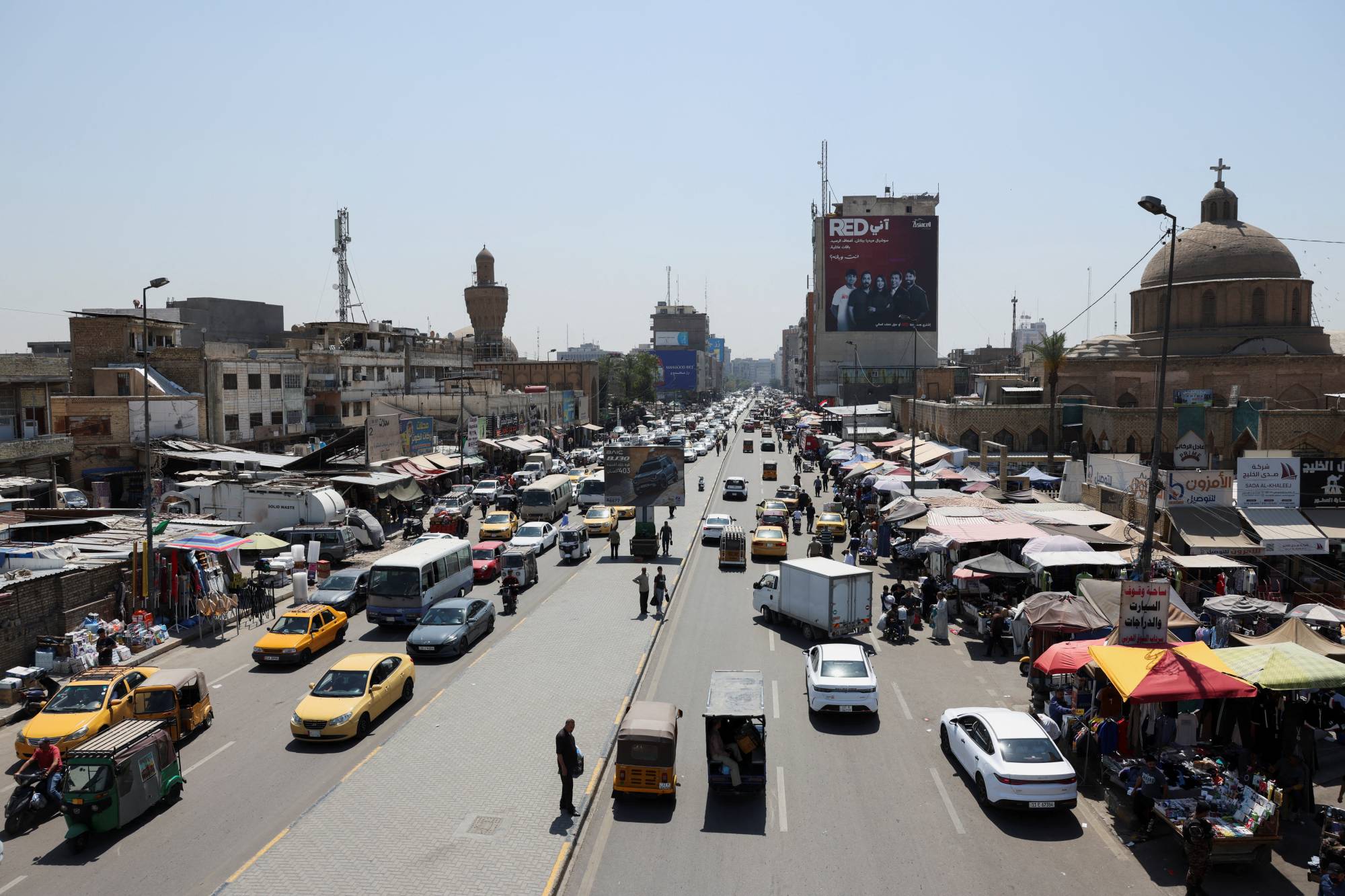
Cars drive through central Baghdad as a thick fog blankets the Iraqi capital on December 11, 2025. (AFP)
TT

Iraq Top Judge Says Armed Factions to Cooperate on Weapons

Cars drive through central Baghdad as a thick fog blankets the Iraqi capital on December 11, 2025. (AFP)

The head of Iraq's highest judicial body said Saturday that the leaders of armed factions have agreed to cooperate on the sensitive issue of the state's monopoly on weapons.

However, the powerful Kataib Hezbollah group said that it would only discuss giving up its arms when foreign troops leave the country.

"The resistance is a right, and its weapons will remain in the hands of its fighters," the group said in a statement.

The leaders of three other pro-Iran factions designated by Washington as terrorist groups said that it is time to restrict weapons to state control, although they too have stopped short of committing to disarm -- a long-standing US demand.

Faiq Zidan, the head of Iraq's Supreme Judicial Council, in a statement thanked "faction leaders for heeding his advice to coordinate together to enforcing the rule of law, restrict weapons to state control, and transition to political action after the national need for military action has ceased".

After Iraq's general elections in November, the United States demanded that the new government exclude six groups it designates as terrorists and instead move to dismantle them, Iraqi officials and diplomats told AFP.

But some of the groups have increased their presence in the new parliament and are members of the Coordination Framework, a ruling alliance of Shiite parties with varying ties to Iran that holds the majority.

The blacklisted groups are part of the pro-Iran Popular Mobilization Forces, a former paramilitary alliance that has integrated into the armed forces. But they have also developed a reputation for sometimes acting on their own.

They are also part of the Tehran-backed so-called "Axis of Resistance" and have called for the withdrawal of US troops -- deployed in Iraq as part of an anti-ISIS coalition -- and launched attacks against them.

These groups include the powerful Asaib Ahl al-Haq faction, which won 27 seats in the elections.

Earlier this week, the group's leader, Qais al-Khazali, a key figure in the Coordination Framework, said "we believe" in "the slogan to restrict weapons to the state", and "we are now part of the state".

Two other groups, Harakat Ansar Allah al-Awfiya and Kataeb Imam Ali, said on Friday that it is time to "limit weapons to the state".
