


'Transformation' Beckons for Embattled Credit Suisse

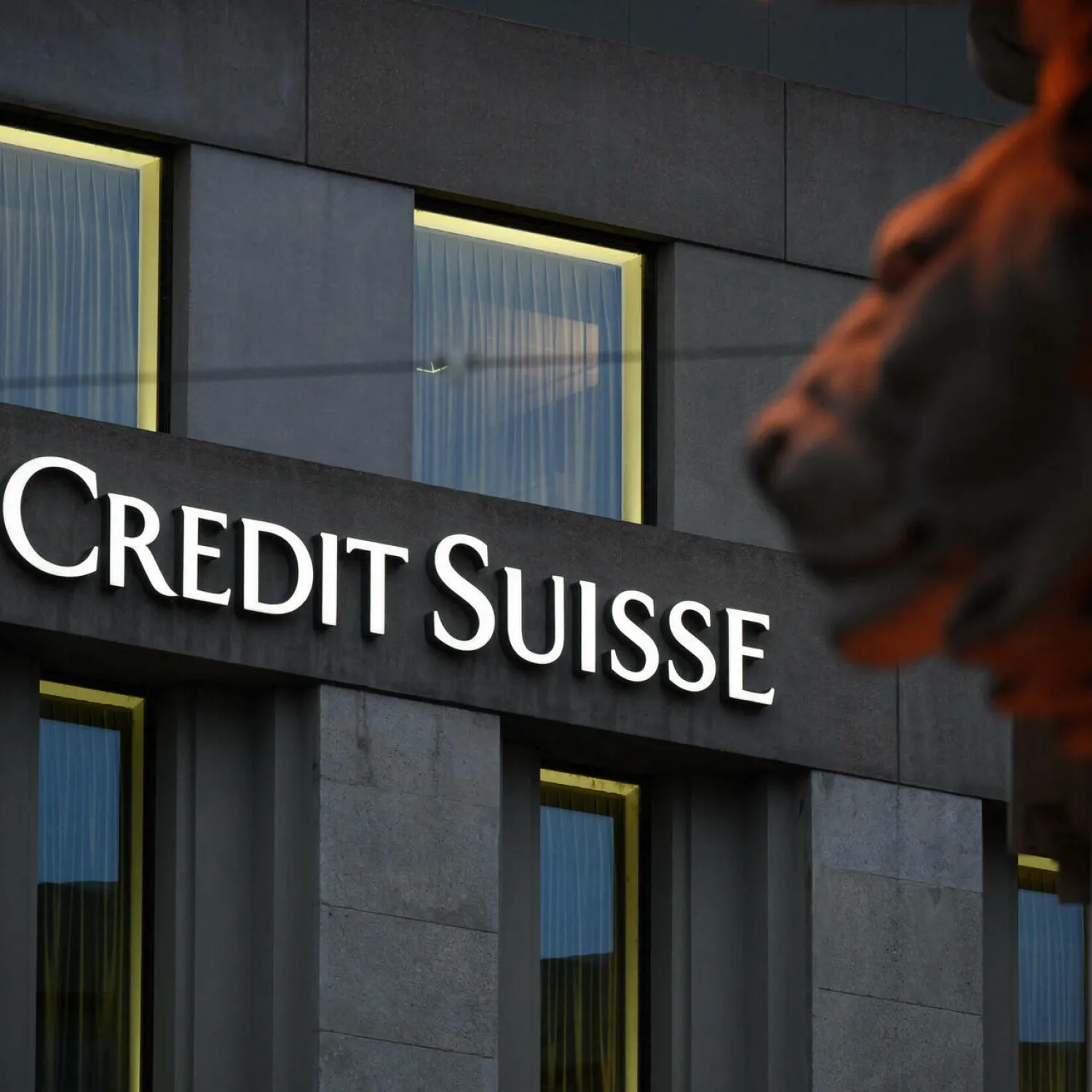
A sign of Switzerland's second largest bank Credit Suisse on a branch's building in downtown Geneva in a file photo from November 4, 2020. Fabrice Coffrini, AFP
TT

'Transformation' Beckons for Embattled Credit Suisse

A sign of Switzerland's second largest bank Credit Suisse on a branch's building in downtown Geneva in a file photo from November 4, 2020. Fabrice Coffrini, AFP

Battered by a series of scandals, rumors of financial trouble and plunging shares, Credit Suisse is preparing "transformation plans" to restore confidence in the Swiss banking giant.

Ulrich Koerner, who took over as chief executive in August, is due to present the strategic review on October 27, AFP said.

With Switzerland's second-biggest bank refraining from revealing its intentions, speculation about its incoming strategy has been swirling.

- Divest or raise capital? -Andreas Venditti, an analyst at Swiss investment firm Vontobel, said "a capital increase appears increasingly likely" for Credit Suisse.

In a note to clients, Venditti estimates that amount needed at four billion Swiss francs ($4 billion).

Investors fear that such a move would dilute the value of bank shares.

Its stock price has shed 70 percent since the March 2021 collapse of British financial firm Greensill. Credit Suisse was heavily exposed to the group.

Carlo Lombardini, a lawyer and professor of banking law at the University of Lausanne, said a capital injection would leave a "bitter taste" for shareholders.

"But they probably don't have a choice," Lombardini told AFP.

The bank will have to raise funds from shareholders to finance layoffs and the cost of restructuring, he said.

Another option would be for the bank to sell assets.

"It's a tough choice," said David Benamou, investment director at Axiom Alternative Investments, noting that it would hurt the bank's future revenues.

"Market conditions are tight and a seller who is forced to sell usually does not get a favorable price," Benamou said.

Analysts at Jefferies, a financial services firm, said "asset sales alone are unlikely to be the solution to the potential capital shortfall problem".

But, they added, it "could be a first step and buy time until shares recover and the outlook gets better, at which time a capital raise, if needed, would be a less dilutive and more acceptable option".

- Is it a takeover target? -Credit Suisse shares have rebounded after sinking to a record low of 3.518 Swiss francs on Monday, showing that markets are giving it "a chance to put together a solid plan", said Ipek Ozkardeskaya, analyst at Swissquote bank.

With its market value melting by 10 billion Swiss francs earlier this week, Credit Suisse became "a very attractive target for banks that would like to buy a nice wealth management branch", said Benamou.

But Credit Suisse has the means to remain independent, he said, and any bid could face political resistance.

"I think the Swiss want Credit Suisse to remain Swiss," Benamou said.

- Is it a 'Lehman moment'? -In addition to the $10 billion exposure to Greensill, the implosion of US fund Archegos cost Credit Suisse $5 billion.

On top of that, Credit Suisse was fined $475 million by US and British authorities in October over loans to state-owned companies in Mozambique.

Koerner, who took the reins in August with the mammoth task of revitalizing the bank, sent an internal message to reassure staff last week, saying Credit Suisse had a "strong capital base and liquidity position".

But investors concerns reached fever pitch last weekend with rumors on social media that the bank may be on the brink of a "Lehman moment" -- a reference to the US investment firm whose disintegration precipitated the 2008 global financial crisis.

This triggered Monday's stock plunge as well as an increase in the cost of buying insurance against Credit Suisse defaulting on its debt.

Analysts, however, have played down concerns that the Swiss bank could follow in the footsteps of Lehman Brothers, stressing that it was "too big to fail" and the government would not let it to collapse.

The Swiss government rescued Credit Suisse rival UBS in 2008 when it teamed up with the central bank to set up a fund that absorbed the group's toxic assets.

Benamou said a state intervention for Credit Suisse was unlikely as banks have been required to put aside enough cash to withstand a new crisis following the 2008 financial shock.

In an effort to reassure markets, Credit Suisse announced plans on Friday to buy back up to $3 billion of debt.


Saudi PIF Backs Multibillion-Dollar Projects to Boost Sustainability

A solar power project in Saudi Arabia (SPA)
TT

Saudi PIF Backs Multibillion-Dollar Projects to Boost Sustainability

A solar power project in Saudi Arabia (SPA)

Saudi Arabia’s Public Investment Fund has fully allocated the proceeds of its green bond issuance, directing $9 billion to eligible projects, in a move that highlights the sovereign wealth fund’s growing role in shaping a more sustainable future and delivering lasting positive impact worldwide.

According to a recent report issued by the Public Investment Fund, reviewed by Asharq Al-Awsat, the expected impact of the fund’s eligible green projects includes generating 427 megawatts of renewable energy, avoiding emissions equivalent to 5.1 million tons of carbon dioxide, and treating 4 million cubic meters of wastewater.

The Public Investment Fund aims to establish itself as an active participant in global debt markets, while also fostering the development of a dynamic domestic market. This would enable the fund to access short- or long-term liquidity through a diverse range of financing instruments.

Financing strategy

The fund’s capital markets program aims to further strengthen its financing strategy and execution capabilities, both at the level of the Saudi sovereign wealth fund and across its portfolio companies, while enabling deeper engagement with global and local debt markets.

The program will also support expanding the fund’s capacity to raise debt and deploy it as a source of investment financing, in line with its overall funding strategy. This approach is designed to instill greater discipline in cash flow management and enhance returns on equity for the fund and its portfolio companies.

The green bond issuance will provide the fund with access to a broader pool of investors who prioritize environmental, social, and governance considerations in their investment decisions. It will also allow investors to diversify their portfolios through green assets, a step expected to help accelerate the pace of green investment globally.

Climate change

The fund has taken concrete steps to advance governance and policy, focusing on sustainability, and is a founding member of the One Planet Sovereign Wealth Funds initiative. This international platform aims to accelerate the integration of climate change considerations into asset management decisions and investment opportunities.

As an investment vehicle, the Public Investment Fund operates through acquiring stakes in companies aligned with its mandate, including ACWA Power and Lucid.

It has also established the Saudi Investment Recycling Company, a leader in waste management and recycling, manages the National Energy Services Company, Tarshid, and supports the creation of a voluntary carbon market in the Middle East and North Africa.

These efforts aim to strengthen Saudi Arabia’s position as one of the world’s most energy-efficient countries.

The green bond issuance will finance tangible projects on the ground, helping to accelerate the green transition and advance the Kingdom’s core targets of achieving net zero emissions by 2060 and generating 50 percent of electricity consumption from renewable energy sources by 2030.

This forms a key pillar of the renewable energy program implemented by the fund, which involves developing 70 percent of renewable power generation capacity.


Saudi E-Commerce Hits Record Monthly Sales over SAR30.7 Billion in October

A view of Riyadh, Saudi Arabia. (SPA file)
TT

Saudi E-Commerce Hits Record Monthly Sales over SAR30.7 Billion in October

A view of Riyadh, Saudi Arabia. (SPA file)

E-commerce sales in Saudi Arabia via "mada" cards soared to an all-time monthly high in October 2025, surpassing SAR30.7 billion.

The surge in sales represents a 68% year-on-year increase, totaling about SAR12.4 billion more than the SAR18.3 billion recorded in October 2024, according to the Saudi Central Bank (SAMA) statistical bulletin on Wednesday.

E-commerce sales for the third quarter (Q3) of 2025 hit SAR88.3 billion, up 15.2% from the previous quarter, representing an increase of about SAR11.6 billion over the SAR76.6 billion recorded in Q2.

On a monthly basis, e-commerce sales in October rose 6%, gaining approximately SAR1.6 billion over September’s total of SAR29.1 billion.

From January to October, "mada" data showed e-commerce sales grew 47.3%, rising by around SAR9.9 billion over the SAR20.9 billion recorded in January.

These figures cover transactions made via "mada" cards on e-commerce websites, apps, and digital wallets, and do not include credit-card payments.


Jeddah's King Abdulaziz Airport Launches First Direct Flight to Moscow

The expansion supports Jeddah Airports Company’s goal of broadening travel options and increasing air traffic revenue, leveraging the Kingdom's strategic location. (SPA)
TT

Jeddah's King Abdulaziz Airport Launches First Direct Flight to Moscow

The expansion supports Jeddah Airports Company’s goal of broadening travel options and increasing air traffic revenue, leveraging the Kingdom's strategic location. (SPA)

Jeddah's King Abdulaziz International Airport (KAIA) celebrated the launch of its first direct flynas flight to Moscow, operating three weekly flights between Jeddah and Vnukovo International Airport.

This initiative, in partnership with the Saudi Tourism Authority and the Air Connectivity Program, boosts air links between Saudi Arabia and Russia.

It marks KAIA's third direct Russian destination, following Makhachkala and Mineralnye Vody, which were inaugurated earlier this month by Azimuth Airlines.

The expansion supports Jeddah Airports Company’s goal of broadening travel options and increasing air traffic revenue, leveraging the Kingdom's strategic location.
